Author: SkillStacked

  • The Mountain Is You by Brianna Wiest: 6 Powerful Insights on Self-Sabotage

    The Mountain Is You by Brianna Wiest: 6 Powerful Insights on Self-Sabotage

    Brianna Wiest’s The Mountain Is You: Transforming Self-Sabotage Into Self-Mastery reframes our inner obstacles as guides rather than judges. She explains that self-sabotage isn’t a sign of weakness but a misguided attempt to protect ourselves . The biggest “mountain” we face is often ourselves, reminding us “it is not the mountain that you must master, but yourself” . Through practical exercises, Wiest shows how to process emotions, rewrite personal narratives, and turn resistance into growth.

    1. Self-Sabotage as Protective Coping

    Wiest notes that self-sabotage comes from fear or unmet needs. “Self-sabotage is not a way we hurt ourselves; it’s a way we try to protect ourselves.” For example, procrastination can hide a fear of failure.

    Action: Notice a self-sabotaging habit (like avoiding a tough task). Ask yourself, “What am I afraid of?” and journal your answer. Understanding the fear behind it begins to dismantle the pattern.

    2. The Mountain = You (Facing Inner Obstacles)

    Wiest’s mountain metaphor shows that outward challenges usually point inward. She reminds us, “it is not the mountain that you must master, but yourself.” When a problem feels insurmountable, it often signals that part of you needs to grow.

    Action: Pick a current challenge (“your mountain”). Ask, “Could my mindset or habits be part of this obstacle?” Then make one small change (a thought shift or habit tweak) that helps you move forward.

    3. Process Your Emotions

    Emotional intelligence is key to breaking the cycle. Wiest outlines steps: understand what upset you, validate the feeling, then choose a course correction . Naming and allowing your emotions releases their hold, so you can choose a positive action.

    Action: Try a quick “feelings check” today. When something upsets you, pause and ask, “Why do I feel this way?” Name the emotion and allow yourself to feel it. Then note one small adjustment you can make to move closer to your goal.

    4. Rewrite Your Identity and Narrative

    Self-sabotage often reveals an outdated inner narrative . Wiest explains our self-image is built from past messages, so changing it is essential. By swapping an “I can’t do this” story for a more truthful belief, we free ourselves to grow.

    Action: Challenge one negative belief about yourself. If you think “I’m not good at this,” question it and replace it with a positive truth (e.g. “I can learn and improve.”). Write this new statement down and repeat it as an affirmation.

    5. Radical Responsibility

    Wiest emphasizes owning our power over life’s outcomes. She writes, “to become a master of oneself is first to take radical and complete responsibility for your life… it is not what happens, but the way one responds, that determines the outcome.” Blaming others keeps you stuck; owning your response gives you freedom.

    Action: Reflect on a recent setback. Instead of asking “Why did this happen to me?”, ask “What can I control here and how will I respond?”. Even owning small reactions (like choosing calm) immediately gives you more control.

    6. Becoming Your Future Self

    Wiest urges: “You must envision and become one with your future self, the hero of your life that is going to lead you from here.” Acting as if you are already that person begins to make it real.

    Action: Picture your most confident future self. What advice would they give you today? Write down one piece of that advice and do it now. For example, if health is important to your future self, take a quick walk as they would.

    1% Better Challenge

    Pick one insight above and apply it in a tiny way today. For example, do a quick “feelings check” (insight 3) when stress hits, or imagine your future self (insight 6) before deciding. These small 1% improvements accumulate into real momentum.

  • Learn the 80/20 Rule (and Apply It Weekly)

    Learn the 80/20 Rule (and Apply It Weekly)

    Have you ever felt swamped by busywork while the real results barely budge? Imagine this: 80% of your impact comes from just 20% of your actions. That’s the magic of the 80/20 rule (Pareto Principle) – a proven productivity hack that can transform your week. Put simply, a small slice of tasks (the “vital few”) drives the lion’s share of success . Mastering this rule means focusing on high-impact habits and letting go of the rest – freeing up time and energy for what really matters. Don’t be the person wasting 80% of your effort on 20% of outcomes. Instead, unleash the power of focus, supercharge your productivity, and revolutionize your time management by applying 80/20 every week.

    Curious how it works? At its core, the Pareto Principle tells us that roughly 80% of consequences come from 20% of causes . For example, Asana explains that “for many outcomes, roughly 80% of consequences come from 20% of causes” . In other words, a tiny fraction of your inputs yields most of your results. This simple statistical pattern shows up everywhere: 80% of a company’s profits often come from 20% of its customers, 20% of tasks produce 80% of daily impact, and even 20% of your wardrobe gets 80% of your wear .

    Why the 80/20 Rule Matters for You

    Embracing the 80/20 rule is a game-changer for anyone chasing more time optimization and self-mastery. It’s the ultimate simplification hack: instead of spreading yourself thin, you concentrate on one-fifth of tasks that yield four-fifths of results . Productivity soars when you do this. As one productivity guide notes, focusing on the top 20% of tasks helps you “work smarter, not harder,” slashing busywork and creating outsized impact . You get more done in less time by ignoring low-value distractions.

    This laser focus also kills inefficiency. Most people scatter effort evenly across tasks, but 80/20 forces you to say no to the trivial many and yes to the vital few . This means less stress and overwhelm – you don’t need to tackle every little thing. Instead, you dramatically increase clarity on what truly moves the needle. With the 80/20 lens, you’ll spot that only a few habits or projects are worth your precious energy .

    Another huge perk: it frees up time for innovation and growth . When you trim away the 80% of tasks that add little value, you carve out space in your schedule. This leaves brain-space for creative thinking, relationship-building, or big-picture goal-setting – the real catalysts of long-term success . In short, the 80/20 rule is about doing less, but better. It helps you ditch the grind of busywork and focus on the key actions that transform your day and your life .

    Key Benefits of 80/20 (in brief):

    Massive impact: 80/20 lets you achieve the same (or better) results with a fraction of the tasks . Less stress: By blocking out the noise, you feel more in control and calm . Sharper focus: You spend your best hours on your most important work . Consistent growth: With weekly 80/20 planning, you continually refine your approach and iterate on what works .

    Find Your Personal 80/20: Action Steps

    Ready to harness this principle? Follow these tactical steps each week to uncover YOUR vital 20%:

    List everything. At the start of each week, dump all your tasks, goals, and projects into one place (paper, spreadsheet, or an app). ActiveCollab recommends doing this weekly so you only repeat the process once — planning five days ahead, which “not only makes it more efficient but also minimizes stress” . Seeing all tasks out in the open removes overwhelm and brings clarity . Spot the 20%. Go through your list and identify the tasks that truly move the needle. Ask: “Which 20% of my tasks will drive 80% of my desired results?” A time-tracking or value-ranking system helps. For example, rate each task on a 1–10 impact scale (like Supernormal suggests) . Or use the Eisenhower Matrix to flag important vs. busywork. The goal: spotlight your high-impact tasks – these are the ones you should prioritize. Prioritize them. Once you’ve identified your top 20%, rank or label them as Priority A. These tasks get top billing. Color-code or highlight them in your planner. ActiveCollab advises assigning your top tasks a “priority label” and making sure only about 20% of your tasks earn it . Schedule these priorities into your week’s calendar first, during your peak energy times . Eliminate or delegate the rest. The remaining ~80% of tasks are lower impact. Decide which of these can be dropped, delegated, or deferred. Think of it as spring cleaning: “constantly making more room for the work that matters and getting rid of the stuff that doesn’t add value” . For example, automate routine tasks, outsource admin work, or simply skip tasks that aren’t essential. Don’t cheat – ruthlessly cull the non-essentials so your schedule clears up. Review & repeat weekly. Each week, do a quick reflection: Did your top tasks produce big results? Tweak your list and strategy based on what you learn. Make a habit of asking: “Was that task part of my 20% most effective activities?” If not, consider cutting it next time. Over time, you’ll sharpen your instincts for high-leverage activities. A weekly 80/20 planning session ensures continuous improvement and keeps you on track .

    80/20 in Action: Real Examples

    Applying the 80/20 mindset works across every area of life. Here are a few real-world examples:

    Business/Work: Often, ~20% of clients or products generate ~80% of revenue. As one guide notes, “80% of a company’s profits come from 20% of customers” . Identify your top clients or projects and give them extra attention. The same applies to tasks: 20% of work tasks usually drive 80% of daily output . Focus meetings, calls, and strategy on that vital 20%. Health & Habits: A few core habits yield the majority of wellness benefits. For most people, regular exercise, good nutrition, and enough sleep (the “vital 20% habits”) produce about 80% of fitness and health outcomes . Instead of trying every trend, prioritize the basics that work for you. For example, a simple 30-minute walk or home workout beats spending hours on ineffective routines. Don’t waste time on 80% of fitness hacks – double down on the crucial few. Relationships: Not all relationships contribute equally to your happiness. Think of your social circle: usually a handful of friends or family (20% of people) provide 80% of your support and joy . Focus energy on those meaningful connections. Schedule quality time with the people who uplift you. By nurturing your vital few relationships and letting go of draining ones, you dramatically boost your personal fulfillment and support network.

    Build a Weekly 80/20 Habit

    The real power of the 80/20 rule comes when you make it a weekly routine. Here’s how to lock it in:

    Schedule a Sunday setup. Block 30–60 minutes each weekend to do your 80/20 planning. List upcoming tasks and identify which are worth your best time. Putting this on your calendar makes it simple and builds momentum. (Pro tip: doing it in one sitting makes your week 5 days smoother .) Time-block your priorities. Once your vital tasks are defined, schedule them on your calendar at high-energy times. Treat these blocks as non-negotiable deep work sessions . Protect them from interruptions (no meetings or notifications allowed!). This ensures the 20% tasks get done effectively. Reflect and adapt. At week’s end, quickly review: Which tasks moved the needle? What drained time without payoff? Adjust next week’s 20% accordingly. This iterative loop (plan → do → review) accelerates your growth. Remember: the goal isn’t to do more tasks, but to continuously hone in on the tasks that matter most. Celebrate 80/20 wins. Recognize the big wins from your high-impact tasks. Celebrate completing that crucial project or having a breakthrough conversation. These successes reinforce the habit and keep you motivated. Share progress with a coach or accountability partner to increase FOMO for not skipping this practice!

    By making 80/20 analysis part of your weekly rhythm, you turn it into a habit that compounds. Each cycle, you get better at spotting the vital few inputs to focus on. Over weeks and months, this commitment leads to massive productivity growth and personal progress.

    Start Today – Don’t Get Left Behind

    Ready to transform your productivity and growth? The 80/20 rule is simple, but its impact is profound. Don’t waste another week on busywork and mediocre results. Instead, decide now to do less, better. Identify your crucial 20% tasks this week, block time for them, and let go of the rest. Feel that surge of relief when your to-do list shrinks and clarity kicks in.

    Remember: time is your most valuable asset. By applying the Pareto principle weekly, you’ll inevitably do more of the work that matters and less of the stuff that doesn’t . Keep tweaking each week – this is your personal growth engine. Embrace the 80/20 mindset, and you’ll watch your productivity, time optimization, and self-mastery soar.

    Make this your highest-impact habit: start planning your next week with the 80/20 rule today, and keep refining it every Sunday. You’ll be amazed at how much you can achieve!


  • ✅ Daily Kaizen: Add a “Don’t Break the Chain” Tracker

    ✅ Daily Kaizen: Add a “Don’t Break the Chain” Tracker

    Build Unstoppable Momentum One Day at a Time

    If motivation is unreliable…

    Discipline is the engine.

    And visual momentum is the fuel.

    Today’s Daily Kaizen is deceptively simple:

    Pick one habit you want to build. Each day you do it, mark an ❌.

    That’s it.

    On paper.

    In your Notes app.

    On a wall calendar.

    Anywhere you can see the chain forming.

    🔥 Why This Works (and Feels Addictive)

    This system was made famous by Jerry Seinfeld.

    He used it to write jokes every day — and never broke the chain.

    Here’s why it works:

    Your brain craves visual progress It becomes painful to miss a day Momentum builds automatically The more days you stack, the less you want to start over

    It turns discipline into a game — and you don’t want to lose.

    🛠️ How to Start Your Chain:

    Choose one habit that matters e.g. 10 pushups, write for 15 minutes, drink 2L water, publish a post Pick a place to track it — whiteboard, sticky notes, Google Sheet, Notes app Do it. Mark ❌. Tomorrow? Do it again.

    You don’t need a perfect system.

    You just need one you’ll see — and use — daily.

    🧠 Why It’s a Perfect Kaizen:

    It’s low effort, high awareness It taps into your reward system It builds identity-based discipline — one X at a time

    🪜 Kaizen Stack:

    Do the habit → Mark your X → See progress → Feel momentum → Keep going

    ✨ Bonus Tip:

    Once you hit 7 days, screenshot the streak and post it.

    It’ll inspire others — and double your accountability.

    🎯 Final Word:

    One ❌ is easy.

    But ten in a row?

    That’s a lifestyle change in motion.

    Don’t break the chain.

  • 💬 Daily Kaizen: Add One Real Compliment

    💬 Daily Kaizen: Add One Real Compliment

    Action:

    Give one genuine, specific compliment today.

    It could be spoken, texted, messaged — whatever feels natural.

    Examples:

    “You handled that situation really well.” “You’ve been so consistent lately — it shows.” “I appreciate how present you’ve been with me.”

    Why it works:

    Most people are starved for real validation.

    A sincere compliment deepens connection and boosts your mood too — not just theirs.

    🪜 Kaizen Stack:

    Real compliment → Deeper connection → More energy → Positive ripple effect

  • The Subtle Art of Not Giving a Fck*: 6 Bold Lessons on Values and Resilience

    The Subtle Art of Not Giving a Fck*: 6 Bold Lessons on Values and Resilience

    Mark Manson’s The Subtle Art of Not Giving a Fck* (2016) cuts through fluffy positivity with a blunt promise: life sucks, so pick which parts suck less.  In a frank, often funny voice, Manson argues that we all have limited “f*cks” to give – so we must focus on what really matters.  He insists that happiness comes not from avoiding pain, but from solving meaningful problems.  In fact, researchers note that “happiness is more than simply feeling pleasure and avoiding pain… it is about having experiences that are meaningful and valuable” .  Manson’s gritty advice resonates with people who want practical self-awareness, value-driven decisions, and stronger emotional resilience.

    6 Key Insights (with Takeaways)

    1. Choose Your Struggles

    Explanation: Manson reminds us that problems are inevitable.  We can’t avoid pain, but we can choose which pain to bear .  Instead of fretting over every tiny annoyance, decide what’s truly worth your effort.  Consciously pick challenges that align with your goals and values.  As one summary puts it, “Problems are inevitable. What is important is what problems we choose to care about” .  Struggle is part of life; make it count.

    Practical Takeaway: Next time you’re stressed, ask: Is this problem one I chose? If not, refocus on one you did choose (or can choose) – the problems tied to your values.  Jot down one annoying task or worry, then reframe it as a chosen project or let it go.  You’ll feel more empowered by owning your struggles.

    2. Break the Feedback Loop from Hell

    Explanation: Ever feel bad about feeling bad?  Manson calls this trap the “Feedback Loop from Hell.”  It’s anxiety stacked on top of anxiety – e.g. “I’m anxious about being anxious” .  Overthinking your emotions only fuels them.  Ironically, trying to suppress stress or negative feelings usually intensifies them .  Studies confirm that resisting negative emotions worsens anxiety, while acceptance improves coping .  The antidote is to notice feelings without self-judgment.  This breaks the loop and builds resilience.

    Practical Takeaway: When a negative emotion hits, name it (e.g. “This is anxiety.”) without beating yourself up.  Pause and breathe.  Remind yourself it’s okay to feel this way.  You don’t have to ‘fix’ the feeling right away – acceptance is part of moving forward.  This simple mindfulness step stops the spiral and clears your head.

    3. Value What You Can Control

    Explanation: Manson stresses that good values are internal and controllable, whereas bad values depend on externals .  For example, good values include honesty, creativity, and persistence – things you shape by your actions.  Bad values might be seeking status, wealth, or other people’s approval – since these depend on external factors and short-term highs.  Investing your worth in what you can’t control sets you up for frustration.  Focus on values you can act on (kindness, learning, hard work), and base decisions on those .  This makes you more self-aware and keeps external drama from derailing you.

    Practical Takeaway: Identify one core value you choose (say, integrity or kindness).  Then ask: Is my current problem related to that value or to something outside my control?  If it’s external, shift focus to something you can do.  For example, instead of fretting about others’ opinions (external), ask “How can I do my best work (internal)?” and act on that.

    4. The Truth About Happiness

    Explanation: Manson flips the usual idea of happiness on its head: he claims that happiness comes from problems, not avoidance of them .  In other words, solving challenges is what makes life satisfying.  Chasing only pleasure actually creates a “want more” loop, which is itself negative .  This aligns with research showing that people find lasting happiness through meaningful experiences and growth, not constant comfort .  Accepting this means choosing struggles that stretch you – that’s where fulfillment lies.

    Practical Takeaway: Reframe a current stress as an opportunity.  If your work or relationship is hard, ask yourself: What problem is here, and what could I learn by solving it?  Embrace the struggle as the price of progress.  Celebrating small wins over challenges will boost your mood more than avoiding any discomfort.

    5. You Are Not Special (And That’s Okay)

    Explanation: Manson shakes us out of entitlement by insisting we’re not uniquely blessed, and that’s fine .  Comparing yourself to unrealistic ideals creates anxiety and resentment.  Instead, accept that the “ordinary” is normal – and that’s where real life happens.  This humility keeps expectations in check.  Manson notes that obsessing over being special or perfect just feeds the negative feedback loop .  Letting go of entitlement makes you more grounded and content.

    Practical Takeaway: The next time you catch yourself envying someone’s life or performance, remind yourself: They have problems I don’t see.  Focus on your own path and values.  Practice gratitude for your ordinary strengths.  This shift from “me vs. the ideal” to “me with my own challenges” eases pressure and builds resilience.

    6. Responsibility ≠ Fault

    Explanation: A key insight is separating responsibility from fault.  Manson argues that, regardless of who’s to blame, you are responsible for dealing with what happens.  Taking responsibility means focusing on your power to act, rather than on excuses .  For example, you may not be at fault for a setback (someone else’s mistake, bad luck, etc.), but you are responsible for your response and choices.  Accepting this gives you agency and emotional control.  In Manson’s words, when we believe we’re responsible, we harness the power to shape our lives .

    Practical Takeaway: Pick one frustrating situation (a work error, a conflict, etc.).  Acknowledge any causes (fault), then immediately ask: What can I do about it?  Write down one constructive action you can take today, and focus on that.  By shifting from blame to action, you reclaim control and resilience.

    1% Better Challenge

    Pick one of these insights and apply it now.  For example, try the Feedback Loop tactic today: when you feel stress or anxiety, stop and name that feeling without judging it.  Breathe, and accept the emotion instead of fighting it.  Notice what changes – even a tiny difference counts.  Small, consistent tweaks like this build big self-awareness and resilience over time.

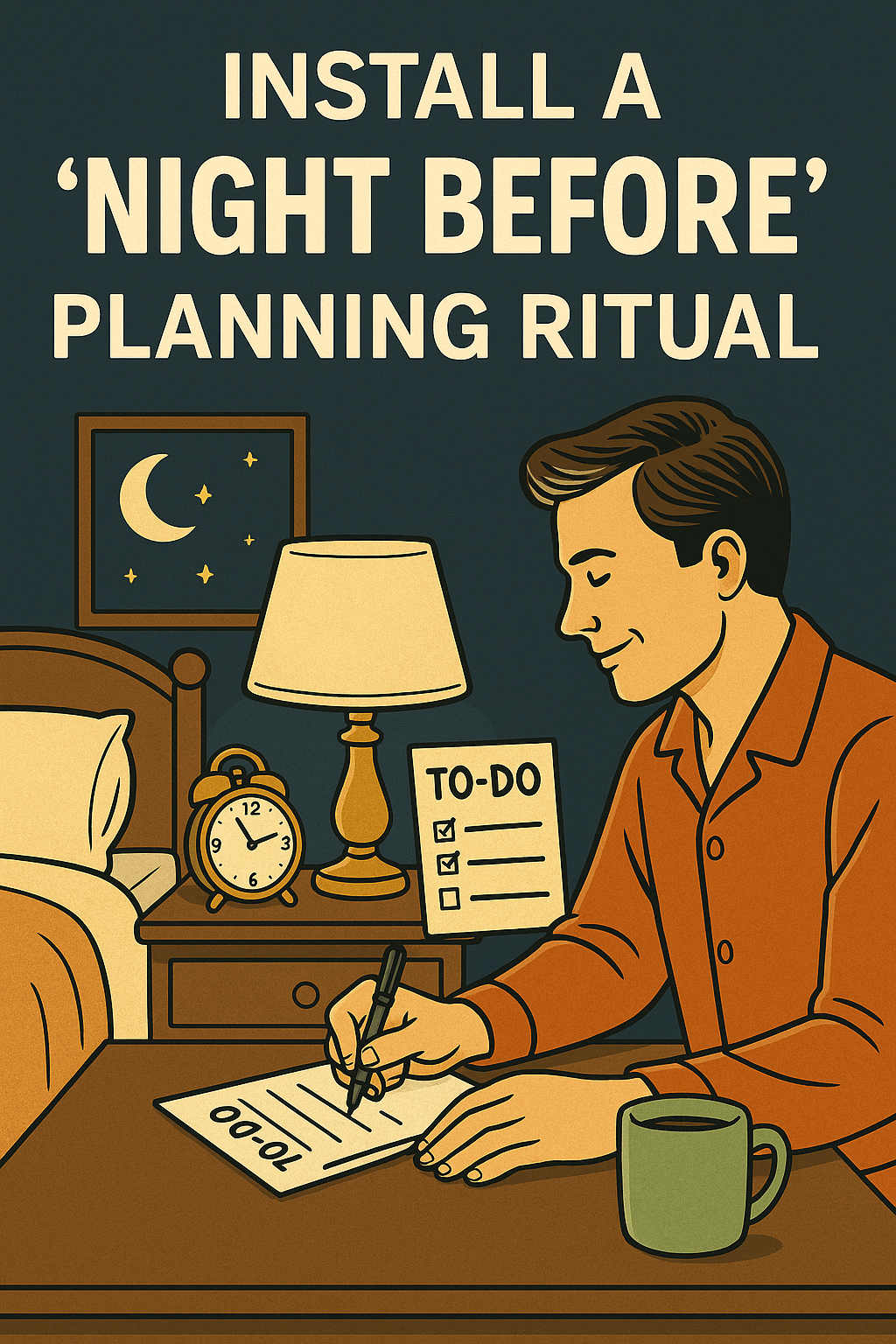
  • Install a Night-Before Planning Ritual

    Install a Night-Before Planning Ritual

    End your day with purpose by planning tomorrow tonight. A simple evening routine of reflecting on today’s progress and mapping out tasks for tomorrow can calm your mind, sharpen your focus, and set you up for a productive morning. Scientific studies show that writing a detailed to-do list at bedtime helps “offload” worries and speeds sleep onset . By making this a habit, you save willpower and reduce decision fatigue – instead of wasting precious morning energy deciding what to do, you wake up with a clear roadmap .

    Benefits of a Nightly Planning Ritual

    Reduced decision fatigue.  When you plan ahead, you eliminate many small morning choices (like what to wear or what task to tackle first). Decision fatigue – a state where mental energy for making choices runs low – builds up each day .  Productivity experts note that by planning the night before you “reduce decision fatigue, and preserve your willpower for your deepest most meaningful work.” . In short, having a plan means your brain isn’t drained by easy decisions, leaving more energy for what matters. Lower stress and anxiety. Jotting down unfinished tasks and worries before bed lets you offload them from your mind. Research found that participants who wrote a to-do list before sleep fell asleep about 9 minutes faster than those who journaled about completed tasks . Writing out tomorrow’s tasks (rather than mentally rehearsing them) reduces “cognitive arousal” and racing thoughts . Doctors advise “don’t take your problems to bed” – instead, schedule a worry-free planning session earlier in the evening . This practice clears your head and can improve sleep quality. Better sleep quality. A consistent bedtime routine signals to your brain that it’s time to wind down. Studies show that structured evening habits – especially a soothing ritual before sleep – are linked to better sleep habits and family well-being .  The sleep study above also found that the more specifically participants wrote their to-do lists, the faster they fell asleep . In other words, the act of detailed planning helps your brain let go of work concerns and drift off more easily. Morning momentum and clarity.  Waking up knowing exactly what to do first creates immediate focus and momentum. As one productivity writer notes, planning your day the night before means you’ll “get more done in less time” and experience “more flow” in the morning . By reviewing your priorities tonight, you remove guesswork from tomorrow’s morning – you know which tasks are top priority, so you can dive in confidently. A clear game plan built the night before means you start each day already moving forward.

    How to Build Your Nightly Planning Ritual

    Reflect on Today.  Spend a few minutes reviewing what you accomplished and what’s pending. Check off completed tasks and celebrate small wins. Noting down what went well (and what didn’t) helps you learn and ensures nothing important slips through the cracks. This reflection closes out the day and makes it easier to move on. Set Tomorrow’s Priorities.  Write a concise to-do list or pick the 3–5 most important things for tomorrow.  The classic Ivy Lee method suggests listing your top tasks before bed and tackling them first thing. Be specific: the sleep research found that detailed to-do lists offload more mental stress . Focus on high-impact goals that align with your bigger objectives. Jotting down these items (on paper, in a planner, or an app) gives your mind permission to rest, knowing you won’t forget them. Prepare Your Space.  Lay out anything you’ll need in the morning: clothes, tools, documents, or even a pre-set coffee mug.  For example, one schedule recommends “prepare for the next day: pack your stuff, choose your outfit” before bed .  Setting out tomorrow’s outfit on the bed (and packing your bag or work supplies) eliminates a key morning decision.  Another habit-stack is setting out your coffee mug or brewing supplies – James Clear points out a simple nighttime stack: after cleaning up, set out your coffee mug for tomorrow morning . These small cues make your morning routine run effortlessly. Wind Down Mindfully.  Turn off work and screens at least 30 minutes before bed. Do a relaxing activity like reading, gentle stretching, or deep breathing. A calming ritual signals it’s time to sleep .  You might also write a brief journal entry – either a gratitude log or a “worry list” – to further clear your mind (many therapists use worry lists to calm anxious thoughts). By separating your planning from active problem-solving, you give your brain the cue that the workday is done and it’s time to rest. Keep a Consistent Schedule.  Try to do this planning ritual at the same time each evening. Habits form best when they’re tied to a routine . For example, plan right after dinner or immediately after your evening shower. Over time, this consistency will make evening planning second nature. The more automatic it is, the easier it is to maintain – soon, writing tomorrow’s list will feel like a normal part of winding down.

    Examples of Effective Nightly Rituals

    One powerful nightly habit is to lay out tomorrow’s essentials before bed.  For example, prepare your outfit and work bag ahead of time – a schedule note advises “prepare for the next day: pack your stuff, choose your outfit” before sleep .  Even small cues help: setting out your coffee mug and ingredients can streamline your morning (as one habit example notes, “After I wipe down the counter, I will set out my coffee mug for tomorrow morning.” ).

    Review Big Goals and Wins.  Take 1–2 minutes to look over your long-term goals or project milestones. Celebrate any progress today and adjust tomorrow’s tasks if needed. This keeps your nightly plan aligned with the big picture. Write a To-Do List.  Handwrite or type the top tasks for tomorrow. Be clear and action-oriented. (Remember: researchers found that a detailed pre-sleep to-do list can actually help you fall asleep faster , so don’t skimp on specifics!) Check Tomorrow’s Calendar.  Scan your schedule for upcoming meetings or deadlines. Confirm any appointments and note what preparations you need. This ensures you wake up mentally prepared for events, not scrambling. Lay Out Clothes or Gear.  Decide what you’ll wear and put it out, or pack your gym/laptop bag. This removes a “morning decision” and can save precious time. Prep Breakfast or Lunch.  If you bring lunch or make morning coffee at home, prepare the night before. Fill the coffee maker, pack ingredients, or set out dishes. These tiny steps can make your morning smoother. Write a Worry List.  Quickly jot down any nagging worries or tasks that are on your mind. Just writing them down can quiet anxious thoughts (a Cognitive Behavioral Therapy technique ), making it easier to relax into sleep. Prep Your Technology.  Charge your phone and laptop so they’re ready. Set your phone to Do Not Disturb or put it away from the bed. Fewer notifications in the morning means a calmer start.

    Each of these simple rituals takes only a few minutes but can have a big payoff. Over time, they add up into a powerful habit loop that makes every morning easier. As one productivity coach puts it, giving yourself a framework for the next day “means there’s no guesswork as to what you’ll be doing when you sit down to work in the morning.”

    Conclusion: Try It Tonight

    Installing a night-before planning ritual is a small step that can transform your days. Imagine waking up calm and confident, with all your priorities lined up. Tonight, before bed, give it a try: spend five minutes jotting down your top goals for tomorrow and set out one item you’ll need (like your outfit or coffee mug). Notice how this clears your mind and jumpstarts your productivity. You might be surprised by how much more focused and energized you feel in the morning. Experiment with this ritual tonight and see the difference tomorrow .

    Give yourself one night to start – your tomorrow will thank you.

  • Build a Morning Routine That Works on Autopilot

    Build a Morning Routine That Works on Autopilot

    Starting your day with structure and clarity sets you up for success.  A consistent morning routine eliminates decision overload and jumpstarts your energy, focus and positivity.  As productivity experts note, tiny “pre-game” habits – like drinking a glass of water or opening the blinds – cue your brain that the day has begun .  By anchoring new habits to stable cues (a strategy James Clear calls habit stacking ), you’ll build a morning routine that feels automatic and effortless.  In this post we’ll break down six core morning habits – from waking at the same time every day to planning your day’s goals – explaining why each works and how to implement it for maximum impact.

    1. Wake Up at the Same Time Every Day

    A reliable wake-up time is the cornerstone of any successful morning routine.  When you rise at (nearly) the same hour each day, you synchronize your body’s circadian rhythm – the internal clock that regulates sleep, hormone release and metabolism .  This regularity makes it easier to fall asleep at night and feel alert in the morning.  For example, sleep experts at Michigan Medicine note that waking up at the same time “anchors” the circadian clock and can improve sleep quality and daytime energy .  To implement this habit, set a consistent alarm (yes, even on weekends!) and resist the snooze button.  Go to bed at a reasonable hour so you can wake up refreshed.  Opening the curtains or getting morning sunlight right away also helps signal your brain that it’s time to be awake .  Over time, your body will adapt and this consistent wake-up cue will kick on autopilot alertness each morning.

    2. Rehydrate and Fuel Your Body

    A reliable wake-up time is the cornerstone of any successful morning routine.  When you rise at (nearly) the same hour each day, you synchronize your body’s circadian rhythm – the internal clock that regulates sleep, hormone release and metabolism .  This regularity makes it easier to fall asleep at night and feel alert in the morning.  For example, sleep experts at Michigan Medicine note that waking up at the same time “anchors” the circadian clock and can improve sleep quality and daytime energy .  To implement this habit, set a consistent alarm (yes, even on weekends!) and resist the snooze button.  Go to bed at a reasonable hour so you can wake up refreshed.  Opening the curtains or getting morning sunlight right away also helps signal your brain that it’s time to be awake .  Over time, your body will adapt and this consistent wake-up cue will kick on autopilot alertness each morning.

    2. Rehydrate and Fuel Your Body

    Get your blood flowing to really wake up!  Even a brief bout of exercise first thing – whether it’s stretching, yoga, walking or a quick home workout – releases energy-boosting hormones.  Regular exercise “is excellent for boosting energy and reducing fatigue,” one medical source explains, because it pumps oxygen and nutrients to your heart, lungs and muscles .  Morning movement also triggers feel-good neurotransmitters: during exercise your brain produces extra endorphins, natural “happy” chemicals that reduce stress and boost mood .  A 2019 study even found that morning workouts sharpen attention and decision-making for hours afterward .  To implement: start small (even 5–10 minutes of stretching or a brisk walk around the block).  Build consistency first, then gradually add a few more minutes or new moves.  Lay out your workout clothes the night before (habit stacking: for example, “After I brush my teeth, I will put on my sneakers” ) to make moving in the morning automatic.  Physical movement in the AM not only wakes your body but also builds confidence and momentum that carries through the day.

    4. Mindful Practice (Meditation, Journaling or Breathing)

    Spend a few quiet minutes grounding yourself with mindfulness.  This could be a short meditation, deep breathing, or journaling about your priorities and feelings.  Science shows that morning mindfulness has powerful benefits: it calms the mind, reduces anxiety and sets a positive tone.  As one expert writes, practicing meditation in the morning has “beneficial effects on your brain, heart, immune system, and hormones,” which last throughout the day and improve focus, attitude, decision-making and energy .  Journaling can similarly clear mental clutter.  Writing down thoughts or to-dos in a journal helps organize your mind: people who journal often report feeling more relaxed and prepared, with improved productivity .  To implement, find a quiet spot (even your kitchen table or bedside) and spend just 5–10 minutes.  Sit comfortably, close your eyes and focus on your breath, or write three things you’re grateful for.  Many people find “simple affirmations can create a positive mindset” and reduce stress .  Apps like Headspace or Calm can guide a quick meditation, or simply jot a few bullet points in a notebook.  This mindful pause acts like a mental “reset button,” helping you approach the day with clarity and calm.

    5. Cultivate Gratitude and Positivity

    Starting the day with gratitude shifts your focus to the positive.  Take a moment to note two or three things you’re grateful for (your health, family, a new opportunity, etc.) or repeat a positive affirmation.  Research shows that gratitude practices can significantly reduce stress and anxiety while increasing happiness and well-being .  You don’t need fancy words – even thinking “I’m thankful to see this new day” can prime your brain for optimism.  For example, you might write “I appreciate my health” or “I look forward to today’s challenges” on your journal page.  By consciously adopting a grateful mindset in the morning, you set an uplifting tone that colors your thoughts and actions all day.

    6. Plan Your Day’s Top Priorities

    Finally, take a few minutes to outline your most important tasks.  Writing a brief to-do list or identifying two “must-do” goals for the day puts structure around your intentions.  As one productivity source notes, “Taking a few minutes to plan your day in the morning can set the tone for productivity.”  Jotting down tasks or appointments forces you to prioritize by importance, so you’re not scrambling later .  This doesn’t have to be a long list – even listing 3–5 items in order of priority is enough.  Many habit experts recommend habit-stacking this with your journaling or breakfast (for example, “After I make my coffee, I will write down my top three tasks”).  That way, planning becomes a natural part of the sequence.  Having a written plan clears mental space (no more trying to remember everything) and keeps you accountable.  When unexpected events arise, you can confidently adjust because you already know what truly matters for the day ahead .

    Pro Tip: Automate via Habit Stacking

    The ultimate key to an effortless routine is linking (or “stacking”) each step together.  As James Clear teaches in Atomic Habits, tie a new habit to an existing one so it triggers automatically .  For instance, “After I drink my morning water, I will do my stretches,” or “After I meditate, I will immediately review today’s tasks.”  Start with tiny actions – even just one minute – and grow gradually.  Each completed habit strengthens neural connections, making the routine easier and more ingrained over time .  Finally, prepare the night before: set out your exercise gear, journal and a glass of water.  By removing friction and using clear cues, your morning ritual will run on autopilot, leaving you energized, focused and ready to own your day.  Good morning!

    Sources: Science and expert insights on morning habits and circadian rhythm .  (Consult cited links for detailed studies and advice.)

  • Atomic Habits: 6 Key Insights for Building Lasting Change

    Atomic Habits: 6 Key Insights for Building Lasting Change

    James Clear’s Atomic Habits shows that tiny daily changes lead to big results.  Small routines (“atomic habits”) may seem trivial alone, but compounded over time they produce remarkable outcomes .  Clear emphasizes building sustainable systems of behavior – focusing on the type of person you want to become – rather than chasing distant goals .  In practice this means shaping your identity and environment to make good habits automatic and bad habits difficult.  The book is packed with actionable strategies for anyone who wants to improve performance, productivity, and personal growth.

    1. Identity-Based Habits

    Clear argues that true habit change starts with identity.  Instead of obsessing over outcomes (like “lose 20 pounds”), focus on who you want to become (a healthy person) .  Every habit then becomes evidence of your new identity: reading one page a day proves you’re a reader, one push-up makes you a fitness-minded person.  By aligning habits with your self-image, you build lasting change from the inside out.

    Actionable Takeaway:  Define your ideal identity (“I am an active person,” “I am a reader”) and pick one tiny habit that reflects it.  For example, if you want to be a morning person, make your bed every day first thing.  This links behavior to identity and reinforces who you want to be.

    2. 1% Improvements

    A core insight is that tiny gains compound.  Clear calculates that “if you get one percent better each day for one year, you’ll end up thirty-seven times better by the time you’re done” .  Initially a 1% improvement isn’t noticeable, but small changes accumulate – like an airplane making a 1% course correction and landing in a completely different place .  This reframes success as the result of consistent tiny wins, not sudden overhauls.

    Actionable Takeaway:  Pick one micro-improvement and stick with it daily.  For example, add just one extra push-up each workout, or read one more paragraph of a book each night.  These 1% steps keep you motivated and compound into big gains over months.

    3. Habit Stacking

    “Habit stacking” leverages your existing routines as triggers for new habits.  Clear suggests using the formula “After/Before [CURRENT HABIT], I will [NEW HABIT]” .  For instance: “After I pour my morning coffee, I will meditate for one minute.”  By attaching a new action to a well-established habit, you create an obvious cue and make the new behavior easier to remember.  Over time, these little stacks chain into powerful routines (e.g. make coffee → meditate → write a to-do list).

    Actionable Takeaway:  Identify a daily habit you already do (like brushing teeth or taking off shoes) and attach one small new action.  For example, after you sit at your desk, open a book for two minutes.  Linking habits helps momentum build naturally.

    4. Environment Design

    Clear shows that context drives behavior: people often act according to their surroundings, not just willpower .  A simple cue in your environment can trigger (or break) a habit.  For example, placing your running shoes by the door makes morning jogs easier, while hiding junk food in the pantry reduces cravings.  In other words, “structuring your environment to favor good habits significantly increases adherence” .  Design your workspace, home, and schedule so that good choices are obvious and bad ones require extra effort.

    Actionable Takeaway:  Make habit cues visible and friction low.  If you want to write each night, leave your journal on your pillow.  If you want to eat healthier, put a fruit bowl on the counter and remove sugary snacks from view.  These small tweaks “nudge” you toward success.

    5. Make It Easy

    The third law of behavior change is to reduce friction.  Clear recommends using the Two-Minute Rule: start any habit so small it takes two minutes or less to do .  For example, if you want to read more, begin by reading just one page per day.  By dramatically lowering the barrier to start, you’ll actually begin the habit; once started, it often naturally expands.  This principle turns daunting goals into manageable steps.

    Actionable Takeaway:  Break down a habit into its smallest form.  If you aim to work out, start with just one push-up or one minute of exercise.  These tiny steps are easy to do on even your busiest day, and getting started builds momentum to keep going.

    6. Habit Tracking

    Keeping a visual log of progress makes habits more motivating and satisfying.  A simple habit tracker (X-ing off days on a calendar) provides immediate feedback that you “completed your habit” and signals daily progress .  Seeing a growing streak is motivating – nobody wants to break the chain .  Tracking also keeps you honest about your behavior (we often overestimate how well we’re doing).  By regularly marking achievements, you get quick wins and a sense of accomplishment each day.

    Actionable Takeaway:  Use a calendar, app, or journal to tick off each day you perform a habit.  For example, shade one square on a calendar whenever you practice a new skill.  The visual streak will encourage you to maintain consistency.

    1% Better Challenge

    Put these ideas into practice with a “1% Better” challenge.  Choose one tiny habit and commit to improving it slightly every day for a week.  For instance, add just one minute of movement to your daily walk, or answer one extra customer support email each day.  Track it visibly (on a calendar or whiteboard) and don’t let yourself break the streak twice in a row.  Remember, small changes compound: as Clear says, daily 1% improvements will make you exponentially better over time .

    Key Insights at a Glance

    Identity-Based Habits: Become the person you want to be (focus on identity, not just outcomes) . 1% Improvements: Tiny daily gains add up dramatically . Habit Stacking: Pair a new habit with an existing routine . Environment Design: Shape your surroundings to make good habits easy and bad habits hard . Make It Easy: Use the Two-Minute Rule to keep starting simple . Habit Tracking: Log each success to build momentum and accountability .

  • 🍽️ Remove Mindless Bites

    🍽️ Remove Mindless Bites

    Daily Kaizen – 1% Better Through Intentional Eating

    We often think of nutrition as a food issue — but in reality, it’s often a focus issue.

    Today’s Kaizen doesn’t ask you to change what you eat.

    It asks you to change how you eat.

    Kaizen: For one meal today, eat without distraction — no screens, no standing, no multitasking.

    ⚠️ Why This Matters:

    Mindless eating is one of the most overlooked causes of overconsumption.

    You’re not hungry — you’re scrolling.

    You’re not fuelling — you’re coping.

    The result? You eat more than you need, absorb less, and feel less satisfied.

    🧠 The Fix Is Simple:

    For one meal today, do this:

    Sit down Put your phone away Take a breath Focus on your food

    You’ll notice taste, texture, and fullness like never before.

    ✅ Why It Works:

    You feel full faster You enjoy your food more You regain control over impulse eating No need to change your diet — just your presence

    This is micro-discipline that delivers macro-results.

    🪜 Kaizen Stack:

    Eat mindfully → Turn off autopilot → Reduce overconsumption → Improve nutrition effortlessly

    Want to push this further?

    Try doing this for one meal a day for the next 7 days.

    You’ll recalibrate your hunger signals and feel sharper — without tracking a single calorie.

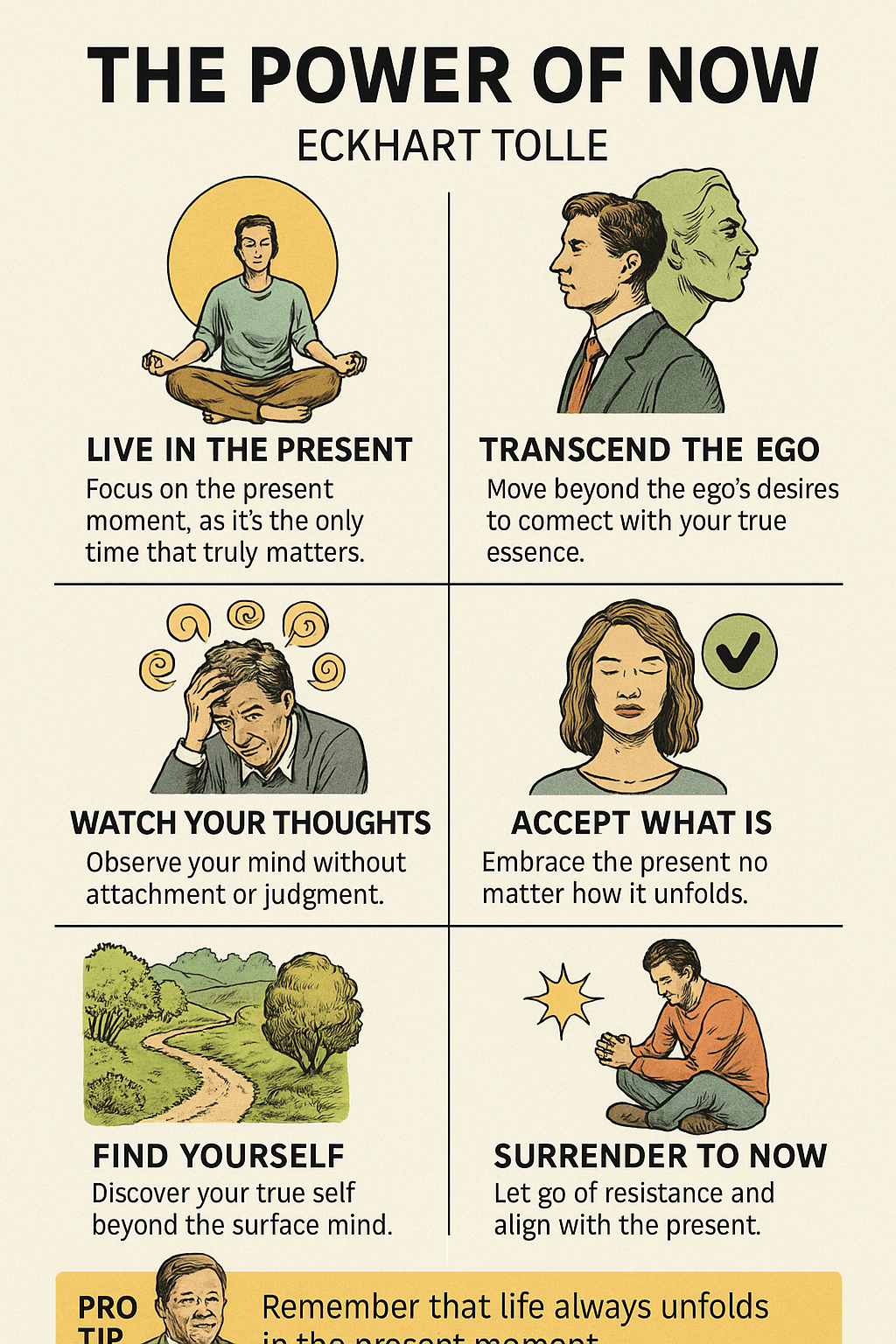
  • The Power of Now by Eckhart Tolle: 6 Mindfulness Insights for Daily Growth

    The Power of Now by Eckhart Tolle: 6 Mindfulness Insights for Daily Growth

    Eckhart Tolle’s The Power of Now is a guide to spiritual awakening and mindfulness. It teaches that the only reality is the present moment, and that self-reflection and awareness of “now” can free us from anxiety about past or future . The book mixes spiritual traditions to show how identifying too much with thoughts leads to suffering, while anchoring in the present brings peace . Tolle even offers simple practices—like mindfulness exercises and slowing down—to help readers embed presence into daily life

    Focusing on the present moment grounds us in reality. Living in the Present: Tolle reminds us that “only the present moment is real and only the present moment matters” . When we fully engage in what we’re doing—whether it’s breathing, eating, or walking—we experience life without the burden of past regrets or future worries. Practical takeaway: Choose one routine task (like washing dishes or drinking tea) and commit to doing it with full attention. Notice sights, sounds, and sensations to anchor yourself in now.

    Transcending the Ego

    Tolle teaches that much of our pain comes from the ego: the mind’s voice that identifies with stories of “me” and “mine” . This egoic self constantly compares, fears, and seeks control, keeping us trapped in anxiety. By recognizing that our true self is separate from this running commentary, we weaken the ego’s grip. Practical takeaway: When a thought or label (“I am stressed,” “I am not smart,” etc.) arises, notice it with curiosity instead of judgment. Remind yourself, “I am not my thoughts.” This simple shift chips away at the ego’s illusions over time.

    Watching Thoughts

    One of Tolle’s core practices is to observe your thoughts instead of being swept away by them . He suggests watching the mind as if you were listening to a radio in the background—acknowledge thoughts without getting caught up in their drama. This conscious observation creates space between “you” and your mind, making negative patterns lose power. Practical takeaway: Try a 3-minute mental check-in. Sit quietly and count your breaths. When thoughts appear, label them briefly (“thinking,” “worrying,” etc.) and return to the breath. This trains your awareness to be the observer.

    Accepting What Is

    Resistance to the present moment causes unnecessary suffering. Tolle emphasizes acceptance: allowing life to be as it is, without automatically calling experiences “good” or “bad” . Paradoxically, accepting what is doesn’t mean passivity; it means engaging with life from a clear, centered place. When we stop fighting reality, we find calm and clarity. Practical takeaway: The next time something frustrating happens (a traffic jam, a mistake, bad news), pause and say to yourself, “It is what it is.” Take a few deep breaths, then respond calmly. Over time, this small practice lowers stress.

    Finding Your True Self

    Underneath the constant stream of thoughts, Tolle says, lies our true self: the awareness or “being” that is always present . This deeper identity is loving, whole, and constant, beyond ego and mental labels. It’s accessible whenever thoughts subside. Practical takeaway: Spend 1 minute scanning your body and noticing the space around you. You’ll discover a still, silent presence under the surface. Remember this sense of “being” – it’s your true self, always available in the present moment.

    Surrendering to Now

    Tolle describes surrender as the art of letting go of resistance to the present. In the book’s introduction he recalls hearing “resist nothing,” and how that realization ended his fear . When we stop insisting on control and accept what the moment brings, we experience flow and inner freedom. Practical takeaway: In any stressful situation today, try this mantra: “I accept what is.” Repeat it softly, especially if anxiety rises. Notice how surrendering a little helps you respond more wisely, step by step.

    1% Better Daily Challenge

    Commit to one small step of presence today. For example: Before you check your phone in the morning, take two deep breaths and feel your feet on the ground. Notice one new thing in your room. This tiny pause gives your mind a 1% reset toward awareness. Over time, these daily micro-steps add up to major growth.