Author: SkillStacked

  • Book of the Day: Deep Work by Cal Newport

    Book of the Day: Deep Work by Cal Newport

    In an age of endless distractions, Deep Work shows that the ultimate productivity hack is the ability to focus relentlessly on what truly matters.

    1. Deep Work Is Your Superpower

    “The ability to perform deep work is becoming increasingly rare at exactly the same time it is becoming increasingly valuable in our economy. As a consequence, the few who cultivate this skill, and then make it the core of their working life, will thrive.”

    Summary: In today’s noisy world, deep work – the act of focusing without distraction on a demanding task – is like a superpower. Cal Newport argues that while shallow tasks and quick online hits are common, the capacity for sustained focus has become rare and highly valuable . Mastering this skill helps you learn hard things faster and produce higher-quality results. In short, deep focus on the wildly important tasks is what sets top performers apart from the constantly busy majority. High-performers consciously reject the modern obsession with multitasking and social media grazing, choosing instead to prioritize the work that truly moves the needle.

    Practical Takeaway: Make undistracted focus your daily priority. Identify your highest-value activity each day and give it a dedicated block of distraction-free time. By treating your attention as your most precious asset, you’ll quickly gain an edge and thrive in a world of shallow busyness .

    2. Quality Over Quantity – Intensity Beats Time

    “High-Quality Work Produced = (Time Spent) x (Intensity of Focus)”

    Summary: Simply clocking more hours doesn’t guarantee output – what counts is how intensely you work during those hours. Newport reminds us that an hour of pure, undistracted concentration can produce more progress than a day full of task-switching . Studies even suggest that novice deep workers max out at ~1 hour per day, while experts top out around 4 hours of true deep work in a day . Pushing beyond this limit leads to fatigue and diminishing returns. This is why “when you work, work hard. When you’re done, be done.” Top creators often budget just a few golden hours for critical work, guarding their intensity and then fully disengaging to recharge. By working in focused sprints and avoiding the trap of endless pseudo-work, you actually accomplish more in less time.

    Practical Takeaway: Work in focused bursts and honor quitting times. Schedule deep work sessions of 60–90 minutes for your most important tasks, working with full intensity and no interruptions. Then disconnect completely – no after-hours “just checking email” . This rhythm of intense focus and deliberate rest will skyrocket your productivity and prevent burnout.

    3. Build Rituals & Routines (Willpower Is Limited)

    “The key to developing a deep work habit is to move beyond good intentions and add routines and rituals to your working life designed to minimize the amount of your limited willpower necessary to transition into and maintain a state of unbroken concentration.”

    Summary: Don’t rely on willpower alone to dive into deep work – systemize it. Newport emphasizes that human willpower is a finite resource, more like a tired muscle than an unlimited well . The solution is to make deep focus a habit through rituals. This could mean starting work at the same early hour with noise-cancelling headphones on, or having a strict pre-work routine (like a cup of coffee, shutting the door, and putting your phone on airplane mode). By scheduling deep work blocks on your calendar and creating a set routine (time, place, duration, and rules for your session), you eliminate the mental effort of deciding when or how to focus . Over time, this discipline becomes part of your identity – you are someone who shows up consistently for deep sessions, no motivation needed.

    Practical Takeaway: Turn deep work into a daily ritual. Carve out a regular window for intense focus (e.g. every morning 8–10 AM) and protect it fiercely. Use supportive habits – a tidy workspace, a set start time, a “focus” playlist – to cue your brain that it’s time to go deep. By reducing reliance on willpower and sticking to a routine, you’ll embed deep work into your lifestyle and get more done with less mental strain.

    4. Embrace Boredom & Resist Distractions

    “You’ll struggle to achieve the deepest levels of concentration if you spend the rest of your time fleeing the slightest hint of boredom.”

    Summary: The ability to focus is like a muscle – and constant distraction is junk food. Newport delivers a hard truth: if you grab your phone at every idle moment and never allow yourself to be bored, you’ll find it nearly impossible to tolerate the boredom of deep work . Our brains adapt to the quick dopamine hits of social media, notifications, and entertainment-on-demand, leaving us chronically distracted . To undo this, we must practice being bored. Embrace activities that don’t give instant gratification – take a walk without your phone, let your mind wander, single-task on a mundane chore. This “boredom training” toughens your focus muscle. When you can sit with a problem without itching to check email or Instagram, you can reach the kind of deep concentration where real breakthroughs happen. Remember: focus is a skill you cultivate, not just a switch you flip when you need it.

    Practical Takeaway: Disconnect and train your attention span. Institute phone-free times in your day and resist the urge to seek stimuli during every lull. For example, set a rule that you won’t check any apps during the first hour of your morning, or practice doing nothing while waiting in line. By being comfortable with boredom, you’ll actually regain control of your mind and be ready to dive into deep work when it’s time .

    5. Quit the Shallows – Limit Social Media & Busyness

    “For many, there’s a comfort in the artificial busyness of rapid e-mail messaging and social media posturing, while the deep life demands that you leave much of that behind.”

    Summary: Shallow work – like incessant emails, meetings, and social media – can chew up your day and create the illusion of productivity. Cal Newport argues that to unlock your best work, you must “drain the shallows,” meaning aggressively minimize non-essential tasks and distractions. This might mean quitting or curtailing social media usage, reducing pointless meetings, and saying “no” more often. He suggests evaluating each tool (Facebook, Twitter, etc.) by whether it significantly supports your professional or personal values – if not, eliminate it. Remember, being busy is not the same as being productive. Multitasking and trying to do it all leads to mediocrity. As Newport puts it, clarity about what matters provides clarity about what does not. Focus on a few meaningful goals and let go of the rest . By leaving behind the comfort of busyness, you free up time and energy for work that truly counts.

    Practical Takeaway: Cut the shallow distractions mercilessly. Simplify your digital life – try a 30-day social media fast or limit checking news/email to a couple of short windows a day. Batch routine tasks (emails, admin work) to the afternoon so your mornings are free for creation. Prioritize deep work over reactive busywork. It might feel uncomfortable at first, but guarding your attention from the shallow stuff will give you hours of your day back and empower you to produce exceptional results instead of average output.

    6. Deep Work = Meaningful Work (Flow and Fulfillment)

    “To build your working life around the experience of flow produced by deep work is a proven path to deep satisfaction.”

    Summary: Deep Work isn’t just about getting more done – it’s about building a life centered on meaningful achievement rather than mindless activity. Newport draws on the psychology of “flow,” the state of total immersion in a challenging task, which is often deeply rewarding. When you routinely engage in deep work, you invite more of these satisfying flow states into your day. You also treat your work as a craft to be honed, which gives a sense of purpose and pride in whatever you do . This focus on depth over distraction leads to a more fulfilling professional life. Instead of ending the day wondering if you actually accomplished anything real, you experience the quiet joy of meaningful progress. In short, a deep life is a good life – one where you can end each day knowing you spent your time on things that matter.

    Practical Takeaway: Seek depth for greater fulfillment. Approach your work as a craft and allocate time to get into flow on important projects. By reducing shallow distractions and immersing yourself fully in worthwhile challenges, you’ll not only get more done – you’ll feel more satisfied and purposeful in your day-to-day life.

    Key Takeaways from Deep Work:

    Focus is a force multiplier: Deep, undistracted work on important tasks produces far more value than scattered effort. Intensity trumps hours: Four hours of deep work beats  eight hours of busywork. Work with full focus, then rest to recharge. Habits over willpower: Build rituals and routines to make deep focus a natural part of your day – don’t wait for inspiration, systemize it. Embrace boredom, ignore glitter: Strengthen your attention by resisting constant distraction. A bit of boredom builds mental muscle for sustained concentration. Drain the shallows: Be ruthless in cutting out low-value activities (excessive social media, needless tasks). Prioritize depth over busyness to create meaningful output.

    Final Challenge: Starting tomorrow, schedule a deep work session (even 30 minutes to start) for a project that matters to you – no distractions, no interruptions. Protect that time like a meeting with your future self. As Cal Newport would challenge us, step away from the shallow noise and dive deep – you’ll be amazed at the progress and satisfaction that follow. Good luck, and happy focusing!

  • 🧠 Daily Kaizen: Remove a Doomscrolling Trigger

    🧠 Daily Kaizen: Remove a Doomscrolling Trigger

    Today’s improvement is about protecting focus and reclaiming time.

    🔧 Action:

    Pick one trigger that leads to mindless scrolling (e.g. TikTok app, Instagram stories, YouTube homepage).

    → Remove it or disable its access point.

    🧠 Why:

    These digital black holes cost more than time — they burn attention, steal motivation, and kill momentum.

    🪜 Kaizen Stack:

    Remove 1 trigger today Replace it with a tool or environment that pulls you forward (e.g. WordPress dashboard, Kindle app, Google Docs)

  • 1% Better Today 💥

    1% Better Today 💥

    Most people focus on what to add to their diet.

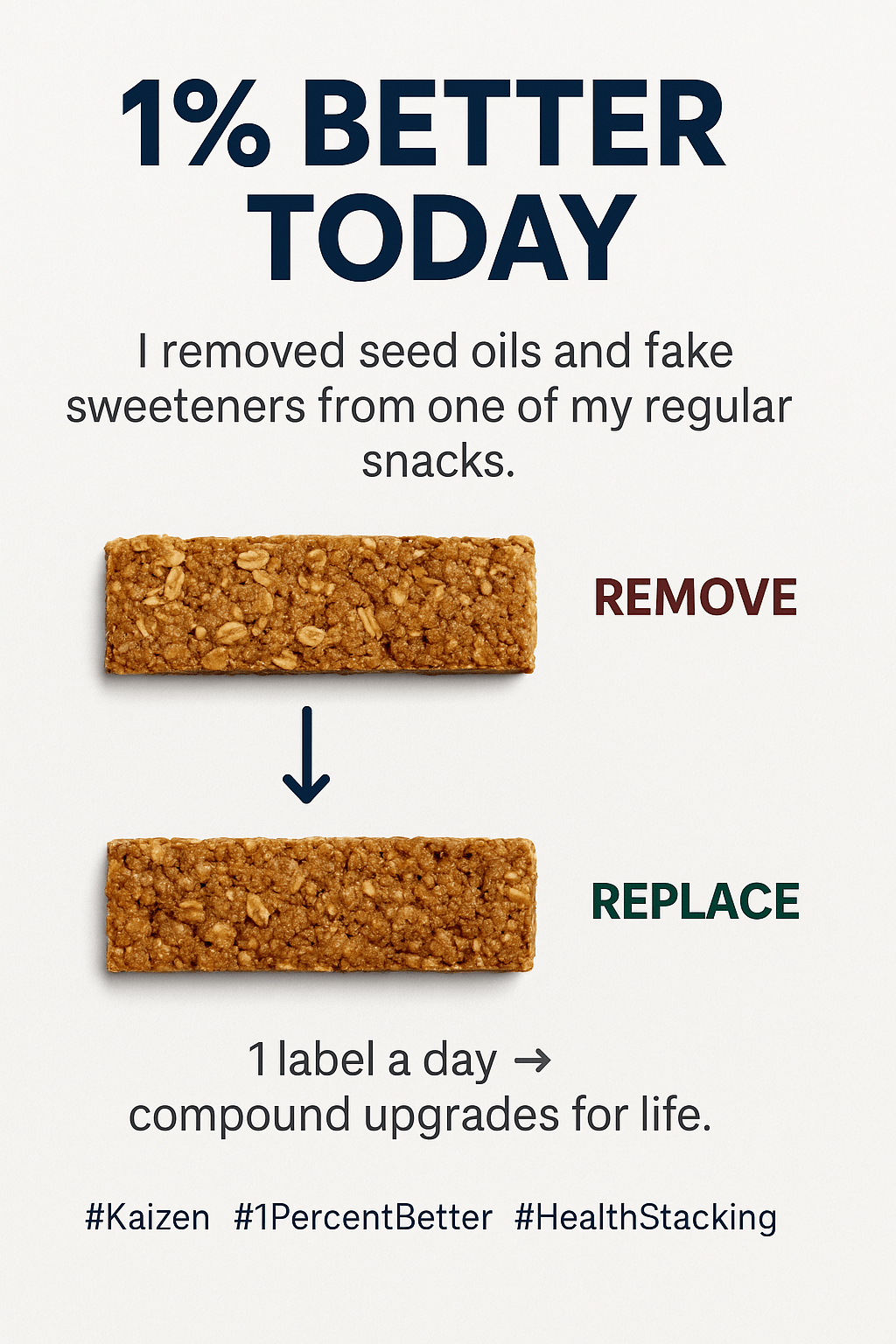
    Today I focused on what to remove.

    I checked the label on one of my regular “healthy” snacks — turns out it was full of seed oils and fake sweeteners.

    🧠 Small change: I replaced it with a cleaner option.

    📈 Long-term win: Better hormones, digestion, and energy.

    1 label a day → compound upgrades for life.

  • Why Most People Fail at Skill Building—And How to Fix It

    Why Most People Fail at Skill Building—And How to Fix It

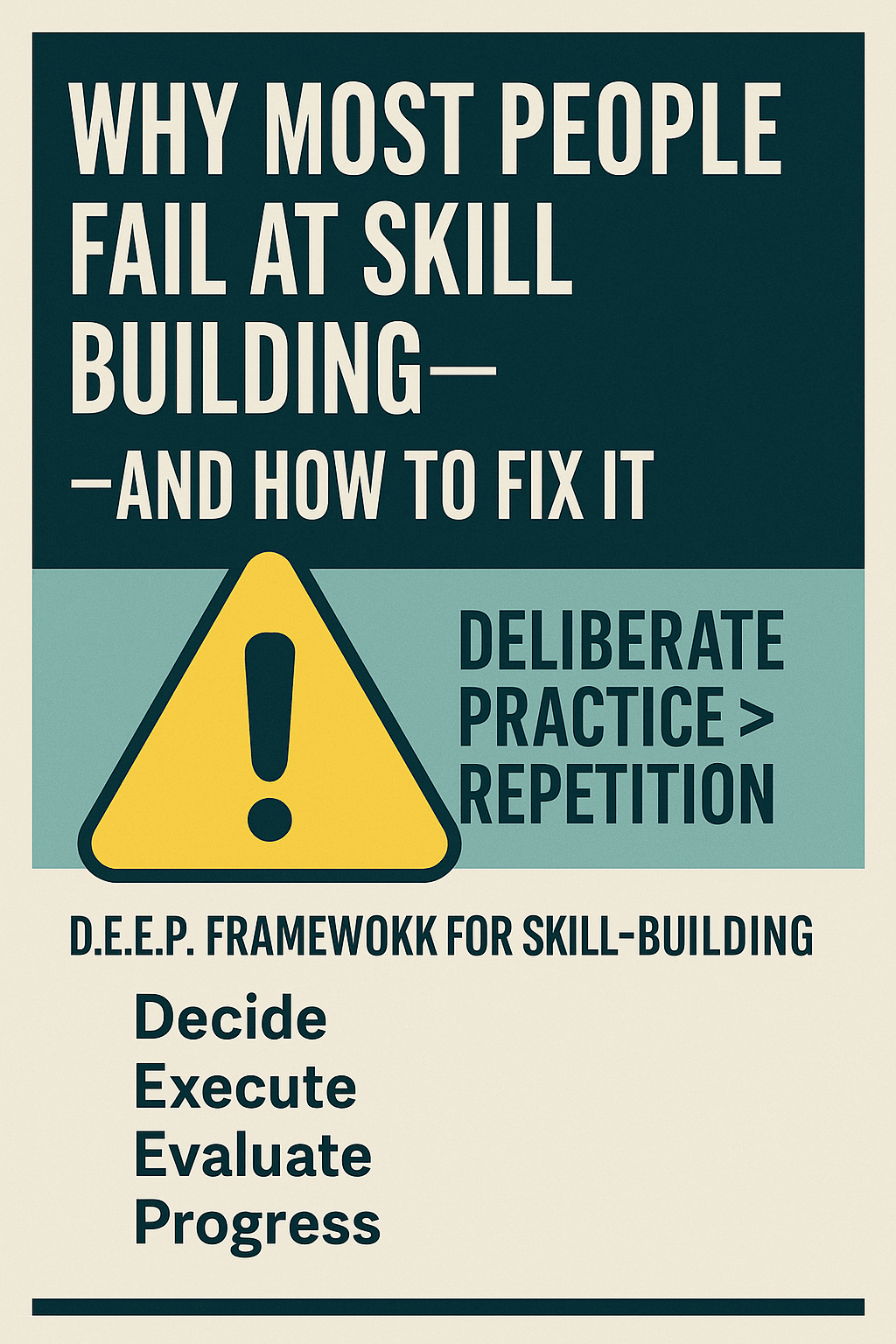
    85% of people quit learning a new skill before they ever master it . Why? Most are practicing wrong and end up discouraged.

    Common Pitfalls:

    Jumping in without clear goals (starting on impulse, then losing focus) . Mistaking passive learning for progress (watching tutorials without real practice) . Relying on mindless repetition with no feedback (reinforcing bad habits instead of improving).

    Deliberate Practice > Repetition: Not all practice is created equal. Simply grinding out hours on a skill doesn’t guarantee growth – you can repeat a bad technique 1,000 times and not get better . Deliberate practice, on the other hand, means practicing with purpose and focus. It’s about targeting specific weaknesses with full concentration and clear goals . This approach leads to real improvement, session after session. In fact, studies of top performers show their mastery was built on countless hours of deliberate practice – not just time on task .

    The D.E.E.P. Framework for Skill-Building:

    Decide: Pick one skill and set a clear, meaningful goal. Avoid vague aims or chasing every “shiny” new skill – clarity beats confusion. Execute: Commit to a consistent practice schedule. Focus on quality over quantity – each session should be purposeful. (You’re literally rewiring your brain with each focused repetition .) Evaluate: Regularly reflect and seek feedback. Identify what isn’t working and adjust. A coach, mentor, or even self-review can pinpoint weaknesses to fix . Progress: Raise the bar as you improve. Push slightly beyond your comfort zone each time – doing something a bit better or harder in every practice session ensures continuous growth .

    Mastery isn’t about how much you practice; it’s about how you practice. Practice with intention, and you’ll join the few who turn effort into real results.

  • Book of the Day: The War of Art by Steven Pressfield

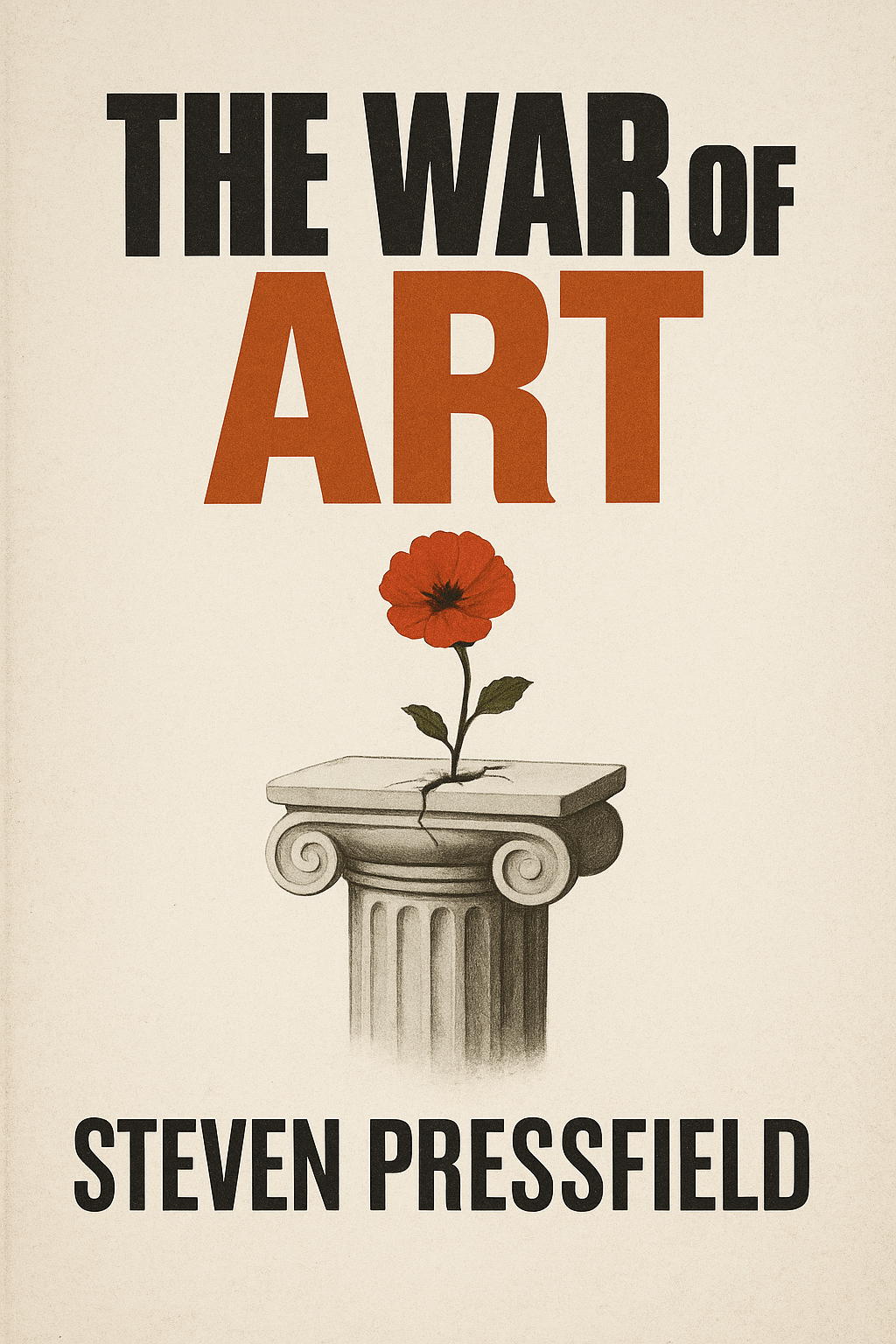
    Book of the Day: The War of Art by Steven Pressfield

    Core Message in a Nutshell

    The War of Art is a battle plan for creators and entrepreneurs to defeat the inner enemy that keeps them from doing their work. The core message: our greatest barriers to high performance are not external, but internal. Pressfield names this invisible opponent “Resistance” – the force of self-sabotage that manifests as procrastination, fear, self-doubt, excuses, and anything that stops you from doing what you need to do . According to Pressfield, Resistance stands between the life you live now and the “unlived” life of your highest potential . The War of Art teaches that by adopting a professional, disciplined mindset, we can conquer this Resistance and unleash our creative potential .

    Key Lessons for High-Performance Creators

    Know Your Enemy: Resistance. The first step is recognizing the enemy within. Pressfield defines Resistance as a universal internal force that “opposes any act that might lead to personal growth or creativity,” often disguising itself as rational excuses . Have you ever decided to start a project or a healthy habit, only to find yourself procrastinating or rationalizing it away? That’s Resistance at work . It’s not personal weakness – everyone faces Resistance when trying to do something worthwhile. In fact, the more important a goal is to your soul or growth, the more Resistance you’ll feel toward it . Pressfield even calls Resistance “the most toxic force on the planet,” responsible for more unhappiness than poverty or illness . Actionable Insight: Expect Resistance daily and don’t take it as a sign to quit – take it as a sign that what you’re attempting truly matters. Commit to fighting it by starting your important work each day no matter what .

    Turn Pro – Embrace Discipline and Consistency.

    Pressfield’s antidote to Resistance is to “turn pro.” This means treat your passion like a professional job, not a hobby. High performers show up every day, no matter what – whether they feel inspired or not . Turning pro is a mindset shift: you commit for the long haul, set a schedule, and do the work rain or shine . Professionals don’t make excuses or wait for motivation; they punch the clock and get it done. As Pressfield notes, the amateur is at the mercy of moods, but the pro “focuses on mastering the craft,” knowing that success (and inspiration) is a by-product of consistent effort . Actionable Insight: Adopt a workman-like ethos in your creative life. Schedule daily time for your craft and stick to it religiously – same time, same place, like it’s your job. By showing up consistently, you build momentum and signal to yourself (and others) that you take your calling seriously .

    Use Fear as Fuel.

    Rather than avoiding fear, Pressfield boldly argues that fear is a compass pointing you toward the work that matters most. “Are you paralyzed with fear? That’s a good sign,” he writes – it means you’re doing something important . In The War of Art, fear and Resistance are two sides of the same coin: the more scared you are of a creative endeavor or risky goal, the more sure you can be that you need to pursue it . Fear is an indicator of potential growth. High-achievers feel fear but move forward anyway, using it as adrenaline rather than a brake. If a project makes you anxious – launching that business, writing that book, stepping on that stage – that’s probably the very thing you must tackle . Actionable Insight: Don’t shy away from what scares you. Identify one task that excites you and terrifies you – then take action on it precisely because it scares you. As Pressfield puts it, “Fear tells us what we have to do” , so let it guide you toward the work that will make the biggest impact.

    Love the Process, Not the Outcome.

    One hallmark of the professional mindset is focusing on the work itself rather than fortune, fame, or even the final product. Pressfield insists that we must do our work for its own sake, not for applause or rewards . In high-performance terms, this is about intrinsic motivation – finding satisfaction in the process of creation and improvement. The War of Art introduces the idea of being “territorial” about your work: deriving fulfillment from the act of doing it, instead of measuring yourself by external hierarchies or validation . When you focus on the process, you free yourself from worrying about others’ opinions or perfect outcomes. Paradoxically, this leads to better results and more persistence, because you’re fueled by passion and purpose, not ego. Actionable Insight: Whatever your field, commit to the craft itself. Set aside ego and external metrics, and fall in love with the day-to-day grind of honing your skills. For example, if you’re a writer, write every day because you are a writer, not because you need a bestseller. Consistent practice and a love of the process will eventually attract the outcomes you desire .

    Play the Long Game (Patience and Persistence).

    High achievers know that meaningful success is a marathon, not a sprint. Pressfield drives home that persistence is what separates pros from amateurs. The professional is in it for the long haul – he doesn’t quit when things get hard or when accolades are delayed . There’s a powerful line in the book about the cost of slacking off: “The professional has learned better. He respects Resistance. He knows if he caves in today, he’ll be twice as likely to cave in tomorrow.” In other words, every day you skip work makes it harder to get back in the saddle the next day. So, don’t break the chain. By showing up consistently and patiently, you compound your gains. Pressfield also notes that success often comes as an unexpected by-product of dedication – when you put in the work day after day, opportunities and “luck” tend to follow . Actionable Insight: Be patiently relentless. Commit to your practice for the long term, whether or not you see immediate results. When you feel the urge to procrastinate or give up, remember that consistency is your competitive advantage – every session counts. Stick with it, especially on the days you don’t want to. Over time, your discipline will pay off in mastery and momentum.

    Memorable Quote

    “Are you paralyzed with fear? That’s a good sign. Fear is good. Like self-doubt, fear is an indicator. Fear tells us what we have to do.” – Steven Pressfield

    This fiery quote encapsulates Pressfield’s message that the emotions we often run from are actually arrows pointing us toward our true calling. Embrace the fear and do it anyway.

    Your Action Prompt for Today

    Identify one important task you’ve been avoiding due to Resistance or fear – that one thing you know would move you forward (perhaps it’s writing a page, hitting the gym, making a tough call). Commit to working on it for just 30 minutes today, no excuses. Set a timer, start right now, and fight through any Resistance. By taking action in the face of fear and discomfort, you’ll be winning your own “War of Art” today. Good luck – now get after it!

  • ✅ Skill of the Day: How to Keep a ‘Done’ List (Not Just a To-Do List)

    ✅ Skill of the Day: How to Keep a ‘Done’ List (Not Just a To-Do List)

    You’re not unproductive.

    You’re just forgetting what you actually got done.

    We obsess over what’s left — but we rarely track what we’ve already conquered.

    That’s where the ‘Done’ List comes in.

    🔁 How It Works:

    At the end of the day, write down everything you finished, no matter how small: Sent that message Did the workout Read 5 pages Didn’t check Instagram during work Drank more water than usual

    🧠 Why It Works:

    Shifts your focus from incomplete to accomplished Builds confidence through proof Reinforces the identity of someone who executes

    🧱 Pro Tip:

    Start with just 3 wins a day.

    You’ll be shocked how much you’re actually doing.

    📘 Don’t just plan your progress — record your proof.

  • Book of the Day: The Obstacle Is the Way by Ryan Holiday

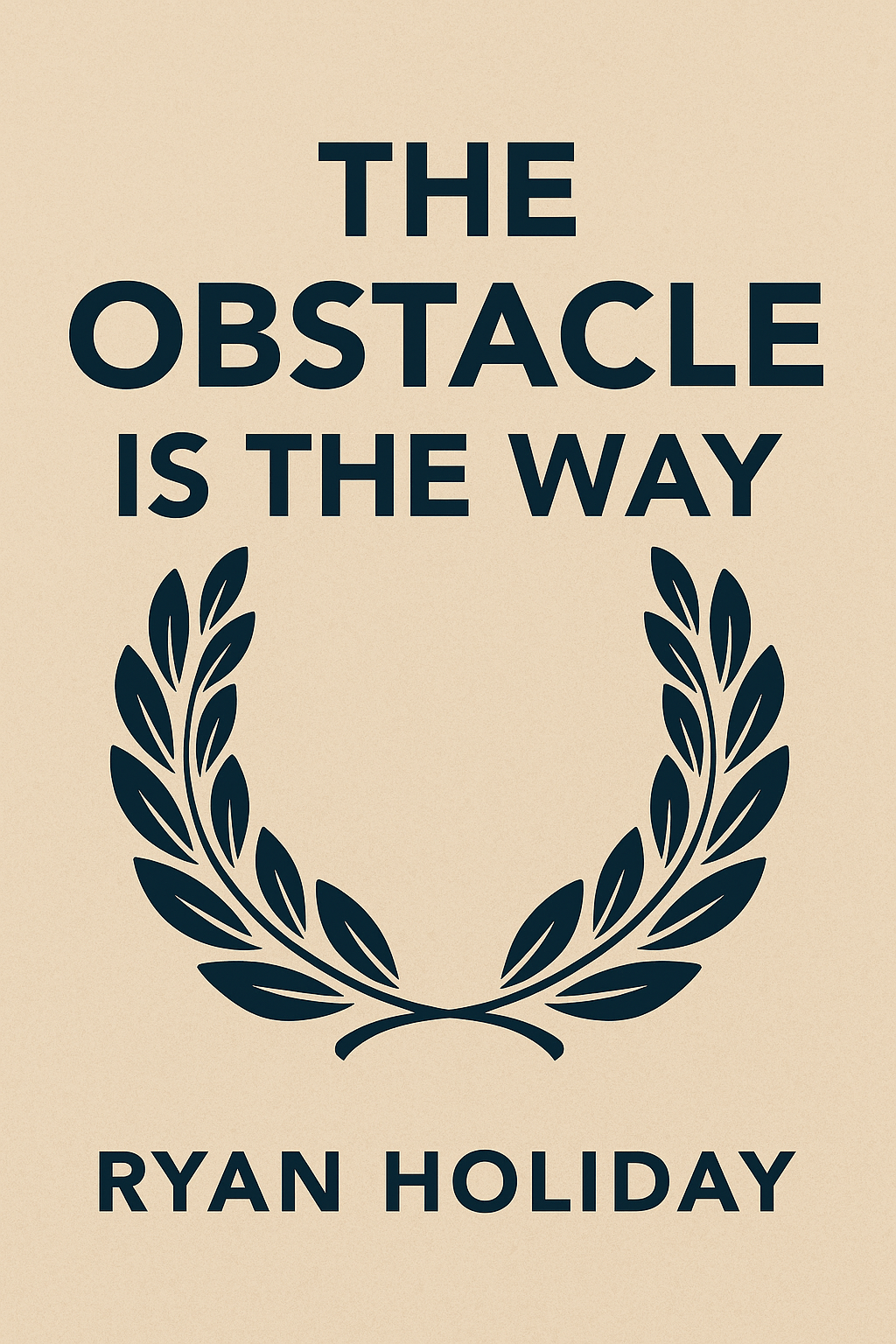
    Book of the Day: The Obstacle Is the Way by Ryan Holiday

    The Obstacle Is the Way by Ryan Holiday is a modern manifesto for turning adversity into advantage. A cult classic embraced by athletes, entrepreneurs, and leaders, it offers a framework for overcoming the obstacles life inevitably throws at us . The core idea, drawn from ancient Stoic wisdom, is that how we respond to challenges defines us . As Marcus Aurelius wrote, “The impediment to action advances action. What stands in the way becomes the way.” Instead of seeing roadblocks as setbacks, Holiday shows that each obstacle can become an opportunity to practice virtue, build strength, and move forward .

    Key Takeaways: Stoic Strategies for Overcoming Obstacles

    Holiday’s method centers on three interrelated disciplines—Perception, Action, and Will —forming a reliable approach to any challenge. Here are five powerful ways to apply these principles immediately:

    Reframe Your Perspective: When faced with a problem, choose to see it objectively rather than with fear or frustration. Our perceptions can be a source of strength or weakness—there is no good or bad until we assign meaning to events . By staying calm and seeing things as they are (without exaggeration or panic), you can spot the opportunity hidden in each obstacle instead of feeling defeated .

    Focus on What You Can Control: Direct your energy only toward what you can change, and let go of the rest. Stoics teach that zeroing in on your own actions and attitudes (and not obsessing over external factors) greatly magnifies your power and effectiveness . When you stop wasting effort worrying about things outside your control, you free up mental bandwidth to solve the problem at hand more creatively and efficiently .

    Take Decisive Action: No amount of worry or theory will remove an obstacle—only deliberate action will . Holiday emphasizes directed, persistent effort: tackle the issue step by step, using ingenuity and courage rather than brute force . Even small wins build momentum. Don’t wait for perfect conditions or permission to start; as Holiday bluntly advises, stop waiting for a miracle and start looking for angles to make progress . In short, action is the antidote—boldly do what you can, and do it right now.

    See Failure as Feedback: Every setback is a lesson in disguise. “Failure shows us the way—by showing us what isn’t the way,” Holiday writes . Instead of interpreting failure as a permanent defeat, view it as valuable feedback. Each unsuccessful attempt reveals what to adjust or avoid next time (recall Thomas Edison’s 10,000 “ways that won’t work”). Adopting this attitude turns failures into data points on the path to success, keeping you resilient and motivated to try new approaches until you triumph .

    Build Inner Resilience (Will): Some challenges can’t be changed; they can only be endured and met with character. Holiday encourages building an “Inner Citadel” of strength that no external adversity can break . This means preparing yourself mentally to handle hard times and choosing to find meaning in hardship rather than despair. For example, Abraham Lincoln endured lifelong bouts of depression yet used that suffering to develop profound patience, humility, and compassion in service of a cause greater than himself . By cultivating quiet endurance, humility, and faith that “this too shall pass,” you fortify your will . With a resilient mindset, even the worst trials become fuel for growth.

    Embrace the Obstacle – Closing Thoughts

    In essence, The Obstacle Is the Way reframes life’s difficulties as the raw material for greatness. Obstacles are not roadblocks to success—they are the path to success. Every challenge provides a chance to practice excellence and strengthen yourself . As Holiday summarizes: “See things for what they are. Do what we can. Endure and bear what we must.” Adopt this mindset, and the obstacles that once intimidated you will become stepping stones on your journey of self-mastery.

  • 🌱 Daily Kaizen: Ask One Curious Question Today

    🌱 Daily Kaizen: Ask One Curious Question Today

    Most conversations are just noise.

    But one genuine question can change a relationship, a room — even a life.

    Today, pause before you talk.

    Ask one person something that actually matters:

    “What’s been on your mind lately?” “What’s something you’re excited about?” “What would you do if you weren’t afraid?”

    Then listen — fully. No waiting to speak. No fixing. No judgment.

    Curiosity is a superpower.

    It makes people feel seen.

    And seen people never forget you.

    🧠 Be interested, not just interesting. That’s how you stack connection.

  • 🧠 Skill of the Day: How to Be Consistent Without Motivation

    🧠 Skill of the Day: How to Be Consistent Without Motivation

    Motivation is a lie.

    Consistency only comes when you stop relying on feelings — and start relying on systems.

    Here’s how I built consistency I can trust:

    Identity first. I stopped trying to “get motivated.” I asked: What would a disciplined person do today? Design friction. I deleted distractions. No motivation needed when there’s nothing tempting me to stop. Daily 1% wins. No heroic efforts. Just one brick every day — no matter what. Pre-decide your actions. If you have to think about it, you’ll find a reason not to. Pre-decide. Execute. Done. Make your system unmissable. My routine is easier to do than to avoid. That’s by design.

    Motivation fades. But systems keep showing up.

    🧱 Discipline is a system — not a feeling.

  • 📚 Book of the Day: The Obstacle Is the Way by Ryan Holiday

    📚 Book of the Day: The Obstacle Is the Way by Ryan Holiday

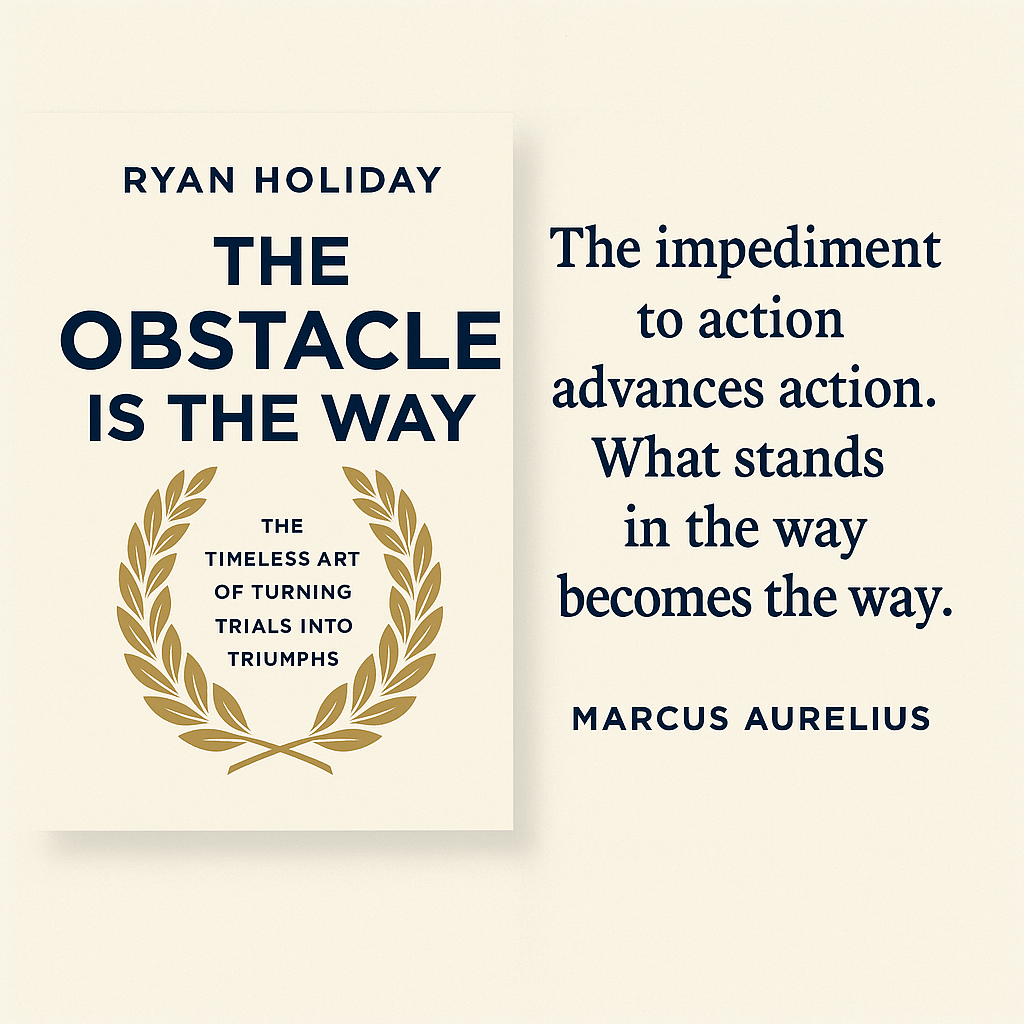
    “The impediment to action advances action. What stands in the way becomes the way.”

    — Marcus Aurelius

    This is the Stoic formula for turning adversity into fuel.

    In The Obstacle Is the Way, Ryan Holiday revives the ancient philosophy of Stoicism and shows how history’s most resilient figures — from emperors to athletes — used obstacles as training grounds.

    The core idea: obstacles don’t block the path — they are the path.

    💡 Core Ideas:

    1. Perception is everything

    You can’t always control what happens, but you can always control how you interpret it.

    Train yourself to stay calm, see clearly, and find opportunity inside challenge.

    “Choose not to be harmed — and you won’t feel harmed.”

    2. Action is the cure

    Don’t wallow. Don’t freeze. Don’t retreat.

    Move forward — even if it’s inch by inch. The key to momentum is deliberate action.

    “Action is commonplace. Right action is not.”

    3. Will is your final fortress

    Some obstacles can’t be beaten. But your attitude — your inner citadel — can’t be broken without your permission.

    “You will come across obstacles in life — fair and unfair. And you will discover, time and again, that what matters most is not what these obstacles are but how you see them, how you react to them, and whether you keep your composure.”

    🛠 Skill Stacker Take:

    The Obstacle Is the Way is mental jiu-jitsu for builders.

    Your blog post flops? Good. Now you know what doesn’t work.

    You feel resistance to writing today? That’s the training.

    Your idea gets ignored? Perfect — you’ll learn how to pitch it better.

    Obstacles aren’t setbacks. They’re proof you’re on the right path.

    Lean in. Flip them. Use them.

    That’s 1% better, Skill Stacker style.