Category: Book of the Day

  • Book of the Day: The Slight Edge by Jeff Olson

    Book of the Day: The Slight Edge by Jeff Olson

    Overview

    The Slight Edge is a personal development classic that delivers one clear message: small, everyday choices compound into massive success (or failure) over time. Olson describes his philosophy as “a way of thinking… that enables you to make the daily choices that will lead you to the success and happiness you desire” . In other words, there’s no secret formula or grand leap to success – it’s about doing the little, seemingly insignificant things consistently until the outcomes snowball in your favor. The book shows that anyone can leverage this “slight edge” by using tools they already have (habits, attitude, time) to create powerful results from simple daily activities . It’s an empowering message for creators, writers, and entrepreneurs: your 1% daily improvements and disciplined actions, however minor they seem, are the gateway to extraordinary success.

    Key Takeaways (for Creators, Solopreneurs & Builders)

    Commit to Small Daily Wins – They Compound Over Time: Every big success is built on consistent small actions. Olson famously distills his formula: “consistently repeated daily actions + time = unconquerable results” . For example, improving by just 1% each day makes you 365% better in a year . Whether it’s writing 300 words daily for your blog or reaching out to one new client, those tiny efforts add up. Time and consistency are your allies – as Olson puts it, “time will be your friend or your enemy; it will promote you or expose you” . In practical terms, this means showing up every day even when the payoff isn’t immediate, trusting that your gradual gains will compound into significant results.

    Master the Mundane – Easy to Do, Easy Not to Do: The tasks that lead to success often seem trivial in the moment. They’re easy to do, but just as easy not to do . Skipping your morning writing session or neglecting that marketing email won’t ruin you today, but repeating such lapses over time can quietly put you on a downward curve. Olson warns that the difference between success and failure is often “so subtle, so mundane, that most people miss it” . Successful people separate themselves by doing the boring, beneficial tasks that others ignore. “Successful people do what unsuccessful people are not willing to do” – like writing one page even on uninspired days, or making that extra sales call when you’d rather relax. Embracing discipline in these little choices, especially when you don’t feel like it, gives you the slight edge. Over time, the mundane daily disciplines lead to remarkable outcomes, while daily neglect leads to regret .

    Your Philosophy Shapes Your Success: Olson argues that mindset is the root of achievement. “Your philosophy creates your attitudes, which create your actions, which create your results, which create your life.” In short, how you think about daily discipline and improvement sets the tone for your journey. If you believe small actions don’t matter, you’ll act accordingly – and stall. But if you adopt a philosophy that every day is an opportunity to grow, you’ll approach tasks with a productive attitude.

    This is self-mastery 101: cultivate a positive, growth-oriented mindset that fuels consistent action. For a solopreneur or creative, this might mean viewing each blog post, each design draft, each incremental code update as an important step in the long game. Olson encourages readers to develop success habits (like reading 10 pages of a good book daily, or practicing a skill every day) because these habits reinforce a winning philosophy. Over time, a humble daily routine – backed by the right mindset – produces stellar results. Attitude and perspective make all the difference in turning simple disciplines into success .

    Play the Long Game – Patience and Perseverance: The Slight Edge drives home that success is a long-term journey of planting and nurturing, not a one-time event. Olson writes, “There is a natural progression to everything in life: plant, cultivate, harvest.” The trouble is, many people want to skip the cultivation and jump straight to reaping rewards. But just as in farming, you can’t harvest the same day you plant. In your creative or business endeavors, consistency and patience are non-negotiable. Results often start off invisible – nothing seems to happen in the first weeks or months of effort . That’s when most people get frustrated and quit, or chase a shiny new idea. Don’t fall for the “instant success” illusion: embrace the process. Keep refining your craft, publishing content, building your product, even when progress is hard to see. Olson advises following the full Plant–Cultivate–Harvest cycle and not expecting something for nothing . If you cultivate long enough – keeping at those daily improvements – the harvest will come. Think in terms of years, not days. This long-game mindset is what separates the 5% who achieve extraordinary success from the 95% who lead a mediocre life . For an online business builder, that means focusing on sustainable growth and learning, rather than chasing overnight results. Stay the course, and let your efforts compound with time.

    Skill Stacker Take

    At Skill Stacker, we live and breathe the Slight Edge philosophy. The book’s core idea – that small daily wins lead to massive success through compounding effort – is the very foundation of our brand. Every article you write, every piece of code you push, every design tweak you make is a building block stacking toward your goals. Olson’s message validates our belief that consistency beats intensity: doing the 1% improvements daily and staying patient through the process. This is long-game thinking incarnate – the recognition that real mastery and business growth come from accumulated effort over time, not one-off strokes of genius. The Skill Stacker take is simple: embrace the Slight Edge in your own journey. Commit to those everyday disciplines and trust the process. When you do, you’ll create a momentum that’s hard to stop – the compounding curve of progress that turns skill stackers into success stories. Remember, the grind you put in today may seem small, but it’s paving the way for tomorrow’s big win. In Olson’s words, greatness is always in the moment of the decision – the decision you make today to show up and do the work, however small. Keep stacking those skills and wins daily, and watch the slight edge work its magic.

  • Book of the Day: Digital Minimalism by Cal Newport

    Book of the Day: Digital Minimalism by Cal Newport

    Digital Minimalism: Choosing a Focused Life in a Noisy World by Cal Newport is a guide to decluttering your digital life and reclaiming real focus. Newport – best known for Deep Work – argues that less can be more when it comes to technology. The core message is to be intentional and selective about the apps, sites, and devices you allow into your routine. In fact, Newport defines digital minimalism as “a philosophy of technology use in which you focus your online time on a small number of carefully selected and optimized activities that strongly support things you value, and then happily miss out on everything else” .

    In an age of infinite feeds and notifications, Newport reminds us that our current tech-saturated lifestyle didn’t happen by accident. “We didn’t sign up for the digital lives we now lead… [they were] crafted in boardrooms to serve the interests of a select group of technology investors,” he observes . In other words, Big Tech has designed platforms to be as addictive and all-consuming as possible. “People don’t succumb to screens because they’re lazy, but instead because billions of dollars have been invested to make this outcome inevitable,” Newport writes . The antidote, he argues, is to develop a conscious digital philosophy – using tech on your terms to support your goals, and confidently ignoring the rest.

    Key Takeaways for Digital Discipline and Focus

    Focus on What Truly Matters: Identify the handful of digital activities that genuinely add value to your work and life, and eliminate the rest. Digital minimalists focus their online time on carefully selected pursuits that support their values and happily miss out on everything else . For a creator or entrepreneur, this might mean doubling down on creating content or building your product, while saying no to endless scrolling and shiny new apps that don’t serve your mission. Perform a 30-Day Digital Declutter: Newport suggests a technology “fast” to reset your habits . Take a 30-day break from all optional online activities – social media, news feeds, streaming – that aren’t essential. Use this period to rediscover offline hobbies and real-world pleasures. After 30 days, reintroduce digital tools only if they serve a deep value or purpose in your life . Many find that after a month off, they regain control and no longer feel the urge to revert to past habits.

    Reclaim Solitude (Disconnect to Think): In a world of constant connectivity, “solitude deprivation” – never being alone with our thoughts – is a real threat . Make it a discipline to carve out tech-free time for reflection. That could mean daily walks without your phone, journaling, or simply sitting unplugged. Newport points out that great ideas and self-awareness flourish in moments of quiet, when you can actually hear yourself think. Protect these pockets of solitude to recharge your mind and boost your creativity and mental well-being.

    Prioritize Creation Over Consumption: Be a producer, not just a consumer. Instead of defaulting to passive scrolling whenever you have a free moment, direct that time toward demanding, high-value activities that sharpen your skills or create something meaningful . This might be writing a blog post, designing a new project, practicing your craft, or having a deep conversation with a friend. Newport calls this the Bennett Principle – favor the real-world and the challenging over the easy hits of digital distraction . You’ll gain far more satisfaction from building or learning than from another hour lost on a timeline.

    Use Social Media Like a Tool, Not a Crutch: For many in online business, social media is unavoidable – but use it intentionally. Treat it as a professional tool for specific outcomes, not a default pastime. Newport advises curating your digital environment: follow only high-quality accounts that inform or inspire you, and unfollow the noise . Set strict boundaries like checking messages or feeds during a designated 30-minute window, rather than sporadically all day . By scheduling your usage and sticking to purpose-driven tasks (e.g. publishing your work or engaging with your community), you prevent the platforms from hijacking your attention.

    Skill Stacker Take

    At Skill Stacker, we’re all about building online leverage through focus, clarity, and action – and Digital Minimalism is a perfect rallying cry for this mission. Newport’s insights remind us that disciplined tech use isn’t about deprivation; it’s about creating space for what matters most. When you clear out the digital clutter, you make room for deep work and creative output that moves the needle. For creators, writers, and entrepreneurs, this means more time to hone your craft and execute on your ideas, and less time fighting distractions.

    The takeaway is both inspirational and practical: your attention is your most valuable asset. By adopting digital minimalism, you reclaim that asset and direct it toward your goals. This focused intentionality is a force multiplier – it leads to clearer thinking, higher-quality work, and ultimately greater impact in your online business. Digital Minimalism challenges you to step up as the architect of your digital life. Embrace it, and you’ll find that what you choose not to do with technology is just as important as what you do, enabling you to stack your skills and build your success with unwavering focus.

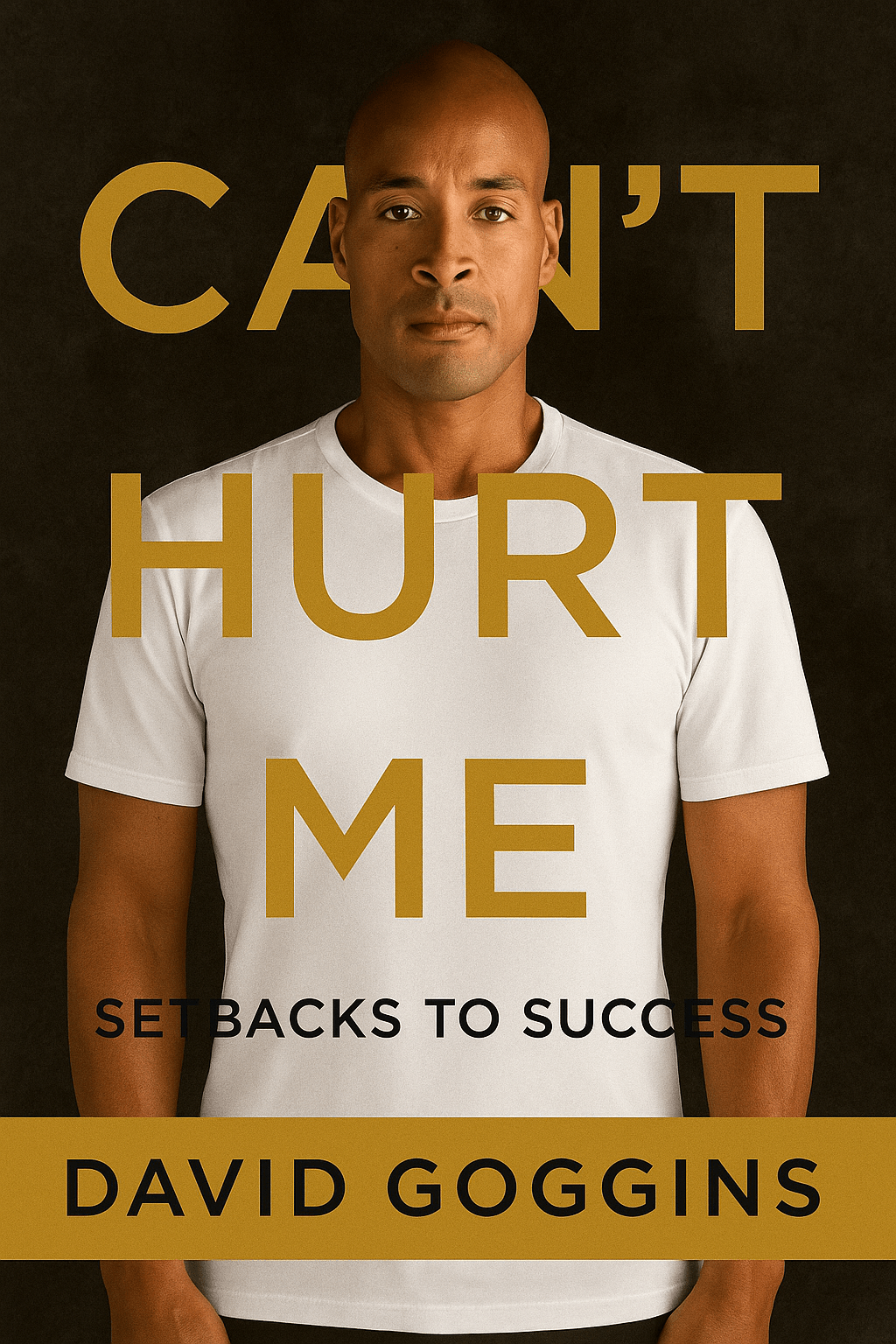
  • Can’t Hurt Me: Forge an Unbreakable Mind

    Can’t Hurt Me: Forge an Unbreakable Mind

    David Goggins’ story reads like a war journal. Born into abuse and grinding poverty , he turned every trauma into fuel. A former Navy SEAL and ultramarathon legend, Goggins literally wrote down phrases like “callus your mind” and “accountability mirror” to survive the hardest trials . Can’t Hurt Me is his unflinching playbook: a raw, no-excuses roadmap to mind over matter. Let’s break down his core mindset tools and how you can use them.

    The 40% Rule: You’re Only Getting Started

    Your brain is a liar. Goggins’ famous 40% Rule means: when your mind screams “I’m done,” you’ve only tapped ~40% of your potential . In practice, this meant that during a 135-mile Death Valley ultramarathon, Goggins felt completely spent — yet somehow dug deeper and kept moving. In his weight-loss crusade he was 300 pounds, but refused to stop before losing 100 pounds in 3 months to qualify for Navy SEAL training . His mantra? “Don’t stop when you’re tired, stop when you’re done.”

    Actionable Insight: Next time you feel like quitting (a workout, a late-night project, a hard deadline), pause. Remember Goggins: you haven’t even reached your limit yet. Force yourself to do just 10–20% more work. For example, finish one more lap when your legs burn, or write one more paragraph when you feel “finished.” You’ll train your mind to tolerate far more than you think possible.

    The Accountability Mirror: Brutal Self-Honesty

    Goggins taught himself to look in the mirror every day and call himself out. He covered mirrors with sticky notes spelling out truths like “you’re fat” or “you’re not smart enough” . Every morning he faced the most important conversation of all – the one with himself – and confronted excuses head-on. If he saw weight gain, the note read “very fucking unhealthy” – a slap of honesty. If he felt weak, he posted reminders of how hard he needs to work. This daily drill forces radical accountability. No excuses. If you lie to yourself, you’ll never grow .

    Actionable Insight: Set up your own accountability mirror. Write 2–3 questions or statements on post-its (e.g. “Are you living up to your goals? Why not?” or “Stop coddling yourself!”) and stick them to your bathroom mirror. Each morning, stare yourself in the eye and answer honestly. Point out laziness or half-effort and demand better. This gut-check fuels discipline. Make it a ritual: the most powerful conversations you’ll have are the ones with yourself .

    Callus Your Mind: Embrace the Suck

    If hands can get calluses, so can your mind. Goggins “callused his mind” by willingly exposing himself to pain and boredom until the mental sting faded . He ran in the freezing rain, did brutal workouts, and relived trauma – over and over – until resistance vanished. “Some people say triple down on your strengths… but if you really want true mental toughness you have to triple down on your weaknesses. And that’s the only way you can callous your mind.” He literally embraced the suck of discomfort.

    Actionable Insight: Seek out a daily “suck workout” or challenge. It could be a freezing cold shower, a set of burpees to failure, a pre-dawn run, or diving into a topic you hate. The first time will hurt. The second time hurts less. Keep repeating. Each “initiation” adds another layer of mental callus. Over time, situations that once made you quit will barely phase you.

    Fill Your Cookie Jar – Strength from Successes

    Goggins carries an inner cookie jar of hard-won victories, and he dips into it whenever life gets brutal . These aren’t half-forgotten memories – he taps into the exact feelings of overcoming odds. As he says, “I actually tapped into the emotional state I felt during those victories… We all have a cookie jar inside us… Even if you’re feeling low and beat down by life right now, I guarantee you can think of a time or two when you overcame odds and tasted success.” Remembering those moments floods your system with confidence and strength.

    Actionable Insight: Create your own cookie jar. Keep a running list (in a notebook or phone) of past wins: times you crushed a goal, endured pain, or bounced back from failure. When you face a tough day, read through them. Feel the pride and power again. Your past toughness is proof you can handle today’s challenge.

    Key Battles That Forged the Goggins Mindset

    David’s core principles didn’t spring from a textbook – they were hammered out in real life:

    Abusive Childhood: He grew up abused by his father and living in fear on the family’s Skateland rink . Instead of breaking, this trauma made him obsessed with never feeling weak again. (“He wants you to be obsessed to the point where people will think you’re nuts,” is his warning .) Flipping the Script on Laziness: In his 20s he was 300 pounds and depressed. Horrified, he flipped a switch: in three months he blasted off the first 100 pounds so he could “get some purpose” . He learned that action cures fear, so he embarked on grueling training. Navy SEAL Hell Weeks: He became a SEAL after multiple attempts (including failing Air Force tech school and a heart surgery). Each failure and injury just fueled his obsession. He refused to quit, logging countless extra workouts. The message: “There are no shortcuts”, no governor on effort. Ultramarathon Legend: When he ran 135 miles through Death Valley (Badwater) in 2007, he nearly died on the course – but kept going. He used the 40% Rule on brutal mountain climbs and 130°F heat. His third-place finish (beating his own time by 4 hours!) was achieved by embracing every ounce of pain. Personal Mottos: After each ordeal, Goggins jotted down lessons. Hence the odd but powerful phrases: “Armor your mind,” “Get comfortable being uncomfortable,” “Perform without purpose” (meaning don’t train aimlessly) . These maxims defined his ethos.

    Each crucible chipped away excuses and built the Goggins philosophy: Comfort is the enemy of achievement. He learned that success comes from saying “no” to easy and “yes” to hardship, day after day.

    Who Can’t Hurt Me Is Not For

    This book is NOT a gentle read or fluffy pep-talk. It’s a merciless gut-punch. If you’re looking for shortcuts, feel-good affirmation, or an easy ride, move on. Can’t Hurt Me isn’t for:

    People content with comfort. (Goggins lives under constant self-imposed suffering to grow. If you don’t want to embrace the suck, this will feel insane.) Those who blame outside factors. (If you’re not willing to take 100% accountability for your situation, the accountability mirror will be brutal.) Anyone scared of hard work. (Goggins demands obsessiveness. He’s not into motivation as a feel-good vibe – he wants you so driven that others call you “fucking nuts” .) Readers seeking a quick fix. (These principles work only if you do the work. There’s no magic pill – he’ll make you own your failures and grind through them.)

    In short: if you expect coddling, this book will slap you. But if you crave real growth through relentless self-discipline, it will change your life.

    Ready to Get Hard? Reflect and Act

    Now the ball is in your court. Goggins sets the bar high to show you it can be done. Ask yourself: “What challenge am I going to push through today that I would normally quit?” Are you ready to confront your own mirror and push past 40%? The struggle begins now. Stand up, embrace the pain, and grow.

    What’s your first uncomfortable step? Choose one tiny pain point to tackle this week – a cold shower, an extra mile, an honest mirror check – and report back to you.

    Sources: Lessons and quotes above are drawn from David Goggins’ Can’t Hurt Me and related interviews/transcripts , as well as biographical summaries that reveal the real-life crucibles behind his mindset.

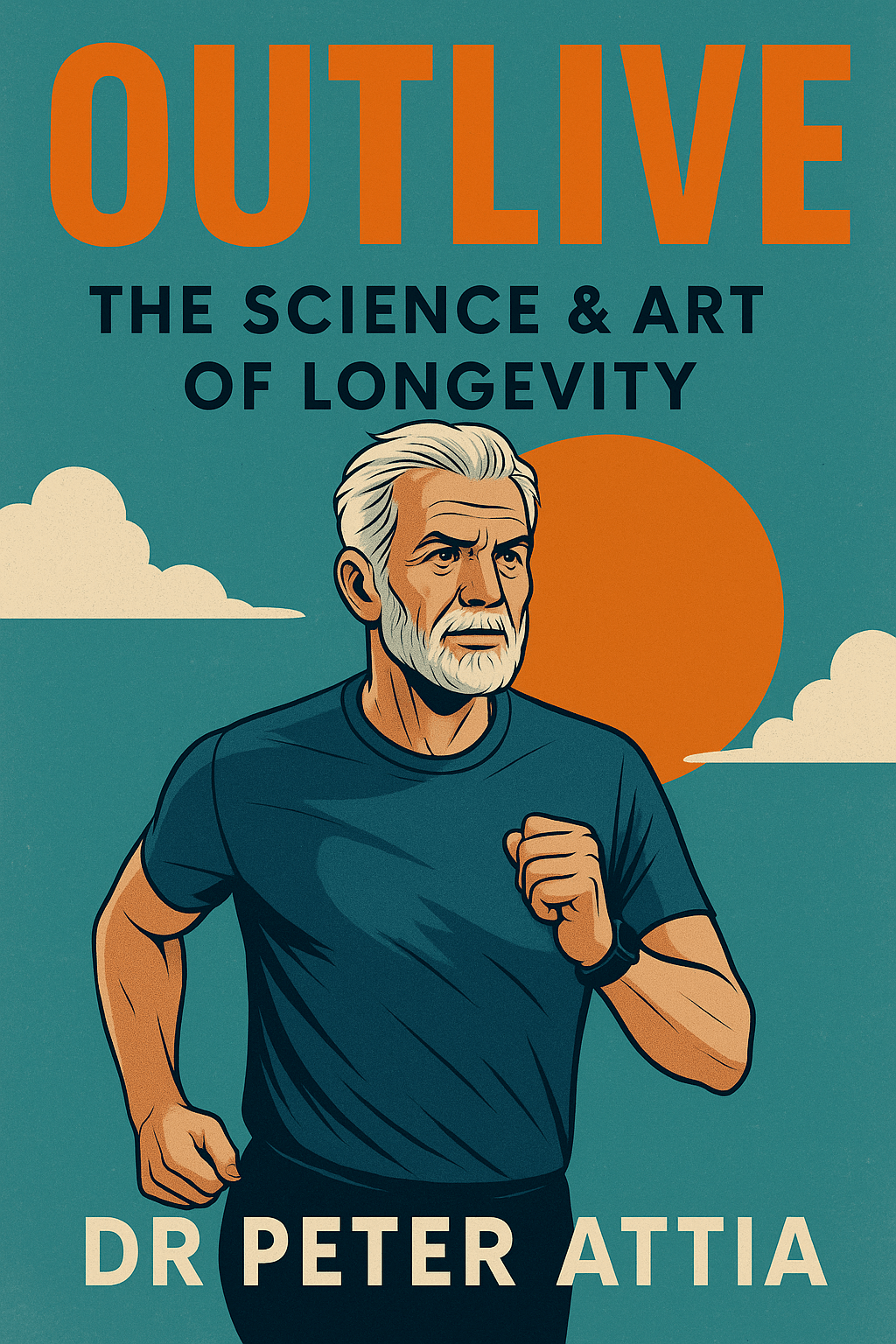
  • Book of the Day: Outlive — The Science & Art of Longevity by Dr. Peter Attia

    Book of the Day: Outlive — The Science & Art of Longevity by Dr. Peter Attia

    Have you ever felt that everything you thought about “healthy aging” might be wrong? In Outlive, Peter Attia shatters conventional wisdom and hands you the evidence-based playbook to truly live longer and better. This isn’t hype – it’s a no-nonsense blueprint for peak performance at any age. Attia, a Stanford-trained physician and longevity expert, argues that our current medical model (which he dubs “Medicine 1.0” and “2.0”) is fundamentally flawed . Instead of waiting for illness, he demands a radical proactive regime: treat aging like an engineering problem — track your health, catch threats early, and optimize your performance every day .

    The Four Horsemen and Medicine 3.0

    Attia identifies four killers driving most premature death: heart disease, cancer, Alzheimer’s/dementia, and type 2 diabetes/metabolic dysfunction. He dubs these the “Four Horsemen” of aging, arguing they dictate both how long we live and how well we live . The key is a radical pivot he calls Medicine 3.0 . No more reacting after the fact: under this model you hunt down problems early. For example, Outlive urges calcium scans for hidden plaque or routine cancer blood tests before any symptoms appear —completely flipping the script on how we use medicine.

    Bold Takeaway: Prevention is the new prescription. Think long-term: what’s your 80-year game plan? (Hint: it shouldn’t start at 80.) Medicine 3.0 is clear: catch problems early or prevent them entirely .

    The Four Pillars of Longevity

    So what do you actually do? Attia boils it down to four tactical pillars of health : exercise, nutrition, sleep, and emotional health. Ignore any one of these, and longevity suffers.

    Exercise: This isn’t optional. Attia flat-out calls exercise “the most potent longevity ‘drug’ in our arsenal” . The research backs it up: just 90 minutes of moderate exercise per week can slash your mortality risk (~14% lower) , and regular exercisers live a decade longer than couch potatoes . Zone 2 cardio, strength training, even agility work — Attia details how each form of movement upgrades your heart, muscles, and brain. Your muscles and mind will thank you. Nutrition: This is not another faddish diet sermon. Attia challenges conventional diet dogma . There’s no one-size-fits-all approach . Instead, he urges a nutrient-dense, whole-food focus (think Mediterranean-style eating, minimal refined sugar/alcohol) and encourages you to experiment and measure how your own body responds . He’s clear: severe calorie restriction can backfire — it can tax your immune system and lead to frailty —so prioritize quality and sustainability in your diet. Sleep: The undercover hero of health. Outlive warns that chronic sleep deficits wreck metabolism, immunity, and brain repair. Treat sleep as non-negotiable: consistency, a cool dark room, and proper duration are as critical as any workout or meal. Neglect it, and you’ll be stacking up disease risk by the decade (attacked obesity, diabetes, heart disease, even dementia). Emotional & Mental Health: Longevity isn’t just a physical game. Attia stresses that chronic stress, loneliness, and depression accelerate aging. Good relationships, purpose, therapy or mindfulness — these count as seriously as reps in the gym. Outlive shows that a resilient, engaged mind fuels all other pillars and keeps you sharp and motivated in your 80s and 90s.

    “I now consider exercise to be the most potent longevity ‘drug’ in our arsenal”  — a reminder that the basics (move more, eat real food, sleep well, manage stress) are far more powerful than any pill or supplement for a vibrant, long life.

    Personalization, Metrics and the Centenarian Decathlon

    No-nonsense cornerstone: measure everything, personalize relentlessly . Attia bluntly states there is no magic pill or single diet that fits all . You are a unique experiment: track your blood pressure, lipid panels, glucose responses, and even get advanced tests (coronary calcium scans, genetic risk screens, etc.). He even advises prescribing statins for prevention if your calcium score is sky-high . The motto: you can’t manage what you don’t measure.

    Attia also introduces the “Centenarian Decathlon.” Imagine the life you want at 100: what athletic and mental feats do you still want to pull off? A marathon? Writing a novel? Keep up with grandchildren? Now reverse-engineer: build a program today to preserve those specific abilities . This simple, inspiring concept reframes aging as a personal engineering challenge. Every workout or habit tweak is targeted at making that 100-year-old you possible.

    Bold Takeaway: Don’t guess — test and tune. Gather your data (wearables, bloodwork, scans) and only take aggressive action if anything looks off .

    Breaking (Goodbye to) Old Advice

    Outlive tears down outdated health mantras. Dietary cholesterol as a mortal enemy? Attia says it’s nuanced — some people handle eggs and saturated fat just fine . All calories being equal? He shows that quality matters, and extreme calorie-cutting often backfires . The “wait for symptoms” medical model? He flips it: find hidden plaque or early tumors long before they strike .

    You won’t find sugar-coated pills or vague platitudes here. Attia’s tone is tough-love: he wants you to embrace uncomfortable truths (for example, over 11% of Americans have diabetes right now ) and use that data to overhaul habits.

    Bold Takeaway: Challenge everything. If a health recommendation feels lazy or one-size, scrutinize it. Outlive teaches that breakthroughs come from hacking the system — using data, rejecting dogma, and training your body/mind to defy the status quo .

    Actionable Fitness & Lifestyle Hacks

    Outlive isn’t just theory — it’s packed with practical life tweaks. Here are some game-changing moves distilled for daily life:

    Move with a plan: Schedule consistent cardio (e.g. 3 sessions/week of 30–60 min Zone-2 rides or runs) and strength training (muscle = metabolic armor). Remember: 90 minutes/week of exercise yields huge returns , and every rep builds your future self. Eat for energy: Ditch ultra-processed junk and added sugars. Embrace whole foods: vibrant veggies, lean protein, healthy fats. Experiment: track your blood glucose or ketones to see which foods spike you — then dial your diet for stability. Sleep as your power-up: Prioritize 7–9 hours nightly. Fix your light exposure (bright days, dark nights) and keep a consistent bedtime. Small tweaks (no late caffeine, a cool dark room, wind-down routine) can revolutionize your daily energy and hormone balance. Build mental resilience: Make stress-management a daily habit — meditation, cold exposure, journaling, therapy, or whatever works for you. Cultivate strong social bonds and hobbies you love. Your mind is the command center of health; protect it. Set 10-year goals: Use Attia’s Centenarian Decathlon: list the feats you want at ages 70, 80, 100. Measure them yearly. This keeps you laser-focused on why you’re doing this (hint: for maximum life fulfillment). Track your metrics: Get annual labs (fasting glucose, lipids, inflammation markers). Know your family risks and discuss them with your doctor. If something’s off (e.g. rising blood sugar or a high calcium score), take action now.

    Each step here is a brick in your longevity fortress — and the beauty is they overlap with peak performance. When your cardiovascular fitness soars, energy and clarity follow. When your diet stabilizes blood sugar, productivity spikes and crashes disappear. When you nail sleep, workouts, mood, and focus all improve. This isn’t about giving up life’s pleasures; it’s about getting more out of life — longer and better.

    Conclusion: Defy Your Age

    Reading Outlive feels like a wake-up call. Dr. Attia doesn’t promise magic pills; he delivers a radical, disciplined framework. The message is empowering: you are in charge of your aging. There’s no reason to be passive — the science shows we can extend our healthspan with bold, intentional choices.

    In the end, Outlive is a manifesto for anyone serious about self-mastery. It’s about embracing hard truths (like over 11% of Americans have diabetes right now ) and taking relentless action.

    So here’s the challenge: Pick one area today and commit. Run a little farther, swap one processed snack for something real, carve out 15 minutes to meditate. Outlive shows you that small steps against the Four Horsemen compound into huge wins.

    Bold Takeaway: The best time to plant your longevity tree was yesterday; the second-best time is now. Attia’s Outlive arms you with the strategy — your mission is to execute. Read it, question it, and go improve yourself. Your future self will thank you.