Category: Emotional Intelligence

  • 🧠 Daily Kaizen #3 – Write One Sentence About How You Actually Feel Right Now

    🧠 Daily Kaizen #3 – Write One Sentence About How You Actually Feel Right Now

    Most people go years without asking themselves this:

    “How do I actually feel right now?”

    Not “how should I feel?”

    Not “how do I want to feel?”

    Just the truth.

    We’re trained to perform.

    To stay strong.

    To hide emotions behind jokes, tasks, and distractions.

    But suppressed emotion doesn’t disappear — it festers.

    And the antidote isn’t a 10-day retreat.

    It’s one honest sentence.

    🧩 Why this works:

    It activates emotional intelligence Interrupts unconscious coping mechanisms Creates a micro-moment of self-connection

    Even writing something like:

    “I feel flat and anxious, but I’m pretending to be fine.”

    is enough to reclaim power from the unconscious.

    💡 Your Kaizen Today:

    Take out your phone, notes app, or a scrap of paper and write this:

    “Right now, I feel ____________.”

    That’s it.

    No journaling.

    No judgment.

    No overthinking.

    Just one sentence. One truth.

    Because when you name it — you start to tame it.

    🧭 Why it matters:

    Small awareness creates massive change.

    This is one of those tiny habits that looks too simple to work —

    Until it becomes your emotional anchor in chaos.

    Try it right now. Then come back tomorrow.

    Because this is what we do here — one small win at a time.

    🔁 Follow Skill Stacked for a new Daily Kaizen every day.

    Small changes. Serious growth.

    Let’s build discipline that compounds.

  • 6 Transformative Lessons from The Untethered Soul by Michael A. Singer

    6 Transformative Lessons from The Untethered Soul by Michael A. Singer

    Imagine stepping out of the endless noise in your head and into a life of true freedom and joy. In The Untethered Soul, Michael A. Singer shows how you can untie yourself from fear, ego, and stress to live more fully in the present. These insights – about the inner witness, open heart, and letting go – aren’t just theory. They are practical keys to inner peace and growth. Read on for 6 life-changing lessons that make Singer’s teachings simple and inspiring, and discover how they can transform your mindset and life.

    Key Lessons from The Untethered Soul

    Lesson 1: You Are the Witness (Not Your Thoughts). Singer reminds us that you are not your inner monologue or your self-image. Instead, you are the awareness behind your thoughts – the calm observer of your mind . When you realize you’re watching thoughts (rather than being them), anxiety and self-doubt lose their grip. This shift is powerful: instead of being swept away by a negative thought (“I’m a failure”), you simply notice it and let it pass. In practice, this means pausing when stress hits and asking, “Is this really me, or just a thought I’m watching?” – a simple step that brings clarity and calm to your day. Lesson 2: Keep Your Heart Open (Let Energy Flow). Singer teaches that a healthy heart is always open, allowing energy, love, and inspiration to flow through . Every time we “close” our hearts – by clinging to anger, fear or past hurts – we block that positive energy. Personal growth and productivity skyrocket when we consciously choose openness instead. For example, after a tough day, you might practice relaxing your heart with a deep breath. Over time, this gentle habit “heals” emotional wounds and fills your life with greater compassion and creativity. As Singer says, an open heart is “the instrument of the heart as it was meant to be” – a source of unending love and openness . Lesson 3: Release and Surrender (Letting Go). The path to lasting peace comes from constant letting go of inner baggage. Singer emphasizes that every time you let go of anger, jealousy or pain, you fall “back into an ocean of energy” and inner light . In other words, surrender and acceptance are practical skills, not weakness. For busy professionals and emotionally aware people, this means noticing triggers (like criticism or a deadline panic) and deciding not to give them power. As Singer writes, “Deep inner release is… the path of nonresistance, the path of acceptance, the path of surrender” . Practicing this daily – pausing, breathing, and relaxing your grip on the thought – transforms stress into peace. Lesson 4: Commit to Inner Work (Find Liberation). True freedom comes from within. Singer says we each have the power to liberate our soul by doing the inner work of self-inquiry . He puts it bluntly: “the only price you have to pay is letting go of yourself” . In practice, that means being brutally honest with yourself about what holds you back – perfectionism, fear of rejection, the need to control outcomes – and then facing those fears head-on. This lesson resonates with anyone seeking growth: the minute you stop protecting your ego, you start to “steal freedom for your soul” . Embrace challenges (instead of avoiding them) and the reward is a lightness of being that comes from knowing you’re enough as you are. Lesson 5: Choose Unconditional Happiness. Singer argues that happiness is a choice and a practice, not a result. He encourages us to decide, right now, “you’re going to be happy from now on for the rest of your life” . That might sound simple, but it’s transformative. For example, when traffic jams or delays normally trigger frustration, tell yourself, “I choose peace right now.” This small act trains your mind. Singer calls this “the highest technique” to awakening . Personal development experts know that our mindset shapes our results – by choosing happiness (even in hard moments), you literally rewire your life toward more joy, resilience, and even creativity. Lesson 6: Live Fully (Death Teaches Life). Finally, Singer uses the mirror of mortality to inspire you to live more intensely now. He calls death “the best teacher of life” – meaning that remembering our limited time sharpens what truly matters . If you really believed life was short, what would you do today? Maybe you’d call that friend, take a risk, or let go of old grudges. This lesson is powerful: it invites you to fill every moment with presence and gratitude. As Singer puts it, if you live each experience fully, “death doesn’t take anything from you” . It’s a reminder to stop postponing happiness. You are alive now – so make every breath count.

    Your Next Step: Reflect and Act

    Now that you’ve seen these core ideas, it’s time to put them into practice. What thought or fear will you observe instead of believing today? What tiny tension can you release with a deep breath? Singer’s message is deeply personal: the real learning happens in your heart and mind, not just on the page. Consider picking up The Untethered Soul and letting it guide you further. In the meantime, start small. Maybe set an alarm to pause and check in with yourself once a day. Remember Singer’s words: “everything will be okay as soon as you are okay with everything” . Embrace that transformation. You have the power to untether your soul – one breath, one choice, one moment at a time.

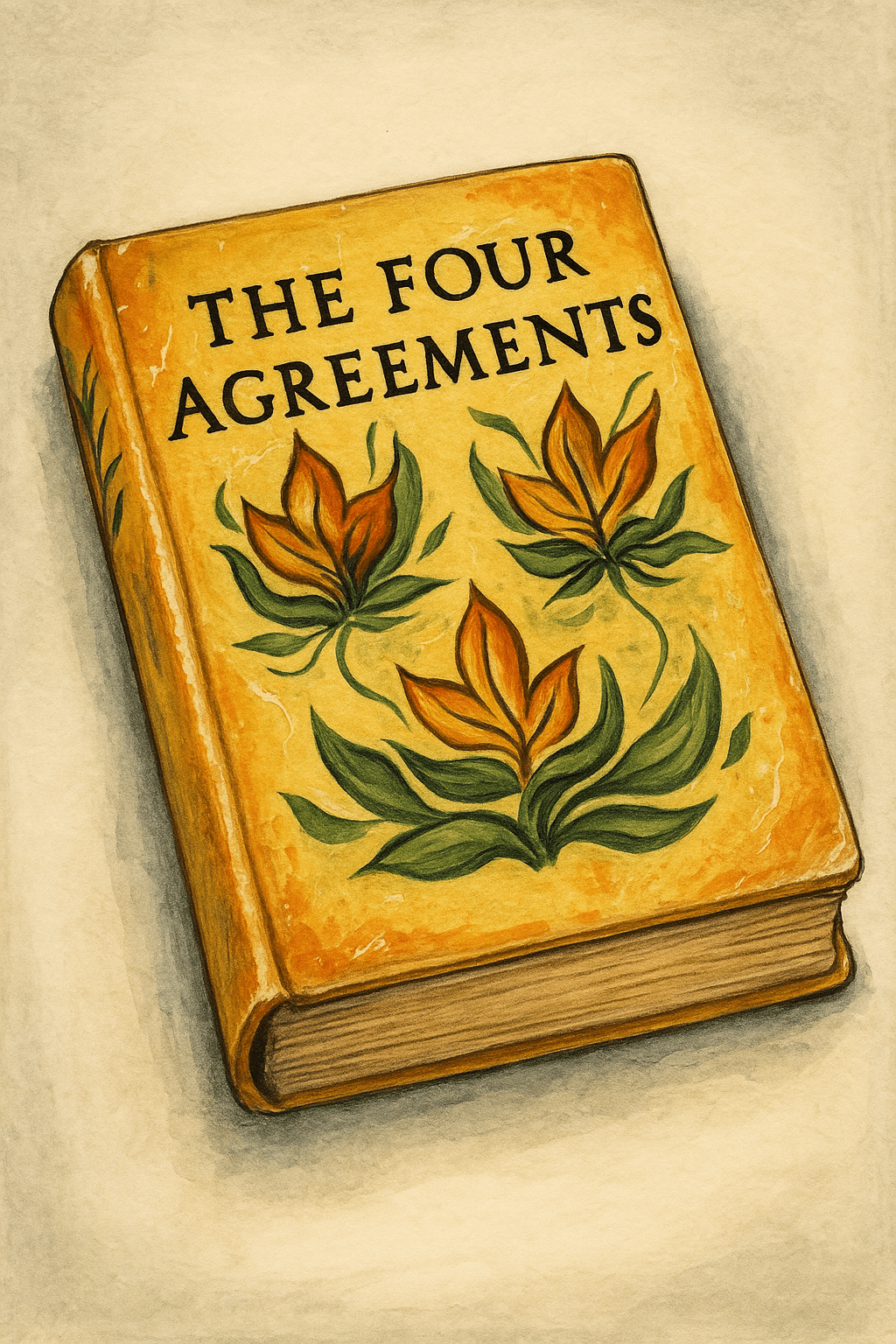
  • The Four Agreements by Don Miguel Ruiz: 4 Rules That Will Change Your Life

    The Four Agreements by Don Miguel Ruiz: 4 Rules That Will Change Your Life

    What if your life could be transformed by just four simple agreements?

    Don Miguel Ruiz’s The Four Agreements offers ancient Toltec wisdom in a modern package — and the results are radical. These aren’t fluffy affirmations. They are practical commitments to self-liberation.

    By breaking the mental “agreements” we’ve unconsciously made with fear, guilt, and conditioning, we unlock freedom, peace, and personal power.

    Let’s break down each of the Four Agreements and how to live them today.

    1️⃣ Be Impeccable with Your Word

    Your words create your world.

    Ruiz says this is the most important agreement. To be “impeccable” means to use your word with integrity — no gossip, no self-hate, no lies (especially to yourself). Speak truth. Speak life.

    🔁 Takeaway:

    Speak to yourself like someone you deeply love.

    Before speaking, ask: Is this kind, true, and necessary?

    2️⃣ Don’t Take Anything Personally

    Nothing others do is because of you — it’s a projection of their own world.

    When you take things personally, you hand your power to someone else’s emotional state. Ruiz says: “Even when a situation seems so personal, even if others insult you directly, it has nothing to do with you.”

    🔁 Takeaway:

    Someone cut you off, criticized your work, ignored your text?

    Say it to yourself: “That’s about them, not me.”

    3️⃣ Don’t Make Assumptions

    Assumptions create drama. Clarity creates peace.

    We assume people understand us. We assume we know their intentions. And then we get angry over things that aren’t even real. Ruiz urges: Ask. Clarify. Communicate.

    🔁 Takeaway:

    If something feels off, don’t spiral — ask.

    Just say: “Can I clarify something?”

    It saves relationships.

    4️⃣ Always Do Your Best

    Not perfection. Not overachievement. Just your best — and it changes daily.

    This agreement reminds us that our “best” will look different when we’re rested, stressed, or learning. But if you consistently give your honest best effort, you’ll avoid regret, shame, and self-judgment.

    🔁 Takeaway:

    Whatever you do today — training, working, resting — do it fully, with intention. That’s your best.

    💡 1% Better Challenge:

    Choose one agreement you’ve broken lately.

    Recommit to it just for today.

    Maybe it’s pausing to clarify (no assumptions) or saying something kind to yourself (impeccable word).

    One small act of integrity shifts everything.

  • The Mountain Is You by Brianna Wiest: 6 Powerful Insights on Self-Sabotage

    The Mountain Is You by Brianna Wiest: 6 Powerful Insights on Self-Sabotage

    Brianna Wiest’s The Mountain Is You: Transforming Self-Sabotage Into Self-Mastery reframes our inner obstacles as guides rather than judges. She explains that self-sabotage isn’t a sign of weakness but a misguided attempt to protect ourselves . The biggest “mountain” we face is often ourselves, reminding us “it is not the mountain that you must master, but yourself” . Through practical exercises, Wiest shows how to process emotions, rewrite personal narratives, and turn resistance into growth.

    1. Self-Sabotage as Protective Coping

    Wiest notes that self-sabotage comes from fear or unmet needs. “Self-sabotage is not a way we hurt ourselves; it’s a way we try to protect ourselves.” For example, procrastination can hide a fear of failure.

    Action: Notice a self-sabotaging habit (like avoiding a tough task). Ask yourself, “What am I afraid of?” and journal your answer. Understanding the fear behind it begins to dismantle the pattern.

    2. The Mountain = You (Facing Inner Obstacles)

    Wiest’s mountain metaphor shows that outward challenges usually point inward. She reminds us, “it is not the mountain that you must master, but yourself.” When a problem feels insurmountable, it often signals that part of you needs to grow.

    Action: Pick a current challenge (“your mountain”). Ask, “Could my mindset or habits be part of this obstacle?” Then make one small change (a thought shift or habit tweak) that helps you move forward.

    3. Process Your Emotions

    Emotional intelligence is key to breaking the cycle. Wiest outlines steps: understand what upset you, validate the feeling, then choose a course correction . Naming and allowing your emotions releases their hold, so you can choose a positive action.

    Action: Try a quick “feelings check” today. When something upsets you, pause and ask, “Why do I feel this way?” Name the emotion and allow yourself to feel it. Then note one small adjustment you can make to move closer to your goal.

    4. Rewrite Your Identity and Narrative

    Self-sabotage often reveals an outdated inner narrative . Wiest explains our self-image is built from past messages, so changing it is essential. By swapping an “I can’t do this” story for a more truthful belief, we free ourselves to grow.

    Action: Challenge one negative belief about yourself. If you think “I’m not good at this,” question it and replace it with a positive truth (e.g. “I can learn and improve.”). Write this new statement down and repeat it as an affirmation.

    5. Radical Responsibility

    Wiest emphasizes owning our power over life’s outcomes. She writes, “to become a master of oneself is first to take radical and complete responsibility for your life… it is not what happens, but the way one responds, that determines the outcome.” Blaming others keeps you stuck; owning your response gives you freedom.

    Action: Reflect on a recent setback. Instead of asking “Why did this happen to me?”, ask “What can I control here and how will I respond?”. Even owning small reactions (like choosing calm) immediately gives you more control.

    6. Becoming Your Future Self

    Wiest urges: “You must envision and become one with your future self, the hero of your life that is going to lead you from here.” Acting as if you are already that person begins to make it real.

    Action: Picture your most confident future self. What advice would they give you today? Write down one piece of that advice and do it now. For example, if health is important to your future self, take a quick walk as they would.

    1% Better Challenge

    Pick one insight above and apply it in a tiny way today. For example, do a quick “feelings check” (insight 3) when stress hits, or imagine your future self (insight 6) before deciding. These small 1% improvements accumulate into real momentum.


  • 💬 Daily Kaizen: Add One Real Compliment

    💬 Daily Kaizen: Add One Real Compliment

    Action:

    Give one genuine, specific compliment today.

    It could be spoken, texted, messaged — whatever feels natural.

    Examples:

    “You handled that situation really well.” “You’ve been so consistent lately — it shows.” “I appreciate how present you’ve been with me.”

    Why it works:

    Most people are starved for real validation.

    A sincere compliment deepens connection and boosts your mood too — not just theirs.

    🪜 Kaizen Stack:

    Real compliment → Deeper connection → More energy → Positive ripple effect

  • 🌱 Daily Kaizen: Ask One Curious Question Today

    🌱 Daily Kaizen: Ask One Curious Question Today

    Most conversations are just noise.

    But one genuine question can change a relationship, a room — even a life.

    Today, pause before you talk.

    Ask one person something that actually matters:

    “What’s been on your mind lately?” “What’s something you’re excited about?” “What would you do if you weren’t afraid?”

    Then listen — fully. No waiting to speak. No fixing. No judgment.

    Curiosity is a superpower.

    It makes people feel seen.

    And seen people never forget you.

    🧠 Be interested, not just interesting. That’s how you stack connection.

  • 🛡️ Skill of the Day: How to Set Boundaries Without Guilt

    🛡️ Skill of the Day: How to Set Boundaries Without Guilt

    Saying “no” isn’t selfish. It’s self-respect.

    If you constantly feel drained, resentful, or taken advantage of, it’s not because you’re too nice—it’s because your boundaries are too weak.

    But here’s the truth: You can set boundaries and still be kind. You can protect your time, energy, and mental health without guilt.

    Let’s break down how.


    🧠 1. Guilt Is a Signal, Not a Stop Sign

    Feeling guilty doesn’t mean you’re doing something wrong. It means you’re doing something new.

    Most guilt stems from old conditioning—people-pleasing habits, fear of rejection, or childhood patterns where saying “no” felt unsafe.m.youtube.com

    Instead of avoiding guilt, recognize it as a sign that you’re growing.

    “Guilt is not reality. It reminds us we are human… but it’s important to stay strong and really care for yourself when you set a boundary.”
    Reddit user on r/raisedbynarcissists reddit.com+1m.youtube.com+1


    🧭 2. Use “I” Statements and Keep It Simple

    You don’t owe anyone a long explanation.laconciergepsychologist.com+2noworrieswellness.org+2psychologytoday.com+2

    Clear, calm language works best:

    • “I’m not available for that.”
    • “I need time to recharge.”
    • “That doesn’t work for me.”

    Avoid over-explaining. The more you justify, the more room you give others to push back.noworrieswellness.org+4reddit.com+4self.com+4


    🧱 3. Remember: Boundaries Build Stronger Relationships

    Healthy boundaries aren’t walls—they’re bridges.

    They create clarity, reduce resentment, and foster mutual respect.

    As Sharon Martin, LCSW, notes:psychologytoday.com

    “Boundaries foster intimacy and connection because they create emotional safety which allows us to be vulnerable.” psychologytoday.com

    By setting limits, you show others how to treat you—and encourage them to do the same.verywellmind.com


    🧘 4. Practice Self-Compassion

    Setting boundaries is a skill, and like any skill, it takes practice.noworrieswellness.org+3psychologytoday.com+3heragenda.com+3

    Be patient with yourself.

    If you feel guilt creeping in, remind yourself:terricole.com+1yourtimetogrow.com+1

    • “I have the right to prioritize my needs.”
    • “Taking care of myself benefits everyone around me.”
    • “It’s okay to feel uncomfortable; growth often is.”

    🔄 5. Reframe “No” as a Positive

    Every time you say “no” to something that drains you, you’re saying “yes” to something that fuels you.

    Think of it this way:

    • Saying “no” to overtime = Saying “yes” to family dinner.
    • Saying “no” to a social event = Saying “yes” to rest.
    • Saying “no” to a toxic relationship = Saying “yes” to peace.

    This perspective shift can transform guilt into empowerment.


    🔧 Practice Drill: The Boundary Script

    Choose one area where you need a boundary—work, family, or friends.

    Write a simple script:

    • “I appreciate the offer, but I can’t commit to that right now.”
    • “I understand you’re upset, but I need to focus on my well-being.”
    • “I’m choosing to spend my time differently.”

    Practice saying it out loud. The more you rehearse, the more natural it becomes.


    🔥 Final Thought

    You’re not responsible for others’ reactions—you’re responsible for your actions.noworrieswellness.org

    Setting boundaries is an act of self-love, not selfishness.

    As you strengthen this skill, you’ll find that guilt fades, and confidence grows.