Category: FAQ of the day

  • ❓FAQ of the Day: Why Do I Quit When Things Get Hard?

    ❓FAQ of the Day: Why Do I Quit When Things Get Hard?

    You’re not weak.
    You’re not lazy.
    You just haven’t trained your mind to stay in the fight when it gets uncomfortable.

    But you can.


    🧠 Quitting Is a Pattern — Not a Personality

    Most people quit when things get hard because hard is unfamiliar.

    Pain hits. Frustration builds. Doubt creeps in.
    And your brain says: “This means stop.”

    Why?
    Because that’s what you’ve trained it to expect.


    🔁 Your Brain Follows Patterns

    Every time you quit when it hurts, you’re reinforcing the loop:

    • Effort → Discomfort → Escape → Relief.

    That’s addictive. But it’s not fixed.

    Discipline is just delayed reward.

    You don’t break the quitting habit by feeling stronger.
    You break it by doing one thing: staying in the fire just a little longer each time.


    🔨 Enter: The Goggins 40% Rule

    When you feel done, you’re at 40%.
    That’s the red zone where most people tap out—and where growth actually begins.

    So when it gets hard?
    You’re exactly where you need to be.

    “Suffering is the true test of life.” – David Goggins


    🔧 How to Rewire the Response

    1. Label It: Say out loud, “This is the part where I usually quit.”
      It separates you from the pattern.
    2. Set a Rule: When you want to quit, go 1 more round.
      • One more rep.
      • One more minute.
      • One more sentence.
    3. Track the Wins: Keep a log of when you stayed.
      Call it your “Didn’t Quit List.” Revisit it often.

    🧱 Final Thought

    You quit because no one trained you to stay.

    Now you know. So stay.
    And next time it hurts, smile.

    That’s the signal:
    You’re not failing. You’re forging something new.
  • FAQ of the Day: How Do I Know If I’m Actually Healthy?

    FAQ of the Day: How Do I Know If I’m Actually Healthy?

    There’s a big difference between looking healthy and being healthy. Six-pack abs don’t guarantee metabolic health. Running 10K doesn’t mean you’re sleeping enough. So what actually counts?

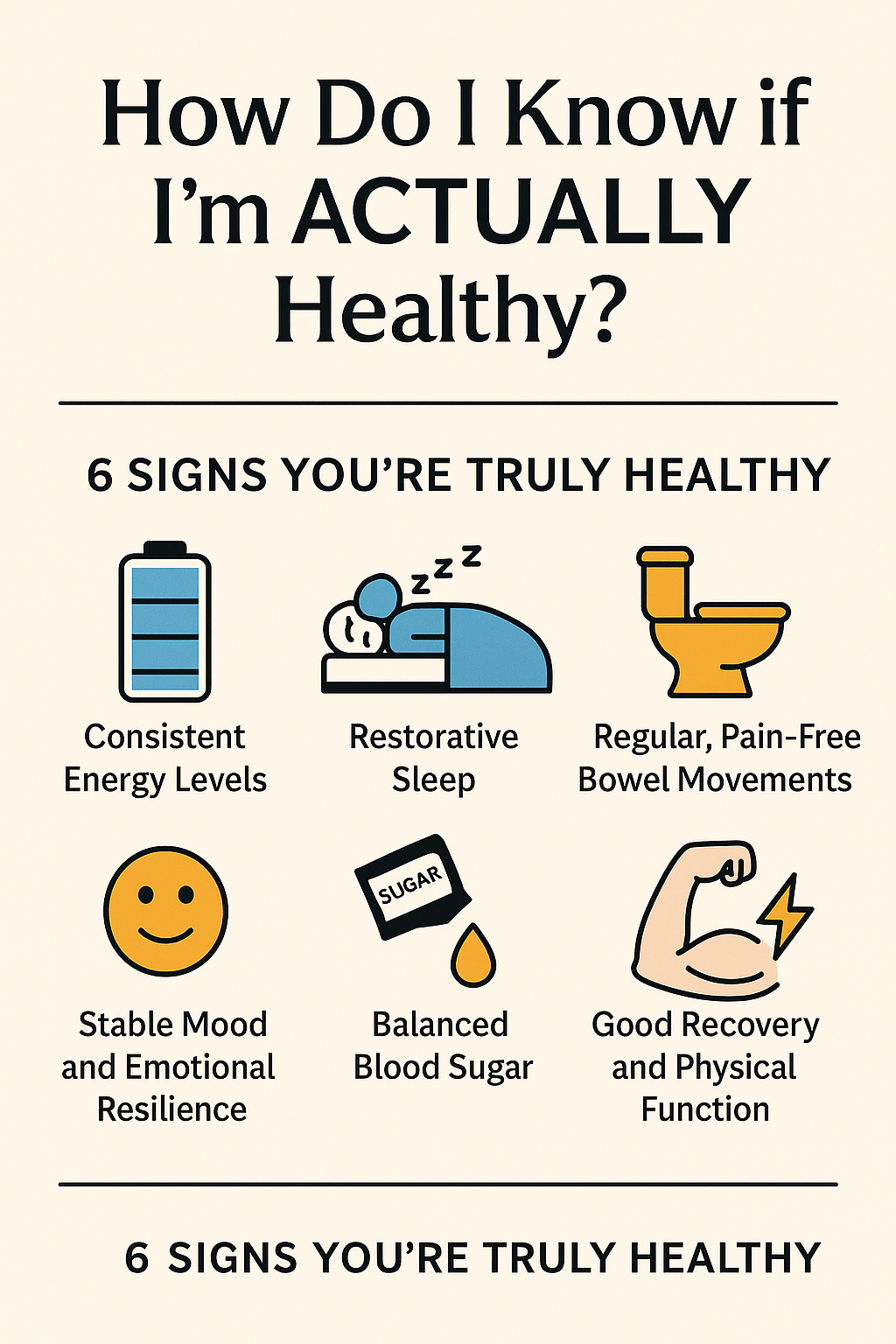
    ✅ 6 Signs You’re Truly Healthy

    Consistent Energy Levels You wake up refreshed and maintain steady energy throughout the day (without needing caffeine to survive). Restorative Sleep You fall asleep quickly, stay asleep, and wake up without feeling groggy. Regular, Pain-Free Bowel Movements Daily, easy-to-pass stools are a clear sign your gut—and your diet—are in a good place. Stable Mood and Emotional Resilience You don’t feel like you’re on a constant emotional rollercoaster. You can handle stress without snapping or shutting down. Balanced Blood Sugar No extreme hunger, dizziness, or “hangry” crashes. You feel satisfied after meals and don’t obsess over snacks. Good Recovery and Physical Function You bounce back after workouts. Your joints feel good. You move well and don’t constantly ache.

    👀 Bonus Insight:

    Just because you’re not sick doesn’t mean you’re healthy.

    Symptoms like bloating, brain fog, and poor concentration are early whispers your body’s off track. Listen to them.

    🚀 How to Audit Yourself:

    Track energy levels and sleep quality for a week Use a basic food and mood journal Notice how long it takes to recover after a workout Reflect: do you feel good most days?

    If you’re falling short in one or more of these areas—it’s not a crisis, it’s a signal. Health is a dial, not a switch.

  • FAQ of the Day: What’s the Best Time of Day to Work Out?

    FAQ of the Day: What’s the Best Time of Day to Work Out?

    Q: I’m busy and want to make my workouts count—does it matter when I train?

    A: The best time to work out is the time you’ll actually stick to consistently. That said, different times offer different benefits. Here’s what the research and real-world experience suggest:


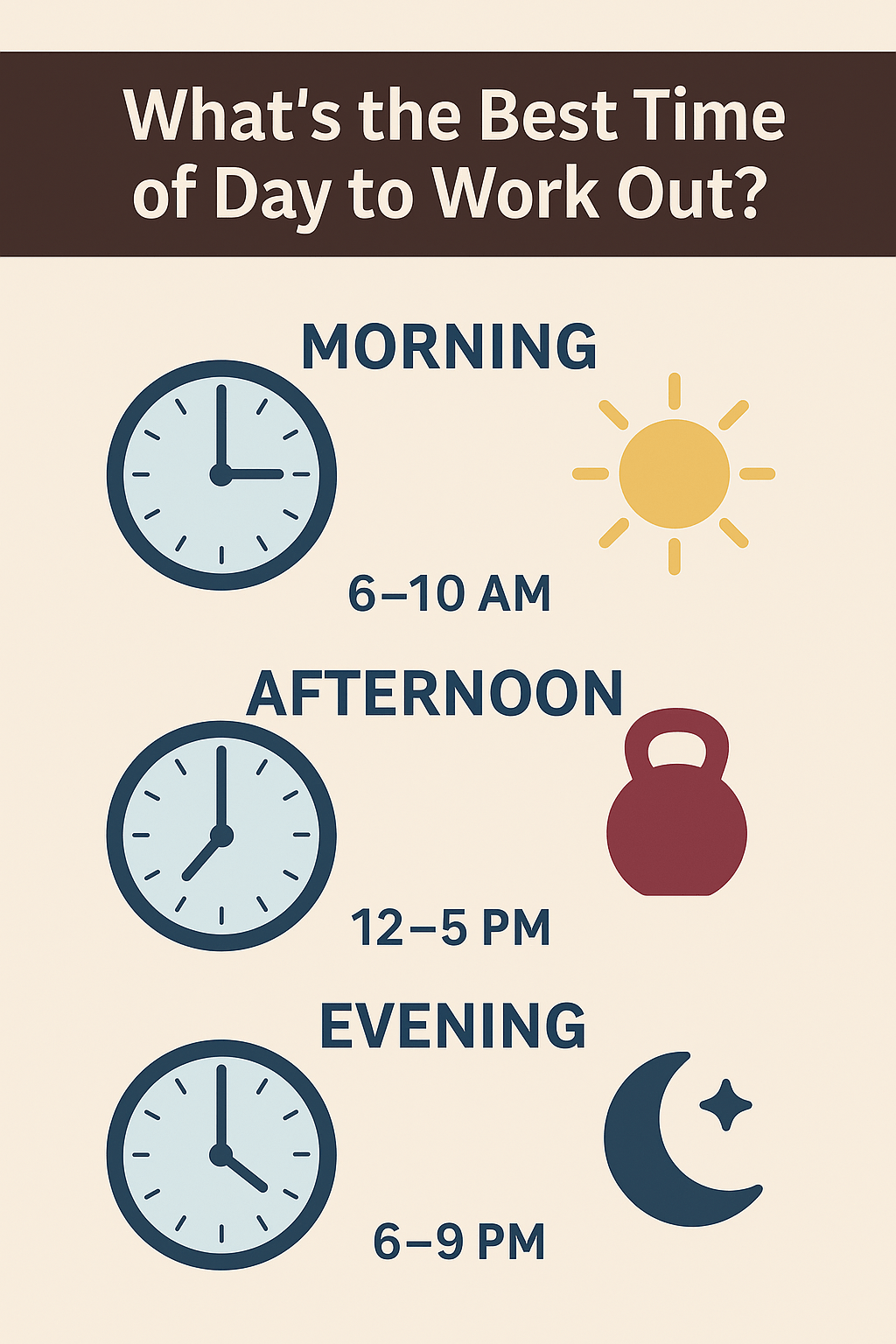
    🕒 Morning Workouts (6–10 AM)

    ✅ Pros:

    • Boosts alertness and energy for the day
    • Fewer schedule disruptions (less likely to skip)
    • Improves discipline by stacking a win early
    • Can improve fat burning (especially fasted)

    ❌ Cons:

    • Body may feel stiff or cold (warm-up is essential)
    • Might be harder to lift heavy due to lower core temperature
    • Not ideal if sleep is sacrificed to fit it in

    Best for: Busy professionals who want to build consistency and start the day with momentum.


    🕓 Afternoon Workouts (12–5 PM)

    ✅ Pros:

    • Body temperature is at its peak = better performance
    • Great time for strength training and high intensity
    • Helps break up sedentary workdays
    • Can act as a stress reliever mid-day

    ❌ Cons:

    • Can be hard to schedule around work or meetings
    • May conflict with post-lunch energy dips

    Best for: Those with flexible schedules or people looking for peak physical output.


    🌙 Evening Workouts (6–9 PM)

    ✅ Pros:

    • You’re fully fuelled from the day’s meals
    • Strength and flexibility may be higher than in the morning
    • Great time for stress relief after work

    ❌ Cons:

    • More likely to be skipped due to fatigue or social obligations
    • Can interfere with sleep if done too late or too intensely

    Best for: Night owls or those who prefer unwinding through movement.


    💡 So What’s the Verdict?

    Consistency beats timing. It’s better to train at 6 AM consistently than to chase a “perfect” time and skip half your workouts.

    That said:

    • Train early if you want consistency and discipline.
    • Train midday for performance and energy.
    • Train late if that’s when you’re most available—and it doesn’t affect your sleep.

    ⚙️ Pro Tip: Match Timing to Training Type

    • Cardio? Early morning or mid-afternoon for energy and fat oxidation.
    • Heavy lifting? Midday to early evening for strength performance.
    • Yoga or stretching? Anytime—but especially effective in the evening to wind down.

    💬 Final Thought

    Your body will adapt to whatever routine you stick to. Don’t obsess over the “perfect” time—lock in the habit, and let consistency build results.