James Clear’s Atomic Habits shows that tiny daily changes lead to big results. Small routines (“atomic habits”) may seem trivial alone, but compounded over time they produce remarkable outcomes . Clear emphasizes building sustainable systems of behavior – focusing on the type of person you want to become – rather than chasing distant goals . In practice this means shaping your identity and environment to make good habits automatic and bad habits difficult. The book is packed with actionable strategies for anyone who wants to improve performance, productivity, and personal growth.
1. Identity-Based Habits
Clear argues that true habit change starts with identity. Instead of obsessing over outcomes (like “lose 20 pounds”), focus on who you want to become (a healthy person) . Every habit then becomes evidence of your new identity: reading one page a day proves you’re a reader, one push-up makes you a fitness-minded person. By aligning habits with your self-image, you build lasting change from the inside out.
Actionable Takeaway: Define your ideal identity (“I am an active person,” “I am a reader”) and pick one tiny habit that reflects it. For example, if you want to be a morning person, make your bed every day first thing. This links behavior to identity and reinforces who you want to be.
2. 1% Improvements
A core insight is that tiny gains compound. Clear calculates that “if you get one percent better each day for one year, you’ll end up thirty-seven times better by the time you’re done” . Initially a 1% improvement isn’t noticeable, but small changes accumulate – like an airplane making a 1% course correction and landing in a completely different place . This reframes success as the result of consistent tiny wins, not sudden overhauls.
Actionable Takeaway: Pick one micro-improvement and stick with it daily. For example, add just one extra push-up each workout, or read one more paragraph of a book each night. These 1% steps keep you motivated and compound into big gains over months.
3. Habit Stacking
“Habit stacking” leverages your existing routines as triggers for new habits. Clear suggests using the formula “After/Before [CURRENT HABIT], I will [NEW HABIT]” . For instance: “After I pour my morning coffee, I will meditate for one minute.” By attaching a new action to a well-established habit, you create an obvious cue and make the new behavior easier to remember. Over time, these little stacks chain into powerful routines (e.g. make coffee → meditate → write a to-do list).
Actionable Takeaway: Identify a daily habit you already do (like brushing teeth or taking off shoes) and attach one small new action. For example, after you sit at your desk, open a book for two minutes. Linking habits helps momentum build naturally.
4. Environment Design
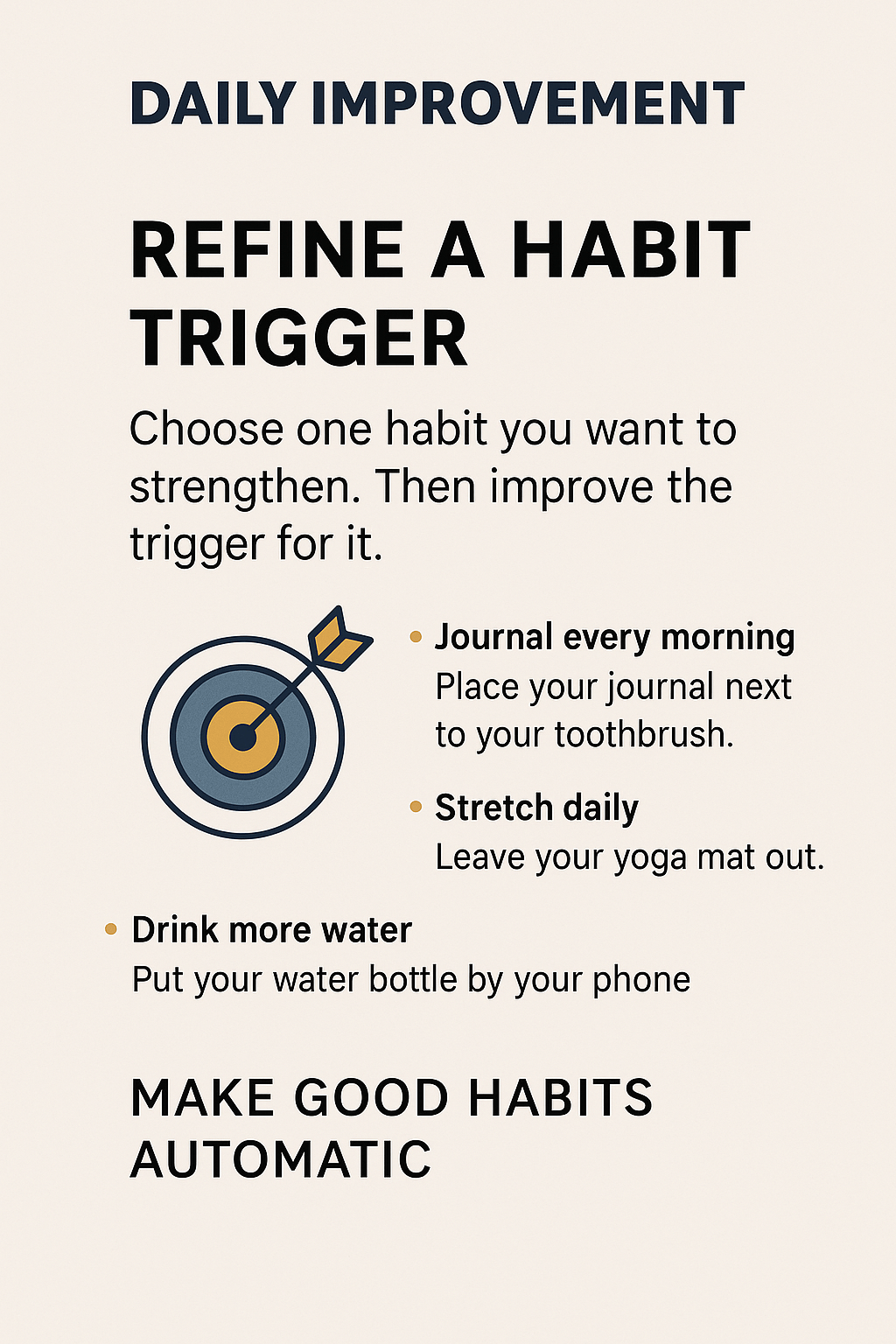
Clear shows that context drives behavior: people often act according to their surroundings, not just willpower . A simple cue in your environment can trigger (or break) a habit. For example, placing your running shoes by the door makes morning jogs easier, while hiding junk food in the pantry reduces cravings. In other words, “structuring your environment to favor good habits significantly increases adherence” . Design your workspace, home, and schedule so that good choices are obvious and bad ones require extra effort.
Actionable Takeaway: Make habit cues visible and friction low. If you want to write each night, leave your journal on your pillow. If you want to eat healthier, put a fruit bowl on the counter and remove sugary snacks from view. These small tweaks “nudge” you toward success.
5. Make It Easy
The third law of behavior change is to reduce friction. Clear recommends using the Two-Minute Rule: start any habit so small it takes two minutes or less to do . For example, if you want to read more, begin by reading just one page per day. By dramatically lowering the barrier to start, you’ll actually begin the habit; once started, it often naturally expands. This principle turns daunting goals into manageable steps.
Actionable Takeaway: Break down a habit into its smallest form. If you aim to work out, start with just one push-up or one minute of exercise. These tiny steps are easy to do on even your busiest day, and getting started builds momentum to keep going.
6. Habit Tracking
Keeping a visual log of progress makes habits more motivating and satisfying. A simple habit tracker (X-ing off days on a calendar) provides immediate feedback that you “completed your habit” and signals daily progress . Seeing a growing streak is motivating – nobody wants to break the chain . Tracking also keeps you honest about your behavior (we often overestimate how well we’re doing). By regularly marking achievements, you get quick wins and a sense of accomplishment each day.
Actionable Takeaway: Use a calendar, app, or journal to tick off each day you perform a habit. For example, shade one square on a calendar whenever you practice a new skill. The visual streak will encourage you to maintain consistency.
1% Better Challenge
Put these ideas into practice with a “1% Better” challenge. Choose one tiny habit and commit to improving it slightly every day for a week. For instance, add just one minute of movement to your daily walk, or answer one extra customer support email each day. Track it visibly (on a calendar or whiteboard) and don’t let yourself break the streak twice in a row. Remember, small changes compound: as Clear says, daily 1% improvements will make you exponentially better over time .
Key Insights at a Glance
Identity-Based Habits: Become the person you want to be (focus on identity, not just outcomes) . 1% Improvements: Tiny daily gains add up dramatically . Habit Stacking: Pair a new habit with an existing routine . Environment Design: Shape your surroundings to make good habits easy and bad habits hard . Make It Easy: Use the Two-Minute Rule to keep starting simple . Habit Tracking: Log each success to build momentum and accountability .