We all have that one invisible saboteur – a hidden cue or habit that derails our best intentions. Perhaps it’s the ping of a phone notification that pulls you off task, a snack stored in plain sight that triggers mindless munching, or a late-night routine that leads to sleep loss. These destructive triggers can quietly sabotage productivity, health goals, and personal growth, even when our motivation is high. Imagine flipping the script: by identifying and eliminating just one key trigger, you could stop the chain reaction of self-sabotage and take control of your day. In this post (Part 9 of our series on self-mastery), we’ll dive into the psychology and neuroscience of habit triggers, help you spot your own biggest trigger, and guide you through practical steps to remove or replace it.
“Identify one destructive cue, remove it, and watch the dominoes of your day fall into place.”
What Is a Destructive Trigger?
Every habit starts with a cue – an environmental or emotional trigger that ignites a routine . In psychology, this is often called the “cue” in the habit loop (cue–routine–reward). For example, seeing your smartphone buzz is the cue that launches a scrolling session, or feeling stressed at the office cues the routine of stress-snacking. Over time, these cue–response loops become wired into the brain’s habit centers (the basal ganglia) . The result is automatic behavior: you don’t even think before you reach for that cookie or flip open your phone – the trigger did it for you.
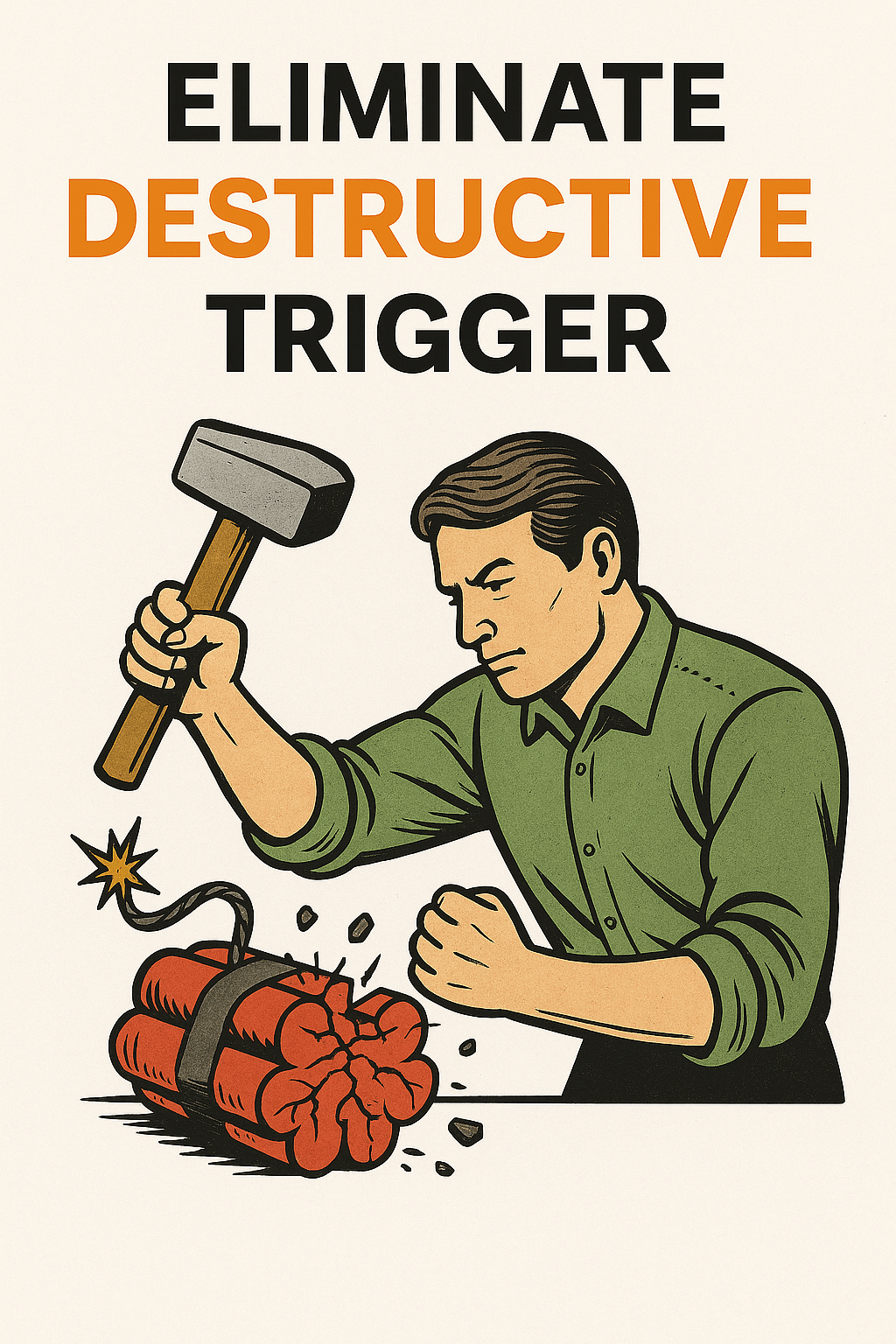
A destructive trigger is simply one of those cues that consistently leads you off-track. It’s a part of your environment or routine that sparks an unwanted behavior. Importantly, removing or modifying this one trigger can prevent the unwanted habit from ever starting. As cognitive neuroscience research shows, removing the environmental cue for a bad habit can “disrupt[]” the loop that keeps it going . In other words, break the cue and you break the habit.
A destructive trigger might be a time of day (e.g. 8 PM signals snack time), an emotion (like stress or boredom), a person, or even a physical object (like a cluttered desk or a pile of unfinished tasks on your calendar). Whatever it is, it’s a predictable catalyst for self-sabotage. It aligns closely with what experts call self-sabotage – behaviors that create problems in daily life and interfere with long-term goals . For instance, Psychology Today notes that procrastination, comfort eating, or phone addiction can all be forms of self-sabotage triggered by specific cues . Our job is to uncover which cue is your culprit, so you can stop it.
The Brain and Habit Loops
Understanding why triggers have such power means looking at your brain’s wiring. Neuroscience tells us that the brain uses habits to conserve energy – routine actions move from the deliberate prefrontal cortex down into the automatic basal ganglia . Once this happens, a cue can flip the switch on a habitual routine without much conscious thought. As one science news article summarizes: “habits happen when automatic responses outweigh our ability to consciously control them” .
In practice, this means even a tiny cue (like your phone lighting up) can hijack your attention and automatically pull you into a familiar, often unwanted behavior . For example, researchers have found that just hearing your phone buzz (even in your pocket) is enough to break your focus: “Unless your phone is fully silenced or off, it’s probably still distracting you…The familiar buzz buzz of a new notification is not as innocuous as it seems” . That buzzing sound is literally a trigger that your brain has learned to respond to automatically, over and over again.
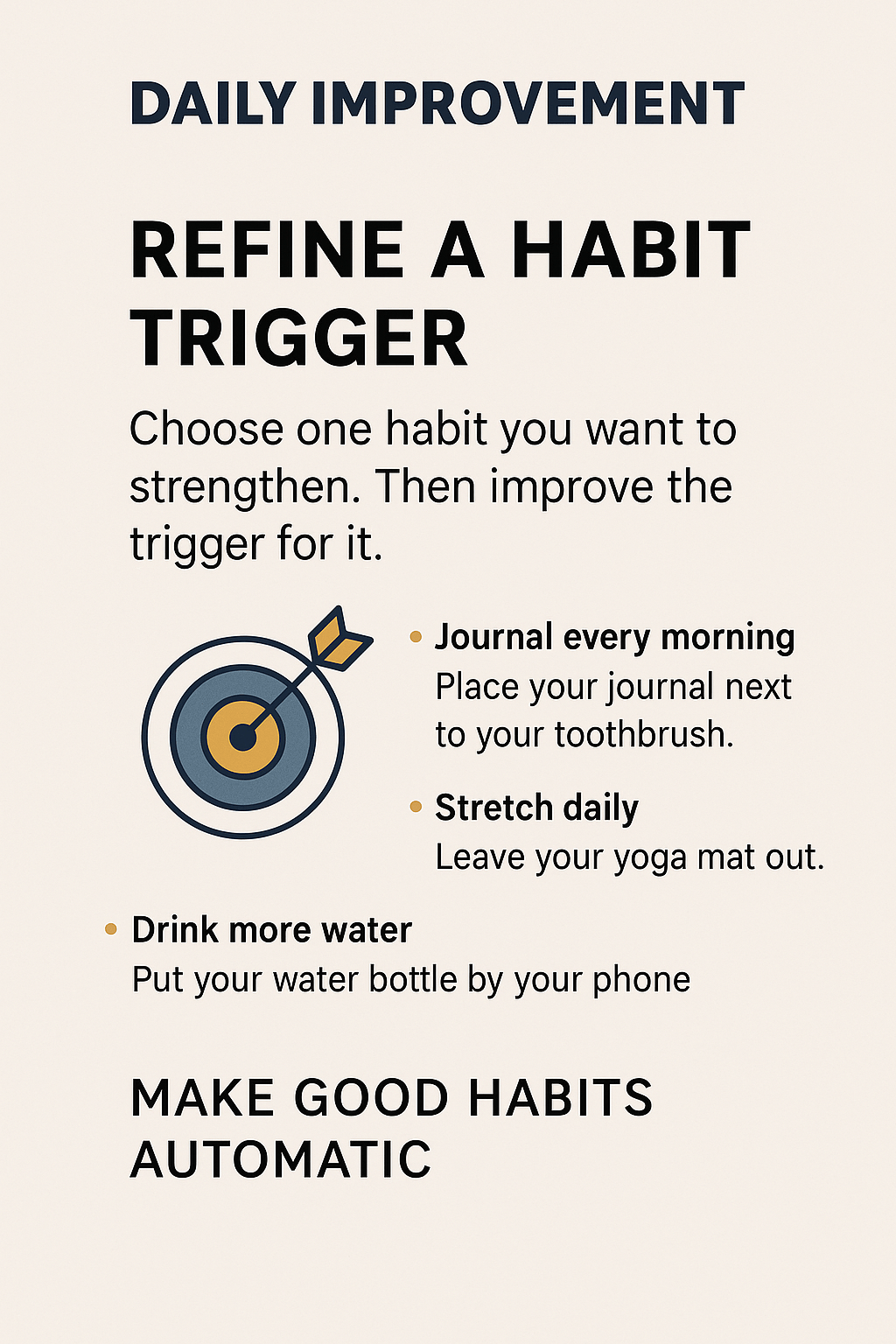
The key insight from neuroscience is that good or bad, habits form from repeated cue–action pairings . Repetition plus reward cements these associations. But this also means that those same principles can be used in your favor. You can replace an unwanted routine with a new one by linking it to the same cue or creating a new cue. For example, if stress is your cue to snack, you might attach a different routine to that stress cue (like a short walk or a breathing exercise) that still delivers a reward (calm, or a sense of accomplishment) but is healthier . Over time, your brain will forge a new habit loop around the positive routine instead.
Spot the Cue: Identifying Your Trigger
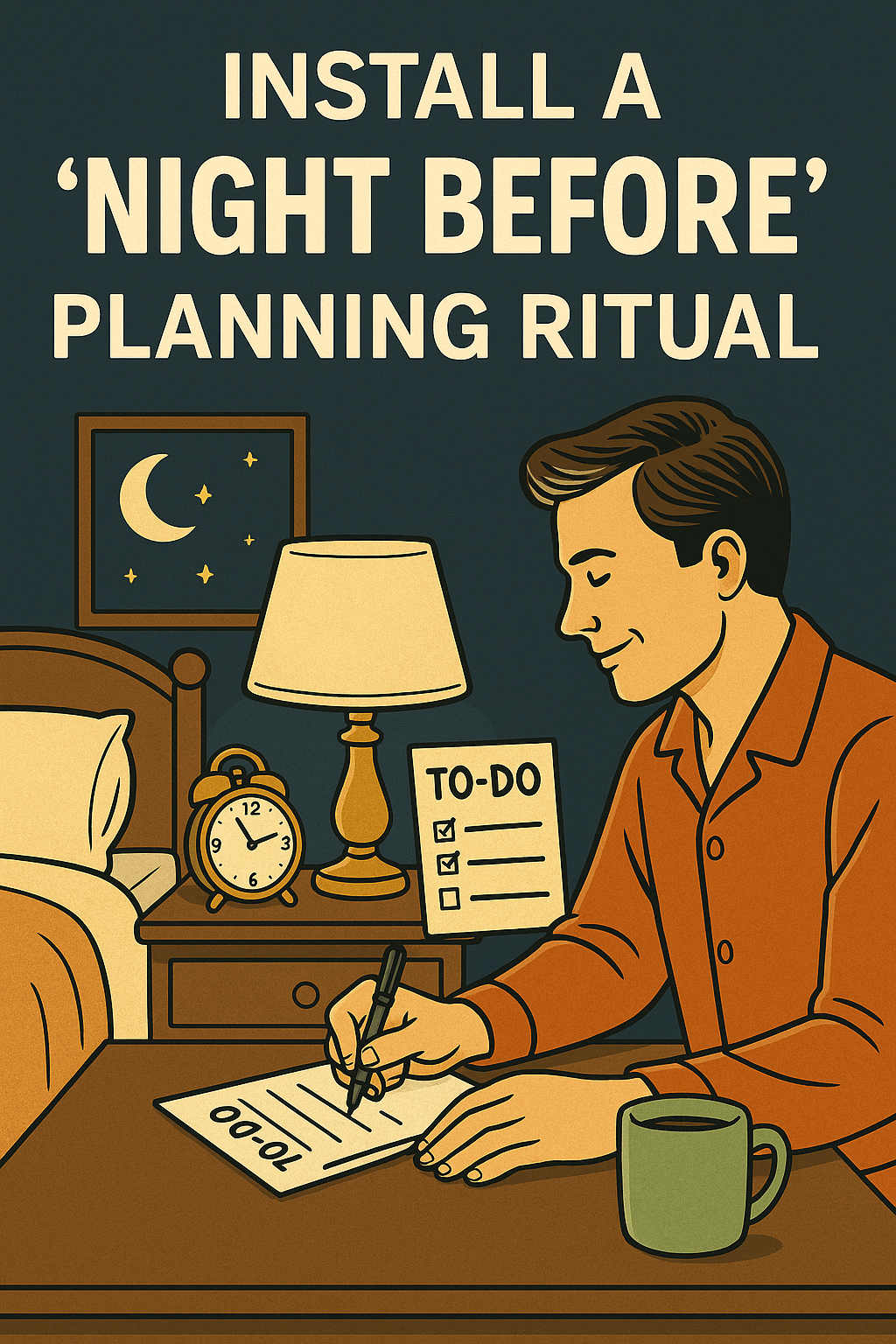
First, let’s shine a light on that destructive trigger. This often takes conscious attention, because triggers act on autopilot. Start by observing and documenting the problem behavior. Keep a brief “trigger log” or journal. Whenever you catch yourself doing something unhelpful (procrastinating, over-snacking, doomscrolling, etc.), note what happened just before: the time, your location, your feelings, even who or what was around. Psychology Today advises that “documenting and analyzing behavior is a key component of preventing self-sabotage” . In practice, this might mean writing down, “It’s 3 PM, I feel stressed and the first thing I did was open Instagram,” or “After dinner, saw chips on counter and snacked.” Over days or weeks, patterns will emerge.
You can also apply a simple question when a negative habit occurs: “What was the trigger?” Ask yourself what thought or emotion popped up just before the urge hit . Often we find it was something like boredom, anxiety, or even a specific place or time. For example, many people discover that Mondays in the office cue a sugary coffee or that arguing with family cues comfort eating. By bringing this automatic link into awareness, you can catch the trigger in the act.
Another check is to evaluate whether your behavior is aligned with your goals . If it’s not, the environment or cue around you may be to blame. Psychology Today notes that misaligned behaviors that repeatedly undermine long-term goals are the hallmark of self-sabotage . If you find yourself repeatedly veering off-course, look at what external or emotional cue led there.
“Your environment is a radar; remove one blip, and your signals clear up.”
Why That One Trigger Matters
It might sound simple – one cue – but its effect can be huge. Think of triggers as the first domino in a long chain. When a trigger hits, it sets off a chain reaction of habits and justifications. For instance, one email notification at the wrong time can spiral into a day lost to distraction, or seeing a piece of cake can spark an entire evening of overeating. Productivity and habit experts often point out that bad habits and procrastination usually start with an unnoticed trigger .
Research confirms that even brief distractions have an outsize impact. A Harvard Business Review article highlights how simply hearing your phone buzz—even if you don’t pick it up—harms your performance . Similarly, studies on habit change emphasize that even one environmental cue can sustain a pattern of behavior . That’s why zeroing in on one destructive trigger can feel so effective: when you remove that cue, the whole routine often fizzles out.
Moreover, eliminating a trigger can help you break the cycle of self-sabotage. Instead of using willpower alone, you starve the habit of its signal. Scientists stress that removing triggers is often more reliable than fighting the urge after it appears . In practice, that means you can stop unwanted habits before they even start. Personal growth happens incrementally: by tackling just one habit loop at a time, you lay the foundation for bigger change .
Remove or Replace: Transforming Your Trigger
Once you’ve identified the culprit trigger, it’s time to eliminate or rewire it. Here are evidence-based strategies:
Modify Your Environment. Adjust your surroundings to cut off exposure to the trigger. As researchers note, “making desired behaviors easier to access encourages good habits, while removing cues that trigger unwanted behavior disrupts bad habits” . For example, if junk food on the counter is your trigger, put it away or replace it with fruit. If your phone buzz distracts you, turn off notifications or place it in another room during focus times. Psychology Today even finds that changing locations can reset patterns: when people visit a new place or rearrange their space, their old habits “don’t stand a chance” thanks to different cues .
A clutter-free, intentional workspace eliminates many visual cues that could derail focus.
Use Implementation Intentions. This is a fancy term for “if-then” planning. Set a clear plan for what you’ll do when the trigger appears. For instance, “If I feel stressed in the afternoon, then I will take three deep breaths and stretch for two minutes.” This kind of pre-planning has been shown to bridge the gap between intention and action by giving your brain an alternative response to an old cue . Replace the Routine. You’re not just ripping out a habit; you’re grafting in a new one. Decide on a positive action to follow the trigger instead. For example, if TV time at night cues snacking, vow to drink herbal tea instead whenever you start that show. Over time, your brain will form a new habit loop: the same cue (TV) now triggers tea and relaxation, not chips. Western University research on habit change emphasizes this: instead of eliminating a behavior, “the routine can be replaced with a healthier alternative” so long as the new routine yields a satisfying reward . Consistency is key: each time you honor the new routine, the old neural pathway for the bad habit weakens and the new one strengthens . Practice Mindfulness. Cultivate awareness of the trigger in the moment. Mindfulness slows down the automatic pilot. When you feel the cue or crave hit, pause and take three deep breaths. Ask yourself if you really want to follow the old routine or if there’s another choice. Science suggests that staying mindful and intentional can prevent you from defaulting into bad habits under stress . Even a few seconds of breathing or noting your thoughts can break the automatic link. Align with Your Identity. Shift your mindset to reinforce the change. According to habit experts, lasting change often starts with believing you are the kind of person who doesn’t fall for that trigger . Consciously tell yourself, “I am someone who doesn’t use my phone during dinner,” or “I’m the kind of person who chooses a short walk over a sugary snack.” Each time you act in line with this identity, you gather small wins that prove it to yourself (for example, taking a walk three nights in a row) . Over time, your brain starts to embody that identity and the new behavior becomes second nature.
These steps combine to break the trigger–habit loop. First, you starve the trigger of its power (by hiding or avoiding it). Then you rewire the loop with a new, healthy response and reward. Remember: change is most achievable gradually, one small step at a time . Trying to remove every trigger at once can be overwhelming, so focus on the single most destructive one. Once you eliminate that cue, celebrate the progress and notice how the rest of your day flows more smoothly.
Action Steps: Your Daily Routine Upgrade
Ready to put this into practice? Follow these action steps to eliminate your top trigger:
Identify and Log: Keep a simple log for a few days. Note each time you slip or procrastinate. Write down the preceding cue (time, place, feeling) and your response. This will reveal your key trigger(s) . Analyze the Impact: Ask yourself, “How does this cue derail me?” and “How does the routine serve me (or not)?” Recognize the cycle of self-sabotage it creates . Alter Your Environment: Remove or hide the cue. If possible, take the object or context off the table entirely. (E.g., block distracting websites, put the candy dish out of sight, switch up your workspace .) Plan an Alternative: Decide on a healthier habit to follow the cue. Write an “If trigger, then do X” statement. Practice it until it feels natural . Leverage Identity: Frame the change in terms of who you want to become. Use affirmations or small identity-based goals (e.g. “I’m the type of person who …” ). Each time you act consistently, mentally tick it as a win. Reflect and Reward: Notice the difference when the trigger strikes and you make a new choice. Celebrate any success, no matter how small. This reward reinforces the new habit.
By taking control of one destructive trigger, you upgrade your daily routine and break free from that nagging cycle of failure. Over time, your progress compounds. Eliminate the smallest trigger, and you might find yourself accomplishing tasks you once resisted, sleeping better, or finally sticking to a workout plan. This is the power of habit change: small shifts, big results.
Actionable Takeaway: Commit right now to tackle one trigger. Carry a notebook or use a phone app for 3 days and track when your bad habit happens and why. Identify the cue. Then remove or change that cue in your environment (move it, hide it, silence it) and plan a positive alternative. Use your identity (“I am someone who…”) to reinforce this change. You will be amazed how one smart, research-backed tweak can turn your self-sabotaging patterns into empowerment for personal growth