Category: Productivity

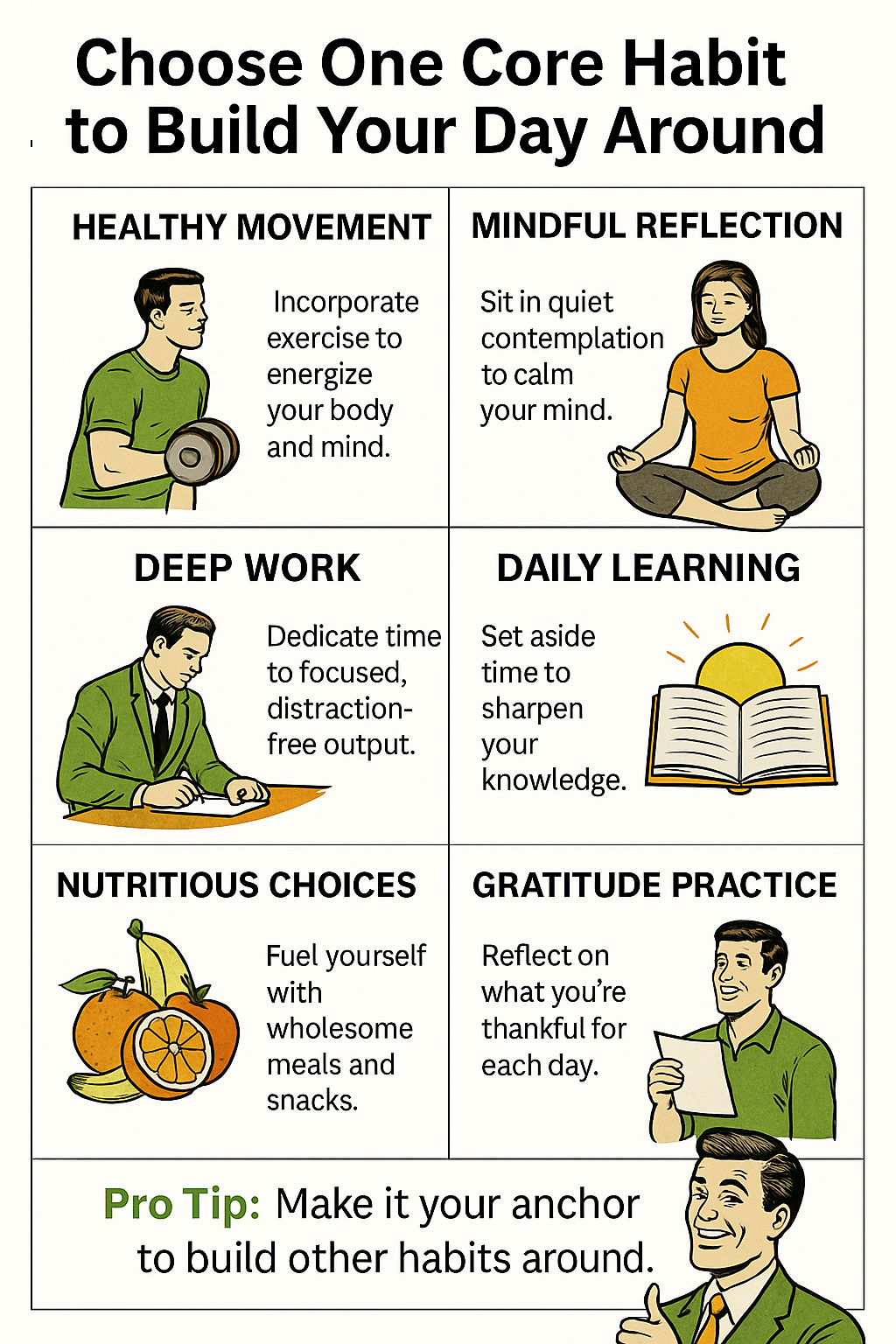
  • Choose One Core Habit to Build Your Day Around

    Choose One Core Habit to Build Your Day Around

    Building lasting change often starts with one keystone habit – a single routine that becomes the anchor of your day.  Focusing on one habit at a time is key. In fact, research shows that people who make specific plans for one habit (the when, where, and how) are 2–3× more likely to follow through .  Crucially, implementation intentions only work if you focus on one thing: people juggling many goals tend to fail more often than those committed to a single goal .  By picking one meaningful habit, you give yourself the best chance to automate it into your routine.

    Anchoring your day to one core habit has a ripple effect across your life.  As Psychology Today explains, “keystone habits” are foundational routines that create a domino effect of positive changes .  For example, establishing a regular exercise routine not only boosts fitness, but often leads to improved diet, better sleep, higher energy and productivity .  In other words, one good habit tends to spawn others.  By consistently practicing just one high-impact habit, you build momentum and confidence that carries over to every part of your day.  This habit becomes the stable foundation on which other healthy routines can be built.

    Why a Core Habit Matters: Relying on autopilot routines relieves decision fatigue and conserves willpower . When one key habit is locked in place each morning, the rest of your day tends to flow better.  You develop a “success mindset” as each completed habit reinforces your identity (for instance, thinking of yourself as “someone who journals every morning” or “a regular exerciser”).  And science backs this up: our brains form habits in the basal ganglia, automatically linking cues to routines .  By designing a single keystone habit and its cues, you work with your brain’s natural wiring.

    Catalyst for change: One core habit can trigger a cascade of other good habits . For example, starting the day with exercise often leads to healthier eating, better sleep, and sharper focus in the afternoon . Momentum builder: Completing a meaningful habit each day boosts motivation and confidence.  When you see progress in one area, it’s easier to tackle other challenges. Routine anchor: Your keystone habit anchors your schedule. Making it a fixed part of your morning or evening routine creates stability, so other habits “slot in” around it . Identity shift: Focusing on one habit helps reshape your self-image.  You begin to think, “I am the kind of person who [habits]”, which reinforces consistent behavior. Simplicity wins: Psychology research finds that trying too many new habits at once undermines progress. People focusing on a single specific habit are far more likely to succeed .

    Together, these points show why it’s better to master one core habit than spread yourself thin.

    Examples of Powerful Core Habits

    Which habits make good core routines?  Think of activities that energize you, support your biggest goals, or simply feel rewarding.  Here are some examples that many people find transformative:

    Morning Journaling: Spend 5–10 minutes writing after you wake up. Journaling clears your mind, sets your intentions for the day, and helps process emotions. Studies show that expressing thoughts on paper “enhances mental clarity and emotional processing,” helping to manage stress and anxiety .  Over time, this practice can improve mood and self-awareness. Daily Exercise: A short workout or brisk walk each morning gets your body moving and brain alert.  Exercise not only strengthens muscles and heart, it also “boosts memory and thinking indirectly by improving mood and sleep, and by reducing stress and anxiety” .  Many people who exercise daily report clearer thinking and more energy throughout the day. Daily Reading: Even 15–30 minutes of reading (non-fiction, personal development, or inspirational material) can prime your mind. Reading regularly is like a gym session for your brain – it “improves memory, concentration, and [reduces] stress,” according to education experts .  Starting the day with learning sets a positive tone and gradually builds knowledge. Morning Meditation or Mindfulness: Sitting quietly for a few minutes each morning to meditate or breathe deeply trains your attention and calms your nervous system.  Research on meditation shows that brief daily practice can decrease negative mood and anxiety while improving attention and working memory .  Over weeks, people report better focus and emotional balance. Gratitude Practice: Noticing things you’re thankful for – even mentally or by writing a quick list – can reframe your mindset.  Regular gratitude journaling has been linked to better well-being and reduced stress .  It’s a simple habit that shifts your outlook to the positive. Evening Review or Planning: End your day by reviewing successes and planning tomorrow’s top priority.  This sets up your next morning with clarity and can improve sleep by reducing rumination.  (This habit aligns with identity and goal-setting research .)

    (Tailor this list to what appeals to you: exercise could be yoga or dance, reading could be podcasts, and journaling could be notes on wins. The specific habit is less important than consistency.)

    How to Pick the Right Habit for You

    The best habit is one that aligns with your goals, lifestyle, and natural energy. Here are some guidelines:

    Match Your Goals: What is your top priority? If you want more energy, a morning workout or walk might be ideal. If you seek calm and focus, meditation or journaling could help. If personal growth is key, reading or learning fits. Choose a habit that directly supports what you care about most. Consider Your Daily Rhythm: Pay attention to when you feel most alert.  Morning “larks” often have more willpower and energy early, so they might tackle exercise or writing right after waking.  Night owls might start with something simpler (like sipping tea while reading) and schedule more demanding habits later.  Research shows people perform best at their preferred time of day – morning types in the a.m. and evening types later .  Pick a habit and time of day when you naturally feel energetic and clear-headed. Test for Enjoyment and Feasibility: A habit doesn’t have to be fun, but it should be something you don’t dread.  For example, if 30 minutes of exercise feels impossible, start with 5 minutes.  If journaling every day is too much, try 3 days a week.  The goal is consistency, not intensity. Simplicity and Resources: Keep it simple. You’re much more likely to maintain a basic habit (5-minute meditation, 10-minute walk) than a complex one.  Also, ensure you have what you need: if you choose exercise, place workout clothes where you see them; if writing, keep a notebook handy. Identity Alignment: Frame the habit in identity terms.  Instead of “I want to exercise,” tell yourself “I am the sort of person who exercises regularly.”  This mindset (identity-based habits) makes it easier to stick with your choice .

    When you settle on one habit, commit to it wholeheartedly. Remember, focusing on that one habit increases your chance of success . You can always add another habit later. For now, give your first habit all your attention and energy.

    Making Your Habit Stick: Practical Steps

    Once you’ve chosen your keystone habit and timing, use these strategies to turn it into an automatic part of your day:

    Plan It Precisely (Implementation Intention): Decide exactly when, where, and how you will do your habit.  For example: “Every morning right after I brush my teeth, I will meditate for 5 minutes.” Studies find that writing down such specific plans doubles or even triples the likelihood you’ll follow through .  Having a concrete plan (“If X happens, then I will Y”) makes it much easier to act. Habit Stacking: Attach your new habit to an existing routine.  This is called “habit stacking.”  For instance, after you make coffee, then sit down to journal; or after you put away your shoes at night, then do 5 minutes of stretching.  Psychology experts note that habit stacking “anchors” a new habit to something you already do, making the change feel effortless . Over time the linked behaviors become second nature. Time-Blocking: Put the habit on your calendar and treat it as an appointment.  Block a short fixed window each day (e.g. 7:00–7:10 AM) for your habit.  This way you won’t accidentally skip it.  Scheduling a daily reminder or alarm can help signal it’s time. Design Your Environment: Make the habit obvious and easy by arranging your surroundings. Keep cues and tools in sight: place your journal on your desk, lay workout gear out before bed, or put a water bottle where you’ll see it . Conversely, hide or remove distractions: turn off notifications, log out of social apps, or keep junk food out of the house.  As one habit expert advises, small environmental tweaks (like “keeping a water bottle on your desk” or “placing a book on your nightstand instead of your phone”) can automatically nudge you toward the right behavior . Start Small and Build: Resist the urge to overdo it.  Consistency is more important than duration.  If you miss a day, don’t criticize yourself – just do it again tomorrow.  Gradually increase the habit as it becomes easier.  For example, add one more minute to your meditation or one extra page of reading each week. Use Rewards and Tracking: Give yourself a small reward after completing the habit (even just a mental high-five).  Keep track of your progress – a checkmark on a calendar or a habit-tracking app can reinforce your commitment.  Seeing a streak build can be motivating. Get Accountability: Tell a friend or family member about your habit goal, or join a group (online or offline) for support.  Sometimes sharing your intention publicly makes you more likely to stick with it.

    Following these steps harnesses the best strategies from behavioral science.  As Neuroscience Today explains, our brains form strong habits when we consistently pair a cue (like a time of day) with a routine, which eventually becomes automatic . By stacking your habit, time-blocking it, and shaping your environment, you effectively engineer success.

    Your Takeaway: Start Today

    You now have the blueprint: pick one single habit to build your daily routine around.  Make it specific, plan it, and slot it into your schedule.  Use habit-stacking and environmental cues to make it automatic.  Remember that even a few minutes of daily focus can spark broader improvements.

    The most important step is to start. Don’t wait for the “perfect” time or until you have more willpower.  Tomorrow morning, for example, wake up a bit earlier and begin.  Write those first journal lines, put on your sneakers for a walk, or sit for a short meditation.  Once you’ve built a streak of a few days, you’ll feel the momentum building.

    Key takeaways: Choose one core habit aligned with your goals.  Treat it like an unmissable appointment.  Set up cues and remove friction so the habit happens almost automatically .  Focus on this habit fully before adding more.  Scientific research confirms this focused approach is the most effective route to lasting change .

    You’re ready – start your new habit today and let it become the anchor of a better, more productive day!

    Sources: Practical tips and examples above are backed by psychology and neuroscience research , which highlight how keystone habits and smart habit-design lead to lasting success. Use these insights as your guide, and watch the positive ripple effect in your life. You’ve got this!

  • Hidden Time Leaks and Productivity

    Hidden Time Leaks and Productivity

    Most of us drift through the day distracted by tiny “time leaks” – email pings, phone buzzes, random tasks – that chip away our focus.  In fact, research finds the average person is interrupted just 12 minutes into a task, and needs over 25 minutes to refocus afterward .  These fragments add up: roughly 720 work hours per year (about 18 full work weeks) are lost to distractions .  Every little interruption or idle moment – even checking a message or browsing social media – may feel harmless, but they compound into a massive productivity drain.

    Humans also tend to misjudge time.  The planning fallacy shows that we chronically underestimate how long our tasks will take .  When deadlines feel far away, Parkinson’s Law kicks in: work expands to fill the time allotted .  Give yourself two weeks for a project, and you’ll likely shuffle it for 13 days before scrambling at the end.  This combination of underestimating effort and over-allocating time means you inadvertently create more work and procrastinate, letting tasks stretch out and steal your calendar .

    Meanwhile our brains pay a heavy price for each switch of attention.  Cognitive science shows that multitasking is a myth – the brain can’t truly do two hard tasks at once.  Instead we juggle rapidly between them, burning mental energy with each switch .  As psychologist Daniel Levitin notes, bouncing between tasks spikes stress hormones and glucose burn in the brain .  Even a brief “mental block” from a switch can consume up to 40% of your productive time .  In short, little leaks like interruptions, multitasking and drifted attention slow you down, reduce work quality, and leave you exhausted – even if it feels like you’re busy.

    On top of that, digital distractions are ubiquitous.  One survey found 77% of workers feel more stressed by technology, with notifications tearing away focus .  A phone notification or an email alert doesn’t just nibble a moment – it breaks concentration and often sends you off-task for minutes.  Over a week you may face 160+ such distractions .  No wonder nearly 8 in 10 people report feeling distracted during the workday .  These hidden leaks – the “continuous partial attention” of modern life – quietly sink productivity unless we notice them and act.

    Strategies to Audit Your Time

    The good news is that awareness is the first step to plugging these leaks.  By systematically auditing how you spend each hour, you can surface hidden drains and regain control.  Try these strategies (each corresponds to a point in our infographic grid):

    1. Track Every Minute:  Keep a detailed time log for 1–2 weeks.  Write down how you spend blocks of time (work tasks, email, meetings, breaks, even browsing).  Studies show people grossly underestimate task durations .  Seeing the numbers in black and white sparks urgency: when you know you’re “on the clock,” you tend to focus more .  A log reveals surprises (e.g. how much social media or admin eats your day) and builds time awareness.  This data is the foundation of any audit. 2. Identify Your Leaks:  Analyze your time log for low-value activities.  Which “tasks” are really just buffers or distractions?  Maybe you spent half an hour each day on unnecessary meetings or gossip.  Note how often you check your phone (90% of people say phones are their biggest distraction ).  These leaks often hide in plain sight.  Categorize your activities (deep work, shallow admin, breaks, etc.) and calculate percentages – even a 5% daily leak adds up to over 100 hours a year. 3. Set Hard Time Limits:  Combat Parkinson’s Law by capping how much time a task can take.  Instead of “finish the report by Friday,” timebox it: “3 hours on Monday to outline it.”  Or use a timer/Pomodoro (e.g. 50-minute focus, 10-minute break).  When you give yourself a tight deadline or timer, you force focus and shorten drawn-out tasks.  As one guide notes, be mindful of how long you really need, not just the generous window given .  Shorter deadlines can harness urgency and prevent work from inflating. 4. Focus on One Thing:  Plan to single-task during work blocks.  Each time you try to split your attention (even music in background), you add cognitive load .  Structure your day into focused periods on one project at a time.  During each block, close unrelated tabs and resist switching.  Research shows that concentrated focus (deep work) yields higher-quality output and actually takes less time overall . 5. Batch Similar Tasks:  Group routine or shallow tasks together.  For example, schedule specific times to check email or Slack (say, twice a day) rather than letting them pop up constantly.  Batch phone calls, administrative tasks, or quick errands into dedicated slots.  This reduces the frequency of context switches (which chew time) and lets you tackle similar tasks with momentum.  Batching is especially powerful for tasks that otherwise interrupt bigger projects. 6. Tame Digital Distractions:  Silence or filter notifications.  Turn off app pings, put your phone on Do Not Disturb, or use website blockers during focus time.  The constant lure of news feeds and alerts wrecks concentration – in one survey, nearly half of workers admitted losing focus to irrelevant notifications .  By removing these digital hiccups, you stop many leaks before they start.  If needed, use “focus modes” or tools like noise-cancelling headphones to create a distraction-free zone. 7. Plan Breaks (And Earn Them):  Ironically, taking scheduled breaks can improve overall productivity.  Everyone needs downtime between intense tasks – the trick is to make it conscious, not accidental.  Build short breaks or walk-away moments into your schedule (e.g. a quick stretch every 90 minutes).  Planning breaks prevents random drift (like doomscrolling) and keeps you refreshed.  A rested brain works faster, so a 10-minute pause can save 20 minutes of frustrated effort later. 8. Review and Adjust Weekly:  At the end of each week, revisit your log and goals.  What went well? Where did new leaks appear?  Update your strategy accordingly.  For instance, if email still creeps in, tighten your batching.  If meetings dominated your time, negotiate agendas or attendee lists.  This reflection step turns data into action.  Each week’s audit sharpens your time sense (and improves future planning) .

    Implementing these strategies systematically helps you plug the silent drains on your day.  Over time you’ll channel your hours into meaningful work, not noise.

    Summary and Time-Log Exercise

    Time audit is about awareness and action.  Research tells us that productivity isn’t just harder work; it’s smarter scheduling.  By logging your time, spotting leaks, and enforcing structure (Parkinson’s Law, single-tasking, batching, etc.), you reclaim wasted hours .  Each small improvement – delaying that phone check, or finishing tasks ahead of a self-imposed deadline – compounds into big gains.

    Exercise (Optional): For one week, carry a notebook or use a time-tracking app to record your activities every 15–30 minutes.  At week’s end, break your log into categories (focus work, meetings, admin, breaks, distractions).  Calculate how much time went to priority tasks versus time leaks.  Identify the top two biggest drains (e.g. too many emails or idle social media) and apply the strategies above to fix them next week.  Repeat weekly.

    By treating time as data – measuring, analyzing, and iterating – you turn vague “busywork” into clear priorities.  In this way, you’ll plug the leaks and use every hour intentionally, boosting productivity and making progress feel tangible.

  • 🧠 Daily Kaizen: Add a “Why Am I Doing This?” Check

    🧠 Daily Kaizen: Add a “Why Am I Doing This?” Check

    Daily Kaizen – 1% Better Through Intentionality

    We live in a world wired for autopilot. Notifications, habits, and muscle memory often guide our actions more than conscious choice.

    But today’s Kaizen is simple and powerful:

    Before you do anything, pause for 3 seconds and ask yourself:

    “Why am I doing this right now?”

    ❓ What It Looks Like in Practice:

    You’re about to open Instagram… → “Why am I doing this right now?” → You realize you’re bored — not intentional — and choose to move instead. You’re halfway through rewriting the same sentence… → “Why am I doing this right now?” → You realize it’s procrastination in disguise. Hit publish. You start cleaning your inbox at peak creative time… → “Why am I doing this right now?” → You pause, close Gmail, and dive into deep work.

    💥 Why It Works:

    This one-second mental circuit breaker does two things:

    Interrupts automatic behavior Replaces it with intention

    You won’t always make the perfect decision. But you will start making conscious ones. And those compound.

    🪜 Kaizen Stack:

    Ask “Why am I doing this?” → Interrupt autopilot → Align with purpose → Stack wins that matter

    Try it once today. You’ll notice how often your time and energy try to drift off-course.

    This one habit pulls them back in.

  • 🧠 Daily Kaizen: Add a “Hard Thing First” Rule

    🧠 Daily Kaizen: Add a “Hard Thing First” Rule

    Action:

    Start your day by doing the one thing you’re most likely to avoid — before anything else.

    It could be:

    Sending the awkward email Starting the blog post Cleaning the nasty mess Hitting publish Going to the gym

    Why it works:

    That task weighs on you all day. Doing it first clears the mental fog and builds serious momentum.

    🪜 Kaizen Stack:

    Hard thing first → Fast confidence → Easier day overall

  • 🧼 Daily Kaizen: Add a Clean Start Ritual

    🧼 Daily Kaizen: Add a Clean Start Ritual

    Action:

    Start your day by taking 90 seconds to tidy one visible surface — your desk, kitchen counter, bedside table, etc.

    Why it works:

    A clean space tells your brain, “We’re in control.”

    That tiny reset builds momentum, clarity, and pride before your real work even begins.

    🧠 Bonus habit stack:

    Right after brushing your teeth → 90-second tidy → Sit down to deep work.

    Kaizen Stack:

    Clean space → Clear mind → More wins.

  • 🧠 Daily Kaizen: Remove a Doomscrolling Trigger

    🧠 Daily Kaizen: Remove a Doomscrolling Trigger

    Today’s improvement is about protecting focus and reclaiming time.

    🔧 Action:

    Pick one trigger that leads to mindless scrolling (e.g. TikTok app, Instagram stories, YouTube homepage).

    → Remove it or disable its access point.

    🧠 Why:

    These digital black holes cost more than time — they burn attention, steal motivation, and kill momentum.

    🪜 Kaizen Stack:

    Remove 1 trigger today Replace it with a tool or environment that pulls you forward (e.g. WordPress dashboard, Kindle app, Google Docs)

  • 🧠 1% Better: Delete One App

    🧠 1% Better: Delete One App

    What’s one app on your phone that steals more from you than it gives?

    Delete it today.

    Not because you’re weak…

    But because you’re ready to become intentional.

    We all have them:

    That app you open on autopilot. That one that pulls you into comparison. That one that tricks you into thinking you’re “relaxing” — but leaves you more wired than before.

    This isn’t about punishment.

    It’s about power.

    Every distraction you remove is energy you reclaim.

    Every app you delete is time you get back.

    Every tiny choice compounds.

    The goal isn’t to do everything.

    It’s to do what matters — without interruption.

    So today, just one app.

    And watch what happens.

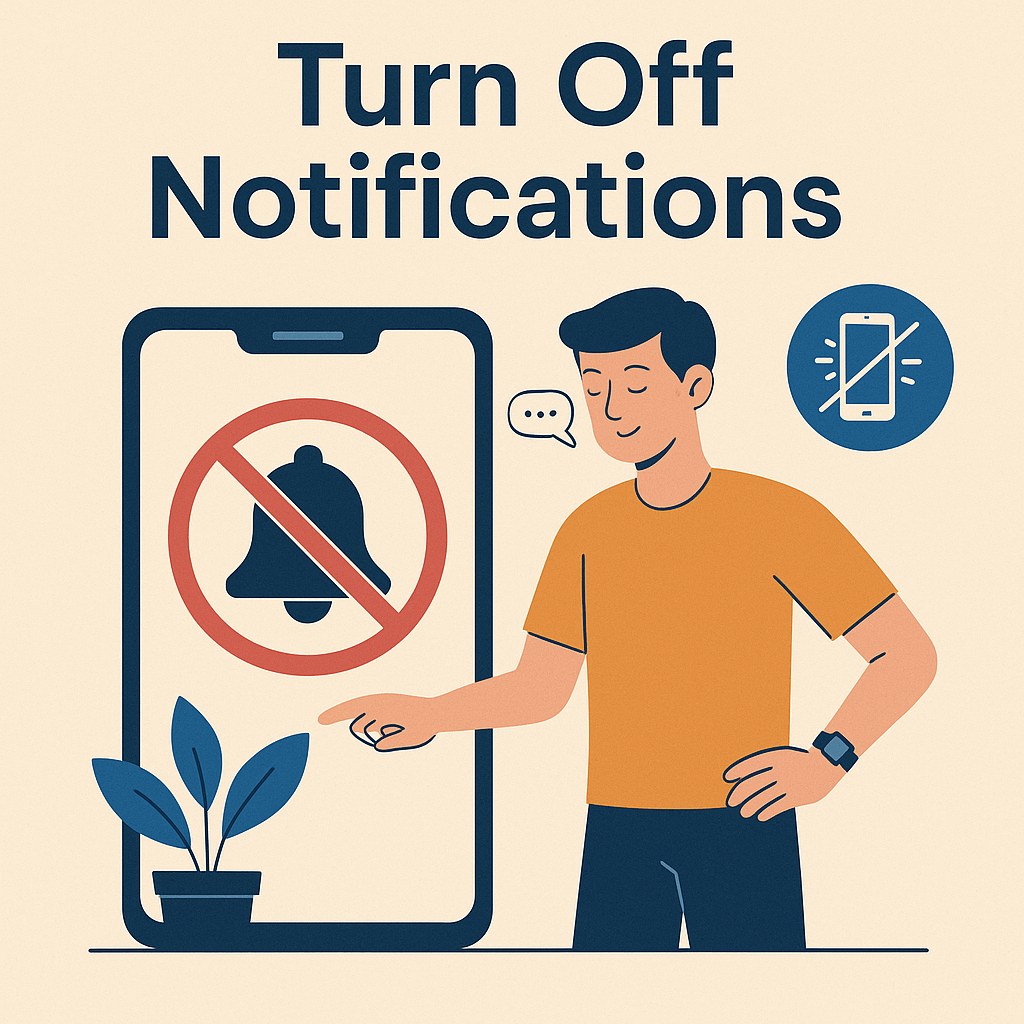
  • 🔧 Daily Kaizen: Remove Notifications, Reclaim Focus

    🔧 Daily Kaizen: Remove Notifications, Reclaim Focus

    Today’s 1% improvement is simple, powerful, and totally free:

    Turn off all non-essential notifications.

    😵 Why It Matters:

    Every ping trains your brain to respond, not create.

    It breaks flow. It adds stress. It makes everyone else’s priorities louder than your own.

    🛠️ What to Do:

    Kill All Social Media Alerts – You’ll check it anyway. Mute Group Chats – 95% of it isn’t urgent. Whitelist only calls, calendar events, and your partner. Use Do Not Disturb for deep work sessions. Batch responses instead of chasing distractions.

    🧠 Bonus:

    “The less your phone controls you, the more you control your life.”

    Try this for a day. You’ll feel more clear-headed, focused, and free.

  • ❓FAQ of the Day: “Should I Train When I’m Tired?”

    ❓FAQ of the Day: “Should I Train When I’m Tired?”

    We’ve all been there: you didn’t sleep well, work was brutal, and now the gym is calling your name. The big question is — should you go anyway?

    ✅ The Short Answer:

    Yes… but with a plan.

    🧠 How to Decide:

    Tired or Exhausted? If you’re mentally tired but physically fine → train. If you’re physically wrecked → modify or rest. Type of Fatigue? Sleep-deprived? Keep it light. Stressed? Training might help reset your mood. Goal-Driven Adjustments: Strength day? Drop the load, focus on form. Cardio? Go Zone 2 and just move.

    🛑 When to Skip:

    You’re sick, injured, or feeling warning signs (e.g., dizziness, joint pain). You’ve had multiple nights of poor sleep. You’re dragging emotionally and training feels destructive.

    💡 The Rule:

    “Show up, scale down, or shift to recovery.

    But keep the habit loop alive.”

    Consistency beats perfection. Tired sessions still count — mentally, physically, and habitually.

  • 🧠 Motivation Is a Trap – Here’s What Actually Keeps You Going

    🧠 Motivation Is a Trap – Here’s What Actually Keeps You Going

    Motivation is a liar.
    It shows up when it feels like it—and disappears the moment things get inconvenient.

    Everyone talks about “getting motivated.”
    But the truth?
    Motivation is the worst thing to rely on if you want long-term success.


    🔥 Why Motivation Fails

    • It’s based on emotion.
    • It’s influenced by sleep, food, mood, weather, and a hundred other things.
    • It disappears when you’re tired, discouraged, or overwhelmed.
    • It turns goals into “someday” fantasies, not daily disciplines.

    You don’t need motivation.
    You need a system that moves even when you don’t want to.


    🛠️ What Works Instead

    1. Rituals > Routines

    Make your habits sacred. The same way a soldier doesn’t think about brushing boots or packing gear—you don’t think, you just do.

    “No debate. No negotiation. Just action.”


    2. Environment Design

    You don’t rise to your goals—you fall to your environment.
    Make it harder to fail than to succeed.

    • Gym clothes ready the night before
    • Water bottle at your desk
    • No junk food in the house

    3. Identity-Based Habits

    Don’t ask, “What should I do today?”
    Ask: “What would a disciplined person do right now?”

    Become the type of person who trains daily, eats clean, and follows through—no matter how they feel.


    4. Momentum Over Heroics

    A perfect day is rare. A good-enough day is enough.
    String together enough “C+” days and you’ll crush 99% of the population.


    🎯 The Truth

    Motivation is a spark.
    Discipline is the engine.
    Systems are the fuel.

    You want progress? Stop waiting to feel like it.
    Act now. The feeling will catch up.