Category: Self Mastery

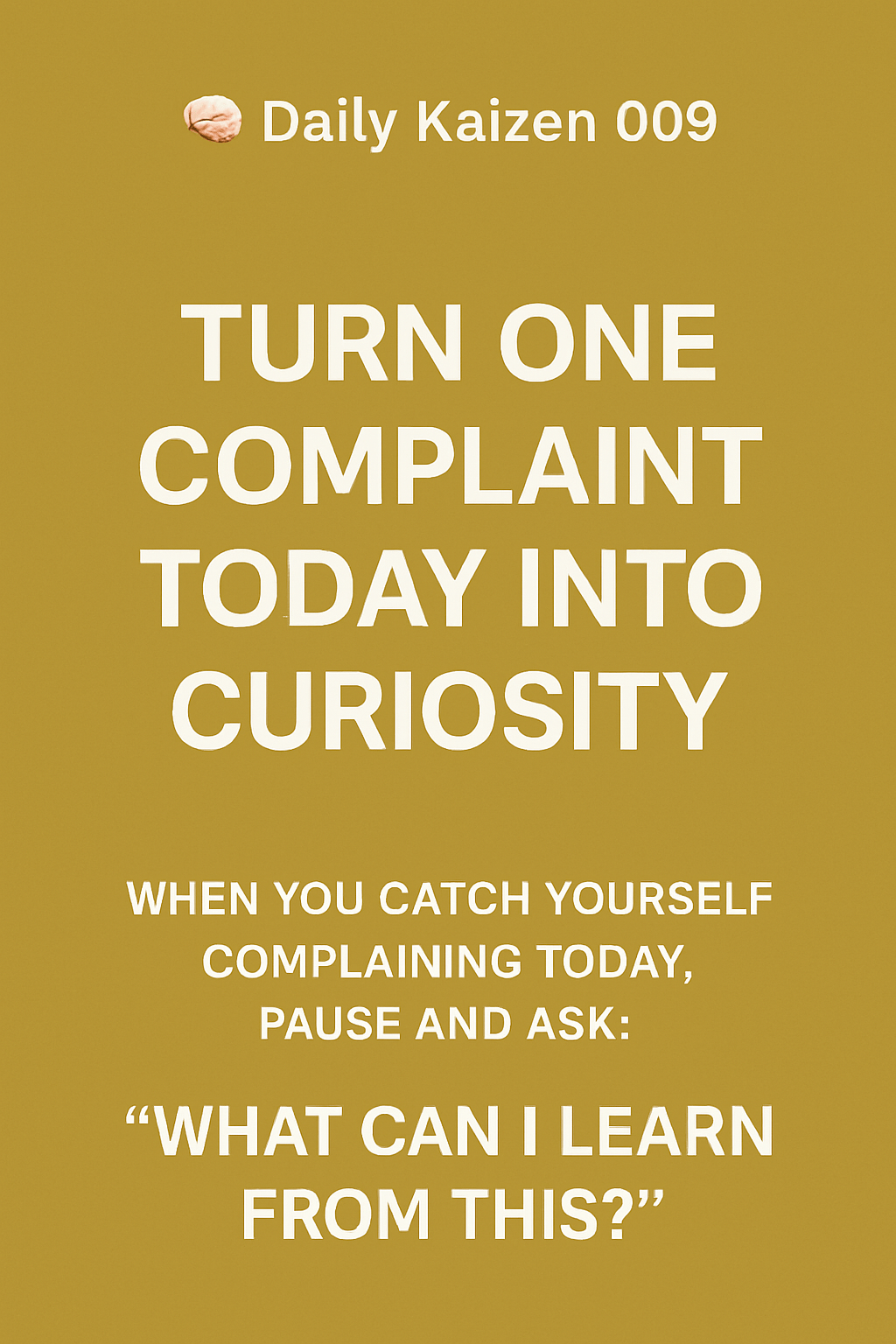
  • 🧠 Daily Kaizen 009: Turn One Complaint Today Into Curiosity

    🧠 Daily Kaizen 009: Turn One Complaint Today Into Curiosity

    Complaining is easy.

    Curiosity is hard.

    But curiosity is where growth begins.

    🛑 The Kaizen

    When you catch yourself complaining today, pause and ask:

    “What can I learn from this?”

    Instead of spiraling into frustration, use that moment to explore. Shift from judging the situation to understanding it.

    💡 Why It Works

    Complaining feels good in the moment—it’s a release valve for negative energy.

    But it also:

    Lowers your mood Drains your energy Makes you a victim of your circumstances

    Curiosity flips the script.

    It changes the narrative from “This is happening to me” to “Why is this happening, and what can I do with it?”

    🧪 What the Science Says

    Curiosity activates the dopamine reward pathway, the same one triggered by novelty and problem-solving Studies show that asking better questions reduces stress and improves emotional regulation The simple act of reframing a complaint increases mental resilience over time

    ✅ How to Do It

    Catch the complaint Notice when you’re about to vent (out loud or in your head) Pause and reframe Ask yourself: “What can I learn here?” “What’s the full picture?” “What’s one small thing I can do differently?” Stay curious, not judgmental Curiosity doesn’t mean liking the situation. It just means you’re open to understanding it.

    🔄 Examples

    Complaint:

    “Traffic is the worst. I’m wasting my time.”

    Curiosity:

    “What’s one podcast or audiobook I can enjoy while I drive?”

    Complaint:

    “This meeting is pointless.”

    Curiosity:

    “What question could I ask to make this conversation productive?”

    ⚙️ How It Stacks

    This habit builds:

    Emotional control Problem-solving Optimism Stronger relationships (less negativity rubs off on others)

    Over time, you’ll catch complaints faster and turn them into productive energy.

    🧠 Final Thought

    Your complaints don’t make life easier—they make it heavier.

    Curiosity makes it lighter.

    Today’s challenge:

    Catch one complaint and ask a better question.

  • The System I Wish I Had Years Ago

    The System I Wish I Had Years Ago

    Most self-improvement advice sounds great in theory.
    But when it comes time to apply it consistently, especially when life gets hard, it falls apart.

    Motivation fades.
    Discipline cracks.
    We revert back to default.

    I’ve spent the last year reverse-engineering why.

    The truth is:
    You don’t need more “inspiration.”
    You need a system that meets you where you are—and builds you brick by brick.

    That’s why I’m creating the 100-Step Personal Development System,
    A step-by-step framework to help you:

    • Build real discipline
    • Level up in all key areas of life
    • Stop relying on motivation
    • Become someone you actually respect

    It’s not finished yet.
    But it’s getting close.
    And when it drops, you’ll have the full blueprint.

    Until then, I’ll be dropping sneak peeks here.
    Mini-lessons. Daily wins. Foundational principles.

    Watch this space.

  • The Four Agreements by Don Miguel Ruiz: 4 Rules That Will Change Your Life

    The Four Agreements by Don Miguel Ruiz: 4 Rules That Will Change Your Life

    What if your life could be transformed by just four simple agreements?

    Don Miguel Ruiz’s The Four Agreements offers ancient Toltec wisdom in a modern package — and the results are radical. These aren’t fluffy affirmations. They are practical commitments to self-liberation.

    By breaking the mental “agreements” we’ve unconsciously made with fear, guilt, and conditioning, we unlock freedom, peace, and personal power.

    Let’s break down each of the Four Agreements and how to live them today.

    1️⃣ Be Impeccable with Your Word

    Your words create your world.

    Ruiz says this is the most important agreement. To be “impeccable” means to use your word with integrity — no gossip, no self-hate, no lies (especially to yourself). Speak truth. Speak life.

    🔁 Takeaway:

    Speak to yourself like someone you deeply love.

    Before speaking, ask: Is this kind, true, and necessary?

    2️⃣ Don’t Take Anything Personally

    Nothing others do is because of you — it’s a projection of their own world.

    When you take things personally, you hand your power to someone else’s emotional state. Ruiz says: “Even when a situation seems so personal, even if others insult you directly, it has nothing to do with you.”

    🔁 Takeaway:

    Someone cut you off, criticized your work, ignored your text?

    Say it to yourself: “That’s about them, not me.”

    3️⃣ Don’t Make Assumptions

    Assumptions create drama. Clarity creates peace.

    We assume people understand us. We assume we know their intentions. And then we get angry over things that aren’t even real. Ruiz urges: Ask. Clarify. Communicate.

    🔁 Takeaway:

    If something feels off, don’t spiral — ask.

    Just say: “Can I clarify something?”

    It saves relationships.

    4️⃣ Always Do Your Best

    Not perfection. Not overachievement. Just your best — and it changes daily.

    This agreement reminds us that our “best” will look different when we’re rested, stressed, or learning. But if you consistently give your honest best effort, you’ll avoid regret, shame, and self-judgment.

    🔁 Takeaway:

    Whatever you do today — training, working, resting — do it fully, with intention. That’s your best.

    💡 1% Better Challenge:

    Choose one agreement you’ve broken lately.

    Recommit to it just for today.

    Maybe it’s pausing to clarify (no assumptions) or saying something kind to yourself (impeccable word).

    One small act of integrity shifts everything.

  • The Mountain Is You by Brianna Wiest: 6 Powerful Insights on Self-Sabotage

    The Mountain Is You by Brianna Wiest: 6 Powerful Insights on Self-Sabotage

    Brianna Wiest’s The Mountain Is You: Transforming Self-Sabotage Into Self-Mastery reframes our inner obstacles as guides rather than judges. She explains that self-sabotage isn’t a sign of weakness but a misguided attempt to protect ourselves . The biggest “mountain” we face is often ourselves, reminding us “it is not the mountain that you must master, but yourself” . Through practical exercises, Wiest shows how to process emotions, rewrite personal narratives, and turn resistance into growth.

    1. Self-Sabotage as Protective Coping

    Wiest notes that self-sabotage comes from fear or unmet needs. “Self-sabotage is not a way we hurt ourselves; it’s a way we try to protect ourselves.” For example, procrastination can hide a fear of failure.

    Action: Notice a self-sabotaging habit (like avoiding a tough task). Ask yourself, “What am I afraid of?” and journal your answer. Understanding the fear behind it begins to dismantle the pattern.

    2. The Mountain = You (Facing Inner Obstacles)

    Wiest’s mountain metaphor shows that outward challenges usually point inward. She reminds us, “it is not the mountain that you must master, but yourself.” When a problem feels insurmountable, it often signals that part of you needs to grow.

    Action: Pick a current challenge (“your mountain”). Ask, “Could my mindset or habits be part of this obstacle?” Then make one small change (a thought shift or habit tweak) that helps you move forward.

    3. Process Your Emotions

    Emotional intelligence is key to breaking the cycle. Wiest outlines steps: understand what upset you, validate the feeling, then choose a course correction . Naming and allowing your emotions releases their hold, so you can choose a positive action.

    Action: Try a quick “feelings check” today. When something upsets you, pause and ask, “Why do I feel this way?” Name the emotion and allow yourself to feel it. Then note one small adjustment you can make to move closer to your goal.

    4. Rewrite Your Identity and Narrative

    Self-sabotage often reveals an outdated inner narrative . Wiest explains our self-image is built from past messages, so changing it is essential. By swapping an “I can’t do this” story for a more truthful belief, we free ourselves to grow.

    Action: Challenge one negative belief about yourself. If you think “I’m not good at this,” question it and replace it with a positive truth (e.g. “I can learn and improve.”). Write this new statement down and repeat it as an affirmation.

    5. Radical Responsibility

    Wiest emphasizes owning our power over life’s outcomes. She writes, “to become a master of oneself is first to take radical and complete responsibility for your life… it is not what happens, but the way one responds, that determines the outcome.” Blaming others keeps you stuck; owning your response gives you freedom.

    Action: Reflect on a recent setback. Instead of asking “Why did this happen to me?”, ask “What can I control here and how will I respond?”. Even owning small reactions (like choosing calm) immediately gives you more control.

    6. Becoming Your Future Self

    Wiest urges: “You must envision and become one with your future self, the hero of your life that is going to lead you from here.” Acting as if you are already that person begins to make it real.

    Action: Picture your most confident future self. What advice would they give you today? Write down one piece of that advice and do it now. For example, if health is important to your future self, take a quick walk as they would.

    1% Better Challenge

    Pick one insight above and apply it in a tiny way today. For example, do a quick “feelings check” (insight 3) when stress hits, or imagine your future self (insight 6) before deciding. These small 1% improvements accumulate into real momentum.

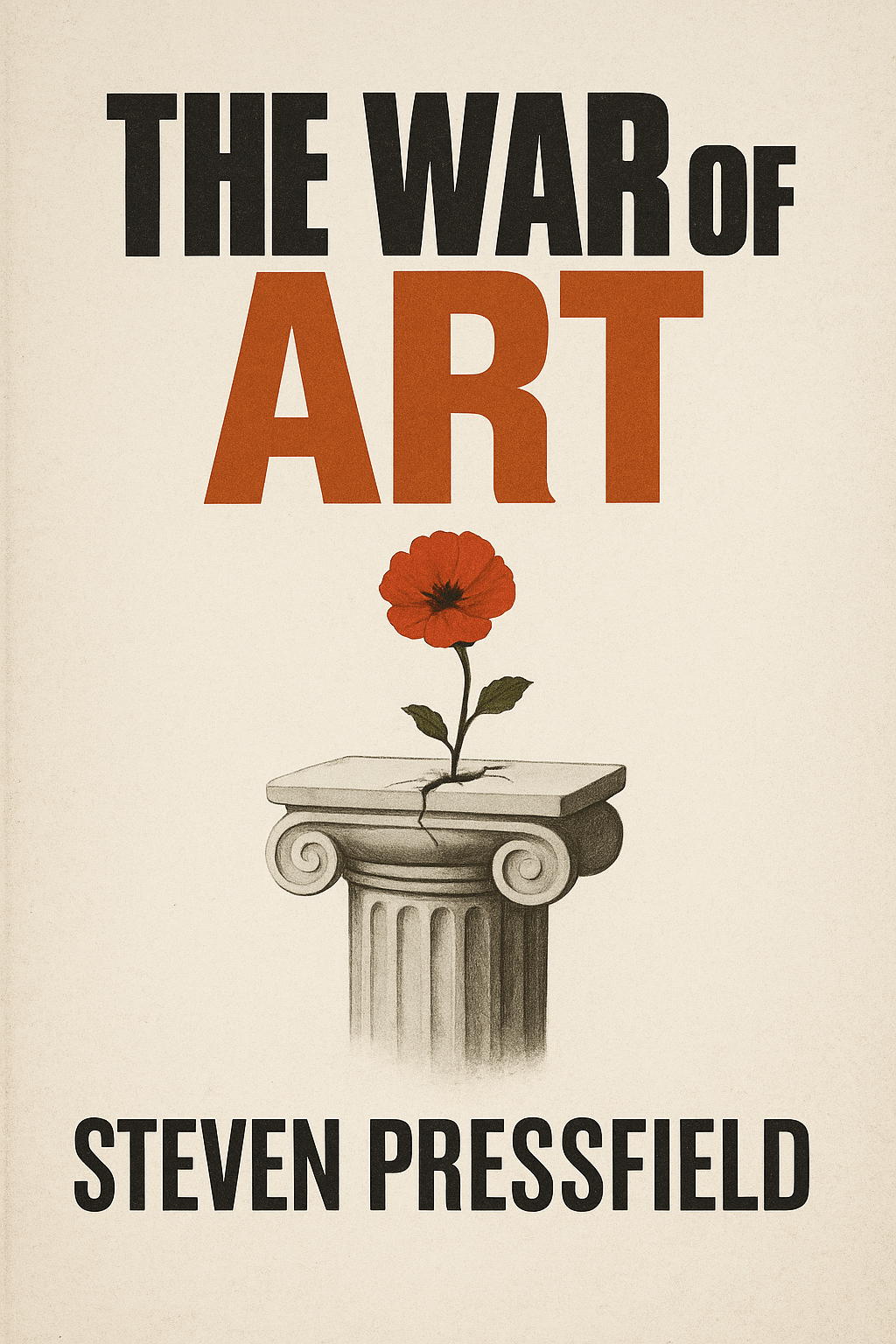
  • Book of the Day: The War of Art by Steven Pressfield

    Book of the Day: The War of Art by Steven Pressfield

    Core Message in a Nutshell

    The War of Art is a battle plan for creators and entrepreneurs to defeat the inner enemy that keeps them from doing their work. The core message: our greatest barriers to high performance are not external, but internal. Pressfield names this invisible opponent “Resistance” – the force of self-sabotage that manifests as procrastination, fear, self-doubt, excuses, and anything that stops you from doing what you need to do . According to Pressfield, Resistance stands between the life you live now and the “unlived” life of your highest potential . The War of Art teaches that by adopting a professional, disciplined mindset, we can conquer this Resistance and unleash our creative potential .

    Key Lessons for High-Performance Creators

    Know Your Enemy: Resistance. The first step is recognizing the enemy within. Pressfield defines Resistance as a universal internal force that “opposes any act that might lead to personal growth or creativity,” often disguising itself as rational excuses . Have you ever decided to start a project or a healthy habit, only to find yourself procrastinating or rationalizing it away? That’s Resistance at work . It’s not personal weakness – everyone faces Resistance when trying to do something worthwhile. In fact, the more important a goal is to your soul or growth, the more Resistance you’ll feel toward it . Pressfield even calls Resistance “the most toxic force on the planet,” responsible for more unhappiness than poverty or illness . Actionable Insight: Expect Resistance daily and don’t take it as a sign to quit – take it as a sign that what you’re attempting truly matters. Commit to fighting it by starting your important work each day no matter what .

    Turn Pro – Embrace Discipline and Consistency.

    Pressfield’s antidote to Resistance is to “turn pro.” This means treat your passion like a professional job, not a hobby. High performers show up every day, no matter what – whether they feel inspired or not . Turning pro is a mindset shift: you commit for the long haul, set a schedule, and do the work rain or shine . Professionals don’t make excuses or wait for motivation; they punch the clock and get it done. As Pressfield notes, the amateur is at the mercy of moods, but the pro “focuses on mastering the craft,” knowing that success (and inspiration) is a by-product of consistent effort . Actionable Insight: Adopt a workman-like ethos in your creative life. Schedule daily time for your craft and stick to it religiously – same time, same place, like it’s your job. By showing up consistently, you build momentum and signal to yourself (and others) that you take your calling seriously .

    Use Fear as Fuel.

    Rather than avoiding fear, Pressfield boldly argues that fear is a compass pointing you toward the work that matters most. “Are you paralyzed with fear? That’s a good sign,” he writes – it means you’re doing something important . In The War of Art, fear and Resistance are two sides of the same coin: the more scared you are of a creative endeavor or risky goal, the more sure you can be that you need to pursue it . Fear is an indicator of potential growth. High-achievers feel fear but move forward anyway, using it as adrenaline rather than a brake. If a project makes you anxious – launching that business, writing that book, stepping on that stage – that’s probably the very thing you must tackle . Actionable Insight: Don’t shy away from what scares you. Identify one task that excites you and terrifies you – then take action on it precisely because it scares you. As Pressfield puts it, “Fear tells us what we have to do” , so let it guide you toward the work that will make the biggest impact.

    Love the Process, Not the Outcome.

    One hallmark of the professional mindset is focusing on the work itself rather than fortune, fame, or even the final product. Pressfield insists that we must do our work for its own sake, not for applause or rewards . In high-performance terms, this is about intrinsic motivation – finding satisfaction in the process of creation and improvement. The War of Art introduces the idea of being “territorial” about your work: deriving fulfillment from the act of doing it, instead of measuring yourself by external hierarchies or validation . When you focus on the process, you free yourself from worrying about others’ opinions or perfect outcomes. Paradoxically, this leads to better results and more persistence, because you’re fueled by passion and purpose, not ego. Actionable Insight: Whatever your field, commit to the craft itself. Set aside ego and external metrics, and fall in love with the day-to-day grind of honing your skills. For example, if you’re a writer, write every day because you are a writer, not because you need a bestseller. Consistent practice and a love of the process will eventually attract the outcomes you desire .

    Play the Long Game (Patience and Persistence).

    High achievers know that meaningful success is a marathon, not a sprint. Pressfield drives home that persistence is what separates pros from amateurs. The professional is in it for the long haul – he doesn’t quit when things get hard or when accolades are delayed . There’s a powerful line in the book about the cost of slacking off: “The professional has learned better. He respects Resistance. He knows if he caves in today, he’ll be twice as likely to cave in tomorrow.” In other words, every day you skip work makes it harder to get back in the saddle the next day. So, don’t break the chain. By showing up consistently and patiently, you compound your gains. Pressfield also notes that success often comes as an unexpected by-product of dedication – when you put in the work day after day, opportunities and “luck” tend to follow . Actionable Insight: Be patiently relentless. Commit to your practice for the long term, whether or not you see immediate results. When you feel the urge to procrastinate or give up, remember that consistency is your competitive advantage – every session counts. Stick with it, especially on the days you don’t want to. Over time, your discipline will pay off in mastery and momentum.

    Memorable Quote

    “Are you paralyzed with fear? That’s a good sign. Fear is good. Like self-doubt, fear is an indicator. Fear tells us what we have to do.” – Steven Pressfield

    This fiery quote encapsulates Pressfield’s message that the emotions we often run from are actually arrows pointing us toward our true calling. Embrace the fear and do it anyway.

    Your Action Prompt for Today

    Identify one important task you’ve been avoiding due to Resistance or fear – that one thing you know would move you forward (perhaps it’s writing a page, hitting the gym, making a tough call). Commit to working on it for just 30 minutes today, no excuses. Set a timer, start right now, and fight through any Resistance. By taking action in the face of fear and discomfort, you’ll be winning your own “War of Art” today. Good luck – now get after it!
  • 🧠 Skill of the Day: How to Break the Scroll Loop in 3 Seconds

    🧠 Skill of the Day: How to Break the Scroll Loop in 3 Seconds

    Let’s be honest — you didn’t mean to open that app.

    You just did. Again.

    The scroll loop is a mental trap:

    Open phone Tap app without thinking Lose 5–50 minutes Exit app… and repeat later

    This isn’t a willpower problem.

    It’s a cue–reward loop hijacking your brain.

    🚨 Break the Loop in 3 Seconds:

    Recognize the Trigger: Pause and say out loud (or in your head): → “I didn’t choose this.” Disrupt the Pattern: Physically lock the phone, flip it face down, and stand up. Insert a 1% Win Instead: One deep breath One glass of water One stretch One micro-task you’d actually be proud of

    🛠 Why This Works:

    Interrupting a habit loop requires awareness + physical break Replacing it with a micro-win reclaims control and momentum 3 seconds of action prevents 30 minutes of regret

    🔁 Repeat Until Automatic:

    Each time you break the loop, your brain rewires.

    Each scroll you avoid, your discipline compounds.

    You don’t need to quit your phone.

    You just need to stop letting it lead.