Category: Skill of the Day

  • ✅ Skill of the Day: How to Keep a ‘Done’ List (Not Just a To-Do List)

    ✅ Skill of the Day: How to Keep a ‘Done’ List (Not Just a To-Do List)

    You’re not unproductive.

    You’re just forgetting what you actually got done.

    We obsess over what’s left — but we rarely track what we’ve already conquered.

    That’s where the ‘Done’ List comes in.

    🔁 How It Works:

    At the end of the day, write down everything you finished, no matter how small: Sent that message Did the workout Read 5 pages Didn’t check Instagram during work Drank more water than usual

    🧠 Why It Works:

    Shifts your focus from incomplete to accomplished Builds confidence through proof Reinforces the identity of someone who executes

    🧱 Pro Tip:

    Start with just 3 wins a day.

    You’ll be shocked how much you’re actually doing.

    📘 Don’t just plan your progress — record your proof.

  • 🧠 Skill of the Day: How to Be Consistent Without Motivation

    🧠 Skill of the Day: How to Be Consistent Without Motivation

    Motivation is a lie.

    Consistency only comes when you stop relying on feelings — and start relying on systems.

    Here’s how I built consistency I can trust:

    Identity first. I stopped trying to “get motivated.” I asked: What would a disciplined person do today? Design friction. I deleted distractions. No motivation needed when there’s nothing tempting me to stop. Daily 1% wins. No heroic efforts. Just one brick every day — no matter what. Pre-decide your actions. If you have to think about it, you’ll find a reason not to. Pre-decide. Execute. Done. Make your system unmissable. My routine is easier to do than to avoid. That’s by design.

    Motivation fades. But systems keep showing up.

    🧱 Discipline is a system — not a feeling.

  • 🧠 Skill of the Day: How to Break the Scroll Loop in 3 Seconds

    🧠 Skill of the Day: How to Break the Scroll Loop in 3 Seconds

    Let’s be honest — you didn’t mean to open that app.

    You just did. Again.

    The scroll loop is a mental trap:

    Open phone Tap app without thinking Lose 5–50 minutes Exit app… and repeat later

    This isn’t a willpower problem.

    It’s a cue–reward loop hijacking your brain.

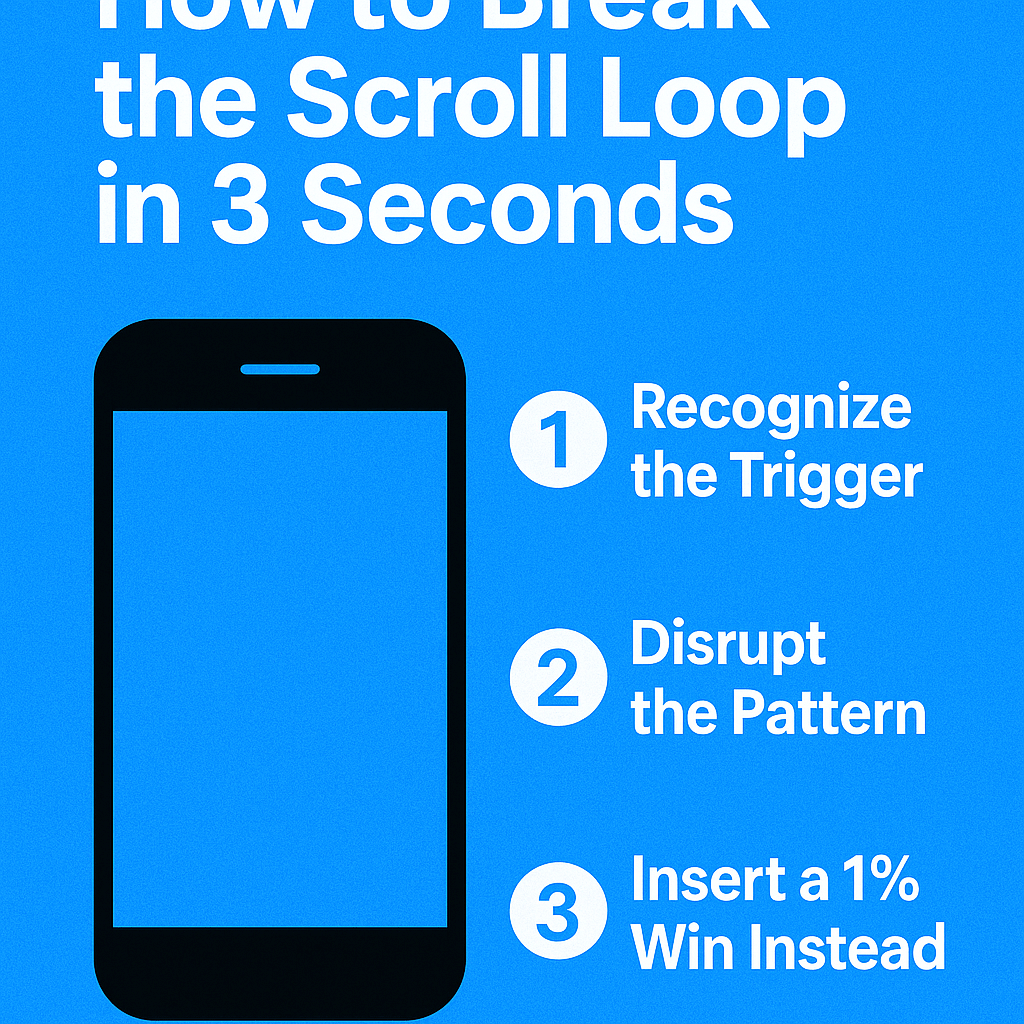
    🚨 Break the Loop in 3 Seconds:

    Recognize the Trigger: Pause and say out loud (or in your head): → “I didn’t choose this.” Disrupt the Pattern: Physically lock the phone, flip it face down, and stand up. Insert a 1% Win Instead: One deep breath One glass of water One stretch One micro-task you’d actually be proud of

    🛠 Why This Works:

    Interrupting a habit loop requires awareness + physical break Replacing it with a micro-win reclaims control and momentum 3 seconds of action prevents 30 minutes of regret

    🔁 Repeat Until Automatic:

    Each time you break the loop, your brain rewires.

    Each scroll you avoid, your discipline compounds.

    You don’t need to quit your phone.

    You just need to stop letting it lead.

  • 🎯 Skill of the Day: How to Make an Unforgettable First Impression

    🎯 Skill of the Day: How to Make an Unforgettable First Impression

    You never get a second chance to make a first impression.

    Within 7 seconds, people decide if you’re worth listening to.

    That means before you say anything meaningful, they’ve already judged your:

    Confidence Competence Energy Respect

    The good news? This is a trainable skill. And mastering it opens doors.

    🔑 1. Own the Room Before You Speak

    Posture is your handshake before your handshake.

    Stand tall. Shoulders relaxed. Chin up. Make eye contact with calm steadiness — not aggression.

    Body language is processed faster than speech. If your body says “uncertain,” your words won’t matter.

    🧠 2. Lead With Listening, Not Talking

    People remember how you made them feel — not what you said.

    Let them speak first. Ask a question. Hold eye contact. Nod with intention.

    Confidence is quiet. Curiosity is magnetic.

    💬 3. Speak 10% Slower Than Feels Natural

    Slowing your speech makes you sound more:

    Intentional Calm Authoritative

    It also makes others lean in. Fast talk signals nerves. Deliberate pacing builds presence.

    🪞 4. Mirror Their Energy — Then Lead It

    Match their volume and tone for the first 30 seconds. Then raise or lower the energy just slightly. This establishes subtle control — and people feel seen, not steamrolled.

    🧠 5. Anchor With a Phrase or Insight

    Leave them with a single takeaway. A story. A sharp line. A question they’ll think about later.

    People don’t remember details — they remember impact.

    🧱 Build the Habit

    Practice 1:

    Walk into a room today with shoulders back, eyes up, and calm breathing.

    Say nothing for 3 seconds. Then greet someone with a question instead of a statement.

    Practice 2:

    Record yourself saying hello and introducing yourself. Watch it back.

    Are you commanding attention — or asking for it?

    ⚔️ Final Thought

    An unforgettable first impression doesn’t require charisma.

    It requires intention.

    Train this skill and people won’t just remember your name — they’ll lean in when you speak.

  • 🛡️ Skill of the Day: How to Set Boundaries Without Guilt

    🛡️ Skill of the Day: How to Set Boundaries Without Guilt

    Saying “no” isn’t selfish. It’s self-respect.

    If you constantly feel drained, resentful, or taken advantage of, it’s not because you’re too nice—it’s because your boundaries are too weak.

    But here’s the truth: You can set boundaries and still be kind. You can protect your time, energy, and mental health without guilt.

    Let’s break down how.


    🧠 1. Guilt Is a Signal, Not a Stop Sign

    Feeling guilty doesn’t mean you’re doing something wrong. It means you’re doing something new.

    Most guilt stems from old conditioning—people-pleasing habits, fear of rejection, or childhood patterns where saying “no” felt unsafe.m.youtube.com

    Instead of avoiding guilt, recognize it as a sign that you’re growing.

    “Guilt is not reality. It reminds us we are human… but it’s important to stay strong and really care for yourself when you set a boundary.”
    Reddit user on r/raisedbynarcissists reddit.com+1m.youtube.com+1


    🧭 2. Use “I” Statements and Keep It Simple

    You don’t owe anyone a long explanation.laconciergepsychologist.com+2noworrieswellness.org+2psychologytoday.com+2

    Clear, calm language works best:

    • “I’m not available for that.”
    • “I need time to recharge.”
    • “That doesn’t work for me.”

    Avoid over-explaining. The more you justify, the more room you give others to push back.noworrieswellness.org+4reddit.com+4self.com+4


    🧱 3. Remember: Boundaries Build Stronger Relationships

    Healthy boundaries aren’t walls—they’re bridges.

    They create clarity, reduce resentment, and foster mutual respect.

    As Sharon Martin, LCSW, notes:psychologytoday.com

    “Boundaries foster intimacy and connection because they create emotional safety which allows us to be vulnerable.” psychologytoday.com

    By setting limits, you show others how to treat you—and encourage them to do the same.verywellmind.com


    🧘 4. Practice Self-Compassion

    Setting boundaries is a skill, and like any skill, it takes practice.noworrieswellness.org+3psychologytoday.com+3heragenda.com+3

    Be patient with yourself.

    If you feel guilt creeping in, remind yourself:terricole.com+1yourtimetogrow.com+1

    • “I have the right to prioritize my needs.”
    • “Taking care of myself benefits everyone around me.”
    • “It’s okay to feel uncomfortable; growth often is.”

    🔄 5. Reframe “No” as a Positive

    Every time you say “no” to something that drains you, you’re saying “yes” to something that fuels you.

    Think of it this way:

    • Saying “no” to overtime = Saying “yes” to family dinner.
    • Saying “no” to a social event = Saying “yes” to rest.
    • Saying “no” to a toxic relationship = Saying “yes” to peace.

    This perspective shift can transform guilt into empowerment.


    🔧 Practice Drill: The Boundary Script

    Choose one area where you need a boundary—work, family, or friends.

    Write a simple script:

    • “I appreciate the offer, but I can’t commit to that right now.”
    • “I understand you’re upset, but I need to focus on my well-being.”
    • “I’m choosing to spend my time differently.”

    Practice saying it out loud. The more you rehearse, the more natural it becomes.


    🔥 Final Thought

    You’re not responsible for others’ reactions—you’re responsible for your actions.noworrieswellness.org

    Setting boundaries is an act of self-love, not selfishness.

    As you strengthen this skill, you’ll find that guilt fades, and confidence grows.

  • 🗣️ Skill of the Day: How to Speak So People Actually Listen

    🗣️ Skill of the Day: How to Speak So People Actually Listen

    Tired of being ignored, misunderstood, or tuned out?

    Being a great speaker isn’t about volume or charisma—it’s about clarity, intent, and emotional control. Speaking well is a skill, and today, we’re going to break down how to master it.

    🧠 1. Start with One Clear Intent

    Before you speak, ask yourself:

    “What’s the one message I want them to take away?”

    Cut the fluff. No one remembers rambling. One clear takeaway will always land harder than a tangled mess of ideas.

    ⏱️ 2. Speak Slower Than Feels Natural

    Speed kills attention.

    When you slow your speech by just 10–20%, it does 3 things:

    Increases clarity Projects calm confidence Makes your words feel intentional

    Pro tip: Pause for half a second between major ideas. Let it land.

    👂 3. Use the “Lean-In” Effect

    Don’t try to fill every silence. Sometimes the most powerful thing you can say is… nothing.

    Strategic pauses make people lean in.

    Silence builds tension and forces attention back on you. Own the space.

    💥 4. Punch With the Last Word

    Always land your most powerful word at the end of a sentence.

    Compare:

    “This is a powerful idea.”

    vs.

    “This idea is powerful.”

    The second one hits.

    🤝 5. Mirror Their Energy, Then Lead

    If you’re too hyped for a calm crowd, you’ll seem fake.

    Match their emotional tone for the first few seconds, then slowly raise the energy once you’ve got their trust.

    This is how charisma is built in real time.

    🔁 Practice Drill: The 60-Second Breakdown

    Choose a topic. Record yourself explaining it in under 60 seconds.

    Watch it back Cut the fluff Tighten the pace Re-record until it lands clean

    Do this 5x per week and you’ll be shocked how fast you improve.

    🔥 Final Thought

    People don’t listen to noise. They listen to signal.

    Train this skill and you won’t just sound confident—you’ll become someone worth listening to.

  • 🧠 Skill of the Day: How to Improve Your Posture

    🧠 Skill of the Day: How to Improve Your Posture

    Poor posture doesn’t just make you look tired, lazy, or older—it limits your performance, causes chronic pain, and quietly sabotages your confidence.

    But here’s the good news: it’s fixable.
    And you can start seeing results in days—not months—with consistent micro-efforts.


    💡 Why Posture Matters

    • Reduces risk of back, neck, and shoulder pain
    • Improves lung capacity and energy
    • Boosts confidence and body language
    • Increases strength and stability in lifts and movement
    • Helps reduce fatigue and tension headaches

    🚨 Common Postural Problems

    • Forward head (tech neck)
    • Rounded shoulders
    • Anterior pelvic tilt (exaggerated lower back curve)
    • Slouched upper back (kyphosis)
    • Inactive glutes and weak core

    What causes them?

    • Sitting too long
    • Screen use
    • Muscle imbalances
    • Weak posterior chain
    • Lack of movement variety

    🛠️ How to Fix Your Posture (Step-by-Step)

    1. Daily Mobility & Stretching

    • Chest Openers: Doorway pec stretch (2×30 secs each side)
    • Neck Tucks: 10 reps daily to realign your head
    • Hip Flexor Stretch: Loosen tight hips that pull your spine forward
    • Thoracic Extensions: Use foam roller or towel under upper back

    2. Strengthen Key Areas

    • Glutes: Glute bridges, clamshells
    • Core: Dead bugs, planks
    • Upper Back: Band pull-aparts, face pulls
    • Lower Traps: Y-T-W raises

    3. Align and Cue Your Body Throughout the Day

    • Stand tall: ears over shoulders, ribs down, glutes gently squeezed
    • Use reminders or tape to keep posture top of mind
    • Stack shoulders over hips—especially when walking or standing

    🔁 Daily Kaizen: Micro-Habits to Lock It In

    • 💡 1-minute posture reset every hour: stand, stretch, and realign
    • 📱 Set your lock screen to say: “Chest Up, Core On”
    • 🚿 Do wall angels before or after your shower
    • 🧘 Morning glute bridges and cat-cows to open up your spine
    • 💻 Invest in a standing desk or lumbar support pillow

    🚀 Final Thoughts

    You don’t need to overhaul your life.
    Just add a few posture resets a day.
    Your back will thank you.
    Your confidence will grow.
    And you’ll move like someone who owns the room.

  • Skill of the Day: Developing Mental Toughness

    Skill of the Day: Developing Mental Toughness

    Introduction
    Mental toughness isn’t about being emotionless or fearless—it’s about staying grounded, focused, and disciplined when it matters most. Whether you’re under pressure at work, grinding through a tough workout, or navigating personal adversity, mental toughness is what keeps you moving forward when motivation fades. It’s a skill—and like any skill, it can be trained.


    🧠 What Is Mental Toughness?

    Mental toughness is your ability to stay resilient, focused, and composed under stress, especially when things get uncomfortable. It’s not about pretending nothing affects you—it’s about responding intentionally instead of reacting emotionally.

    You’ve likely seen it in action:

    • A fighter who keeps their composure after being knocked down.
    • A leader who stays calm while their team panics.
    • An entrepreneur who keeps going after multiple failures.

    Mental toughness is the bridge between goals and execution—the discipline to act even when it’s hard.


    ⚠️ Common Misconceptions

    • “You’re born with it” – False. Mental toughness is built through repetition, like a muscle.
    • “It means pushing through at all costs” – Wrong. True toughness includes knowing when to rest, adapt, or say no.
    • “It’s about being stoic and emotionless” – No. It’s about controlling your emotions, not erasing them.

    🛠️ Real-World Applications

    • Fitness: Pushing through fatigue, showing up on low-motivation days, and training consistently.
    • Career: Delivering under pressure, dealing with criticism, and making tough decisions.
    • Personal Life: Handling setbacks, managing stress, and staying calm during conflict.

    The more mentally tough you are, the better your outcomes—not because life gets easier, but because you get stronger.


    🔁 Step-by-Step Framework to Build It

    1. Embrace Discomfort on Purpose

    You grow tough by choosing challenge regularly. This could be:

    • Cold showers
    • Extra sets at the gym
    • Speaking up when it’s uncomfortable

    These “controlled struggles” expand your capacity for stress.

    2. Control the Inner Dialogue

    Your mind will offer excuses, fears, and doubts. Create a response:

    • “Just keep moving.”
    • “Discomfort is temporary.”
    • “This is how I grow.”

    Repetition rewires your default reactions.

    3. Visualize Pressure

    Prepare mentally for tough scenarios:

    • Imagine that high-stress meeting or hard roll at BJJ
    • Rehearse how you’ll breathe, move, and think

    Mental rehearsal makes the real thing easier.

    4. Set Clear, Unbreakable Standards

    Create rules that don’t bend based on mood:

    • “I don’t skip training.”
    • “I always finish what I start.”
    • “I speak calmly, even when triggered.”

    Then stick to them—especially when it’s hardest.

    5. Recover Like a Pro

    Toughness isn’t just push—it’s also bounce-back. Prioritize:

    • High-quality sleep
    • Intentional rest days
    • Reflection and journaling

    A resilient system doesn’t break—it bends and returns stronger.


    🔁 Kaizen Micro-Habits to Train Mental Toughness

    • Do something hard first thing in the morning (cold shower, exercise, no snooze button).
    • Set a 3-second pause rule before reacting emotionally.
    • Write down one “win under pressure” at the end of each day.
    • Track discomfort reps: Every time you lean into a hard task, note it—it builds pride and momentum.
    • Use a mantra (“Just keep breathing,” “This is where I grow”) when facing challenge.

    Small wins compound—this is the Kaizen path to a stronger mind.


    💬 Final Thoughts + Call to Action

    Mental toughness isn’t about never struggling—it’s about refusing to quit when things get hard. You don’t need to be fearless. You need to be consistent, clear-minded, and grounded in discomfort.

    Today’s challenge:
    Choose one small, uncomfortable action—and do it on purpose. A cold shower. An honest conversation. That task you’ve been avoiding. Then reflect: What did that teach you about yourself?

    Growth lives just beyond discomfort. Go get it.