Blog

  • 🗣️ Daily Kaizen: Speak to One Person Without Checking Your Phone

    🗣️ Daily Kaizen: Speak to One Person Without Checking Your Phone

    Most people can’t hold eye contact for 10 seconds.

    Fewer can stay fully present through a 2-minute chat.

    Even fewer do it on purpose.

    Today’s Kaizen:

    🧠 Talk to one person — no distractions, no glances at your phone, no half-attention.

    That’s it.

    No “just checking the time.”

    No “hang on, let me reply to this real quick.”

    Just 1 person. 1 conversation. 100% presence.

    Why it matters:

    Builds real connection Trains your attention span Reclaims respect in a world of divided minds

    Presence is rare. That’s why it’s powerful.

  • 🧠 1% Better: Remove One Thing From Your To-Do List

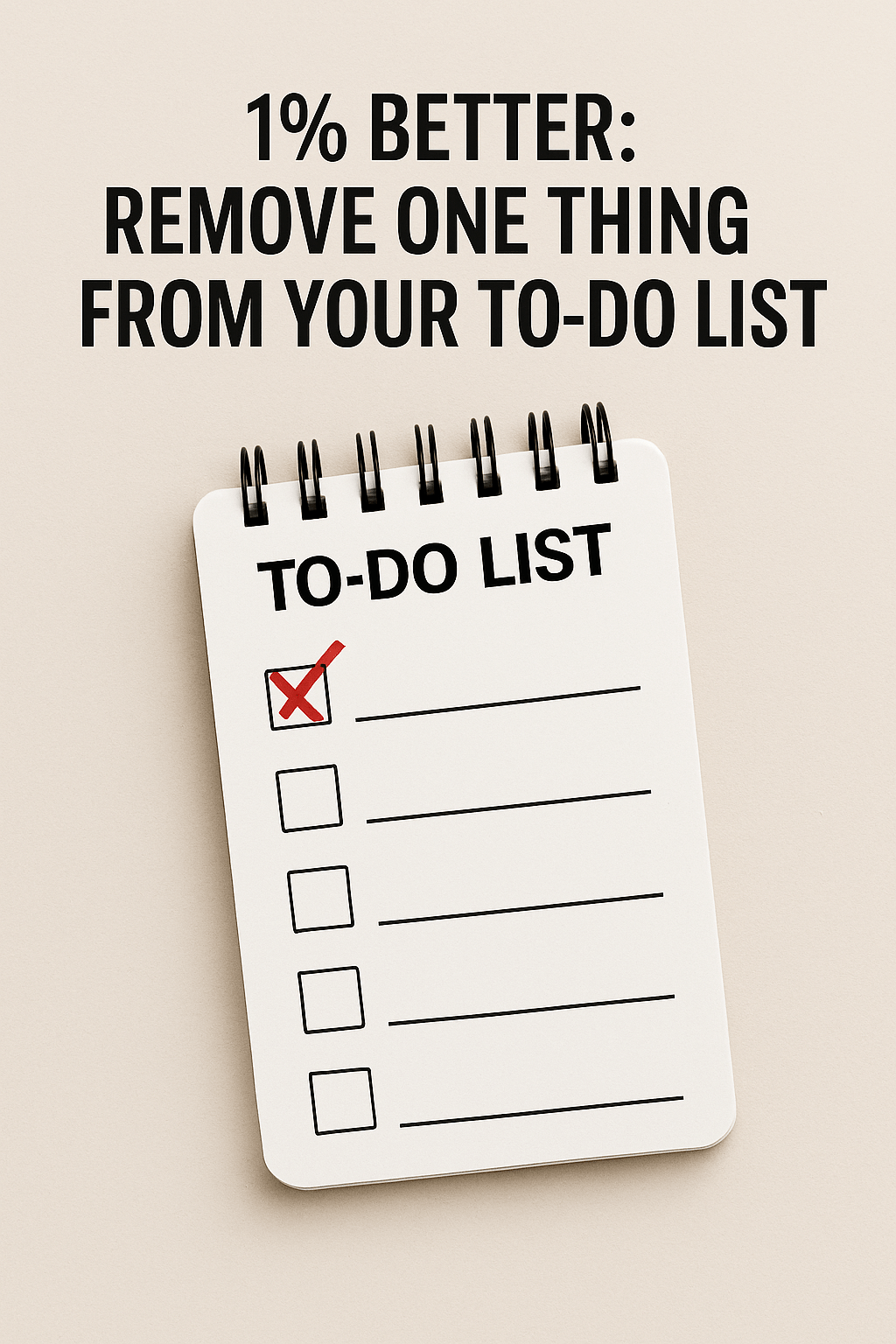
    🧠 1% Better: Remove One Thing From Your To-Do List

    You think you’re falling behind because you’re not doing enough.

    But often, you’re falling behind because you’re doing too much.

    1% better today means less clutter, more clarity.

    🧹 Look at your list.

    🗑️ Choose one item that’s low-leverage, low-impact, or not urgent.

    ❌ Delete it.

    You just created space to execute better on what actually matters.

  • 🧠 Skill of the Day: How to Break the Scroll Loop in 3 Seconds

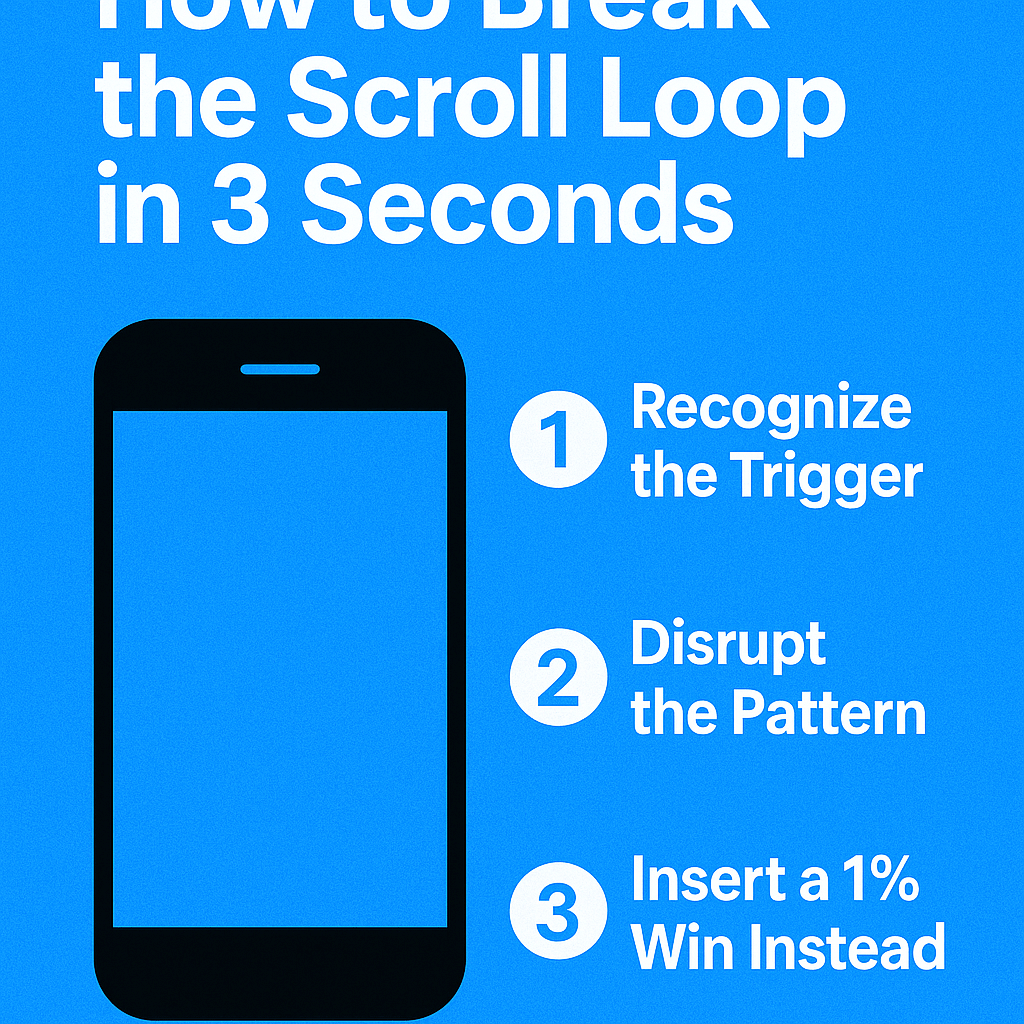
    🧠 Skill of the Day: How to Break the Scroll Loop in 3 Seconds

    Let’s be honest — you didn’t mean to open that app.

    You just did. Again.

    The scroll loop is a mental trap:

    Open phone Tap app without thinking Lose 5–50 minutes Exit app… and repeat later

    This isn’t a willpower problem.

    It’s a cue–reward loop hijacking your brain.

    🚨 Break the Loop in 3 Seconds:

    Recognize the Trigger: Pause and say out loud (or in your head): → “I didn’t choose this.” Disrupt the Pattern: Physically lock the phone, flip it face down, and stand up. Insert a 1% Win Instead: One deep breath One glass of water One stretch One micro-task you’d actually be proud of

    🛠 Why This Works:

    Interrupting a habit loop requires awareness + physical break Replacing it with a micro-win reclaims control and momentum 3 seconds of action prevents 30 minutes of regret

    🔁 Repeat Until Automatic:

    Each time you break the loop, your brain rewires.

    Each scroll you avoid, your discipline compounds.

    You don’t need to quit your phone.

    You just need to stop letting it lead.

  • Book of the Day: The Slight Edge by Jeff Olson

    Book of the Day: The Slight Edge by Jeff Olson

    Overview

    The Slight Edge is a personal development classic that delivers one clear message: small, everyday choices compound into massive success (or failure) over time. Olson describes his philosophy as “a way of thinking… that enables you to make the daily choices that will lead you to the success and happiness you desire” . In other words, there’s no secret formula or grand leap to success – it’s about doing the little, seemingly insignificant things consistently until the outcomes snowball in your favor. The book shows that anyone can leverage this “slight edge” by using tools they already have (habits, attitude, time) to create powerful results from simple daily activities . It’s an empowering message for creators, writers, and entrepreneurs: your 1% daily improvements and disciplined actions, however minor they seem, are the gateway to extraordinary success.

    Key Takeaways (for Creators, Solopreneurs & Builders)

    Commit to Small Daily Wins – They Compound Over Time: Every big success is built on consistent small actions. Olson famously distills his formula: “consistently repeated daily actions + time = unconquerable results” . For example, improving by just 1% each day makes you 365% better in a year . Whether it’s writing 300 words daily for your blog or reaching out to one new client, those tiny efforts add up. Time and consistency are your allies – as Olson puts it, “time will be your friend or your enemy; it will promote you or expose you” . In practical terms, this means showing up every day even when the payoff isn’t immediate, trusting that your gradual gains will compound into significant results.

    Master the Mundane – Easy to Do, Easy Not to Do: The tasks that lead to success often seem trivial in the moment. They’re easy to do, but just as easy not to do . Skipping your morning writing session or neglecting that marketing email won’t ruin you today, but repeating such lapses over time can quietly put you on a downward curve. Olson warns that the difference between success and failure is often “so subtle, so mundane, that most people miss it” . Successful people separate themselves by doing the boring, beneficial tasks that others ignore. “Successful people do what unsuccessful people are not willing to do” – like writing one page even on uninspired days, or making that extra sales call when you’d rather relax. Embracing discipline in these little choices, especially when you don’t feel like it, gives you the slight edge. Over time, the mundane daily disciplines lead to remarkable outcomes, while daily neglect leads to regret .

    Your Philosophy Shapes Your Success: Olson argues that mindset is the root of achievement. “Your philosophy creates your attitudes, which create your actions, which create your results, which create your life.” In short, how you think about daily discipline and improvement sets the tone for your journey. If you believe small actions don’t matter, you’ll act accordingly – and stall. But if you adopt a philosophy that every day is an opportunity to grow, you’ll approach tasks with a productive attitude.

    This is self-mastery 101: cultivate a positive, growth-oriented mindset that fuels consistent action. For a solopreneur or creative, this might mean viewing each blog post, each design draft, each incremental code update as an important step in the long game. Olson encourages readers to develop success habits (like reading 10 pages of a good book daily, or practicing a skill every day) because these habits reinforce a winning philosophy. Over time, a humble daily routine – backed by the right mindset – produces stellar results. Attitude and perspective make all the difference in turning simple disciplines into success .

    Play the Long Game – Patience and Perseverance: The Slight Edge drives home that success is a long-term journey of planting and nurturing, not a one-time event. Olson writes, “There is a natural progression to everything in life: plant, cultivate, harvest.” The trouble is, many people want to skip the cultivation and jump straight to reaping rewards. But just as in farming, you can’t harvest the same day you plant. In your creative or business endeavors, consistency and patience are non-negotiable. Results often start off invisible – nothing seems to happen in the first weeks or months of effort . That’s when most people get frustrated and quit, or chase a shiny new idea. Don’t fall for the “instant success” illusion: embrace the process. Keep refining your craft, publishing content, building your product, even when progress is hard to see. Olson advises following the full Plant–Cultivate–Harvest cycle and not expecting something for nothing . If you cultivate long enough – keeping at those daily improvements – the harvest will come. Think in terms of years, not days. This long-game mindset is what separates the 5% who achieve extraordinary success from the 95% who lead a mediocre life . For an online business builder, that means focusing on sustainable growth and learning, rather than chasing overnight results. Stay the course, and let your efforts compound with time.

    Skill Stacker Take

    At Skill Stacker, we live and breathe the Slight Edge philosophy. The book’s core idea – that small daily wins lead to massive success through compounding effort – is the very foundation of our brand. Every article you write, every piece of code you push, every design tweak you make is a building block stacking toward your goals. Olson’s message validates our belief that consistency beats intensity: doing the 1% improvements daily and staying patient through the process. This is long-game thinking incarnate – the recognition that real mastery and business growth come from accumulated effort over time, not one-off strokes of genius. The Skill Stacker take is simple: embrace the Slight Edge in your own journey. Commit to those everyday disciplines and trust the process. When you do, you’ll create a momentum that’s hard to stop – the compounding curve of progress that turns skill stackers into success stories. Remember, the grind you put in today may seem small, but it’s paving the way for tomorrow’s big win. In Olson’s words, greatness is always in the moment of the decision – the decision you make today to show up and do the work, however small. Keep stacking those skills and wins daily, and watch the slight edge work its magic.

  • 🛡️ Daily Kaizen: Delay Your First Phone Check by 30 Minutes

    🛡️ Daily Kaizen: Delay Your First Phone Check by 30 Minutes

    Your brain wakes up hungry — not for dopamine, but direction.

    The first thing you feed it sets the tone for the day.

    📵 Delay your first phone check by 30 minutes.

    🧠 Use that time to move, think, write, or breathe.

    Reclaim the opening scene.

    Win the day before it begins.

  • Book of the Day: Digital Minimalism by Cal Newport

    Book of the Day: Digital Minimalism by Cal Newport

    Digital Minimalism: Choosing a Focused Life in a Noisy World by Cal Newport is a guide to decluttering your digital life and reclaiming real focus. Newport – best known for Deep Work – argues that less can be more when it comes to technology. The core message is to be intentional and selective about the apps, sites, and devices you allow into your routine. In fact, Newport defines digital minimalism as “a philosophy of technology use in which you focus your online time on a small number of carefully selected and optimized activities that strongly support things you value, and then happily miss out on everything else” .

    In an age of infinite feeds and notifications, Newport reminds us that our current tech-saturated lifestyle didn’t happen by accident. “We didn’t sign up for the digital lives we now lead… [they were] crafted in boardrooms to serve the interests of a select group of technology investors,” he observes . In other words, Big Tech has designed platforms to be as addictive and all-consuming as possible. “People don’t succumb to screens because they’re lazy, but instead because billions of dollars have been invested to make this outcome inevitable,” Newport writes . The antidote, he argues, is to develop a conscious digital philosophy – using tech on your terms to support your goals, and confidently ignoring the rest.

    Key Takeaways for Digital Discipline and Focus

    Focus on What Truly Matters: Identify the handful of digital activities that genuinely add value to your work and life, and eliminate the rest. Digital minimalists focus their online time on carefully selected pursuits that support their values and happily miss out on everything else . For a creator or entrepreneur, this might mean doubling down on creating content or building your product, while saying no to endless scrolling and shiny new apps that don’t serve your mission. Perform a 30-Day Digital Declutter: Newport suggests a technology “fast” to reset your habits . Take a 30-day break from all optional online activities – social media, news feeds, streaming – that aren’t essential. Use this period to rediscover offline hobbies and real-world pleasures. After 30 days, reintroduce digital tools only if they serve a deep value or purpose in your life . Many find that after a month off, they regain control and no longer feel the urge to revert to past habits.

    Reclaim Solitude (Disconnect to Think): In a world of constant connectivity, “solitude deprivation” – never being alone with our thoughts – is a real threat . Make it a discipline to carve out tech-free time for reflection. That could mean daily walks without your phone, journaling, or simply sitting unplugged. Newport points out that great ideas and self-awareness flourish in moments of quiet, when you can actually hear yourself think. Protect these pockets of solitude to recharge your mind and boost your creativity and mental well-being.

    Prioritize Creation Over Consumption: Be a producer, not just a consumer. Instead of defaulting to passive scrolling whenever you have a free moment, direct that time toward demanding, high-value activities that sharpen your skills or create something meaningful . This might be writing a blog post, designing a new project, practicing your craft, or having a deep conversation with a friend. Newport calls this the Bennett Principle – favor the real-world and the challenging over the easy hits of digital distraction . You’ll gain far more satisfaction from building or learning than from another hour lost on a timeline.

    Use Social Media Like a Tool, Not a Crutch: For many in online business, social media is unavoidable – but use it intentionally. Treat it as a professional tool for specific outcomes, not a default pastime. Newport advises curating your digital environment: follow only high-quality accounts that inform or inspire you, and unfollow the noise . Set strict boundaries like checking messages or feeds during a designated 30-minute window, rather than sporadically all day . By scheduling your usage and sticking to purpose-driven tasks (e.g. publishing your work or engaging with your community), you prevent the platforms from hijacking your attention.

    Skill Stacker Take

    At Skill Stacker, we’re all about building online leverage through focus, clarity, and action – and Digital Minimalism is a perfect rallying cry for this mission. Newport’s insights remind us that disciplined tech use isn’t about deprivation; it’s about creating space for what matters most. When you clear out the digital clutter, you make room for deep work and creative output that moves the needle. For creators, writers, and entrepreneurs, this means more time to hone your craft and execute on your ideas, and less time fighting distractions.

    The takeaway is both inspirational and practical: your attention is your most valuable asset. By adopting digital minimalism, you reclaim that asset and direct it toward your goals. This focused intentionality is a force multiplier – it leads to clearer thinking, higher-quality work, and ultimately greater impact in your online business. Digital Minimalism challenges you to step up as the architect of your digital life. Embrace it, and you’ll find that what you choose not to do with technology is just as important as what you do, enabling you to stack your skills and build your success with unwavering focus.

  • 🧠 Daily Kaizen: Put Your Phone Away During Meals

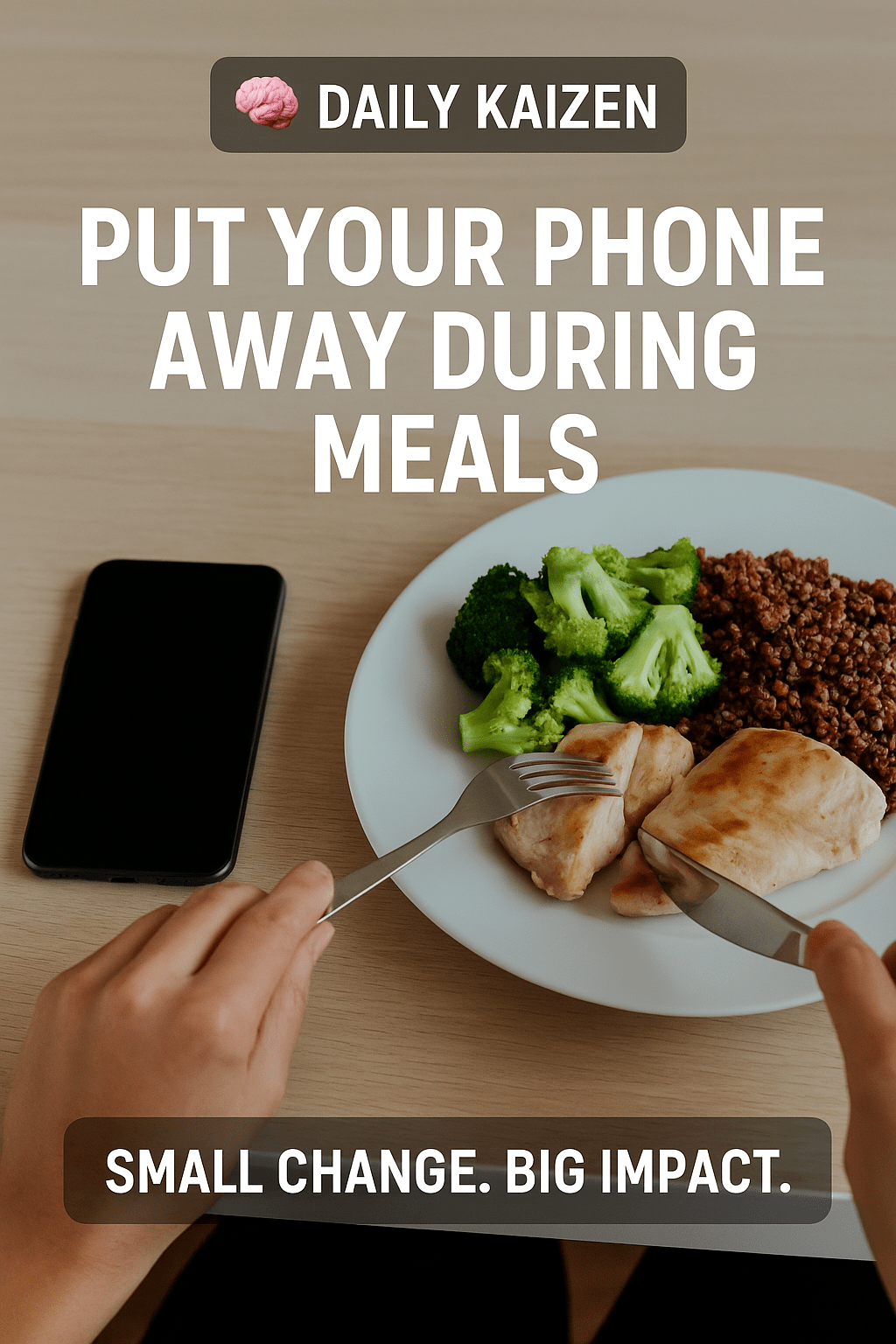
    🧠 Daily Kaizen: Put Your Phone Away During Meals

    Small change. Big impact.

    Today’s 1% improvement is simple:

    Put your phone in another room while you eat.

    You might think you’re just checking a message, watching a video, or reading something useful—but every glance at your phone pulls you out of the present moment.

    Eating while distracted lowers digestion quality, reduces nutrient absorption, and fragments your attention.

    But it’s not just about food. It’s about presence.

    When you eat with someone and leave your phone out of sight, you show respect. When you eat alone and stay unplugged, you show yourself respect.

    This tiny act rewires your brain for better attention, mindfulness, and discipline. It tells your nervous system:

    “This moment matters.”

    ✅ The 1% Better Task:

    Put your phone in another room—or at least face-down on airplane mode—during every meal today.

    Make eating a ritual, not a scroll session.

  • 🧠 1% Better: Delete One App

    🧠 1% Better: Delete One App

    What’s one app on your phone that steals more from you than it gives?

    Delete it today.

    Not because you’re weak…

    But because you’re ready to become intentional.

    We all have them:

    That app you open on autopilot. That one that pulls you into comparison. That one that tricks you into thinking you’re “relaxing” — but leaves you more wired than before.

    This isn’t about punishment.

    It’s about power.

    Every distraction you remove is energy you reclaim.

    Every app you delete is time you get back.

    Every tiny choice compounds.

    The goal isn’t to do everything.

    It’s to do what matters — without interruption.

    So today, just one app.

    And watch what happens.

  • 🎯 Skill of the Day: How to Make an Unforgettable First Impression

    🎯 Skill of the Day: How to Make an Unforgettable First Impression

    You never get a second chance to make a first impression.

    Within 7 seconds, people decide if you’re worth listening to.

    That means before you say anything meaningful, they’ve already judged your:

    Confidence Competence Energy Respect

    The good news? This is a trainable skill. And mastering it opens doors.

    🔑 1. Own the Room Before You Speak

    Posture is your handshake before your handshake.

    Stand tall. Shoulders relaxed. Chin up. Make eye contact with calm steadiness — not aggression.

    Body language is processed faster than speech. If your body says “uncertain,” your words won’t matter.

    🧠 2. Lead With Listening, Not Talking

    People remember how you made them feel — not what you said.

    Let them speak first. Ask a question. Hold eye contact. Nod with intention.

    Confidence is quiet. Curiosity is magnetic.

    💬 3. Speak 10% Slower Than Feels Natural

    Slowing your speech makes you sound more:

    Intentional Calm Authoritative

    It also makes others lean in. Fast talk signals nerves. Deliberate pacing builds presence.

    🪞 4. Mirror Their Energy — Then Lead It

    Match their volume and tone for the first 30 seconds. Then raise or lower the energy just slightly. This establishes subtle control — and people feel seen, not steamrolled.

    🧠 5. Anchor With a Phrase or Insight

    Leave them with a single takeaway. A story. A sharp line. A question they’ll think about later.

    People don’t remember details — they remember impact.

    🧱 Build the Habit

    Practice 1:

    Walk into a room today with shoulders back, eyes up, and calm breathing.

    Say nothing for 3 seconds. Then greet someone with a question instead of a statement.

    Practice 2:

    Record yourself saying hello and introducing yourself. Watch it back.

    Are you commanding attention — or asking for it?

    ⚔️ Final Thought

    An unforgettable first impression doesn’t require charisma.

    It requires intention.

    Train this skill and people won’t just remember your name — they’ll lean in when you speak.

  • ❓FAQ of the Day: Why Do I Quit When Things Get Hard?

    ❓FAQ of the Day: Why Do I Quit When Things Get Hard?

    You’re not weak.
    You’re not lazy.
    You just haven’t trained your mind to stay in the fight when it gets uncomfortable.

    But you can.


    🧠 Quitting Is a Pattern — Not a Personality

    Most people quit when things get hard because hard is unfamiliar.

    Pain hits. Frustration builds. Doubt creeps in.
    And your brain says: “This means stop.”

    Why?
    Because that’s what you’ve trained it to expect.


    🔁 Your Brain Follows Patterns

    Every time you quit when it hurts, you’re reinforcing the loop:

    • Effort → Discomfort → Escape → Relief.

    That’s addictive. But it’s not fixed.

    Discipline is just delayed reward.

    You don’t break the quitting habit by feeling stronger.
    You break it by doing one thing: staying in the fire just a little longer each time.


    🔨 Enter: The Goggins 40% Rule

    When you feel done, you’re at 40%.
    That’s the red zone where most people tap out—and where growth actually begins.

    So when it gets hard?
    You’re exactly where you need to be.

    “Suffering is the true test of life.” – David Goggins


    🔧 How to Rewire the Response

    1. Label It: Say out loud, “This is the part where I usually quit.”
      It separates you from the pattern.
    2. Set a Rule: When you want to quit, go 1 more round.
      • One more rep.
      • One more minute.
      • One more sentence.
    3. Track the Wins: Keep a log of when you stayed.
      Call it your “Didn’t Quit List.” Revisit it often.

    🧱 Final Thought

    You quit because no one trained you to stay.

    Now you know. So stay.
    And next time it hurts, smile.

    That’s the signal:
    You’re not failing. You’re forging something new.

Skill Stacked

Stack Your Skills. Build Your Body. Sharpen Your Mind.

Skip to content ↓