Tag: behaviour change

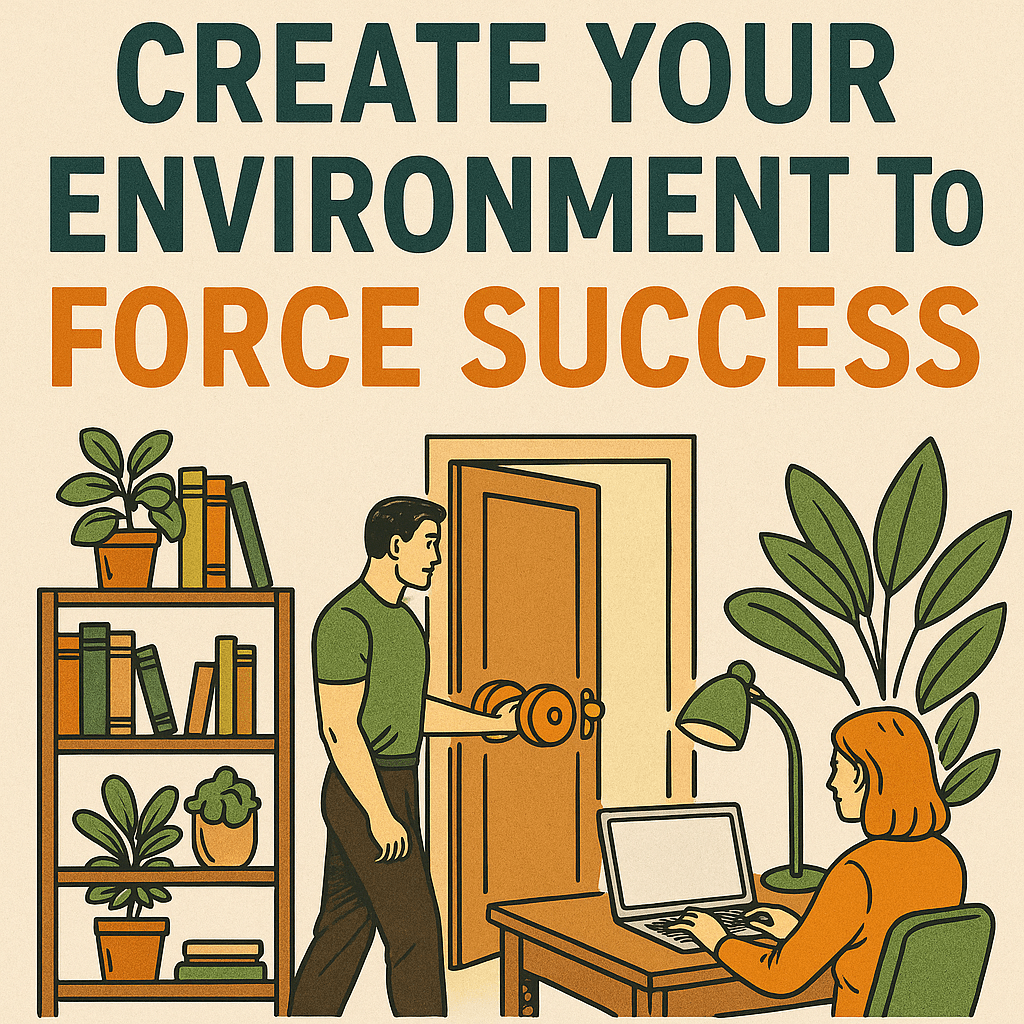
  • Create Your Environment to Force Success

    Create Your Environment to Force Success

    Ever set a goal – like hitting the gym at 6 AM or finally cutting out late-night snacks – only to see your willpower fizzle out by day two? It’s not just you. In fact, studies show that a large portion of our daily actions are automatic responses to the cues around us . Your kitchen counter and living room layout might be quietly training you more than your intentions. As Stanford researcher B.J. Fogg puts it, “There’s just one way to radically change your behavior: radically change your environment” . In other words, if willpower isn’t doing the trick, change your surroundings. By redesigning your space, you can turn good habits into the easy, default choice and make bad habits much harder.

    Why Environment Trumps Willpower

    Habit experts agree that willpower alone is a weak strategy. James Clear bluntly notes, “in the long-run (and often in the short-run), your willpower will never beat your environment” . People who seem ultra-disciplined aren’t superhuman – they’ve simply structured their lives so they don’t have to rely on heroic self-control . For example, nearly identical neighbors can behave very differently if their environments differ. In one striking study, Denmark and Sweden had wildly different organ donation rates (4% vs 86%) even though their cultures are similar . The only difference was the forms people were given – in Sweden citizens were by default organ donors (opt-out), whereas Danes had to opt in. This tiny tweak in the choice architecture shows how your environment can heavily sway decisions .

    Instead of expecting yourself to fight every craving or distraction, make the healthy or productive choice the path of least resistance. Each time you step into your kitchen, gym, or home office, you should ideally be funneled toward positive actions – not sabotaged by hidden temptations. Remember James Clear’s insight: your environment is the “default option to which you are assigned” . If junk food is on the counter and veggies are hidden, you’ll snack mindlessly. If your desk is cluttered and your phone is buzzing, focus will slip away. The good news? You can design your environment for success . By placing hurdles in the way of bad habits and removing barriers to good ones, healthy choices become automatic and willpower is freed up for truly tough tasks.

    5 Ways to Create a Habit-Friendly Environment

    Pre-Plan and Prepare: Reduce friction for good habits. Lay out your gym clothes or set your sneakers by the door the night before so it’s easy to exercise in the morning . Fill a few water bottles each morning and place them in spots you frequently visit . If you want to take vitamins or medications, leave the bottle right next to your toothbrush or coffee mug. These small prep steps mean you have one less excuse to skip your new habit. In a habit-friendly environment, the right tools and gear are always within reach. Make Healthy Choices Obvious: Arrange visual cues so the good stuff grabs your attention. Keep a bowl of fruit on the counter and hide sugary treats in a cupboard or another room . Buy fun, colored plates that make veggies look more appealing – one study found people serve themselves 30% more on larger, dark-green dishes . Similarly, if you want to read more, place books or study materials in clear sight (and put your remote out of sight). When the reminder is right in front of you, you’re far more likely to act. As James Clear advises, make cues for your preferred habits big and prominent, so the best choice is also the obvious one . Increase Friction for Bad Habits: Do the opposite for temptations. Put the cookie jar on a high shelf or empty it entirely. Hide the TV remote in a drawer and toss a book in its place . In one clever example, simply turning living room chairs so they don’t face the TV made people watch way less TV (and pick up a book instead!) . The goal is to create tiny hurdles for bad habits – even an extra 10-second walk to the snack drawer or phone creates a pause where you can choose differently. Remember: if the junk food is visible, you’ll eat it . Out of sight usually means out of mind, so clear the clutter that triggers your worst impulses. Optimize Your Work Space: Clear, focused spaces foster productivity. Designate a tidy “work only” area and keep it free of entertainment cues . Silence or put your phone on Do-Not-Disturb, and if needed use website blockers during deep work sessions. Organize your desk so only what you need is on it – for example, leave your computer on a page you want to study or a project to work on tomorrow. As one writer found, strictly associating his desk with writing (and removing “fun” apps and games) eliminated most distractions . By treating your environment like a training partner, you set yourself up to succeed: a clutter-free space and clean desktop mean you expend less mental energy fighting distractions . Leverage Your Social and Digital Environment: The people and platforms around you count too. Join a workout group, find a study buddy, or post your goals to friends – social pressure can be a powerful cue. In digital spaces, uninstall apps or mute channels that derail you, and fill your feeds with inspirational or educational content instead. For example, if you want to write more code, join an online coding community; if you want healthier eating, follow recipe bloggers. Surrounding yourself with supportive friends and positive influencers creates a naturally habit-friendly environment. As FasterCapital points out, even our homes benefit from social cues – think about coworkers reaching for doughnuts less often when everyone in the office is on a shared health kick .

    Each of these tweaks follows one core idea: make the right choice the easy choice . Reduce steps to good behavior and add steps to bad behavior. Over time, these small changes compound. As Fogg reminds us, “Don’t rely on willpower alone, design your environment to support your desired behavior” .

    Your Next Move: Redesign One Thing Today

    Don’t wait for “motivation” to strike. Be proactive. Ask yourself: What one change in my surroundings would make success inevitable? It might be as simple as placing a water bottle on your desk or moving your alarm clock across the room so you have to get up. Maybe unplug the TV for the week, or park your bike right by the front door. Take action now: pick one key area (kitchen, bedroom, office, or digital space) and tweak it.

    By taking control of your space, you’re “the designer of your world and not merely the consumer of it” . A well-designed environment is a powerful ally – it nudges you toward workouts, healthy meals, focus sessions and away from bad habits, often without any extra effort. Remember the mantra of environment design: if you can’t change yourself, change your surroundings. Transform one corner of your life today and watch how easy, automatic success becomes in your new, habit-friendly world.

    Bold takeaway: Start small but think big – make one small environment change now and let your space help you succeed.
  • Use Identity-Based Habit Formation

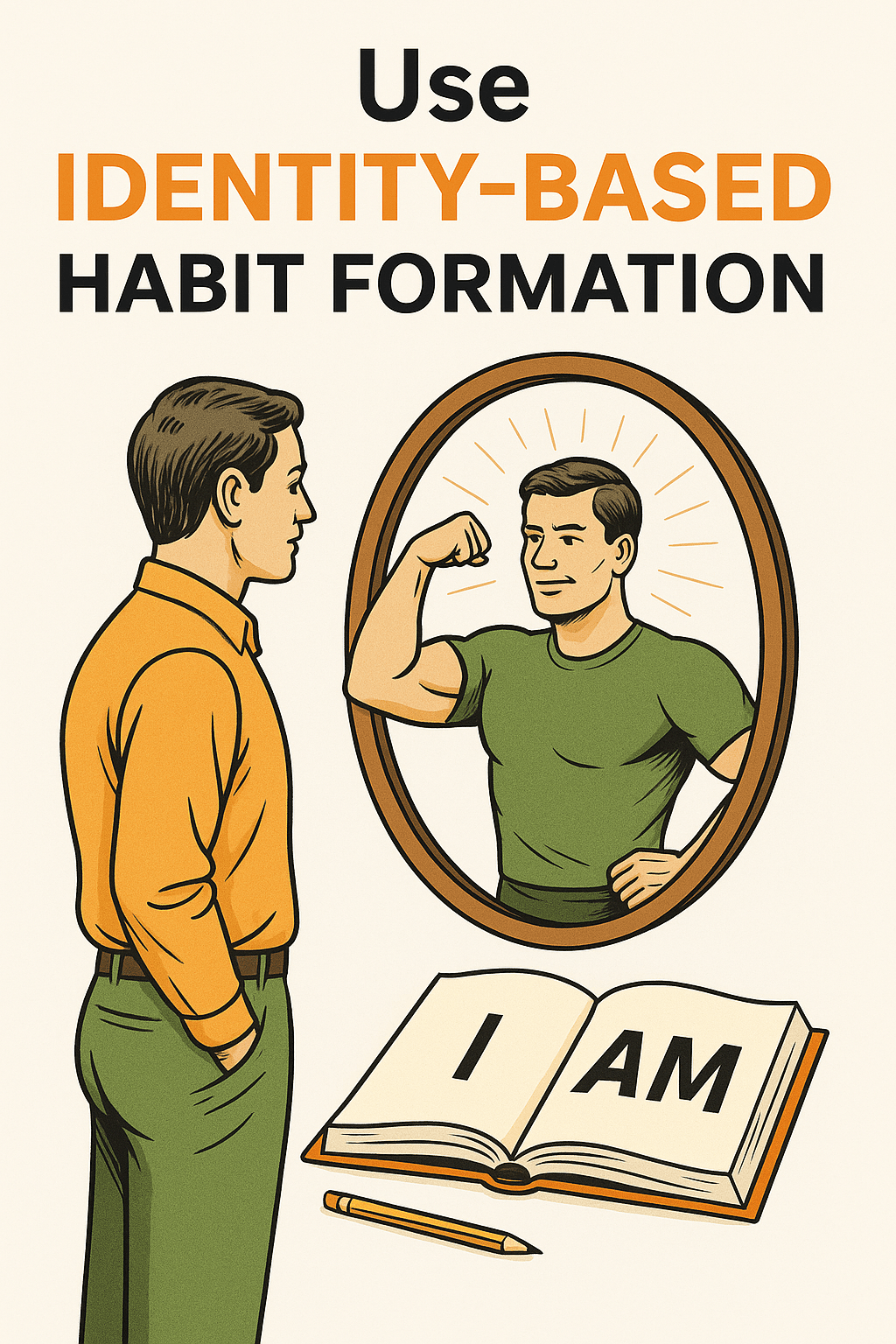
    Use Identity-Based Habit Formation

    Every new year or major goal season, we’ve all been there: fired up one day, and weeks later frustrated that the habit still didn’t stick. The problem may not be what you want to achieve, but who you think you are. Instead of focusing on outcome-driven goals, imagine shifting your mindset: “I am the type of person who [lets X happen].” This simple switch – an identity-based habit – can make habits far easier to form and sustain. As habits expert James Clear explains in Atomic Habits, “your current behaviors are simply a reflection of the type of person you believe that you are” . In other words, true habit change starts by creating a new self-image first.

    Outcome vs. Identity: Two Approaches to Habit Change

    Many people set goals like “I want to run a marathon” or “I want to lose 20 pounds.” These are outcome-based habits: the focus is on a result, not on the person you become. It’s no wonder they often fizzle out; once the goal is reached (or missed), motivation vanishes. In contrast, identity-based habits start by asking: Who do I want to become? For example: instead of “I want to run a marathon,” an identity-based thinker says, “I am a runner.”  When you see yourself as a runner, every action you take (training, eating right, getting enough sleep) feels like an expression of that identity – not just a means to an end .

    This identity-first mindset flips traditional habits on its head. As one habits coach puts it, “Who do I want to become?” replaces “What do I want to achieve?” . Seeing your habits as reflections of your self-image is powerful. For instance, if you identify as a healthy person, you’re naturally more likely to choose salad over fries. This happens because our actions follow our beliefs . If your inner story is “I am disciplined and fit,” you won’t struggle as much to eat well or exercise. In fact, psychologists find that when habits are tied to identity (especially core values), people integrate them more deeply and stick with them long-term .

    Why Identity-Based Habits Are More Powerful

    Identity-based habits build internal motivation and make lasting change more likely.  As one recent guide explains, “Identity-based habits work differently” – they “start with the question: ‘Who do I want to become?’ rather than ‘What do I want to achieve?’” . This creates three big advantages:

    Internal Motivation: When a habit is part of who you believe you are, it feels natural and purposeful. For example, if you think “I’m the kind of person who always exercises,” going to the gym isn’t a chore but an expression of you. This alignment boosts motivation – you’re not just chasing a number on a scale, you’re living your identity . Less Inner Conflict: Trying to quit a bad habit by force often creates internal war (“I should be healthy, but I really want junk food!”). With identity-based thinking, you eliminate that conflict. It’s easier to say “I am not a smoker” than “I’m trying to quit smoking” . There’s no battle between “should” and “want,” because your chosen identity has already won. Sustainable Change: Goals are by nature temporary, but identities endure. When your habits align with how you see yourself, they become part of your lifestyle, not just things to tick off. Research confirms that linking habits to identity helps new behaviors stick and leads to more effective behavior change . In short, identity-based habits turn once-a-day efforts into years-long routines, making personal growth feel more automatic than an uphill struggle.

    This identity-first approach is at the heart of James Clear’s bestselling strategy. In Atomic Habits (25+ million copies sold), Clear stresses that lasting change happens when “creating a new identity” comes before chasing results . When you internalize “I am X,” every choice reinforces that label. Even small victories (“I ate a healthy lunch today”) become proof that this new identity is real and powerful.

    Real-Life Examples: Turning Goals into Identities

    Let’s make this concrete with a few examples. Instead of saying “I want to lose weight,” reframe it as “I’m someone who moves my body every day.” You might start with tiny steps like a 5-minute walk after dinner. Each day you follow through, you prove to yourself “I am a person who stays active,” and that identity propels you further. For instance, James Clear shares a story: after his wife memorized all 30 names in a new class, she thought, “I’m the type of person who is good at remembering names.” From then on, she effortlessly remembered names everywhere she went . That shift in identity – from “I try to remember names” to “I do remember names” – turned a one-time success into a permanent habit.

    Here are a few more identity-based habits in action (adapted from habit experts):

    “I am a learner.” Action: Read 10 pages of a book or listen to an educational podcast each day . Over time, that micro-habit becomes a learning routine. “I am an organized person.” Action: Keep a daily to-do list and tidy your workspace at the end of each day . Small steps like these reinforce the belief that you’re naturally organized. “I am an early riser.” Action: Set a consistent bedtime and wake up 15 minutes earlier tomorrow. Repeat until this new schedule feels normal . Now mornings align with your identity, not just an alarm clock. “I am a writer.” Action: Write one paragraph or journal entry each morning. No pressure for brilliance – just ink a tiny bit and prove you’re “a writer” by writing.

    The key is consistency. Each small action – even a glass of water each morning if you aim to be healthy – serves as “evidence” for your self-image. Celebrate these wins! Every time you live up to your identity (by going on a run, preparing a healthy meal, writing a page), take a moment to acknowledge it. Studies show that reflecting on progress and celebrating identity-aligned actions not only feels good, but cements the new identity even further .

    How to Build Identity-Based Habits: Practical Steps

    Define Your New Identity.  Start by asking yourself, “Who do I want to be?” Pick a clear identity that matches your goals. It could be “the kind of person who reads daily,” “someone who values fitness,” or “a skilled communicator.” Be as specific as possible . For example, instead of just “I’m athletic,” try “I am a runner” or “I am the kind of person who never skips leg day.” Choose Tiny Habit Actions.  Identify one small habit that person would naturally do. If your identity is “I am a fit, healthy person,” you might start with 50 jumping jacks every evening or one extra serving of vegetables at dinner. The goal is to make the habit so easy that it requires no willpower – say, just 1% effort each day . These micro-wins accumulate and reinforce your identity. Attach Habits to Your Identity.  Whenever you perform the habit, mentally note “I am doing this because I am [identity].” For example, tell yourself “I’m having an apple snack because I am a healthy eater.” This mental link turns the action into a statement about you. According to experts, consciously proving your identity to yourself (even in tiny ways) is what makes the new identity stick . Track and Celebrate Wins.  Keep a simple log or journal of your habit actions. Every time you follow through, give yourself a quick pat on the back. This positive reinforcement is like flexing your identity muscle. Remember the birder in James Clear’s story: once she saw a proof (“I remembered that name!”), it confirmed her belief. You can do the same – a 10-minute workout or writing a paragraph is proof of the identity you claim. As researchers note, acknowledging these wins builds self-esteem and strengthens the new habits . Iterate and Deepen the Identity.  As these small habits become routine, you’ll notice your mindset shifting. Keep expanding: increase your habit slightly (walk 5 more minutes, write one more sentence) to continue proving your identity. Over time, “I am a runner” will feel completely natural, and skipping workouts will start to feel like stepping outside who you are.

    By following these steps, you’re literally becoming the person who lives the habits you want, rather than just chasing abstract goals. Each tiny act stacks up to make that identity undeniable.

    The Impact: Personal Growth That Lasts

    Imagine seeing yourself transform: tasks that once felt like chores now feel like parts of your character. That’s the power of identity-based habits. In Skill Stacker’s Personal Development System, we emphasize this approach because it aligns behavior change with personal growth. As you adapt your self-image, you’ll often find that other good habits naturally follow. A tidier desk might lead to clearer thinking, a consistent workout routine could boost your productivity at work, and so on. It becomes a virtuous cycle.

    Hundreds of thousands of people have seen this mindset shift work wonders. Authors, entrepreneurs, and athletes often report that telling themselves “I am the person who [practice X]” fundamentally changed their results. (Olympic runner Eliud Kipchoge, featured in Atomic Habits, is one high-profile example of mastering this mindset .) When you stop fighting your nature and instead transform your self-image, the change is profound.

    Join the Personal Growth Journey

    Ready to give identity-based habits a try? Start small this week: pick one new identity statement (like “I am a writer”) and one tiny action (even just one paragraph) to prove it. Stick to it consistently, celebrate each win, and watch how your behavior naturally shifts.

    Part 7 of our Personal Development System series shows that who you believe you are matters more than any goal. For more strategies on behavior change and personal growth, stay tuned to the Skill Stacker blog and follow our series. And don’t forget to grab our free Personal Development System workbook – it’s packed with practical exercises to help you apply identity-based habit formation and more. Your best self is waiting; become that person one habit at a time!

    Sources: Habit science and expert insights from James Clear’s Atomic Habits , modern habit coaching resources , and psychology research on habit-identity links . (Read more to see how identity-driven habits create lasting change!)

  • 🍽️ Remove Mindless Bites

    🍽️ Remove Mindless Bites

    Daily Kaizen – 1% Better Through Intentional Eating

    We often think of nutrition as a food issue — but in reality, it’s often a focus issue.

    Today’s Kaizen doesn’t ask you to change what you eat.

    It asks you to change how you eat.

    Kaizen: For one meal today, eat without distraction — no screens, no standing, no multitasking.

    ⚠️ Why This Matters:

    Mindless eating is one of the most overlooked causes of overconsumption.

    You’re not hungry — you’re scrolling.

    You’re not fuelling — you’re coping.

    The result? You eat more than you need, absorb less, and feel less satisfied.

    🧠 The Fix Is Simple:

    For one meal today, do this:

    Sit down Put your phone away Take a breath Focus on your food

    You’ll notice taste, texture, and fullness like never before.

    ✅ Why It Works:

    You feel full faster You enjoy your food more You regain control over impulse eating No need to change your diet — just your presence

    This is micro-discipline that delivers macro-results.

    🪜 Kaizen Stack:

    Eat mindfully → Turn off autopilot → Reduce overconsumption → Improve nutrition effortlessly

    Want to push this further?

    Try doing this for one meal a day for the next 7 days.

    You’ll recalibrate your hunger signals and feel sharper — without tracking a single calorie.