Tag: Daily Habits

  • 🧠 Daily Kaizen 010: Make Eye Contact and Smile at One Stranger

    🧠 Daily Kaizen 010: Make Eye Contact and Smile at One Stranger

    We scroll past hundreds of faces online every day.

    But when’s the last time you really connected with a real human in front of you?

    This tiny habit can change that.

    🛑 The Kaizen

    Today, make eye contact and smile at one stranger.

    Not a creepy stare.

    Not an awkward half-smile.

    Just a brief, genuine moment of connection.

    💡 Why It Works

    We’re more disconnected than ever—even in crowded spaces.

    But positive micro-interactions like this:

    Boost your mood Build confidence Break social anxiety patterns Strengthen your community

    A smile costs nothing, but its ripple effect can be huge.

    🧪 What the Science Says

    Eye contact triggers the release of oxytocin, the bonding hormone, reducing stress and increasing feelings of trust Smiling can lower cortisol, improve heart rate variability, and boost immune function Studies on micro-interactions show that small, positive exchanges with strangers improve happiness and reduce loneliness

    ✅ How to Do It

    Pick a moment: walking to work, in line at the shop, at the gym When you make brief eye contact, smile—a real one, not forced Move on. No need for conversation or overthinking.

    🔄 Example

    You’re at the coffee shop.

    Someone glances your way.

    Instead of looking away immediately, hold their gaze for a second, smile, then go back to your day.

    ⚙️ How It Stacks

    This habit builds:

    Confidence (you stop fearing small social interactions) Emotional resilience (you’re comfortable with brief vulnerability) Human connection (because we all need it)

    Over time, these tiny moments make you feel more grounded in your community—and less isolated.

    🧠 Final Thought

    A smile is the smallest act of kindness you can give.

    But to the right person, at the right time, it can mean everything.

    Your challenge today:

    Smile at one stranger. Eye contact included

  • 🧠 Daily Kaizen #4 – Replace Your Morning Scroll With a 10-Minute Walk

    🧠 Daily Kaizen #4 – Replace Your Morning Scroll With a 10-Minute Walk

    Here’s a brutal truth:

    Most people wake up and immediately flood their brain with:

    📱 News they can’t control

    📱 People they’ll never meet

    📱 Stress they didn’t ask for

    All before they’ve even had a glass of water.

    We scroll ourselves into anxiety.

    And we wonder why we feel overwhelmed before 9am.

    💡 Here’s your Kaizen for today:

    Before you pick up your phone — step outside.

    Even if it’s raining. Even if it’s just around the block.

    Set a timer for 10 minutes. Walk with no music, no podcast, no agenda.

    Let your brain breathe.

    🧩 Why this works:

    It lowers cortisol (stress hormone) Increases dopamine and serotonin (mood + focus) Anchors you in the real world, not the digital one Builds a calm, clear foundation for your day

    Walking in natural light also resets your circadian rhythm, helping you sleep better at night.

    ✏️ The Hidden Benefit:

    You reclaim your agency.

    You tell your brain:

    “I run the show — not the algorithm.”

    That shift? That’s freedom.

    And it starts with a single walk.

    🛠️ Make it easier:

    Leave your shoes by the door Set a recurring reminder called “Walk > Scroll” Track your streak on a post-it note

    Start today. No excuses.

    Because the first 10 minutes of your day shape the next 10 hours.

    🔁 Follow @SkillStacked for a new Daily Kaizen every day.

    Simple mindset upgrades that compound.

    One win at a time.

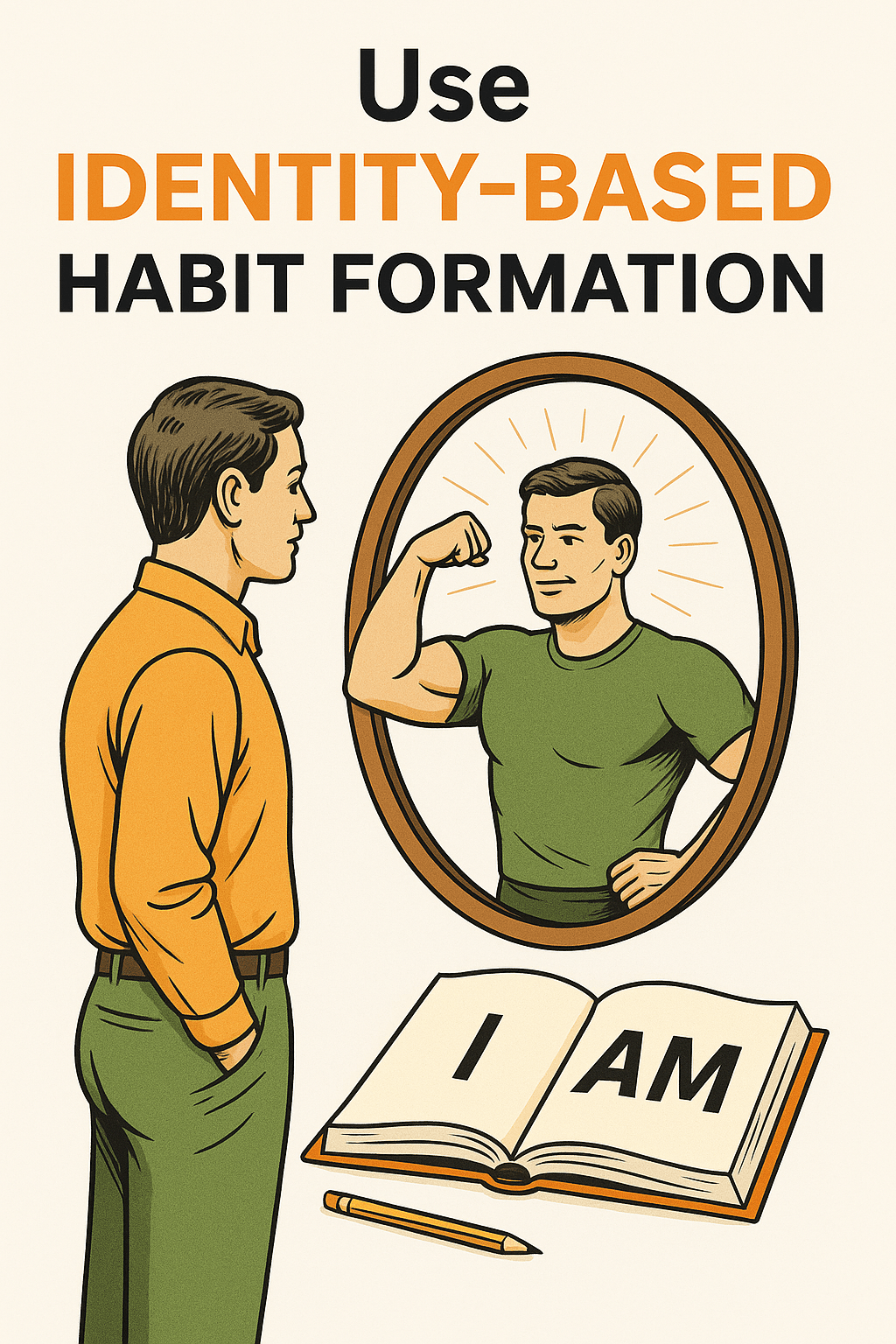
  • Use Identity-Based Habit Formation

    Use Identity-Based Habit Formation

    Every new year or major goal season, we’ve all been there: fired up one day, and weeks later frustrated that the habit still didn’t stick. The problem may not be what you want to achieve, but who you think you are. Instead of focusing on outcome-driven goals, imagine shifting your mindset: “I am the type of person who [lets X happen].” This simple switch – an identity-based habit – can make habits far easier to form and sustain. As habits expert James Clear explains in Atomic Habits, “your current behaviors are simply a reflection of the type of person you believe that you are” . In other words, true habit change starts by creating a new self-image first.

    Outcome vs. Identity: Two Approaches to Habit Change

    Many people set goals like “I want to run a marathon” or “I want to lose 20 pounds.” These are outcome-based habits: the focus is on a result, not on the person you become. It’s no wonder they often fizzle out; once the goal is reached (or missed), motivation vanishes. In contrast, identity-based habits start by asking: Who do I want to become? For example: instead of “I want to run a marathon,” an identity-based thinker says, “I am a runner.”  When you see yourself as a runner, every action you take (training, eating right, getting enough sleep) feels like an expression of that identity – not just a means to an end .

    This identity-first mindset flips traditional habits on its head. As one habits coach puts it, “Who do I want to become?” replaces “What do I want to achieve?” . Seeing your habits as reflections of your self-image is powerful. For instance, if you identify as a healthy person, you’re naturally more likely to choose salad over fries. This happens because our actions follow our beliefs . If your inner story is “I am disciplined and fit,” you won’t struggle as much to eat well or exercise. In fact, psychologists find that when habits are tied to identity (especially core values), people integrate them more deeply and stick with them long-term .

    Why Identity-Based Habits Are More Powerful

    Identity-based habits build internal motivation and make lasting change more likely.  As one recent guide explains, “Identity-based habits work differently” – they “start with the question: ‘Who do I want to become?’ rather than ‘What do I want to achieve?’” . This creates three big advantages:

    Internal Motivation: When a habit is part of who you believe you are, it feels natural and purposeful. For example, if you think “I’m the kind of person who always exercises,” going to the gym isn’t a chore but an expression of you. This alignment boosts motivation – you’re not just chasing a number on a scale, you’re living your identity . Less Inner Conflict: Trying to quit a bad habit by force often creates internal war (“I should be healthy, but I really want junk food!”). With identity-based thinking, you eliminate that conflict. It’s easier to say “I am not a smoker” than “I’m trying to quit smoking” . There’s no battle between “should” and “want,” because your chosen identity has already won. Sustainable Change: Goals are by nature temporary, but identities endure. When your habits align with how you see yourself, they become part of your lifestyle, not just things to tick off. Research confirms that linking habits to identity helps new behaviors stick and leads to more effective behavior change . In short, identity-based habits turn once-a-day efforts into years-long routines, making personal growth feel more automatic than an uphill struggle.

    This identity-first approach is at the heart of James Clear’s bestselling strategy. In Atomic Habits (25+ million copies sold), Clear stresses that lasting change happens when “creating a new identity” comes before chasing results . When you internalize “I am X,” every choice reinforces that label. Even small victories (“I ate a healthy lunch today”) become proof that this new identity is real and powerful.

    Real-Life Examples: Turning Goals into Identities

    Let’s make this concrete with a few examples. Instead of saying “I want to lose weight,” reframe it as “I’m someone who moves my body every day.” You might start with tiny steps like a 5-minute walk after dinner. Each day you follow through, you prove to yourself “I am a person who stays active,” and that identity propels you further. For instance, James Clear shares a story: after his wife memorized all 30 names in a new class, she thought, “I’m the type of person who is good at remembering names.” From then on, she effortlessly remembered names everywhere she went . That shift in identity – from “I try to remember names” to “I do remember names” – turned a one-time success into a permanent habit.

    Here are a few more identity-based habits in action (adapted from habit experts):

    “I am a learner.” Action: Read 10 pages of a book or listen to an educational podcast each day . Over time, that micro-habit becomes a learning routine. “I am an organized person.” Action: Keep a daily to-do list and tidy your workspace at the end of each day . Small steps like these reinforce the belief that you’re naturally organized. “I am an early riser.” Action: Set a consistent bedtime and wake up 15 minutes earlier tomorrow. Repeat until this new schedule feels normal . Now mornings align with your identity, not just an alarm clock. “I am a writer.” Action: Write one paragraph or journal entry each morning. No pressure for brilliance – just ink a tiny bit and prove you’re “a writer” by writing.

    The key is consistency. Each small action – even a glass of water each morning if you aim to be healthy – serves as “evidence” for your self-image. Celebrate these wins! Every time you live up to your identity (by going on a run, preparing a healthy meal, writing a page), take a moment to acknowledge it. Studies show that reflecting on progress and celebrating identity-aligned actions not only feels good, but cements the new identity even further .

    How to Build Identity-Based Habits: Practical Steps

    Define Your New Identity.  Start by asking yourself, “Who do I want to be?” Pick a clear identity that matches your goals. It could be “the kind of person who reads daily,” “someone who values fitness,” or “a skilled communicator.” Be as specific as possible . For example, instead of just “I’m athletic,” try “I am a runner” or “I am the kind of person who never skips leg day.” Choose Tiny Habit Actions.  Identify one small habit that person would naturally do. If your identity is “I am a fit, healthy person,” you might start with 50 jumping jacks every evening or one extra serving of vegetables at dinner. The goal is to make the habit so easy that it requires no willpower – say, just 1% effort each day . These micro-wins accumulate and reinforce your identity. Attach Habits to Your Identity.  Whenever you perform the habit, mentally note “I am doing this because I am [identity].” For example, tell yourself “I’m having an apple snack because I am a healthy eater.” This mental link turns the action into a statement about you. According to experts, consciously proving your identity to yourself (even in tiny ways) is what makes the new identity stick . Track and Celebrate Wins.  Keep a simple log or journal of your habit actions. Every time you follow through, give yourself a quick pat on the back. This positive reinforcement is like flexing your identity muscle. Remember the birder in James Clear’s story: once she saw a proof (“I remembered that name!”), it confirmed her belief. You can do the same – a 10-minute workout or writing a paragraph is proof of the identity you claim. As researchers note, acknowledging these wins builds self-esteem and strengthens the new habits . Iterate and Deepen the Identity.  As these small habits become routine, you’ll notice your mindset shifting. Keep expanding: increase your habit slightly (walk 5 more minutes, write one more sentence) to continue proving your identity. Over time, “I am a runner” will feel completely natural, and skipping workouts will start to feel like stepping outside who you are.

    By following these steps, you’re literally becoming the person who lives the habits you want, rather than just chasing abstract goals. Each tiny act stacks up to make that identity undeniable.

    The Impact: Personal Growth That Lasts

    Imagine seeing yourself transform: tasks that once felt like chores now feel like parts of your character. That’s the power of identity-based habits. In Skill Stacker’s Personal Development System, we emphasize this approach because it aligns behavior change with personal growth. As you adapt your self-image, you’ll often find that other good habits naturally follow. A tidier desk might lead to clearer thinking, a consistent workout routine could boost your productivity at work, and so on. It becomes a virtuous cycle.

    Hundreds of thousands of people have seen this mindset shift work wonders. Authors, entrepreneurs, and athletes often report that telling themselves “I am the person who [practice X]” fundamentally changed their results. (Olympic runner Eliud Kipchoge, featured in Atomic Habits, is one high-profile example of mastering this mindset .) When you stop fighting your nature and instead transform your self-image, the change is profound.

    Join the Personal Growth Journey

    Ready to give identity-based habits a try? Start small this week: pick one new identity statement (like “I am a writer”) and one tiny action (even just one paragraph) to prove it. Stick to it consistently, celebrate each win, and watch how your behavior naturally shifts.

    Part 7 of our Personal Development System series shows that who you believe you are matters more than any goal. For more strategies on behavior change and personal growth, stay tuned to the Skill Stacker blog and follow our series. And don’t forget to grab our free Personal Development System workbook – it’s packed with practical exercises to help you apply identity-based habit formation and more. Your best self is waiting; become that person one habit at a time!

    Sources: Habit science and expert insights from James Clear’s Atomic Habits , modern habit coaching resources , and psychology research on habit-identity links . (Read more to see how identity-driven habits create lasting change!)


  • 🍽️ Remove Mindless Bites

    🍽️ Remove Mindless Bites

    Daily Kaizen – 1% Better Through Intentional Eating

    We often think of nutrition as a food issue — but in reality, it’s often a focus issue.

    Today’s Kaizen doesn’t ask you to change what you eat.

    It asks you to change how you eat.

    Kaizen: For one meal today, eat without distraction — no screens, no standing, no multitasking.

    ⚠️ Why This Matters:

    Mindless eating is one of the most overlooked causes of overconsumption.

    You’re not hungry — you’re scrolling.

    You’re not fuelling — you’re coping.

    The result? You eat more than you need, absorb less, and feel less satisfied.

    🧠 The Fix Is Simple:

    For one meal today, do this:

    Sit down Put your phone away Take a breath Focus on your food

    You’ll notice taste, texture, and fullness like never before.

    ✅ Why It Works:

    You feel full faster You enjoy your food more You regain control over impulse eating No need to change your diet — just your presence

    This is micro-discipline that delivers macro-results.

    🪜 Kaizen Stack:

    Eat mindfully → Turn off autopilot → Reduce overconsumption → Improve nutrition effortlessly

    Want to push this further?

    Try doing this for one meal a day for the next 7 days.

    You’ll recalibrate your hunger signals and feel sharper — without tracking a single calorie.

  • Book of the Day: Mindset — The New Psychology of Success by Carol Dweck

    Book of the Day: Mindset — The New Psychology of Success by Carol Dweck

    Introduction: Why Mindset Matters

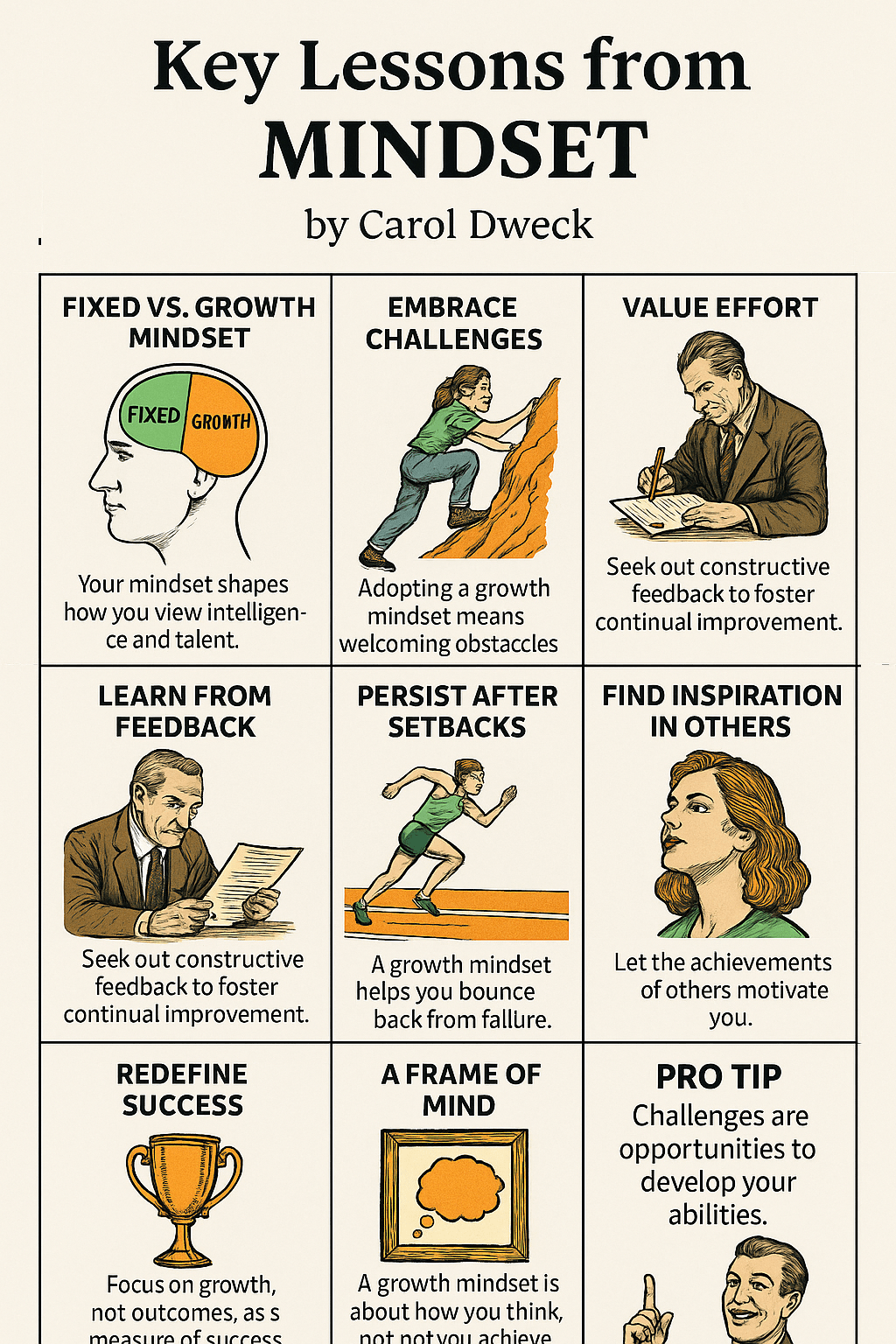
    Have you ever caught yourself thinking, “I’m just not a math person” or “I’ll never be a natural leader”? In Mindset, Stanford psychologist Carol Dweck calls out these self-defeating scripts and shows how a simple shift in mindset can change everything. She identifies two main mindsets – fixed and growth – and argues that developing a growth mindset is essential for success . In short, Mindset reveals how the way you think about talent and effort might be the single most important factor in your personal development and high performance. This isn’t just feel-good hype; it’s grounded in decades of research on achievement and learning.

    Fixed vs. Growth Mindset (The Core Idea)

    In a fixed mindset, you believe traits like intelligence or talent are set in stone. The result? You’re constantly trying to prove yourself. Challenges are scary because failing would mean you’re “not enough.” Dweck explains that if you think your qualities are unchangeable, you’ll likely avoid difficult tasks or criticism to protect your ego . Mistakes feel like personal failures.

    By contrast, a growth mindset means you see abilities as skills to be developed. Talent isn’t a fixed hand you’re dealt, but a starting point – and effort, good strategies, and help from others can grow your capabilities . A growth-minded person embraces challenges and views setbacks as feedback rather than defeat. If you struggle with something, it just means you don’t get it yet . This mindset creates a passion for learning and “stretching” yourself, even when things are tough . In fact, pushing outside your comfort zone (where real growth happens) becomes exciting instead of intimidating.

    3 Key Lessons for Skill Mastery

    Embrace Challenges & Failures: Don’t shy away from challenges – run toward them. People with growth mindsets don’t just accept challenges, they thrive on them . Each tough problem or even failure is actually a chance to learn. Instead of thinking “I failed – I’m no good,” ask “What can I learn from this?” When you treat failures as valuable feedback, you build resilience and bounce back stronger (growth-minded folks see setbacks as a motivating wake-up call ).

    Focus on Effort & Process, Not Talent: Under a fixed mindset, we might assume “If I’m not instantly good, I’ll never be.” Mindset flips that script. Effort is the path to mastery. Dweck’s research found that even geniuses have to work hard – natural talent only takes you so far. It’s consistent effort, practice, and effective strategies that turn potential into accomplishment . In other words, systems and habits beat raw smarts. So celebrate effort and persistence. By focusing on the process (the daily 1% improvements, the habits, the practice sessions), you’ll inevitably get better over time.

    Adopt a “Learner” Identity: Changing your results starts with changing how you see yourself. If you’ve been telling yourself “I’m just bad at ___,” start telling yourself “I’m learning ___.” Dweck often cites sociologist Benjamin Barber: “I don’t divide the world into the weak and the strong… I divide the world into the learners and nonlearners.” Be a learner. This identity-level shift keeps you curious, humble, and willing to try new things. When you identify as someone who is always learning and improving, challenges become part of your mission. You’ll seek out mentors, feedback, and routines that reinforce that identity (this is the essence of the Skill Stacker approach: continuously stacking new skills). Over time, those tiny 1% gains compound into major expertise.

    Daily Kaizen: Flip “Not Yet” into Action

    Today’s 1% improvement: Identify one “fixed mindset” thought you’ve had recently (“I’m just no good at this…”) and add one word to it: “yet.” Then take a small action in that direction. For example, if you’ve been thinking “I can’t speak in public,” tell yourself “I can’t do it yet,” then practice a 2-minute talk in front of a mirror or friend. Embrace the initial discomfort – that’s your growth in progress. This tiny exercise is your 1% better challenge for today.

    Key Takeaways (Infographic-Friendly)

    Fixed Mindset: Believes talent is fixed; often avoids challenges to avoid failure . Growth Mindset: Believes skills can be improved; embraces challenges to learn and grow . Effort Unlocks Ability: No matter your starting talent, effort and practice ignite ability into achievement . Failure = Feedback: Mistakes and setbacks aren’t the end – they’re lessons that guide you toward improvement . Learner Identity: See yourself as a work-in-progress. Choose to be a learner, not a non-learner , and you’ll keep evolving. 1% Better Daily: Small daily improvements compound to massive gains – 1% better each day makes you ~37x better in a year .

  • Book of the Day: The Slight Edge by Jeff Olson

    Book of the Day: The Slight Edge by Jeff Olson

    Overview

    The Slight Edge is a personal development classic that delivers one clear message: small, everyday choices compound into massive success (or failure) over time. Olson describes his philosophy as “a way of thinking… that enables you to make the daily choices that will lead you to the success and happiness you desire” . In other words, there’s no secret formula or grand leap to success – it’s about doing the little, seemingly insignificant things consistently until the outcomes snowball in your favor. The book shows that anyone can leverage this “slight edge” by using tools they already have (habits, attitude, time) to create powerful results from simple daily activities . It’s an empowering message for creators, writers, and entrepreneurs: your 1% daily improvements and disciplined actions, however minor they seem, are the gateway to extraordinary success.

    Key Takeaways (for Creators, Solopreneurs & Builders)

    Commit to Small Daily Wins – They Compound Over Time: Every big success is built on consistent small actions. Olson famously distills his formula: “consistently repeated daily actions + time = unconquerable results” . For example, improving by just 1% each day makes you 365% better in a year . Whether it’s writing 300 words daily for your blog or reaching out to one new client, those tiny efforts add up. Time and consistency are your allies – as Olson puts it, “time will be your friend or your enemy; it will promote you or expose you” . In practical terms, this means showing up every day even when the payoff isn’t immediate, trusting that your gradual gains will compound into significant results.

    Master the Mundane – Easy to Do, Easy Not to Do: The tasks that lead to success often seem trivial in the moment. They’re easy to do, but just as easy not to do . Skipping your morning writing session or neglecting that marketing email won’t ruin you today, but repeating such lapses over time can quietly put you on a downward curve. Olson warns that the difference between success and failure is often “so subtle, so mundane, that most people miss it” . Successful people separate themselves by doing the boring, beneficial tasks that others ignore. “Successful people do what unsuccessful people are not willing to do” – like writing one page even on uninspired days, or making that extra sales call when you’d rather relax. Embracing discipline in these little choices, especially when you don’t feel like it, gives you the slight edge. Over time, the mundane daily disciplines lead to remarkable outcomes, while daily neglect leads to regret .

    Your Philosophy Shapes Your Success: Olson argues that mindset is the root of achievement. “Your philosophy creates your attitudes, which create your actions, which create your results, which create your life.” In short, how you think about daily discipline and improvement sets the tone for your journey. If you believe small actions don’t matter, you’ll act accordingly – and stall. But if you adopt a philosophy that every day is an opportunity to grow, you’ll approach tasks with a productive attitude.

    This is self-mastery 101: cultivate a positive, growth-oriented mindset that fuels consistent action. For a solopreneur or creative, this might mean viewing each blog post, each design draft, each incremental code update as an important step in the long game. Olson encourages readers to develop success habits (like reading 10 pages of a good book daily, or practicing a skill every day) because these habits reinforce a winning philosophy. Over time, a humble daily routine – backed by the right mindset – produces stellar results. Attitude and perspective make all the difference in turning simple disciplines into success .

    Play the Long Game – Patience and Perseverance: The Slight Edge drives home that success is a long-term journey of planting and nurturing, not a one-time event. Olson writes, “There is a natural progression to everything in life: plant, cultivate, harvest.” The trouble is, many people want to skip the cultivation and jump straight to reaping rewards. But just as in farming, you can’t harvest the same day you plant. In your creative or business endeavors, consistency and patience are non-negotiable. Results often start off invisible – nothing seems to happen in the first weeks or months of effort . That’s when most people get frustrated and quit, or chase a shiny new idea. Don’t fall for the “instant success” illusion: embrace the process. Keep refining your craft, publishing content, building your product, even when progress is hard to see. Olson advises following the full Plant–Cultivate–Harvest cycle and not expecting something for nothing . If you cultivate long enough – keeping at those daily improvements – the harvest will come. Think in terms of years, not days. This long-game mindset is what separates the 5% who achieve extraordinary success from the 95% who lead a mediocre life . For an online business builder, that means focusing on sustainable growth and learning, rather than chasing overnight results. Stay the course, and let your efforts compound with time.

    Skill Stacker Take

    At Skill Stacker, we live and breathe the Slight Edge philosophy. The book’s core idea – that small daily wins lead to massive success through compounding effort – is the very foundation of our brand. Every article you write, every piece of code you push, every design tweak you make is a building block stacking toward your goals. Olson’s message validates our belief that consistency beats intensity: doing the 1% improvements daily and staying patient through the process. This is long-game thinking incarnate – the recognition that real mastery and business growth come from accumulated effort over time, not one-off strokes of genius. The Skill Stacker take is simple: embrace the Slight Edge in your own journey. Commit to those everyday disciplines and trust the process. When you do, you’ll create a momentum that’s hard to stop – the compounding curve of progress that turns skill stackers into success stories. Remember, the grind you put in today may seem small, but it’s paving the way for tomorrow’s big win. In Olson’s words, greatness is always in the moment of the decision – the decision you make today to show up and do the work, however small. Keep stacking those skills and wins daily, and watch the slight edge work its magic.

  • 🧠 Daily Kaizen: Put Your Phone Away During Meals

    🧠 Daily Kaizen: Put Your Phone Away During Meals

    Small change. Big impact.

    Today’s 1% improvement is simple:

    Put your phone in another room while you eat.

    You might think you’re just checking a message, watching a video, or reading something useful—but every glance at your phone pulls you out of the present moment.

    Eating while distracted lowers digestion quality, reduces nutrient absorption, and fragments your attention.

    But it’s not just about food. It’s about presence.

    When you eat with someone and leave your phone out of sight, you show respect. When you eat alone and stay unplugged, you show yourself respect.

    This tiny act rewires your brain for better attention, mindfulness, and discipline. It tells your nervous system:

    “This moment matters.”

    ✅ The 1% Better Task:

    Put your phone in another room—or at least face-down on airplane mode—during every meal today.

    Make eating a ritual, not a scroll session.

  • 🧠 Skill of the Day: How to Improve Your Posture

    🧠 Skill of the Day: How to Improve Your Posture

    Poor posture doesn’t just make you look tired, lazy, or older—it limits your performance, causes chronic pain, and quietly sabotages your confidence.

    But here’s the good news: it’s fixable.
    And you can start seeing results in days—not months—with consistent micro-efforts.


    💡 Why Posture Matters

    • Reduces risk of back, neck, and shoulder pain
    • Improves lung capacity and energy
    • Boosts confidence and body language
    • Increases strength and stability in lifts and movement
    • Helps reduce fatigue and tension headaches

    🚨 Common Postural Problems

    • Forward head (tech neck)
    • Rounded shoulders
    • Anterior pelvic tilt (exaggerated lower back curve)
    • Slouched upper back (kyphosis)
    • Inactive glutes and weak core

    What causes them?

    • Sitting too long
    • Screen use
    • Muscle imbalances
    • Weak posterior chain
    • Lack of movement variety

    🛠️ How to Fix Your Posture (Step-by-Step)

    1. Daily Mobility & Stretching

    • Chest Openers: Doorway pec stretch (2×30 secs each side)
    • Neck Tucks: 10 reps daily to realign your head
    • Hip Flexor Stretch: Loosen tight hips that pull your spine forward
    • Thoracic Extensions: Use foam roller or towel under upper back

    2. Strengthen Key Areas

    • Glutes: Glute bridges, clamshells
    • Core: Dead bugs, planks
    • Upper Back: Band pull-aparts, face pulls
    • Lower Traps: Y-T-W raises

    3. Align and Cue Your Body Throughout the Day

    • Stand tall: ears over shoulders, ribs down, glutes gently squeezed
    • Use reminders or tape to keep posture top of mind
    • Stack shoulders over hips—especially when walking or standing

    🔁 Daily Kaizen: Micro-Habits to Lock It In

    • 💡 1-minute posture reset every hour: stand, stretch, and realign
    • 📱 Set your lock screen to say: “Chest Up, Core On”
    • 🚿 Do wall angels before or after your shower
    • 🧘 Morning glute bridges and cat-cows to open up your spine
    • 💻 Invest in a standing desk or lumbar support pillow

    🚀 Final Thoughts

    You don’t need to overhaul your life.
    Just add a few posture resets a day.
    Your back will thank you.
    Your confidence will grow.
    And you’ll move like someone who owns the room.