Ever have a day where just changing into workout clothes feels like climbing a mountain? We all do. Maybe you slept poorly, work was draining, or motivation is at rock-bottom. On days like these, pursuing fitness or learning a new skill can feel impossible. But here’s a secret: you can still make progress even on your worst days. The key is embracing the Kaizen principle – the art of continuous improvement through tiny daily changes. This approach, rooted in science and psychology, lets you turn even the smallest action into momentum toward your goals.
In this post, I’ll share how Kaizen works and how to apply it to fitness, skill development, and everyday performance. You’ll see why small daily wins – like a single push-up, one page of reading, or a brief journal entry – truly matter. We’ll cover the science of habit formation (thanks to experts like BJ Fogg and James Clear), practical examples, and simple steps to get started. By the end, you’ll have a game plan for building strength, skill, and self one tiny step at a time, even when motivation is nowhere to be found. Let’s dive in!
The Kaizen Approach: 1% Better Every Day
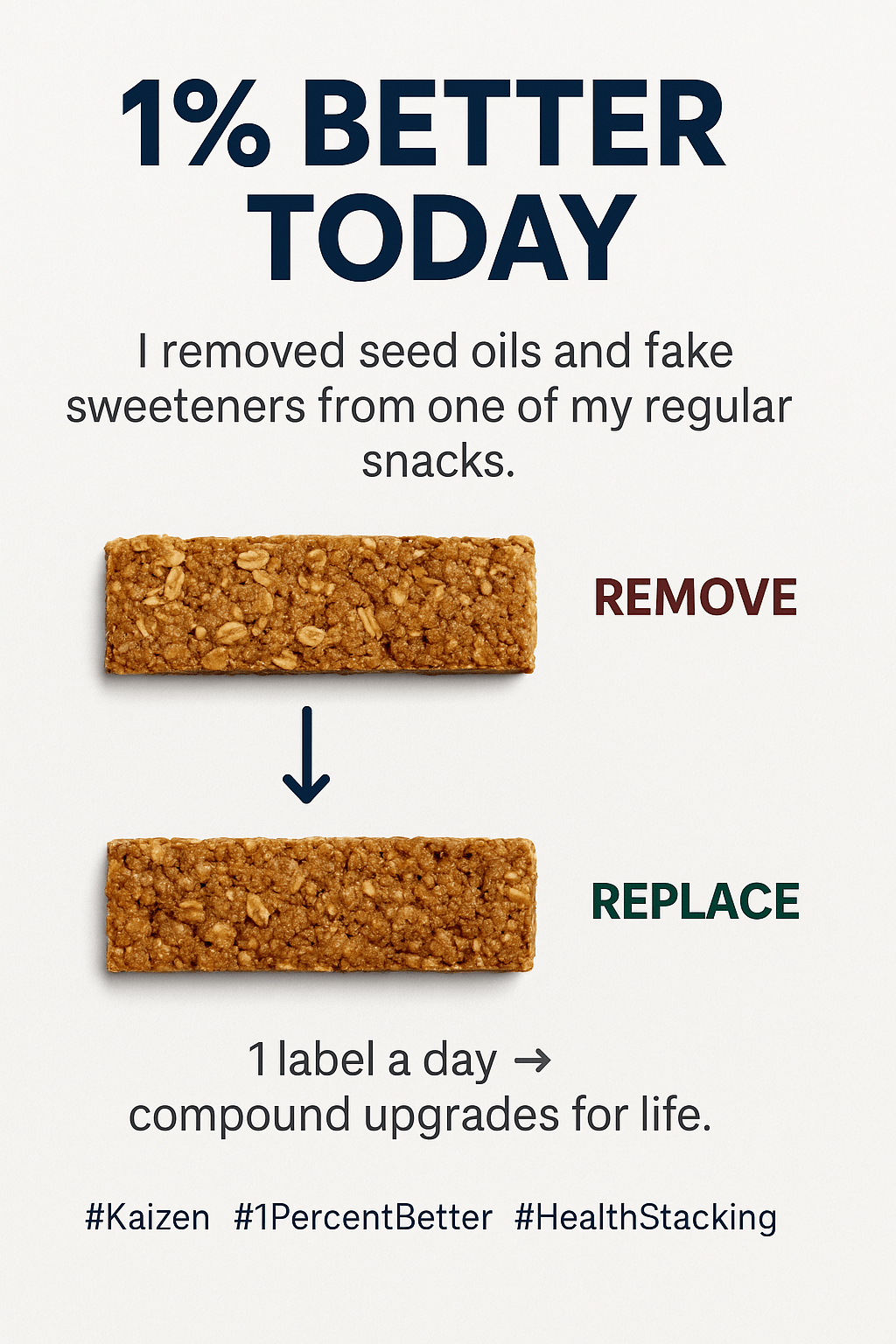
Kaizen is a Japanese term that literally means “change for the good” (from kai = change and zen = good). It’s a philosophy of continuous improvement through small, consistent actions. Instead of trying to overhaul your life overnight, Kaizen says start small and improve gradually. These little gains compound over time into big resultsbetterup.com. In fact, making just 1% progress each day can make you 37 times better in a year! That’s the power of tiny gains.
Why do these micro-improvements work? At first, a choice that’s 1% better (or worse) barely makes a dent. But over weeks and months, those tiny differences add up. It’s like compound interest for your habits. This means that consistency trumps intensity. Doing something small every day beats doing something big once and burning out. As author James Clear puts it, “It’s better to do less than you hoped than nothing at all. No zero days.”jamesclear.com. In other words, any progress is better than none – especially on tough days.
Importantly, Kaizen focuses on action over pure visualization. Dreaming of the end result isn’t enough; you need to do. The good news: these “do’s” can be tiny. Research on habit formation shows that small behaviors, done consistently, can become life-changing habits. Stanford behavior scientist BJ Fogg found that making a habit “as simple and tiny as possible” helps it stick – so easy that even when you’re rushed, sick, or distracted, you can still do it. By lowering the bar to something achievable on your worst days, you ensure no day is ever a total loss.
Why Tiny Habits Work (The Science Behind Small Wins)
Small daily actions not only add up – they also harness powerful psychology and brain science to keep you going:
- They wire your brain for improvement. Every time you learn a new skill or repeat a healthy action, your brain connections change through neuroplasticity. In other words, practice literally makes physical progress in your brain. Neuroscientists confirm that your brain changes whenever you learn or do something new, continually rewiring itself throughout life. So even a short practice session – a few lines of code, one sketch, a 5-minute language lesson – is biologically meaningful. You’re laying a neural brick each time, strengthening pathways that make the skill easier and more automatic.
- They generate positive momentum and motivation. Psychologists refer to the “small wins” effect: achieving a tiny goal gives you a hit of success that boosts your mood and confidencesummer.harvard.edu. That emotional lift isn’t trivial – it’s fuel to do more. BJ Fogg emphasizes that feeling successful is what truly wires habits into your brain. Each small win triggers a little dopamine reward, training your brain to crave that activity again. Over time, these wins build a mindset that progress is possible and enjoyable. Even on a lousy day, doing one positive thing (like taking a walk around the block) can improve your mood and self-belief, which makes it easier to show up again tomorrowsummer.harvard.edu.
- They sidestep the motivation trap. We often assume we need high motivation to act, but in truth, motivation fluctuates. On bad days it can be near zero. Tiny habits allow you to act without relying on willpower – they’re so easy that you don’t need a surge of inspiration to do them. As Fogg says, “Habits are easier to form than most people think… if you do it in the right way”. The “right way” is designing the habit to be effortless. For example, if you commit to just 2 minutes of stretching before bed, you can likely do it no matter how unmotivated you feel. And once you start, you often do a bit more. But even if you don’t, you’ve succeeded. This consistency keeps the habit alive on the hardest days.
- They compound into big improvements. Tiny daily efforts benefit from the magic of compounding. Like we saw with the 1% rule, small gains each day snowball into huge gains over time. It’s not linear – it’s exponential growth. A classic example comes from sports: British Cycling famously improved in many tiny areas (seat comfort, tire pressure, even slightly better pillow for sleep) and reaped massive performance wins. The same applies to your personal goals. Improving a bunch of little things – e.g. sleep 5 minutes earlier, add one vegetable to your meals, do a brief morning meditation – can transform your health and skills when all added together. This approach also builds resilience; if one day’s effort is small, it’s okay because you’re back at it the next day. Over a year, you’ll be astonished at how far you’ve come.
Bottom line: Small habits might seem insignificant in the moment, but they are scientifically potent. They rewire your brain, boost your motivation, and accumulate into meaningful change. By embracing small wins, you set yourself up for sustainable progress without the usual dread or burnout. Now, let’s look at how to put this into practice.
Small Daily Wins in Action: Tiny Examples with Big Impact
What do tiny daily improvements look like in real life? Basically, take any goal and scale it down to a version you can do on your worst day. Here are some practical examples of small wins I’ve applied (and you can try too):
- Fitness: Can’t manage a full workout? Do a mini-exercise. For example, drop and do 5 push-ups (or even just 1 perfect push-up). No energy for cardio? Try a 10-minute walk or even a single lap up and down your stairs. Too tired for yoga class? Do a 2-minute stretching routine in your living room. Even a short burst of activity releases endorphins and can lift your mood. I’ve had days where I felt awful, but after 10 minutes of gentle movement I felt noticeably better – and proud that I did something.
- Skill Development: Want to learn a language, instrument, or craft, but feel overwhelmed? Commit to one tiny practice. Play one song on the guitar, draw for 5 minutes in your sketchbook, or code one simple function. If you’re studying for an exam or learning a subject, read just one page of a textbook or watch a short tutorial video. For example, I’m practicing Brazilian Jiu-Jitsu and on off-days I’ll do a solo BJJ drill for a few minutes (like shrimping or bridging on the living room floor). It’s not much, but it keeps my muscle memory and interest alive. Remember: a single page or one rep is infinitely better than zero. You maintain momentum and keep your mind engaged with the skill.
- Mindset & Mental Health: Stressful day? Aim for a tiny mindset win. Write one sentence in your journal (even if it’s “Today was tough, but I’m glad I called a friend”). Or practice three deep breaths to calm yourself. If you’re trying to build a reading habit for personal growth, read one paragraph of a self-improvement book. These little actions still count. They give you a sense of agency and control when life feels chaotic. On many anxious days, I’ll do just a 2-minute meditation – literally set a timer for 120 seconds. It seems almost too small to matter, yet it helps me re-center and often I continue longer. The hardest part is starting; once you start, you often feel better and carry on.
- Productivity & Daily Performance: Huge to-do list and no motivation? Pick the easiest, smallest task and do it for 5 minutes. Clean one corner of your desk, respond to a single email, or outline just one slide of that presentation. This tiny progress can break the ice of procrastination. For instance, if I’m dreading a project, I tell myself “just work on it for 5 minutes”. Often that leads to 30 minutes of decent work once I get in the flow. But even if it doesn’t, I’ve at least moved the needle. Celebrate that win and let it be enough for today. As Harvard researchers note, even small steps forward at work boost our inner work life and motivationhbs.edusummer.harvard.edu. Each minor task done is a psychological win that can spark the next one.
These examples show that there is always a “micro-win” available, no matter how unproductive or unmotivated you feel. The key is to reduce the scope, but stick to the schedule. Do 1% of your normal routine if 100% is out of reach. By doing so, you reinforce your identity as someone who keeps showing up. Over time, these tiny wins add up to major improvements in strength, skills, and confidence.
How to Start (Even When You Don’t Feel Like It)
Getting started with Kaizen and tiny habits is simple and very forgiving. Here’s how to begin:
- Pick one tiny action. Identify a micro-habit related to an important goal. Make it so easy it sounds almost silly. If your goal is fitness, your tiny action might be “do 2 push-ups” or “walk for 5 minutes.” For learning a skill, it could be “practice piano for 2 minutes” or “write 50 words for my book.” The rule of thumb: on your hardest, laziest day, could you still do this? If yes, you’ve found a good starting point.
- Anchor it to your routine. Choose when you’ll do this tiny action by tying it to something you already do each day. For example, after you brew your morning coffee, you will do your 2 push-ups. Or when you finish dinner, you immediately take a 5-minute walk. Anchoring a new habit to an existing one (called habit stacking) helps you remember to do it. It creates a trigger: “After I [existing routine], I will [new tiny habit].”
- Do it daily (or as often as reasonable). Consistency is your goal – frequency matters more than intensity. Strive to do your tiny action every day (or every weekday, etc., depending on the habit). This “no zero days” mindset keeps the chain unbroken. Remember, doing a little is always better than doing nothing. If you feel good and want to do more, great – but all you must do is that tiny baseline. Some days you’ll exceed it, some days you’ll just check the minimal box, and that’s perfect.
- Celebrate your win. As soon as you complete the tiny habit, give yourself a mental high-five. It might feel funny, but literally say “Yes! I did it.” or pump your fist. Celebrating reinforces the positive emotion, and as behavior science shows, that feeling of success is what helps lock in the habit. No achievement is too small to celebrate. Take a moment to recognize that you made progress today – you honored your commitment to yourself. That’s a big deal, and you should feel proud.
- Gradually build up (if you want). After stringing together many tiny successes, you’ll likely find yourself naturally doing more. Maybe 2 push-ups become 5, or 5 minutes of coding turns into 15 as your capacity grows. You can raise your daily minimum very slowly over time, or keep it the same and simply do extra whenever you’re motivated. There’s no rush. Kaizen is about lifetime improvement. If you have a bad day or setback, just fall back to your tiny habit. It’s your safety net to ensure you never completely stop progressing.
By following these steps, you’ll create a sustainable cycle of improvement. You’re effectively training the “habit muscle” – starting small and strengthening it with each repetition. In a few weeks, you might be surprised that your 5-minute habits have turned into routines you do automatically, and you’re eager to expand them. But it all starts with that first tiny step.
Keep Moving Forward – One Tiny Step at a Time
In the journey of health, skills, and personal growth, consistency beats intensity. Especially on those dark, difficult days, remember that you have nothing to prove to anyone – you just need to show up for yourself, however modestly. Do a little something that pushes you 1% forward, and you’ve won the day. Over time, those 1% wins build a healthier, more skillful, more resilient you. As the saying goes, “a journey of a thousand miles begins with a single step” – and sometimes that step is as small as a push-up or a paragraph.
I speak from experience. There have been mornings I’ve felt completely unmotivated, but I told myself “just warm up with one quick set of squats.” Lo and behold, that one set turned into a full workout – but even if it hadn’t, I’d have been happy that I did something. By embracing Kaizen, I’ve learned to trust the process of continuous daily improvement. It’s a relief knowing that even on low-energy days, I can maintain momentum and avoid the vicious cycle of guilt and inconsistency.
Now it’s your turn. Try the tiny habit approach for yourself. Pick one micro-action and do it today. Then do it again tomorrow. Watch what happens. I guarantee you’ll start to feel the changes – in your mood, in your confidence, and in your progress. Remember, greatness is built on the backs of small daily wins.
If you enjoyed this post and want more tips on building strength, skill, and self through small daily improvements, consider subscribing to Skill-Stacked. Join our community of lifelong learners and get fresh insights every week to help you stay motivated and keep growing – even on the tough days. Let’s keep moving forward together! 🚀