Tag: Discipline

  • 🧹 Daily Kaizen #5: Do One Chore You’ve Been Ignoring for 5+ Days

    🧹 Daily Kaizen #5: Do One Chore You’ve Been Ignoring for 5+ Days

    Small mess. Big drain.

    We all have one chore that’s been quietly haunting us.

    The overflowing laundry basket.

    The bin that needs emptying.

    That one dish that’s somehow avoided the sink all week.

    Here’s your Kaizen today:

    Do one chore you’ve been ignoring for 5+ days.

    Just one. The one that keeps whispering “later” every time you walk by.

    Because it’s not about being spotless — it’s about reclaiming your environment, one small victory at a time.

    🧠 Why this works:

    ✅ You clear the visual noise that subtly increases stress

    ✅ You disrupt the procrastination cycle (which bleeds into everything else)

    ✅ You earn a fast win that builds self-respect and momentum

    And when you complete it, something shifts:

    You move differently.

    Think more clearly.

    Feel more in control.

    🛠️ Try this:

    Set a 5-minute timer Pick the task you least want to do Don’t aim for perfection — just forward motion

    That one act becomes a ripple.

    And ripples become waves.

    ⚡ Final thought:

    If you can conquer a small thing you hate,

    you’re on your way to conquering bigger things that matter.

    So stop scrolling —

    and go dominate the dish, the drawer, or the damn laundry.

    You got this.

  • The System I Wish I Had Years Ago

    The System I Wish I Had Years Ago

    Most self-improvement advice sounds great in theory.
    But when it comes time to apply it consistently, especially when life gets hard, it falls apart.

    Motivation fades.
    Discipline cracks.
    We revert back to default.

    I’ve spent the last year reverse-engineering why.

    The truth is:
    You don’t need more “inspiration.”
    You need a system that meets you where you are—and builds you brick by brick.

    That’s why I’m creating the 100-Step Personal Development System,
    A step-by-step framework to help you:

    • Build real discipline
    • Level up in all key areas of life
    • Stop relying on motivation
    • Become someone you actually respect

    It’s not finished yet.
    But it’s getting close.
    And when it drops, you’ll have the full blueprint.

    Until then, I’ll be dropping sneak peeks here.
    Mini-lessons. Daily wins. Foundational principles.

    Watch this space.

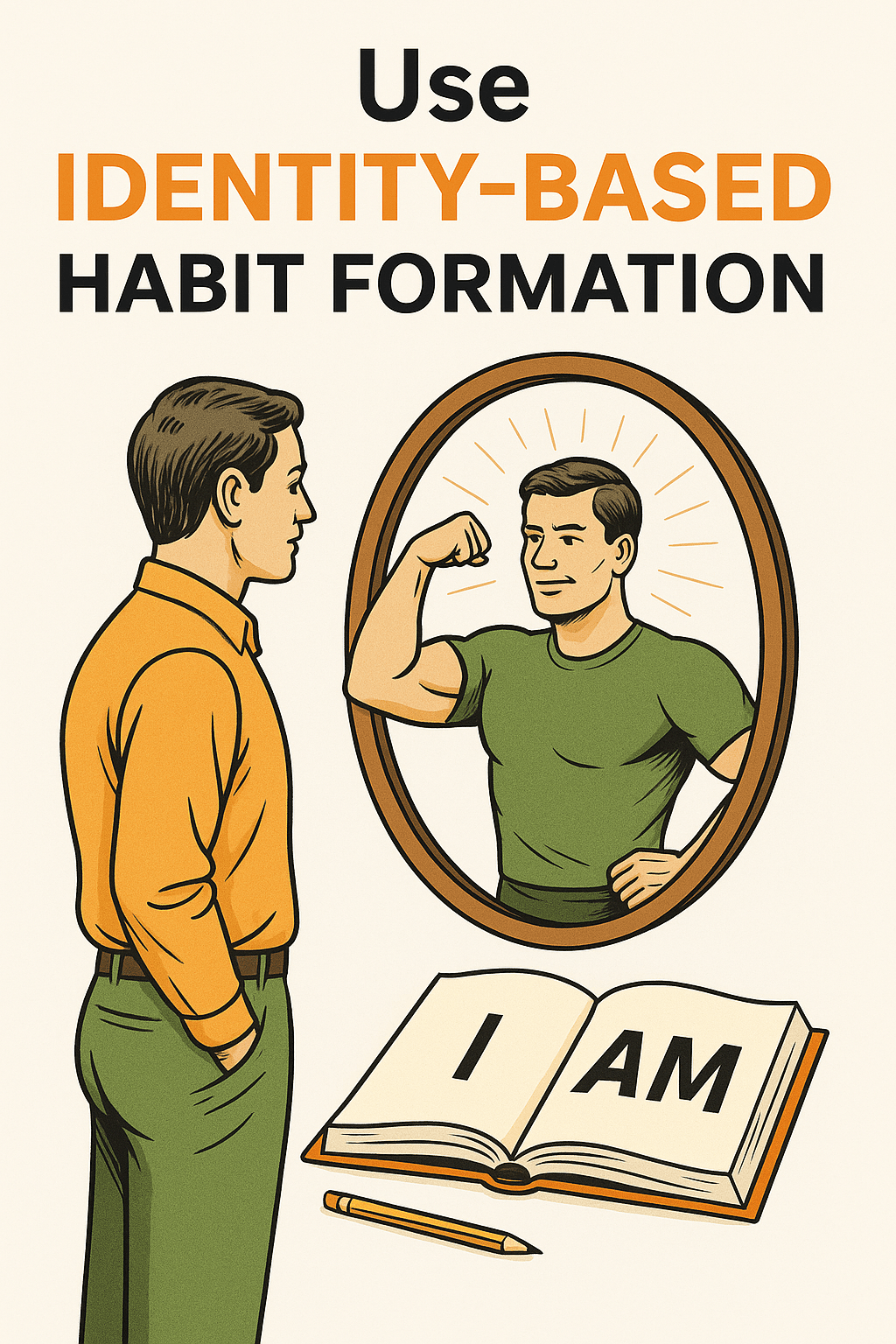
  • Use Identity-Based Habit Formation

    Use Identity-Based Habit Formation

    Every new year or major goal season, we’ve all been there: fired up one day, and weeks later frustrated that the habit still didn’t stick. The problem may not be what you want to achieve, but who you think you are. Instead of focusing on outcome-driven goals, imagine shifting your mindset: “I am the type of person who [lets X happen].” This simple switch – an identity-based habit – can make habits far easier to form and sustain. As habits expert James Clear explains in Atomic Habits, “your current behaviors are simply a reflection of the type of person you believe that you are” . In other words, true habit change starts by creating a new self-image first.

    Outcome vs. Identity: Two Approaches to Habit Change

    Many people set goals like “I want to run a marathon” or “I want to lose 20 pounds.” These are outcome-based habits: the focus is on a result, not on the person you become. It’s no wonder they often fizzle out; once the goal is reached (or missed), motivation vanishes. In contrast, identity-based habits start by asking: Who do I want to become? For example: instead of “I want to run a marathon,” an identity-based thinker says, “I am a runner.”  When you see yourself as a runner, every action you take (training, eating right, getting enough sleep) feels like an expression of that identity – not just a means to an end .

    This identity-first mindset flips traditional habits on its head. As one habits coach puts it, “Who do I want to become?” replaces “What do I want to achieve?” . Seeing your habits as reflections of your self-image is powerful. For instance, if you identify as a healthy person, you’re naturally more likely to choose salad over fries. This happens because our actions follow our beliefs . If your inner story is “I am disciplined and fit,” you won’t struggle as much to eat well or exercise. In fact, psychologists find that when habits are tied to identity (especially core values), people integrate them more deeply and stick with them long-term .

    Why Identity-Based Habits Are More Powerful

    Identity-based habits build internal motivation and make lasting change more likely.  As one recent guide explains, “Identity-based habits work differently” – they “start with the question: ‘Who do I want to become?’ rather than ‘What do I want to achieve?’” . This creates three big advantages:

    Internal Motivation: When a habit is part of who you believe you are, it feels natural and purposeful. For example, if you think “I’m the kind of person who always exercises,” going to the gym isn’t a chore but an expression of you. This alignment boosts motivation – you’re not just chasing a number on a scale, you’re living your identity . Less Inner Conflict: Trying to quit a bad habit by force often creates internal war (“I should be healthy, but I really want junk food!”). With identity-based thinking, you eliminate that conflict. It’s easier to say “I am not a smoker” than “I’m trying to quit smoking” . There’s no battle between “should” and “want,” because your chosen identity has already won. Sustainable Change: Goals are by nature temporary, but identities endure. When your habits align with how you see yourself, they become part of your lifestyle, not just things to tick off. Research confirms that linking habits to identity helps new behaviors stick and leads to more effective behavior change . In short, identity-based habits turn once-a-day efforts into years-long routines, making personal growth feel more automatic than an uphill struggle.

    This identity-first approach is at the heart of James Clear’s bestselling strategy. In Atomic Habits (25+ million copies sold), Clear stresses that lasting change happens when “creating a new identity” comes before chasing results . When you internalize “I am X,” every choice reinforces that label. Even small victories (“I ate a healthy lunch today”) become proof that this new identity is real and powerful.

    Real-Life Examples: Turning Goals into Identities

    Let’s make this concrete with a few examples. Instead of saying “I want to lose weight,” reframe it as “I’m someone who moves my body every day.” You might start with tiny steps like a 5-minute walk after dinner. Each day you follow through, you prove to yourself “I am a person who stays active,” and that identity propels you further. For instance, James Clear shares a story: after his wife memorized all 30 names in a new class, she thought, “I’m the type of person who is good at remembering names.” From then on, she effortlessly remembered names everywhere she went . That shift in identity – from “I try to remember names” to “I do remember names” – turned a one-time success into a permanent habit.

    Here are a few more identity-based habits in action (adapted from habit experts):

    “I am a learner.” Action: Read 10 pages of a book or listen to an educational podcast each day . Over time, that micro-habit becomes a learning routine. “I am an organized person.” Action: Keep a daily to-do list and tidy your workspace at the end of each day . Small steps like these reinforce the belief that you’re naturally organized. “I am an early riser.” Action: Set a consistent bedtime and wake up 15 minutes earlier tomorrow. Repeat until this new schedule feels normal . Now mornings align with your identity, not just an alarm clock. “I am a writer.” Action: Write one paragraph or journal entry each morning. No pressure for brilliance – just ink a tiny bit and prove you’re “a writer” by writing.

    The key is consistency. Each small action – even a glass of water each morning if you aim to be healthy – serves as “evidence” for your self-image. Celebrate these wins! Every time you live up to your identity (by going on a run, preparing a healthy meal, writing a page), take a moment to acknowledge it. Studies show that reflecting on progress and celebrating identity-aligned actions not only feels good, but cements the new identity even further .

    How to Build Identity-Based Habits: Practical Steps

    Define Your New Identity.  Start by asking yourself, “Who do I want to be?” Pick a clear identity that matches your goals. It could be “the kind of person who reads daily,” “someone who values fitness,” or “a skilled communicator.” Be as specific as possible . For example, instead of just “I’m athletic,” try “I am a runner” or “I am the kind of person who never skips leg day.” Choose Tiny Habit Actions.  Identify one small habit that person would naturally do. If your identity is “I am a fit, healthy person,” you might start with 50 jumping jacks every evening or one extra serving of vegetables at dinner. The goal is to make the habit so easy that it requires no willpower – say, just 1% effort each day . These micro-wins accumulate and reinforce your identity. Attach Habits to Your Identity.  Whenever you perform the habit, mentally note “I am doing this because I am [identity].” For example, tell yourself “I’m having an apple snack because I am a healthy eater.” This mental link turns the action into a statement about you. According to experts, consciously proving your identity to yourself (even in tiny ways) is what makes the new identity stick . Track and Celebrate Wins.  Keep a simple log or journal of your habit actions. Every time you follow through, give yourself a quick pat on the back. This positive reinforcement is like flexing your identity muscle. Remember the birder in James Clear’s story: once she saw a proof (“I remembered that name!”), it confirmed her belief. You can do the same – a 10-minute workout or writing a paragraph is proof of the identity you claim. As researchers note, acknowledging these wins builds self-esteem and strengthens the new habits . Iterate and Deepen the Identity.  As these small habits become routine, you’ll notice your mindset shifting. Keep expanding: increase your habit slightly (walk 5 more minutes, write one more sentence) to continue proving your identity. Over time, “I am a runner” will feel completely natural, and skipping workouts will start to feel like stepping outside who you are.

    By following these steps, you’re literally becoming the person who lives the habits you want, rather than just chasing abstract goals. Each tiny act stacks up to make that identity undeniable.

    The Impact: Personal Growth That Lasts

    Imagine seeing yourself transform: tasks that once felt like chores now feel like parts of your character. That’s the power of identity-based habits. In Skill Stacker’s Personal Development System, we emphasize this approach because it aligns behavior change with personal growth. As you adapt your self-image, you’ll often find that other good habits naturally follow. A tidier desk might lead to clearer thinking, a consistent workout routine could boost your productivity at work, and so on. It becomes a virtuous cycle.

    Hundreds of thousands of people have seen this mindset shift work wonders. Authors, entrepreneurs, and athletes often report that telling themselves “I am the person who [practice X]” fundamentally changed their results. (Olympic runner Eliud Kipchoge, featured in Atomic Habits, is one high-profile example of mastering this mindset .) When you stop fighting your nature and instead transform your self-image, the change is profound.

    Join the Personal Growth Journey

    Ready to give identity-based habits a try? Start small this week: pick one new identity statement (like “I am a writer”) and one tiny action (even just one paragraph) to prove it. Stick to it consistently, celebrate each win, and watch how your behavior naturally shifts.

    Part 7 of our Personal Development System series shows that who you believe you are matters more than any goal. For more strategies on behavior change and personal growth, stay tuned to the Skill Stacker blog and follow our series. And don’t forget to grab our free Personal Development System workbook – it’s packed with practical exercises to help you apply identity-based habit formation and more. Your best self is waiting; become that person one habit at a time!

    Sources: Habit science and expert insights from James Clear’s Atomic Habits , modern habit coaching resources , and psychology research on habit-identity links . (Read more to see how identity-driven habits create lasting change!)

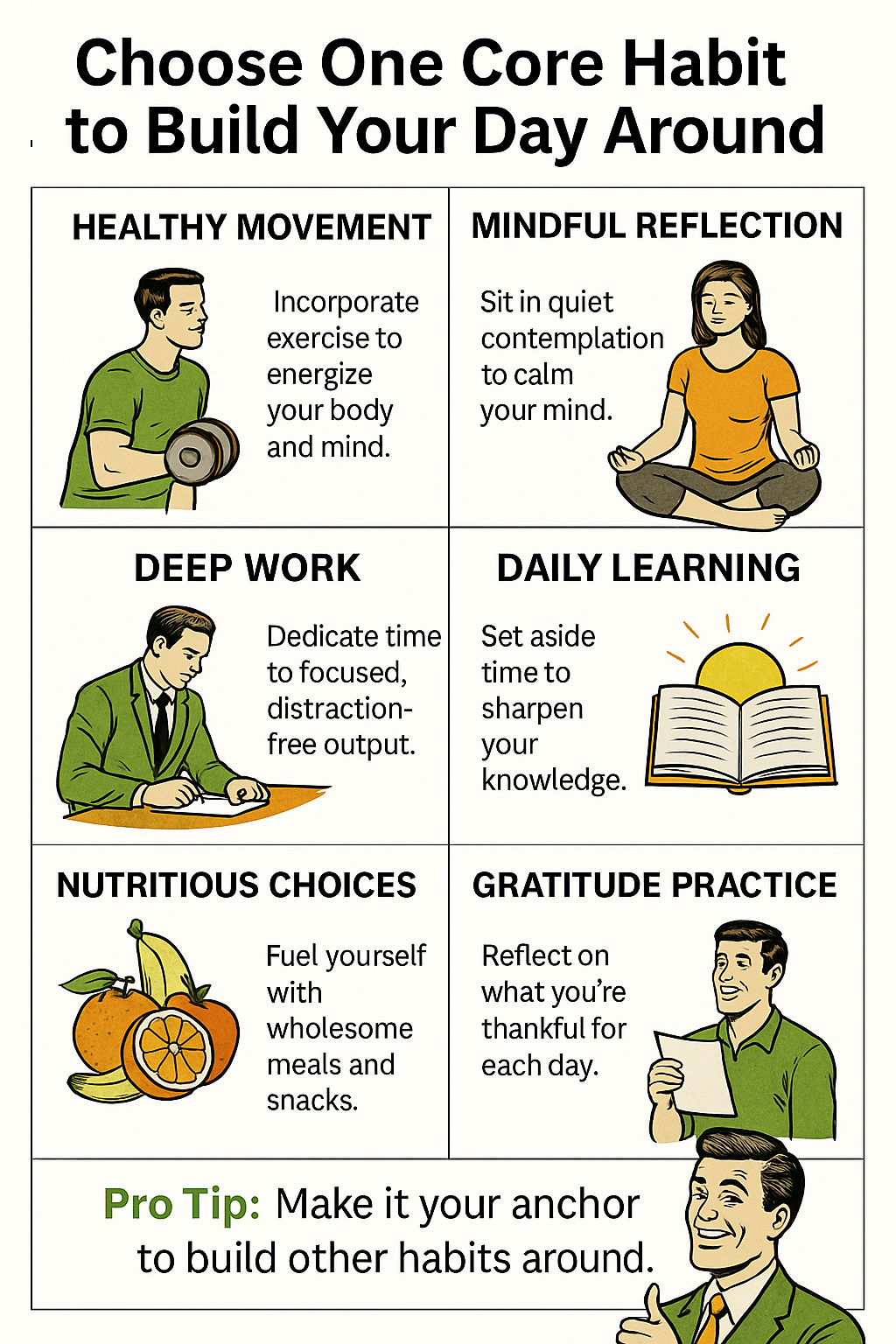
  • Choose One Core Habit to Build Your Day Around

    Choose One Core Habit to Build Your Day Around

    Building lasting change often starts with one keystone habit – a single routine that becomes the anchor of your day.  Focusing on one habit at a time is key. In fact, research shows that people who make specific plans for one habit (the when, where, and how) are 2–3× more likely to follow through .  Crucially, implementation intentions only work if you focus on one thing: people juggling many goals tend to fail more often than those committed to a single goal .  By picking one meaningful habit, you give yourself the best chance to automate it into your routine.

    Anchoring your day to one core habit has a ripple effect across your life.  As Psychology Today explains, “keystone habits” are foundational routines that create a domino effect of positive changes .  For example, establishing a regular exercise routine not only boosts fitness, but often leads to improved diet, better sleep, higher energy and productivity .  In other words, one good habit tends to spawn others.  By consistently practicing just one high-impact habit, you build momentum and confidence that carries over to every part of your day.  This habit becomes the stable foundation on which other healthy routines can be built.

    Why a Core Habit Matters: Relying on autopilot routines relieves decision fatigue and conserves willpower . When one key habit is locked in place each morning, the rest of your day tends to flow better.  You develop a “success mindset” as each completed habit reinforces your identity (for instance, thinking of yourself as “someone who journals every morning” or “a regular exerciser”).  And science backs this up: our brains form habits in the basal ganglia, automatically linking cues to routines .  By designing a single keystone habit and its cues, you work with your brain’s natural wiring.

    Catalyst for change: One core habit can trigger a cascade of other good habits . For example, starting the day with exercise often leads to healthier eating, better sleep, and sharper focus in the afternoon . Momentum builder: Completing a meaningful habit each day boosts motivation and confidence.  When you see progress in one area, it’s easier to tackle other challenges. Routine anchor: Your keystone habit anchors your schedule. Making it a fixed part of your morning or evening routine creates stability, so other habits “slot in” around it . Identity shift: Focusing on one habit helps reshape your self-image.  You begin to think, “I am the kind of person who [habits]”, which reinforces consistent behavior. Simplicity wins: Psychology research finds that trying too many new habits at once undermines progress. People focusing on a single specific habit are far more likely to succeed .

    Together, these points show why it’s better to master one core habit than spread yourself thin.

    Examples of Powerful Core Habits

    Which habits make good core routines?  Think of activities that energize you, support your biggest goals, or simply feel rewarding.  Here are some examples that many people find transformative:

    Morning Journaling: Spend 5–10 minutes writing after you wake up. Journaling clears your mind, sets your intentions for the day, and helps process emotions. Studies show that expressing thoughts on paper “enhances mental clarity and emotional processing,” helping to manage stress and anxiety .  Over time, this practice can improve mood and self-awareness. Daily Exercise: A short workout or brisk walk each morning gets your body moving and brain alert.  Exercise not only strengthens muscles and heart, it also “boosts memory and thinking indirectly by improving mood and sleep, and by reducing stress and anxiety” .  Many people who exercise daily report clearer thinking and more energy throughout the day. Daily Reading: Even 15–30 minutes of reading (non-fiction, personal development, or inspirational material) can prime your mind. Reading regularly is like a gym session for your brain – it “improves memory, concentration, and [reduces] stress,” according to education experts .  Starting the day with learning sets a positive tone and gradually builds knowledge. Morning Meditation or Mindfulness: Sitting quietly for a few minutes each morning to meditate or breathe deeply trains your attention and calms your nervous system.  Research on meditation shows that brief daily practice can decrease negative mood and anxiety while improving attention and working memory .  Over weeks, people report better focus and emotional balance. Gratitude Practice: Noticing things you’re thankful for – even mentally or by writing a quick list – can reframe your mindset.  Regular gratitude journaling has been linked to better well-being and reduced stress .  It’s a simple habit that shifts your outlook to the positive. Evening Review or Planning: End your day by reviewing successes and planning tomorrow’s top priority.  This sets up your next morning with clarity and can improve sleep by reducing rumination.  (This habit aligns with identity and goal-setting research .)

    (Tailor this list to what appeals to you: exercise could be yoga or dance, reading could be podcasts, and journaling could be notes on wins. The specific habit is less important than consistency.)

    How to Pick the Right Habit for You

    The best habit is one that aligns with your goals, lifestyle, and natural energy. Here are some guidelines:

    Match Your Goals: What is your top priority? If you want more energy, a morning workout or walk might be ideal. If you seek calm and focus, meditation or journaling could help. If personal growth is key, reading or learning fits. Choose a habit that directly supports what you care about most. Consider Your Daily Rhythm: Pay attention to when you feel most alert.  Morning “larks” often have more willpower and energy early, so they might tackle exercise or writing right after waking.  Night owls might start with something simpler (like sipping tea while reading) and schedule more demanding habits later.  Research shows people perform best at their preferred time of day – morning types in the a.m. and evening types later .  Pick a habit and time of day when you naturally feel energetic and clear-headed. Test for Enjoyment and Feasibility: A habit doesn’t have to be fun, but it should be something you don’t dread.  For example, if 30 minutes of exercise feels impossible, start with 5 minutes.  If journaling every day is too much, try 3 days a week.  The goal is consistency, not intensity. Simplicity and Resources: Keep it simple. You’re much more likely to maintain a basic habit (5-minute meditation, 10-minute walk) than a complex one.  Also, ensure you have what you need: if you choose exercise, place workout clothes where you see them; if writing, keep a notebook handy. Identity Alignment: Frame the habit in identity terms.  Instead of “I want to exercise,” tell yourself “I am the sort of person who exercises regularly.”  This mindset (identity-based habits) makes it easier to stick with your choice .

    When you settle on one habit, commit to it wholeheartedly. Remember, focusing on that one habit increases your chance of success . You can always add another habit later. For now, give your first habit all your attention and energy.

    Making Your Habit Stick: Practical Steps

    Once you’ve chosen your keystone habit and timing, use these strategies to turn it into an automatic part of your day:

    Plan It Precisely (Implementation Intention): Decide exactly when, where, and how you will do your habit.  For example: “Every morning right after I brush my teeth, I will meditate for 5 minutes.” Studies find that writing down such specific plans doubles or even triples the likelihood you’ll follow through .  Having a concrete plan (“If X happens, then I will Y”) makes it much easier to act. Habit Stacking: Attach your new habit to an existing routine.  This is called “habit stacking.”  For instance, after you make coffee, then sit down to journal; or after you put away your shoes at night, then do 5 minutes of stretching.  Psychology experts note that habit stacking “anchors” a new habit to something you already do, making the change feel effortless . Over time the linked behaviors become second nature. Time-Blocking: Put the habit on your calendar and treat it as an appointment.  Block a short fixed window each day (e.g. 7:00–7:10 AM) for your habit.  This way you won’t accidentally skip it.  Scheduling a daily reminder or alarm can help signal it’s time. Design Your Environment: Make the habit obvious and easy by arranging your surroundings. Keep cues and tools in sight: place your journal on your desk, lay workout gear out before bed, or put a water bottle where you’ll see it . Conversely, hide or remove distractions: turn off notifications, log out of social apps, or keep junk food out of the house.  As one habit expert advises, small environmental tweaks (like “keeping a water bottle on your desk” or “placing a book on your nightstand instead of your phone”) can automatically nudge you toward the right behavior . Start Small and Build: Resist the urge to overdo it.  Consistency is more important than duration.  If you miss a day, don’t criticize yourself – just do it again tomorrow.  Gradually increase the habit as it becomes easier.  For example, add one more minute to your meditation or one extra page of reading each week. Use Rewards and Tracking: Give yourself a small reward after completing the habit (even just a mental high-five).  Keep track of your progress – a checkmark on a calendar or a habit-tracking app can reinforce your commitment.  Seeing a streak build can be motivating. Get Accountability: Tell a friend or family member about your habit goal, or join a group (online or offline) for support.  Sometimes sharing your intention publicly makes you more likely to stick with it.

    Following these steps harnesses the best strategies from behavioral science.  As Neuroscience Today explains, our brains form strong habits when we consistently pair a cue (like a time of day) with a routine, which eventually becomes automatic . By stacking your habit, time-blocking it, and shaping your environment, you effectively engineer success.

    Your Takeaway: Start Today

    You now have the blueprint: pick one single habit to build your daily routine around.  Make it specific, plan it, and slot it into your schedule.  Use habit-stacking and environmental cues to make it automatic.  Remember that even a few minutes of daily focus can spark broader improvements.

    The most important step is to start. Don’t wait for the “perfect” time or until you have more willpower.  Tomorrow morning, for example, wake up a bit earlier and begin.  Write those first journal lines, put on your sneakers for a walk, or sit for a short meditation.  Once you’ve built a streak of a few days, you’ll feel the momentum building.

    Key takeaways: Choose one core habit aligned with your goals.  Treat it like an unmissable appointment.  Set up cues and remove friction so the habit happens almost automatically .  Focus on this habit fully before adding more.  Scientific research confirms this focused approach is the most effective route to lasting change .

    You’re ready – start your new habit today and let it become the anchor of a better, more productive day!

    Sources: Practical tips and examples above are backed by psychology and neuroscience research , which highlight how keystone habits and smart habit-design lead to lasting success. Use these insights as your guide, and watch the positive ripple effect in your life. You’ve got this!

  • Book of the Day: Mindset — The New Psychology of Success by Carol Dweck

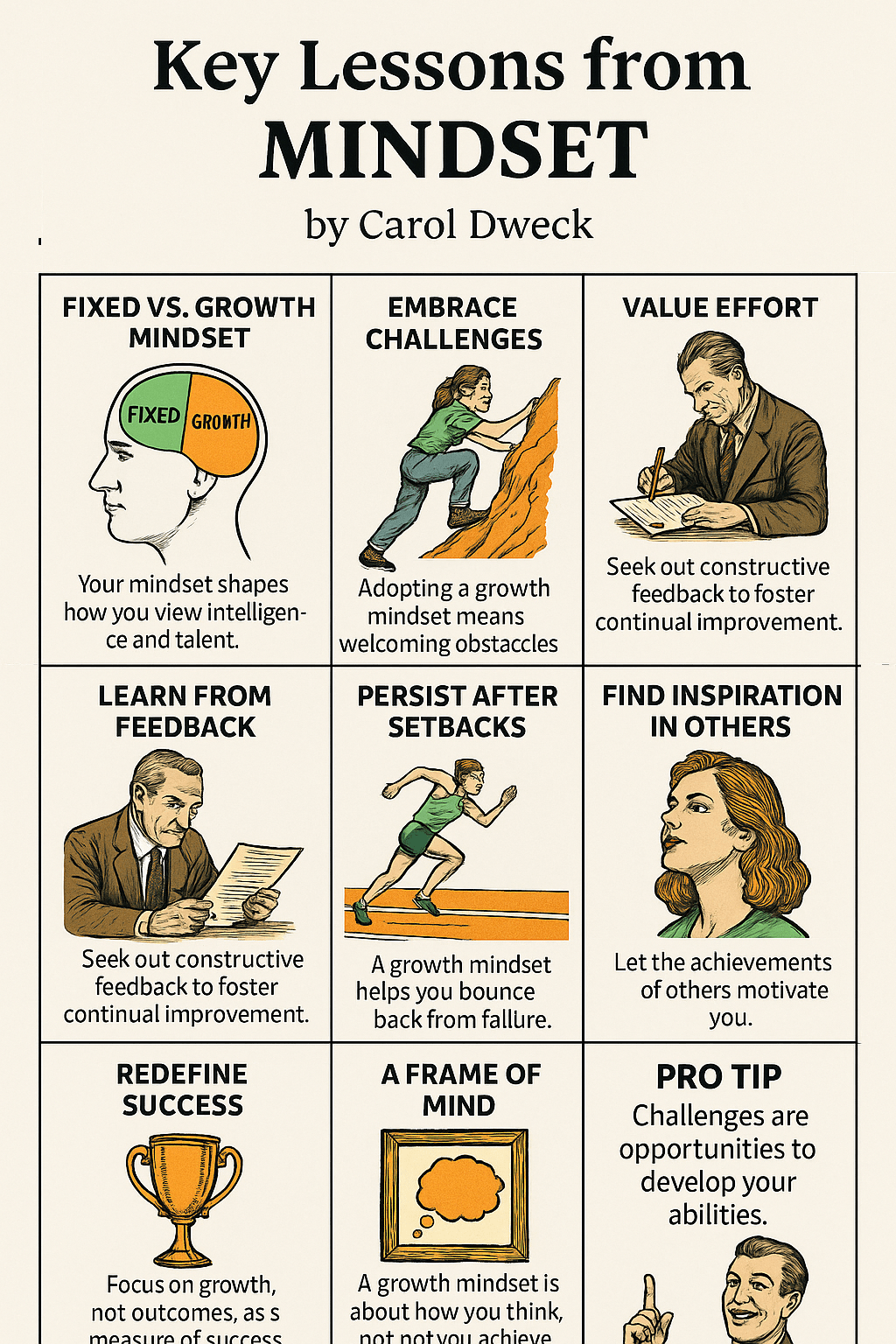
    Book of the Day: Mindset — The New Psychology of Success by Carol Dweck

    Introduction: Why Mindset Matters

    Have you ever caught yourself thinking, “I’m just not a math person” or “I’ll never be a natural leader”? In Mindset, Stanford psychologist Carol Dweck calls out these self-defeating scripts and shows how a simple shift in mindset can change everything. She identifies two main mindsets – fixed and growth – and argues that developing a growth mindset is essential for success . In short, Mindset reveals how the way you think about talent and effort might be the single most important factor in your personal development and high performance. This isn’t just feel-good hype; it’s grounded in decades of research on achievement and learning.

    Fixed vs. Growth Mindset (The Core Idea)

    In a fixed mindset, you believe traits like intelligence or talent are set in stone. The result? You’re constantly trying to prove yourself. Challenges are scary because failing would mean you’re “not enough.” Dweck explains that if you think your qualities are unchangeable, you’ll likely avoid difficult tasks or criticism to protect your ego . Mistakes feel like personal failures.

    By contrast, a growth mindset means you see abilities as skills to be developed. Talent isn’t a fixed hand you’re dealt, but a starting point – and effort, good strategies, and help from others can grow your capabilities . A growth-minded person embraces challenges and views setbacks as feedback rather than defeat. If you struggle with something, it just means you don’t get it yet . This mindset creates a passion for learning and “stretching” yourself, even when things are tough . In fact, pushing outside your comfort zone (where real growth happens) becomes exciting instead of intimidating.

    3 Key Lessons for Skill Mastery

    Embrace Challenges & Failures: Don’t shy away from challenges – run toward them. People with growth mindsets don’t just accept challenges, they thrive on them . Each tough problem or even failure is actually a chance to learn. Instead of thinking “I failed – I’m no good,” ask “What can I learn from this?” When you treat failures as valuable feedback, you build resilience and bounce back stronger (growth-minded folks see setbacks as a motivating wake-up call ).

    Focus on Effort & Process, Not Talent: Under a fixed mindset, we might assume “If I’m not instantly good, I’ll never be.” Mindset flips that script. Effort is the path to mastery. Dweck’s research found that even geniuses have to work hard – natural talent only takes you so far. It’s consistent effort, practice, and effective strategies that turn potential into accomplishment . In other words, systems and habits beat raw smarts. So celebrate effort and persistence. By focusing on the process (the daily 1% improvements, the habits, the practice sessions), you’ll inevitably get better over time.

    Adopt a “Learner” Identity: Changing your results starts with changing how you see yourself. If you’ve been telling yourself “I’m just bad at ___,” start telling yourself “I’m learning ___.” Dweck often cites sociologist Benjamin Barber: “I don’t divide the world into the weak and the strong… I divide the world into the learners and nonlearners.” Be a learner. This identity-level shift keeps you curious, humble, and willing to try new things. When you identify as someone who is always learning and improving, challenges become part of your mission. You’ll seek out mentors, feedback, and routines that reinforce that identity (this is the essence of the Skill Stacker approach: continuously stacking new skills). Over time, those tiny 1% gains compound into major expertise.

    Daily Kaizen: Flip “Not Yet” into Action

    Today’s 1% improvement: Identify one “fixed mindset” thought you’ve had recently (“I’m just no good at this…”) and add one word to it: “yet.” Then take a small action in that direction. For example, if you’ve been thinking “I can’t speak in public,” tell yourself “I can’t do it yet,” then practice a 2-minute talk in front of a mirror or friend. Embrace the initial discomfort – that’s your growth in progress. This tiny exercise is your 1% better challenge for today.

    Key Takeaways (Infographic-Friendly)

    Fixed Mindset: Believes talent is fixed; often avoids challenges to avoid failure . Growth Mindset: Believes skills can be improved; embraces challenges to learn and grow . Effort Unlocks Ability: No matter your starting talent, effort and practice ignite ability into achievement . Failure = Feedback: Mistakes and setbacks aren’t the end – they’re lessons that guide you toward improvement . Learner Identity: See yourself as a work-in-progress. Choose to be a learner, not a non-learner , and you’ll keep evolving. 1% Better Daily: Small daily improvements compound to massive gains – 1% better each day makes you ~37x better in a year .

  • 1% Better Today 💥

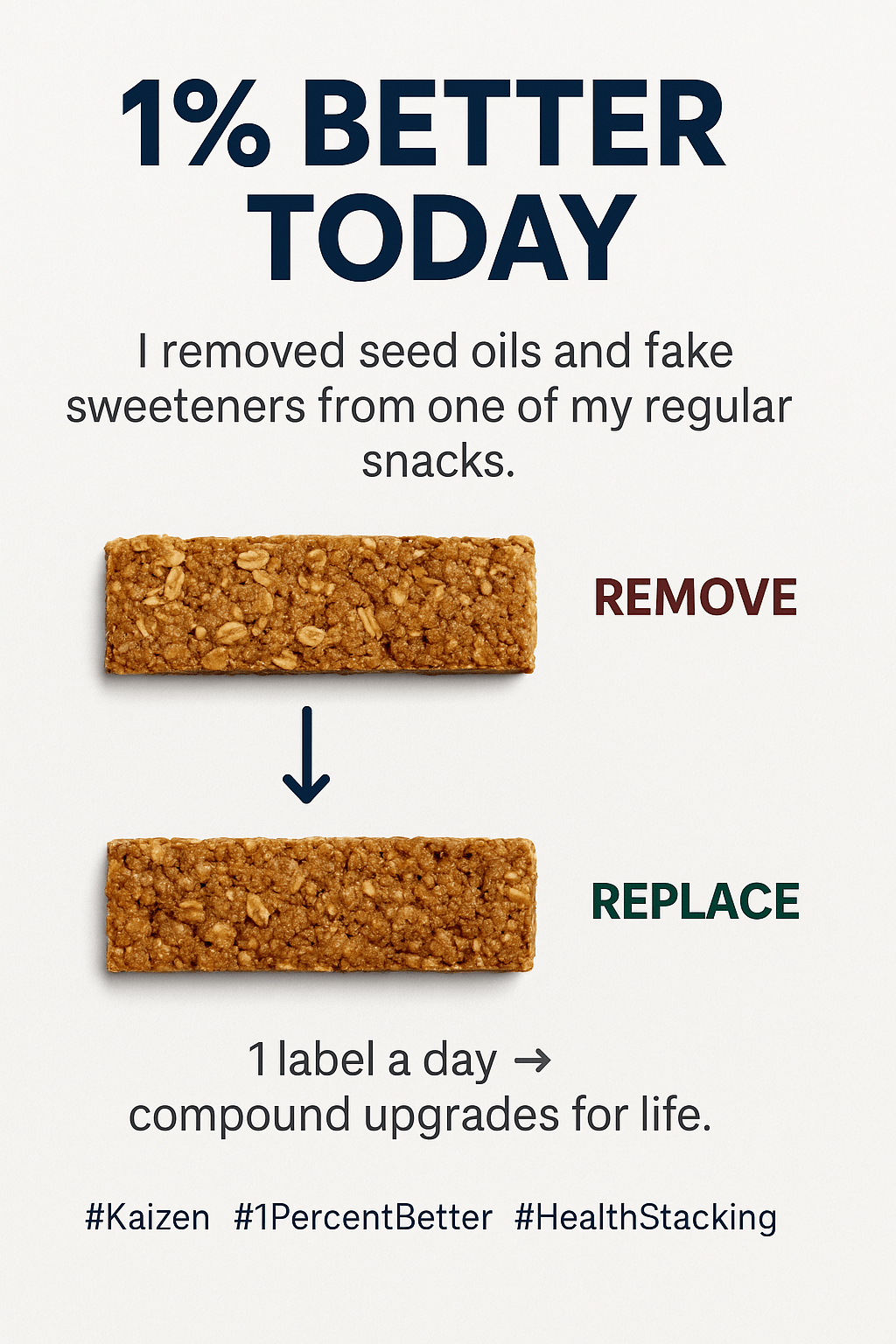
    1% Better Today 💥

    Most people focus on what to add to their diet.

    Today I focused on what to remove.

    I checked the label on one of my regular “healthy” snacks — turns out it was full of seed oils and fake sweeteners.

    🧠 Small change: I replaced it with a cleaner option.

    📈 Long-term win: Better hormones, digestion, and energy.

    1 label a day → compound upgrades for life.

  • Book of the Day: Digital Minimalism by Cal Newport

    Book of the Day: Digital Minimalism by Cal Newport

    Digital Minimalism: Choosing a Focused Life in a Noisy World by Cal Newport is a guide to decluttering your digital life and reclaiming real focus. Newport – best known for Deep Work – argues that less can be more when it comes to technology. The core message is to be intentional and selective about the apps, sites, and devices you allow into your routine. In fact, Newport defines digital minimalism as “a philosophy of technology use in which you focus your online time on a small number of carefully selected and optimized activities that strongly support things you value, and then happily miss out on everything else” .

    In an age of infinite feeds and notifications, Newport reminds us that our current tech-saturated lifestyle didn’t happen by accident. “We didn’t sign up for the digital lives we now lead… [they were] crafted in boardrooms to serve the interests of a select group of technology investors,” he observes . In other words, Big Tech has designed platforms to be as addictive and all-consuming as possible. “People don’t succumb to screens because they’re lazy, but instead because billions of dollars have been invested to make this outcome inevitable,” Newport writes . The antidote, he argues, is to develop a conscious digital philosophy – using tech on your terms to support your goals, and confidently ignoring the rest.

    Key Takeaways for Digital Discipline and Focus

    Focus on What Truly Matters: Identify the handful of digital activities that genuinely add value to your work and life, and eliminate the rest. Digital minimalists focus their online time on carefully selected pursuits that support their values and happily miss out on everything else . For a creator or entrepreneur, this might mean doubling down on creating content or building your product, while saying no to endless scrolling and shiny new apps that don’t serve your mission. Perform a 30-Day Digital Declutter: Newport suggests a technology “fast” to reset your habits . Take a 30-day break from all optional online activities – social media, news feeds, streaming – that aren’t essential. Use this period to rediscover offline hobbies and real-world pleasures. After 30 days, reintroduce digital tools only if they serve a deep value or purpose in your life . Many find that after a month off, they regain control and no longer feel the urge to revert to past habits.

    Reclaim Solitude (Disconnect to Think): In a world of constant connectivity, “solitude deprivation” – never being alone with our thoughts – is a real threat . Make it a discipline to carve out tech-free time for reflection. That could mean daily walks without your phone, journaling, or simply sitting unplugged. Newport points out that great ideas and self-awareness flourish in moments of quiet, when you can actually hear yourself think. Protect these pockets of solitude to recharge your mind and boost your creativity and mental well-being.

    Prioritize Creation Over Consumption: Be a producer, not just a consumer. Instead of defaulting to passive scrolling whenever you have a free moment, direct that time toward demanding, high-value activities that sharpen your skills or create something meaningful . This might be writing a blog post, designing a new project, practicing your craft, or having a deep conversation with a friend. Newport calls this the Bennett Principle – favor the real-world and the challenging over the easy hits of digital distraction . You’ll gain far more satisfaction from building or learning than from another hour lost on a timeline.

    Use Social Media Like a Tool, Not a Crutch: For many in online business, social media is unavoidable – but use it intentionally. Treat it as a professional tool for specific outcomes, not a default pastime. Newport advises curating your digital environment: follow only high-quality accounts that inform or inspire you, and unfollow the noise . Set strict boundaries like checking messages or feeds during a designated 30-minute window, rather than sporadically all day . By scheduling your usage and sticking to purpose-driven tasks (e.g. publishing your work or engaging with your community), you prevent the platforms from hijacking your attention.

    Skill Stacker Take

    At Skill Stacker, we’re all about building online leverage through focus, clarity, and action – and Digital Minimalism is a perfect rallying cry for this mission. Newport’s insights remind us that disciplined tech use isn’t about deprivation; it’s about creating space for what matters most. When you clear out the digital clutter, you make room for deep work and creative output that moves the needle. For creators, writers, and entrepreneurs, this means more time to hone your craft and execute on your ideas, and less time fighting distractions.

    The takeaway is both inspirational and practical: your attention is your most valuable asset. By adopting digital minimalism, you reclaim that asset and direct it toward your goals. This focused intentionality is a force multiplier – it leads to clearer thinking, higher-quality work, and ultimately greater impact in your online business. Digital Minimalism challenges you to step up as the architect of your digital life. Embrace it, and you’ll find that what you choose not to do with technology is just as important as what you do, enabling you to stack your skills and build your success with unwavering focus.

  • ❓FAQ of the Day: Why Do I Quit When Things Get Hard?

    ❓FAQ of the Day: Why Do I Quit When Things Get Hard?

    You’re not weak.
    You’re not lazy.
    You just haven’t trained your mind to stay in the fight when it gets uncomfortable.

    But you can.


    🧠 Quitting Is a Pattern — Not a Personality

    Most people quit when things get hard because hard is unfamiliar.

    Pain hits. Frustration builds. Doubt creeps in.
    And your brain says: “This means stop.”

    Why?
    Because that’s what you’ve trained it to expect.


    🔁 Your Brain Follows Patterns

    Every time you quit when it hurts, you’re reinforcing the loop:

    • Effort → Discomfort → Escape → Relief.

    That’s addictive. But it’s not fixed.

    Discipline is just delayed reward.

    You don’t break the quitting habit by feeling stronger.
    You break it by doing one thing: staying in the fire just a little longer each time.


    🔨 Enter: The Goggins 40% Rule

    When you feel done, you’re at 40%.
    That’s the red zone where most people tap out—and where growth actually begins.

    So when it gets hard?
    You’re exactly where you need to be.

    “Suffering is the true test of life.” – David Goggins


    🔧 How to Rewire the Response

    1. Label It: Say out loud, “This is the part where I usually quit.”
      It separates you from the pattern.
    2. Set a Rule: When you want to quit, go 1 more round.
      • One more rep.
      • One more minute.
      • One more sentence.
    3. Track the Wins: Keep a log of when you stayed.
      Call it your “Didn’t Quit List.” Revisit it often.

    🧱 Final Thought

    You quit because no one trained you to stay.

    Now you know. So stay.
    And next time it hurts, smile.

    That’s the signal:
    You’re not failing. You’re forging something new.

  • Your Personality Isn’t Fixed. It’s Just a Habit You Forgot You Built.

    Your Personality Isn’t Fixed. It’s Just a Habit You Forgot You Built.

    Most people think they “are who they are.”

    “I’m just shy.”

    “I’ve got a short fuse.”

    “I’m lazy unless I’m under pressure.”

    But here’s the truth:

    None of these are personality traits.

    They’re habitual responses you’ve repeated so often, they feel permanent.

    Shyness? It’s a pattern of avoiding eye contact, speaking softly, and staying silent—built over years.

    Anger? It’s a loop of tension, reactivity, and defensive thinking—rehearsed thousands of times.

    Laziness? It’s the momentum of quitting early, putting things off, and negotiating with yourself.

    And habits can be rewired.

    The science is clear: your brain is plastic. Every time you choose courage over fear, calm over rage, or effort over apathy, you strengthen a new identity.

    You’re not stuck.

    You’re just well-trained in being who you’ve been.

    Reinvention starts when you stop identifying with your past.

    It’s time to rebuild who you are—on purpose.

  • Can’t Hurt Me: Forge an Unbreakable Mind

    Can’t Hurt Me: Forge an Unbreakable Mind

    David Goggins’ story reads like a war journal. Born into abuse and grinding poverty , he turned every trauma into fuel. A former Navy SEAL and ultramarathon legend, Goggins literally wrote down phrases like “callus your mind” and “accountability mirror” to survive the hardest trials . Can’t Hurt Me is his unflinching playbook: a raw, no-excuses roadmap to mind over matter. Let’s break down his core mindset tools and how you can use them.

    The 40% Rule: You’re Only Getting Started

    Your brain is a liar. Goggins’ famous 40% Rule means: when your mind screams “I’m done,” you’ve only tapped ~40% of your potential . In practice, this meant that during a 135-mile Death Valley ultramarathon, Goggins felt completely spent — yet somehow dug deeper and kept moving. In his weight-loss crusade he was 300 pounds, but refused to stop before losing 100 pounds in 3 months to qualify for Navy SEAL training . His mantra? “Don’t stop when you’re tired, stop when you’re done.”

    Actionable Insight: Next time you feel like quitting (a workout, a late-night project, a hard deadline), pause. Remember Goggins: you haven’t even reached your limit yet. Force yourself to do just 10–20% more work. For example, finish one more lap when your legs burn, or write one more paragraph when you feel “finished.” You’ll train your mind to tolerate far more than you think possible.

    The Accountability Mirror: Brutal Self-Honesty

    Goggins taught himself to look in the mirror every day and call himself out. He covered mirrors with sticky notes spelling out truths like “you’re fat” or “you’re not smart enough” . Every morning he faced the most important conversation of all – the one with himself – and confronted excuses head-on. If he saw weight gain, the note read “very fucking unhealthy” – a slap of honesty. If he felt weak, he posted reminders of how hard he needs to work. This daily drill forces radical accountability. No excuses. If you lie to yourself, you’ll never grow .

    Actionable Insight: Set up your own accountability mirror. Write 2–3 questions or statements on post-its (e.g. “Are you living up to your goals? Why not?” or “Stop coddling yourself!”) and stick them to your bathroom mirror. Each morning, stare yourself in the eye and answer honestly. Point out laziness or half-effort and demand better. This gut-check fuels discipline. Make it a ritual: the most powerful conversations you’ll have are the ones with yourself .

    Callus Your Mind: Embrace the Suck

    If hands can get calluses, so can your mind. Goggins “callused his mind” by willingly exposing himself to pain and boredom until the mental sting faded . He ran in the freezing rain, did brutal workouts, and relived trauma – over and over – until resistance vanished. “Some people say triple down on your strengths… but if you really want true mental toughness you have to triple down on your weaknesses. And that’s the only way you can callous your mind.” He literally embraced the suck of discomfort.

    Actionable Insight: Seek out a daily “suck workout” or challenge. It could be a freezing cold shower, a set of burpees to failure, a pre-dawn run, or diving into a topic you hate. The first time will hurt. The second time hurts less. Keep repeating. Each “initiation” adds another layer of mental callus. Over time, situations that once made you quit will barely phase you.

    Fill Your Cookie Jar – Strength from Successes

    Goggins carries an inner cookie jar of hard-won victories, and he dips into it whenever life gets brutal . These aren’t half-forgotten memories – he taps into the exact feelings of overcoming odds. As he says, “I actually tapped into the emotional state I felt during those victories… We all have a cookie jar inside us… Even if you’re feeling low and beat down by life right now, I guarantee you can think of a time or two when you overcame odds and tasted success.” Remembering those moments floods your system with confidence and strength.

    Actionable Insight: Create your own cookie jar. Keep a running list (in a notebook or phone) of past wins: times you crushed a goal, endured pain, or bounced back from failure. When you face a tough day, read through them. Feel the pride and power again. Your past toughness is proof you can handle today’s challenge.

    Key Battles That Forged the Goggins Mindset

    David’s core principles didn’t spring from a textbook – they were hammered out in real life:

    Abusive Childhood: He grew up abused by his father and living in fear on the family’s Skateland rink . Instead of breaking, this trauma made him obsessed with never feeling weak again. (“He wants you to be obsessed to the point where people will think you’re nuts,” is his warning .) Flipping the Script on Laziness: In his 20s he was 300 pounds and depressed. Horrified, he flipped a switch: in three months he blasted off the first 100 pounds so he could “get some purpose” . He learned that action cures fear, so he embarked on grueling training. Navy SEAL Hell Weeks: He became a SEAL after multiple attempts (including failing Air Force tech school and a heart surgery). Each failure and injury just fueled his obsession. He refused to quit, logging countless extra workouts. The message: “There are no shortcuts”, no governor on effort. Ultramarathon Legend: When he ran 135 miles through Death Valley (Badwater) in 2007, he nearly died on the course – but kept going. He used the 40% Rule on brutal mountain climbs and 130°F heat. His third-place finish (beating his own time by 4 hours!) was achieved by embracing every ounce of pain. Personal Mottos: After each ordeal, Goggins jotted down lessons. Hence the odd but powerful phrases: “Armor your mind,” “Get comfortable being uncomfortable,” “Perform without purpose” (meaning don’t train aimlessly) . These maxims defined his ethos.

    Each crucible chipped away excuses and built the Goggins philosophy: Comfort is the enemy of achievement. He learned that success comes from saying “no” to easy and “yes” to hardship, day after day.

    Who Can’t Hurt Me Is Not For

    This book is NOT a gentle read or fluffy pep-talk. It’s a merciless gut-punch. If you’re looking for shortcuts, feel-good affirmation, or an easy ride, move on. Can’t Hurt Me isn’t for:

    People content with comfort. (Goggins lives under constant self-imposed suffering to grow. If you don’t want to embrace the suck, this will feel insane.) Those who blame outside factors. (If you’re not willing to take 100% accountability for your situation, the accountability mirror will be brutal.) Anyone scared of hard work. (Goggins demands obsessiveness. He’s not into motivation as a feel-good vibe – he wants you so driven that others call you “fucking nuts” .) Readers seeking a quick fix. (These principles work only if you do the work. There’s no magic pill – he’ll make you own your failures and grind through them.)

    In short: if you expect coddling, this book will slap you. But if you crave real growth through relentless self-discipline, it will change your life.

    Ready to Get Hard? Reflect and Act

    Now the ball is in your court. Goggins sets the bar high to show you it can be done. Ask yourself: “What challenge am I going to push through today that I would normally quit?” Are you ready to confront your own mirror and push past 40%? The struggle begins now. Stand up, embrace the pain, and grow.

    What’s your first uncomfortable step? Choose one tiny pain point to tackle this week – a cold shower, an extra mile, an honest mirror check – and report back to you.

    Sources: Lessons and quotes above are drawn from David Goggins’ Can’t Hurt Me and related interviews/transcripts , as well as biographical summaries that reveal the real-life crucibles behind his mindset.