Tag: Identity Based Habits

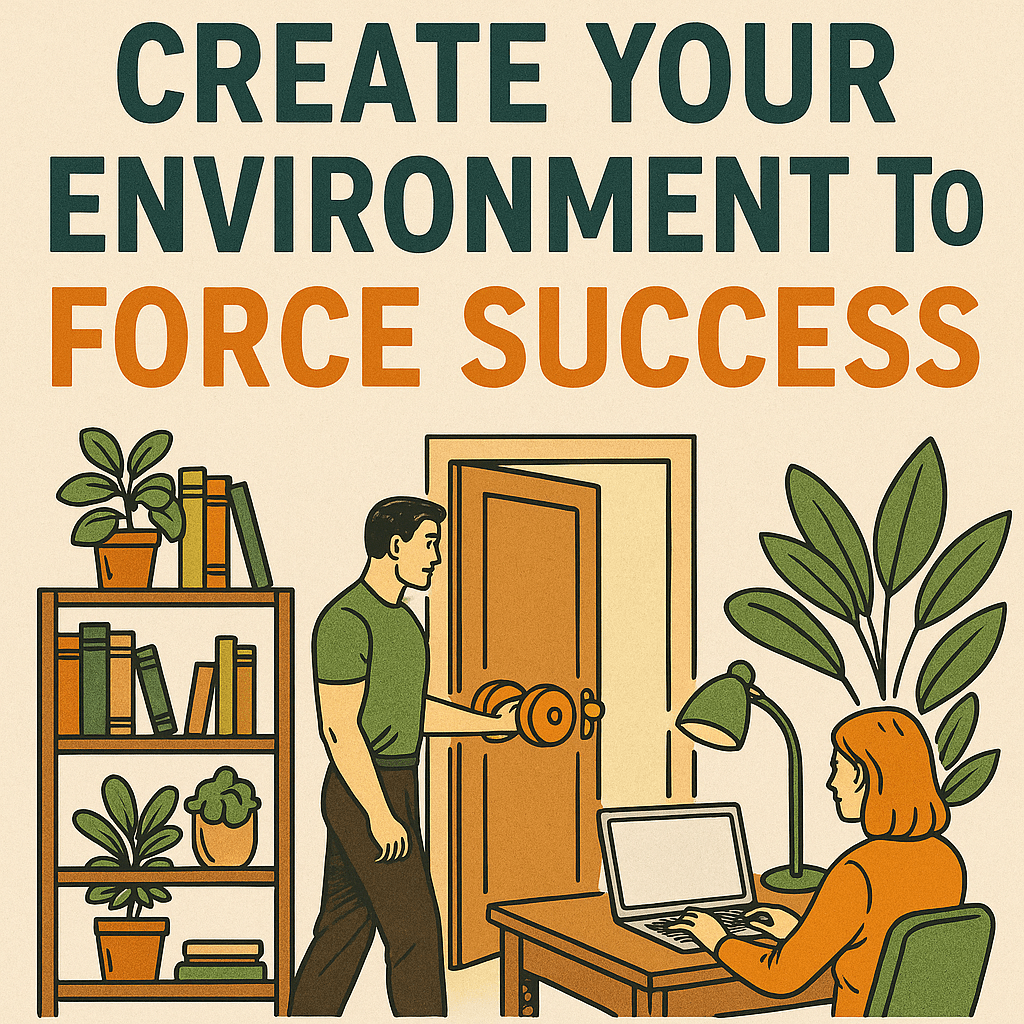
  • Create Your Environment to Force Success

    Create Your Environment to Force Success

    Ever set a goal – like hitting the gym at 6 AM or finally cutting out late-night snacks – only to see your willpower fizzle out by day two? It’s not just you. In fact, studies show that a large portion of our daily actions are automatic responses to the cues around us . Your kitchen counter and living room layout might be quietly training you more than your intentions. As Stanford researcher B.J. Fogg puts it, “There’s just one way to radically change your behavior: radically change your environment” . In other words, if willpower isn’t doing the trick, change your surroundings. By redesigning your space, you can turn good habits into the easy, default choice and make bad habits much harder.

    Why Environment Trumps Willpower

    Habit experts agree that willpower alone is a weak strategy. James Clear bluntly notes, “in the long-run (and often in the short-run), your willpower will never beat your environment” . People who seem ultra-disciplined aren’t superhuman – they’ve simply structured their lives so they don’t have to rely on heroic self-control . For example, nearly identical neighbors can behave very differently if their environments differ. In one striking study, Denmark and Sweden had wildly different organ donation rates (4% vs 86%) even though their cultures are similar . The only difference was the forms people were given – in Sweden citizens were by default organ donors (opt-out), whereas Danes had to opt in. This tiny tweak in the choice architecture shows how your environment can heavily sway decisions .

    Instead of expecting yourself to fight every craving or distraction, make the healthy or productive choice the path of least resistance. Each time you step into your kitchen, gym, or home office, you should ideally be funneled toward positive actions – not sabotaged by hidden temptations. Remember James Clear’s insight: your environment is the “default option to which you are assigned” . If junk food is on the counter and veggies are hidden, you’ll snack mindlessly. If your desk is cluttered and your phone is buzzing, focus will slip away. The good news? You can design your environment for success . By placing hurdles in the way of bad habits and removing barriers to good ones, healthy choices become automatic and willpower is freed up for truly tough tasks.

    5 Ways to Create a Habit-Friendly Environment

    Pre-Plan and Prepare: Reduce friction for good habits. Lay out your gym clothes or set your sneakers by the door the night before so it’s easy to exercise in the morning . Fill a few water bottles each morning and place them in spots you frequently visit . If you want to take vitamins or medications, leave the bottle right next to your toothbrush or coffee mug. These small prep steps mean you have one less excuse to skip your new habit. In a habit-friendly environment, the right tools and gear are always within reach. Make Healthy Choices Obvious: Arrange visual cues so the good stuff grabs your attention. Keep a bowl of fruit on the counter and hide sugary treats in a cupboard or another room . Buy fun, colored plates that make veggies look more appealing – one study found people serve themselves 30% more on larger, dark-green dishes . Similarly, if you want to read more, place books or study materials in clear sight (and put your remote out of sight). When the reminder is right in front of you, you’re far more likely to act. As James Clear advises, make cues for your preferred habits big and prominent, so the best choice is also the obvious one . Increase Friction for Bad Habits: Do the opposite for temptations. Put the cookie jar on a high shelf or empty it entirely. Hide the TV remote in a drawer and toss a book in its place . In one clever example, simply turning living room chairs so they don’t face the TV made people watch way less TV (and pick up a book instead!) . The goal is to create tiny hurdles for bad habits – even an extra 10-second walk to the snack drawer or phone creates a pause where you can choose differently. Remember: if the junk food is visible, you’ll eat it . Out of sight usually means out of mind, so clear the clutter that triggers your worst impulses. Optimize Your Work Space: Clear, focused spaces foster productivity. Designate a tidy “work only” area and keep it free of entertainment cues . Silence or put your phone on Do-Not-Disturb, and if needed use website blockers during deep work sessions. Organize your desk so only what you need is on it – for example, leave your computer on a page you want to study or a project to work on tomorrow. As one writer found, strictly associating his desk with writing (and removing “fun” apps and games) eliminated most distractions . By treating your environment like a training partner, you set yourself up to succeed: a clutter-free space and clean desktop mean you expend less mental energy fighting distractions . Leverage Your Social and Digital Environment: The people and platforms around you count too. Join a workout group, find a study buddy, or post your goals to friends – social pressure can be a powerful cue. In digital spaces, uninstall apps or mute channels that derail you, and fill your feeds with inspirational or educational content instead. For example, if you want to write more code, join an online coding community; if you want healthier eating, follow recipe bloggers. Surrounding yourself with supportive friends and positive influencers creates a naturally habit-friendly environment. As FasterCapital points out, even our homes benefit from social cues – think about coworkers reaching for doughnuts less often when everyone in the office is on a shared health kick .

    Each of these tweaks follows one core idea: make the right choice the easy choice . Reduce steps to good behavior and add steps to bad behavior. Over time, these small changes compound. As Fogg reminds us, “Don’t rely on willpower alone, design your environment to support your desired behavior” .

    Your Next Move: Redesign One Thing Today

    Don’t wait for “motivation” to strike. Be proactive. Ask yourself: What one change in my surroundings would make success inevitable? It might be as simple as placing a water bottle on your desk or moving your alarm clock across the room so you have to get up. Maybe unplug the TV for the week, or park your bike right by the front door. Take action now: pick one key area (kitchen, bedroom, office, or digital space) and tweak it.

    By taking control of your space, you’re “the designer of your world and not merely the consumer of it” . A well-designed environment is a powerful ally – it nudges you toward workouts, healthy meals, focus sessions and away from bad habits, often without any extra effort. Remember the mantra of environment design: if you can’t change yourself, change your surroundings. Transform one corner of your life today and watch how easy, automatic success becomes in your new, habit-friendly world.

    Bold takeaway: Start small but think big – make one small environment change now and let your space help you succeed.

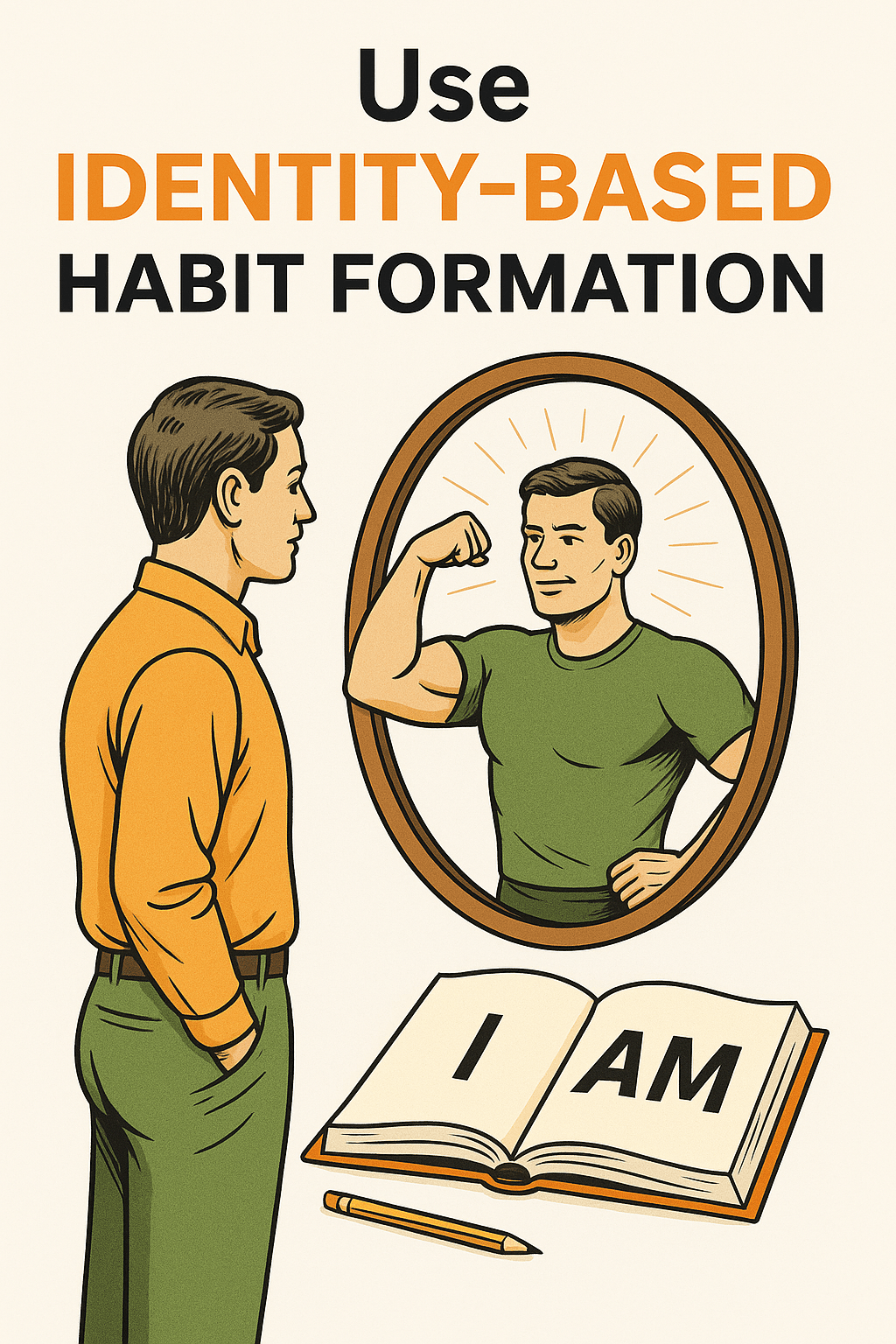
  • Use Identity-Based Habit Formation

    Use Identity-Based Habit Formation

    Every new year or major goal season, we’ve all been there: fired up one day, and weeks later frustrated that the habit still didn’t stick. The problem may not be what you want to achieve, but who you think you are. Instead of focusing on outcome-driven goals, imagine shifting your mindset: “I am the type of person who [lets X happen].” This simple switch – an identity-based habit – can make habits far easier to form and sustain. As habits expert James Clear explains in Atomic Habits, “your current behaviors are simply a reflection of the type of person you believe that you are” . In other words, true habit change starts by creating a new self-image first.

    Outcome vs. Identity: Two Approaches to Habit Change

    Many people set goals like “I want to run a marathon” or “I want to lose 20 pounds.” These are outcome-based habits: the focus is on a result, not on the person you become. It’s no wonder they often fizzle out; once the goal is reached (or missed), motivation vanishes. In contrast, identity-based habits start by asking: Who do I want to become? For example: instead of “I want to run a marathon,” an identity-based thinker says, “I am a runner.”  When you see yourself as a runner, every action you take (training, eating right, getting enough sleep) feels like an expression of that identity – not just a means to an end .

    This identity-first mindset flips traditional habits on its head. As one habits coach puts it, “Who do I want to become?” replaces “What do I want to achieve?” . Seeing your habits as reflections of your self-image is powerful. For instance, if you identify as a healthy person, you’re naturally more likely to choose salad over fries. This happens because our actions follow our beliefs . If your inner story is “I am disciplined and fit,” you won’t struggle as much to eat well or exercise. In fact, psychologists find that when habits are tied to identity (especially core values), people integrate them more deeply and stick with them long-term .

    Why Identity-Based Habits Are More Powerful

    Identity-based habits build internal motivation and make lasting change more likely.  As one recent guide explains, “Identity-based habits work differently” – they “start with the question: ‘Who do I want to become?’ rather than ‘What do I want to achieve?’” . This creates three big advantages:

    Internal Motivation: When a habit is part of who you believe you are, it feels natural and purposeful. For example, if you think “I’m the kind of person who always exercises,” going to the gym isn’t a chore but an expression of you. This alignment boosts motivation – you’re not just chasing a number on a scale, you’re living your identity . Less Inner Conflict: Trying to quit a bad habit by force often creates internal war (“I should be healthy, but I really want junk food!”). With identity-based thinking, you eliminate that conflict. It’s easier to say “I am not a smoker” than “I’m trying to quit smoking” . There’s no battle between “should” and “want,” because your chosen identity has already won. Sustainable Change: Goals are by nature temporary, but identities endure. When your habits align with how you see yourself, they become part of your lifestyle, not just things to tick off. Research confirms that linking habits to identity helps new behaviors stick and leads to more effective behavior change . In short, identity-based habits turn once-a-day efforts into years-long routines, making personal growth feel more automatic than an uphill struggle.

    This identity-first approach is at the heart of James Clear’s bestselling strategy. In Atomic Habits (25+ million copies sold), Clear stresses that lasting change happens when “creating a new identity” comes before chasing results . When you internalize “I am X,” every choice reinforces that label. Even small victories (“I ate a healthy lunch today”) become proof that this new identity is real and powerful.

    Real-Life Examples: Turning Goals into Identities

    Let’s make this concrete with a few examples. Instead of saying “I want to lose weight,” reframe it as “I’m someone who moves my body every day.” You might start with tiny steps like a 5-minute walk after dinner. Each day you follow through, you prove to yourself “I am a person who stays active,” and that identity propels you further. For instance, James Clear shares a story: after his wife memorized all 30 names in a new class, she thought, “I’m the type of person who is good at remembering names.” From then on, she effortlessly remembered names everywhere she went . That shift in identity – from “I try to remember names” to “I do remember names” – turned a one-time success into a permanent habit.

    Here are a few more identity-based habits in action (adapted from habit experts):

    “I am a learner.” Action: Read 10 pages of a book or listen to an educational podcast each day . Over time, that micro-habit becomes a learning routine. “I am an organized person.” Action: Keep a daily to-do list and tidy your workspace at the end of each day . Small steps like these reinforce the belief that you’re naturally organized. “I am an early riser.” Action: Set a consistent bedtime and wake up 15 minutes earlier tomorrow. Repeat until this new schedule feels normal . Now mornings align with your identity, not just an alarm clock. “I am a writer.” Action: Write one paragraph or journal entry each morning. No pressure for brilliance – just ink a tiny bit and prove you’re “a writer” by writing.

    The key is consistency. Each small action – even a glass of water each morning if you aim to be healthy – serves as “evidence” for your self-image. Celebrate these wins! Every time you live up to your identity (by going on a run, preparing a healthy meal, writing a page), take a moment to acknowledge it. Studies show that reflecting on progress and celebrating identity-aligned actions not only feels good, but cements the new identity even further .

    How to Build Identity-Based Habits: Practical Steps

    Define Your New Identity.  Start by asking yourself, “Who do I want to be?” Pick a clear identity that matches your goals. It could be “the kind of person who reads daily,” “someone who values fitness,” or “a skilled communicator.” Be as specific as possible . For example, instead of just “I’m athletic,” try “I am a runner” or “I am the kind of person who never skips leg day.” Choose Tiny Habit Actions.  Identify one small habit that person would naturally do. If your identity is “I am a fit, healthy person,” you might start with 50 jumping jacks every evening or one extra serving of vegetables at dinner. The goal is to make the habit so easy that it requires no willpower – say, just 1% effort each day . These micro-wins accumulate and reinforce your identity. Attach Habits to Your Identity.  Whenever you perform the habit, mentally note “I am doing this because I am [identity].” For example, tell yourself “I’m having an apple snack because I am a healthy eater.” This mental link turns the action into a statement about you. According to experts, consciously proving your identity to yourself (even in tiny ways) is what makes the new identity stick . Track and Celebrate Wins.  Keep a simple log or journal of your habit actions. Every time you follow through, give yourself a quick pat on the back. This positive reinforcement is like flexing your identity muscle. Remember the birder in James Clear’s story: once she saw a proof (“I remembered that name!”), it confirmed her belief. You can do the same – a 10-minute workout or writing a paragraph is proof of the identity you claim. As researchers note, acknowledging these wins builds self-esteem and strengthens the new habits . Iterate and Deepen the Identity.  As these small habits become routine, you’ll notice your mindset shifting. Keep expanding: increase your habit slightly (walk 5 more minutes, write one more sentence) to continue proving your identity. Over time, “I am a runner” will feel completely natural, and skipping workouts will start to feel like stepping outside who you are.

    By following these steps, you’re literally becoming the person who lives the habits you want, rather than just chasing abstract goals. Each tiny act stacks up to make that identity undeniable.

    The Impact: Personal Growth That Lasts

    Imagine seeing yourself transform: tasks that once felt like chores now feel like parts of your character. That’s the power of identity-based habits. In Skill Stacker’s Personal Development System, we emphasize this approach because it aligns behavior change with personal growth. As you adapt your self-image, you’ll often find that other good habits naturally follow. A tidier desk might lead to clearer thinking, a consistent workout routine could boost your productivity at work, and so on. It becomes a virtuous cycle.

    Hundreds of thousands of people have seen this mindset shift work wonders. Authors, entrepreneurs, and athletes often report that telling themselves “I am the person who [practice X]” fundamentally changed their results. (Olympic runner Eliud Kipchoge, featured in Atomic Habits, is one high-profile example of mastering this mindset .) When you stop fighting your nature and instead transform your self-image, the change is profound.

    Join the Personal Growth Journey

    Ready to give identity-based habits a try? Start small this week: pick one new identity statement (like “I am a writer”) and one tiny action (even just one paragraph) to prove it. Stick to it consistently, celebrate each win, and watch how your behavior naturally shifts.

    Part 7 of our Personal Development System series shows that who you believe you are matters more than any goal. For more strategies on behavior change and personal growth, stay tuned to the Skill Stacker blog and follow our series. And don’t forget to grab our free Personal Development System workbook – it’s packed with practical exercises to help you apply identity-based habit formation and more. Your best self is waiting; become that person one habit at a time!

    Sources: Habit science and expert insights from James Clear’s Atomic Habits , modern habit coaching resources , and psychology research on habit-identity links . (Read more to see how identity-driven habits create lasting change!)

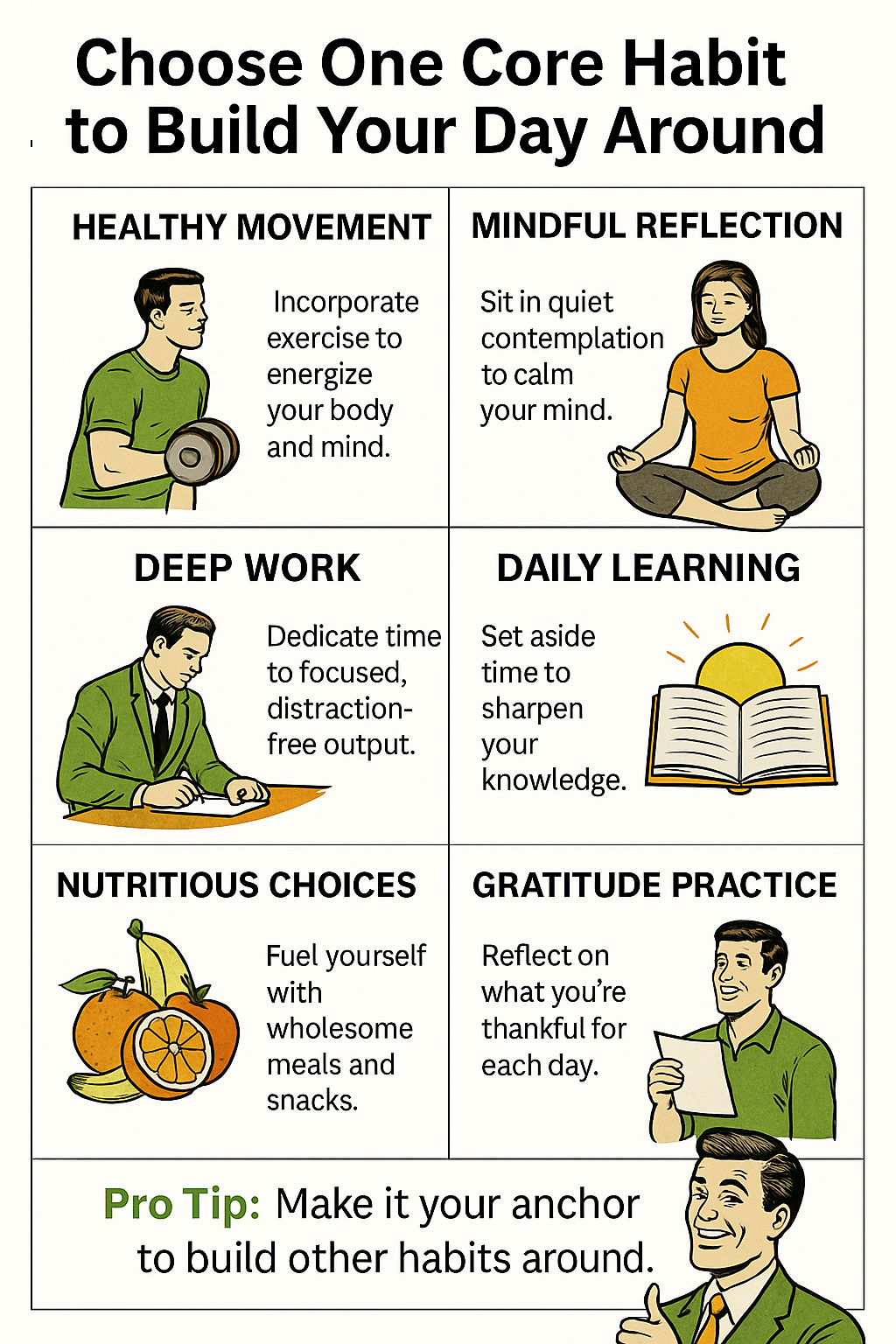
  • Choose One Core Habit to Build Your Day Around

    Choose One Core Habit to Build Your Day Around

    Building lasting change often starts with one keystone habit – a single routine that becomes the anchor of your day.  Focusing on one habit at a time is key. In fact, research shows that people who make specific plans for one habit (the when, where, and how) are 2–3× more likely to follow through .  Crucially, implementation intentions only work if you focus on one thing: people juggling many goals tend to fail more often than those committed to a single goal .  By picking one meaningful habit, you give yourself the best chance to automate it into your routine.

    Anchoring your day to one core habit has a ripple effect across your life.  As Psychology Today explains, “keystone habits” are foundational routines that create a domino effect of positive changes .  For example, establishing a regular exercise routine not only boosts fitness, but often leads to improved diet, better sleep, higher energy and productivity .  In other words, one good habit tends to spawn others.  By consistently practicing just one high-impact habit, you build momentum and confidence that carries over to every part of your day.  This habit becomes the stable foundation on which other healthy routines can be built.

    Why a Core Habit Matters: Relying on autopilot routines relieves decision fatigue and conserves willpower . When one key habit is locked in place each morning, the rest of your day tends to flow better.  You develop a “success mindset” as each completed habit reinforces your identity (for instance, thinking of yourself as “someone who journals every morning” or “a regular exerciser”).  And science backs this up: our brains form habits in the basal ganglia, automatically linking cues to routines .  By designing a single keystone habit and its cues, you work with your brain’s natural wiring.

    Catalyst for change: One core habit can trigger a cascade of other good habits . For example, starting the day with exercise often leads to healthier eating, better sleep, and sharper focus in the afternoon . Momentum builder: Completing a meaningful habit each day boosts motivation and confidence.  When you see progress in one area, it’s easier to tackle other challenges. Routine anchor: Your keystone habit anchors your schedule. Making it a fixed part of your morning or evening routine creates stability, so other habits “slot in” around it . Identity shift: Focusing on one habit helps reshape your self-image.  You begin to think, “I am the kind of person who [habits]”, which reinforces consistent behavior. Simplicity wins: Psychology research finds that trying too many new habits at once undermines progress. People focusing on a single specific habit are far more likely to succeed .

    Together, these points show why it’s better to master one core habit than spread yourself thin.

    Examples of Powerful Core Habits

    Which habits make good core routines?  Think of activities that energize you, support your biggest goals, or simply feel rewarding.  Here are some examples that many people find transformative:

    Morning Journaling: Spend 5–10 minutes writing after you wake up. Journaling clears your mind, sets your intentions for the day, and helps process emotions. Studies show that expressing thoughts on paper “enhances mental clarity and emotional processing,” helping to manage stress and anxiety .  Over time, this practice can improve mood and self-awareness. Daily Exercise: A short workout or brisk walk each morning gets your body moving and brain alert.  Exercise not only strengthens muscles and heart, it also “boosts memory and thinking indirectly by improving mood and sleep, and by reducing stress and anxiety” .  Many people who exercise daily report clearer thinking and more energy throughout the day. Daily Reading: Even 15–30 minutes of reading (non-fiction, personal development, or inspirational material) can prime your mind. Reading regularly is like a gym session for your brain – it “improves memory, concentration, and [reduces] stress,” according to education experts .  Starting the day with learning sets a positive tone and gradually builds knowledge. Morning Meditation or Mindfulness: Sitting quietly for a few minutes each morning to meditate or breathe deeply trains your attention and calms your nervous system.  Research on meditation shows that brief daily practice can decrease negative mood and anxiety while improving attention and working memory .  Over weeks, people report better focus and emotional balance. Gratitude Practice: Noticing things you’re thankful for – even mentally or by writing a quick list – can reframe your mindset.  Regular gratitude journaling has been linked to better well-being and reduced stress .  It’s a simple habit that shifts your outlook to the positive. Evening Review or Planning: End your day by reviewing successes and planning tomorrow’s top priority.  This sets up your next morning with clarity and can improve sleep by reducing rumination.  (This habit aligns with identity and goal-setting research .)

    (Tailor this list to what appeals to you: exercise could be yoga or dance, reading could be podcasts, and journaling could be notes on wins. The specific habit is less important than consistency.)

    How to Pick the Right Habit for You

    The best habit is one that aligns with your goals, lifestyle, and natural energy. Here are some guidelines:

    Match Your Goals: What is your top priority? If you want more energy, a morning workout or walk might be ideal. If you seek calm and focus, meditation or journaling could help. If personal growth is key, reading or learning fits. Choose a habit that directly supports what you care about most. Consider Your Daily Rhythm: Pay attention to when you feel most alert.  Morning “larks” often have more willpower and energy early, so they might tackle exercise or writing right after waking.  Night owls might start with something simpler (like sipping tea while reading) and schedule more demanding habits later.  Research shows people perform best at their preferred time of day – morning types in the a.m. and evening types later .  Pick a habit and time of day when you naturally feel energetic and clear-headed. Test for Enjoyment and Feasibility: A habit doesn’t have to be fun, but it should be something you don’t dread.  For example, if 30 minutes of exercise feels impossible, start with 5 minutes.  If journaling every day is too much, try 3 days a week.  The goal is consistency, not intensity. Simplicity and Resources: Keep it simple. You’re much more likely to maintain a basic habit (5-minute meditation, 10-minute walk) than a complex one.  Also, ensure you have what you need: if you choose exercise, place workout clothes where you see them; if writing, keep a notebook handy. Identity Alignment: Frame the habit in identity terms.  Instead of “I want to exercise,” tell yourself “I am the sort of person who exercises regularly.”  This mindset (identity-based habits) makes it easier to stick with your choice .

    When you settle on one habit, commit to it wholeheartedly. Remember, focusing on that one habit increases your chance of success . You can always add another habit later. For now, give your first habit all your attention and energy.

    Making Your Habit Stick: Practical Steps

    Once you’ve chosen your keystone habit and timing, use these strategies to turn it into an automatic part of your day:

    Plan It Precisely (Implementation Intention): Decide exactly when, where, and how you will do your habit.  For example: “Every morning right after I brush my teeth, I will meditate for 5 minutes.” Studies find that writing down such specific plans doubles or even triples the likelihood you’ll follow through .  Having a concrete plan (“If X happens, then I will Y”) makes it much easier to act. Habit Stacking: Attach your new habit to an existing routine.  This is called “habit stacking.”  For instance, after you make coffee, then sit down to journal; or after you put away your shoes at night, then do 5 minutes of stretching.  Psychology experts note that habit stacking “anchors” a new habit to something you already do, making the change feel effortless . Over time the linked behaviors become second nature. Time-Blocking: Put the habit on your calendar and treat it as an appointment.  Block a short fixed window each day (e.g. 7:00–7:10 AM) for your habit.  This way you won’t accidentally skip it.  Scheduling a daily reminder or alarm can help signal it’s time. Design Your Environment: Make the habit obvious and easy by arranging your surroundings. Keep cues and tools in sight: place your journal on your desk, lay workout gear out before bed, or put a water bottle where you’ll see it . Conversely, hide or remove distractions: turn off notifications, log out of social apps, or keep junk food out of the house.  As one habit expert advises, small environmental tweaks (like “keeping a water bottle on your desk” or “placing a book on your nightstand instead of your phone”) can automatically nudge you toward the right behavior . Start Small and Build: Resist the urge to overdo it.  Consistency is more important than duration.  If you miss a day, don’t criticize yourself – just do it again tomorrow.  Gradually increase the habit as it becomes easier.  For example, add one more minute to your meditation or one extra page of reading each week. Use Rewards and Tracking: Give yourself a small reward after completing the habit (even just a mental high-five).  Keep track of your progress – a checkmark on a calendar or a habit-tracking app can reinforce your commitment.  Seeing a streak build can be motivating. Get Accountability: Tell a friend or family member about your habit goal, or join a group (online or offline) for support.  Sometimes sharing your intention publicly makes you more likely to stick with it.

    Following these steps harnesses the best strategies from behavioral science.  As Neuroscience Today explains, our brains form strong habits when we consistently pair a cue (like a time of day) with a routine, which eventually becomes automatic . By stacking your habit, time-blocking it, and shaping your environment, you effectively engineer success.

    Your Takeaway: Start Today

    You now have the blueprint: pick one single habit to build your daily routine around.  Make it specific, plan it, and slot it into your schedule.  Use habit-stacking and environmental cues to make it automatic.  Remember that even a few minutes of daily focus can spark broader improvements.

    The most important step is to start. Don’t wait for the “perfect” time or until you have more willpower.  Tomorrow morning, for example, wake up a bit earlier and begin.  Write those first journal lines, put on your sneakers for a walk, or sit for a short meditation.  Once you’ve built a streak of a few days, you’ll feel the momentum building.

    Key takeaways: Choose one core habit aligned with your goals.  Treat it like an unmissable appointment.  Set up cues and remove friction so the habit happens almost automatically .  Focus on this habit fully before adding more.  Scientific research confirms this focused approach is the most effective route to lasting change .

    You’re ready – start your new habit today and let it become the anchor of a better, more productive day!

    Sources: Practical tips and examples above are backed by psychology and neuroscience research , which highlight how keystone habits and smart habit-design lead to lasting success. Use these insights as your guide, and watch the positive ripple effect in your life. You’ve got this!

  • 🧠 Skill of the Day: How to Be Consistent Without Motivation

    🧠 Skill of the Day: How to Be Consistent Without Motivation

    Motivation is a lie.

    Consistency only comes when you stop relying on feelings — and start relying on systems.

    Here’s how I built consistency I can trust:

    Identity first. I stopped trying to “get motivated.” I asked: What would a disciplined person do today? Design friction. I deleted distractions. No motivation needed when there’s nothing tempting me to stop. Daily 1% wins. No heroic efforts. Just one brick every day — no matter what. Pre-decide your actions. If you have to think about it, you’ll find a reason not to. Pre-decide. Execute. Done. Make your system unmissable. My routine is easier to do than to avoid. That’s by design.

    Motivation fades. But systems keep showing up.

    🧱 Discipline is a system — not a feeling.

  • 🧠 Motivation Is a Trap – Here’s What Actually Keeps You Going

    🧠 Motivation Is a Trap – Here’s What Actually Keeps You Going

    Motivation is a liar.
    It shows up when it feels like it—and disappears the moment things get inconvenient.

    Everyone talks about “getting motivated.”
    But the truth?
    Motivation is the worst thing to rely on if you want long-term success.


    🔥 Why Motivation Fails

    • It’s based on emotion.
    • It’s influenced by sleep, food, mood, weather, and a hundred other things.
    • It disappears when you’re tired, discouraged, or overwhelmed.
    • It turns goals into “someday” fantasies, not daily disciplines.

    You don’t need motivation.
    You need a system that moves even when you don’t want to.


    🛠️ What Works Instead

    1. Rituals > Routines

    Make your habits sacred. The same way a soldier doesn’t think about brushing boots or packing gear—you don’t think, you just do.

    “No debate. No negotiation. Just action.”


    2. Environment Design

    You don’t rise to your goals—you fall to your environment.
    Make it harder to fail than to succeed.

    • Gym clothes ready the night before
    • Water bottle at your desk
    • No junk food in the house

    3. Identity-Based Habits

    Don’t ask, “What should I do today?”
    Ask: “What would a disciplined person do right now?”

    Become the type of person who trains daily, eats clean, and follows through—no matter how they feel.


    4. Momentum Over Heroics

    A perfect day is rare. A good-enough day is enough.
    String together enough “C+” days and you’ll crush 99% of the population.


    🎯 The Truth

    Motivation is a spark.
    Discipline is the engine.
    Systems are the fuel.

    You want progress? Stop waiting to feel like it.
    Act now. The feeling will catch up.

  • 5 Key Strategies for Consistent Fitness Success

    5 Key Strategies for Consistent Fitness Success

    Fitness success isn’t about grand gestures; it’s built on small, consistent habits that fit into your daily life. Have you ever started a workout plan with sky-high motivation, only to find yourself back on the couch a few weeks later? If so, you’re not alone. As a personal trainer, I’ve seen countless beginners and busy professionals struggle to stick to exercise routines despite the best intentions. The truth is, getting fit (and staying fit) isn’t simply about willpower or finding more hours in the day – it’s about avoiding common pitfalls and leveraging simple strategies from habit psychology. In this post, we’ll explore why most people fail at fitness and how to stay consistent for the long haul.

    1. The All-or-Nothing Mindset

    One of the biggest fitness traps is the all-or-nothing mentality. This is the idea that you have to be “100% all-in” with your fitness program – working out every single day, eating perfectly clean – or else you label yourself a failure. I see this often: A newbie starts strong with daily intense workouts and a strict diet. But as soon as life happens (a missed workout or an inevitable treat), they feel like they’ve blown it and throw in the towel entirely. Psychology experts note that if you live by an all-or-nothing mindset, you’re much more likely to “give up” the moment you slip upjamesclear.comjamesclear.com. In other words, the first missed workout isn’t what ruins your progress – it’s the spiral of guilt and quitting that follows.

    How to overcome it: Embrace a consistency-over-perfection approach. Fitness is a lifelong journey, not a pass/fail test. Nobody is perfect – even seasoned athletes skip workouts or indulge sometimes. The key is to be flexible, not rigid. If you miss a workout, reschedule it for tomorrow. If you eat a donut, enjoy it and plan a healthier meal next time. By prioritizing consistency and allowing small imperfections, you’ll create a sustainable routine that fits into real lifepsychologytoday.compsychologytoday.com. A helpful rule is “never miss twice” – as habit expert James Clear says, missing one workout is just an accident, but missing two in a row starts a new bad habitjamesclear.com. So you had an off day? Shrug it off and make sure the next day you’re back on track. Over time, this mindset builds resilience and keeps you moving forward instead of restarting from scratch.

    2. Unrealistic Goals and Expectations

    Another reason people give up is setting unrealistic goals. It’s great to be ambitious, but goals like “lose 20 pounds in a month” or “work out 2 hours every day” can set you up for disappointment. When results don’t come as fast as hoped, motivation crashes. I’ve had clients proudly announce extreme goals in our first session – only to feel defeated a few weeks later because they aimed for an overnight transformation. Unrealistic expectations create a vicious cycle: you push too hard too soon, burn out or get discouraged, and then quit, reinforcing the belief that you “failed.” In fact, drastic all-at-once changes often lead to overtraining and burnout rather than lasting progressthirdspace.london.

    How to overcome it: Focus on progress, not perfection. Set realistic, incremental goals that you can build on. For example, aim to work out 3 days a week (not 7), or to jog 5 minutes longer than last week rather than expecting a marathon in a month. Research shows that small, consistent improvements compound into major results over time – the classic “1% better every day” approachthirdspace.londonthirdspace.london. This principle of continuous improvement (sometimes called the Kaizen method) makes change manageable and sustainable. It’s far more motivating to hit modest milestones and celebrate those “small wins” than to constantly fall short of a lofty goalpsychologytoday.compsychologytoday.com. For instance, if you could do 5 push-ups last week and you can do 8 now, that’s a victory – recognize it! These little victories trigger a dopamine boost that keeps you motivated to continuethirdspace.london. Over time, your confidence grows as you see consistent progress, and those initially modest goals snowball into significant improvements.

    Crucially, set goals based on actions (the process), not just outcomes. Instead of “I must lose 30 lbs,” focus on habits like “I will walk 30 minutes on weekdays.” Outcome goals can be discouraging if you don’t hit the number fast, but process goals give you something achievable to do now. And as you repeat those actions, the results will follow. Remember: getting fit is a marathon, not a sprint – pace yourself so you can actually sustain it.

    3. Lack of Structure or Routine

    Many people fail at fitness simply due to a lack of routine or structure. When exercise isn’t built into your schedule or lifestyle, it’s the first thing to drop when you get busy. Think about it – if you’re always deciding “Should I work out today or not?” on the fly, you’re relying on willpower each time. And after a long work day or when motivation is low, willpower loses. Busy people especially struggle here: without a concrete plan, the day fills up with emails, meetings, family obligations – and the workout never happens.

    How to overcome it: Make fitness a scheduled part of your week – as non-negotiable as a work meeting. Planning ahead greatly increases consistencypsychologytoday.com. In fact, research has found that people who exercise at a regular time (same time of day, most days) are more likely to stick with their routine long-termmedicine.at.brown.edu. So find a realistic time slot you can commit to, whether it’s early morning before the day’s chaos, a lunch-break walk, or an evening bike ride. Treat that appointment with yourself seriously. If you put a 30-minute workout on your calendar every Monday, Wednesday, Friday at 7am, you remove the daily decision and make it a habit.

    Another powerful technique is habit stacking. This comes from Stanford behavior scientist BJ Fogg and is popularized by James Clear’s Atomic Habits. The idea is to attach a new habit to an existing habit so you have an automatic cuejamesclear.comjamesclear.com. For example, if you already brew coffee every morning, right after you pour your coffee, do 10 minutes of stretching or yoga. If you commute home from work, make it a routine that as soon as you change out of work clothes, you put on sneakers and go for a walkjamesclear.com. By linking the workout to something you already do reliably, it piggybacks on your established routine. This method makes the new behavior almost an extension of your current lifestyle rather than a disruptive addition. Studies show habit stacking works because it leverages your brain’s existing neural networks – you’re basically chaining a new link onto a well-worn chainjamesclear.com. Over time, the cue (coffee, arriving home, etc.) triggers the exercise habit automatically, no extra willpower required.

    To summarize, create structure. Plan your workouts for specific days and times, prepare your gear beforehand, and use cues (like a packed gym bag by the door or an alarm reminder) to prompt you. When fitness is woven into your routine, it becomes just “what you do” instead of a daily struggle to prioritize. As boring as routines can seem, they are the backbone of fitness consistency.

    4. Neglecting Rest and Recovery

    In the enthusiasm to get fit, people often forget that rest is part of the process. Ironically, pushing yourself too hard – never taking a day off, doing high-intensity exercise 7 days a week – can lead to burnout or injury, derailing your progress completely. I’ve met clients who insist on training intensely every single day when they start, thinking more is better. Within a few weeks, they’re exhausted, ache all over, or get hurt, and then they’re out of the game. Overtraining (too much exercise with too little recovery) backfires by overstressing your body and mind. It can sap your motivation and even suppress your immune system, making you more prone to getting sick or injuredunm.eduunm.edu. In short, no recovery = no consistency, because you’ll be forced to stop eventually.

    How to overcome it: Build recovery into your plan just like you build in workouts. Remember that fitness improvements happen during recovery – your muscles repair and grow stronger on rest days, and your mind stays fresh and motivated when it gets periodic breaks. Make sure you’re taking at least 1–2 rest days per week (more if you’re doing very intense training). Prioritize sleep as well – it’s hard to overstate how much quality sleep aids muscle recovery, hormone balance, and energy levels. If you’re a type-A person who hates the idea of resting, reframe it as “active recovery.” On off days, do gentle yoga, take a leisurely walk, or stretch. You’re still moving, but giving your system a chance to reset.

    Also, listen to your body’s signals. Consistent fatigue, lingering soreness, irritability, or declining performance are signs you might be overdoing it. Don’t ignore those red flags – back off a bit or take an extra rest day. In the long run, avoiding overtraining improves your fitness and prevents burnout and injury that could knock you off courseunm.edu. Think of recovery as investment in your next workout – it’s what allows you to come back stronger and keep going week after week. The most consistent (and successful) people in fitness are not those who go hard for a month and then flame out, but those who pace themselves and find a sustainable rhythm of effort and recovery.

    Science-Backed Strategies to Stay Consistent

    So how do you put this all together and actually stick with your fitness plan? Here are a few realistic, science-supported strategies to help you stay consistent:

    • Start Small (Tiny Habits Method): When motivation is high, it’s tempting to overhaul everything at once – but that often leads to burnout. Instead, start with ridiculously small steps. Behavior scientists like BJ Fogg recommend designing tiny habits that are so easy you can do them even on your busiest dayssuccess.com. For example, begin with 5-10 minutes of exercise or a couple of exercises like 5 push-ups or a short walk. Making it easy builds momentum. Once the tiny habit feels automatic, you can gradually increase it. The key is it should be easy enough that you can’t make excuses. On days when you’re really strapped for time, do your 5-minute mini-workout rather than nothing at all – it keeps your streak alive. And whenever you do accomplish even a small goal, celebrate it in some way (yes, Fogg literally suggests doing a little happy dance or fist pump). It might feel silly, but that positive emotion creates a reward feedback in your brain, which helps lock in the habitsuccess.comsuccess.com. Over time, those tiny steps add up to huge gains.
    • Stack New Habits onto Existing Ones: We discussed habit stacking above because it’s a game-changer for busy people. Take advantage of behaviors you already do reliably, and attach a new fitness habit to them. If you always eat lunch, walk for 10 minutes right after lunch. If you watch a TV show at night, do some light stretching or core exercises during the commercials. By pairing a new habit with an established routine, you create a built-in reminder and make it much more likely the new habit will stickjamesclear.com. Research in habit formation shows that our brains latch onto contextual cues; when you repeat a behavior in the same context (time, place, or preceding action), it starts becoming automaticjamesclear.comjamesclear.com. Use this to your advantage by consciously planning when and where you’ll exercise, and linking it to something you won’t forget. Over time, your day will have multiple “triggers” that get you moving without you even having to think about it.
    • Adopt an Identity-Based Mindset: One powerful insight from habit psychology (championed by author James Clear) is to focus on your identity rather than just your goalsjamesclear.comthirdspace.london. In other words, start thinking of yourself as someone who exercises regularly. When you consistently perform a behavior, it becomes part of how you see yourselfpsychologytoday.com. This identity shift is crucial: if you see yourself as an “active person” or “someone who doesn’t quit,” you’re more likely to show up, even on tough days. On the flip side, if you maintain the mindset of “Ugh, I’m so out of shape and lazy,” it’s easy to find evidence for that and give up. So, even if you’re just starting out, embrace the identity of a fit, active individual. Each small workout is a vote for this new identity. Over time, your brain begins to believe it: This is just who I am. This approach is backed by psychology research – consistency in actions builds self-confidence and reinforces the desire to continuepsychologytoday.com. A practical tip is to use affirmations or simple self-talk: after a workout, tell yourself “Nice work – I’m getting stronger and more resilient.” It might sound cheesy, but it helps cement a positive self-image aligned with your fitness journey.
    • Plan, Monitor, and Adjust: Lastly, make use of basic behavior-change tools: planning, tracking, and reflecting. Plan your workouts each week (what days, what times, and what you’ll do). This removes decision fatigue and sets clear intentions. Consider tracking your workouts – even if just ticking off a calendar or using a habit-tracking app – to visually see your consistency streak. Seeing a chain of completed workouts can be very motivating (you won’t want to break the chain!). And if you miss a day, remember the “never miss twice” rule and get right back at itjamesclear.comjamesclear.com. Also, regularly review your progress and how you feel. Are the workouts too hard or too easy? Is your schedule working or do you need to switch things around? Adjust as needed rather than quitting. Think of it as an ongoing experiment to find what routine sticks best for you. By staying proactive and flexible, you’ll navigate life’s curveballs (busy weeks, low-energy days, etc.) without derailing your habit completely.

    Consistency Over Time = Results

    The big secret is that consistency beats intensity. Doing moderate workouts you can sustain wins out over doing insane workouts for a month and then stopping. When you string together weeks and months of consistent exercise, that’s when you see real transformation – not only in your strength or weight, but in your confidence and mood. You’re essentially reprogramming your lifestyle and even your identity to be a healthier, fitter person.

    The best part is, consistency gets easier the longer you keep at it. Those first few weeks require effort and planning, but soon your fitness routine becomes second nature – something you actually miss if you skip! And you absolutely can reach your fitness goals by taking it step by step, day by day. As the saying goes, “Rome wasn’t built in a day, but they were laying bricks every hour.” Lay your fitness “bricks” each day, no matter how small, and trust that they’ll build something amazing over time.

    Remember, every workout counts, every healthy choice matters, and every time you get back up after a setback, you’re strengthening your consistency muscle. So keep it up – your future self will thank you.

    CTA: If you found these tips helpful, stay connected with us! Subscribe to the Skill-Stacked newsletter for more practical fitness and habit-building insights. As a bonus, you’ll get our free Skill-Stacked Daily Blueprint, a handy guide to designing your day for success (including a simple workout routine you can actually stick to). Don’t miss out on leveling up your health and habits – join the Skill-Stacked community today!