Tag: James Clear

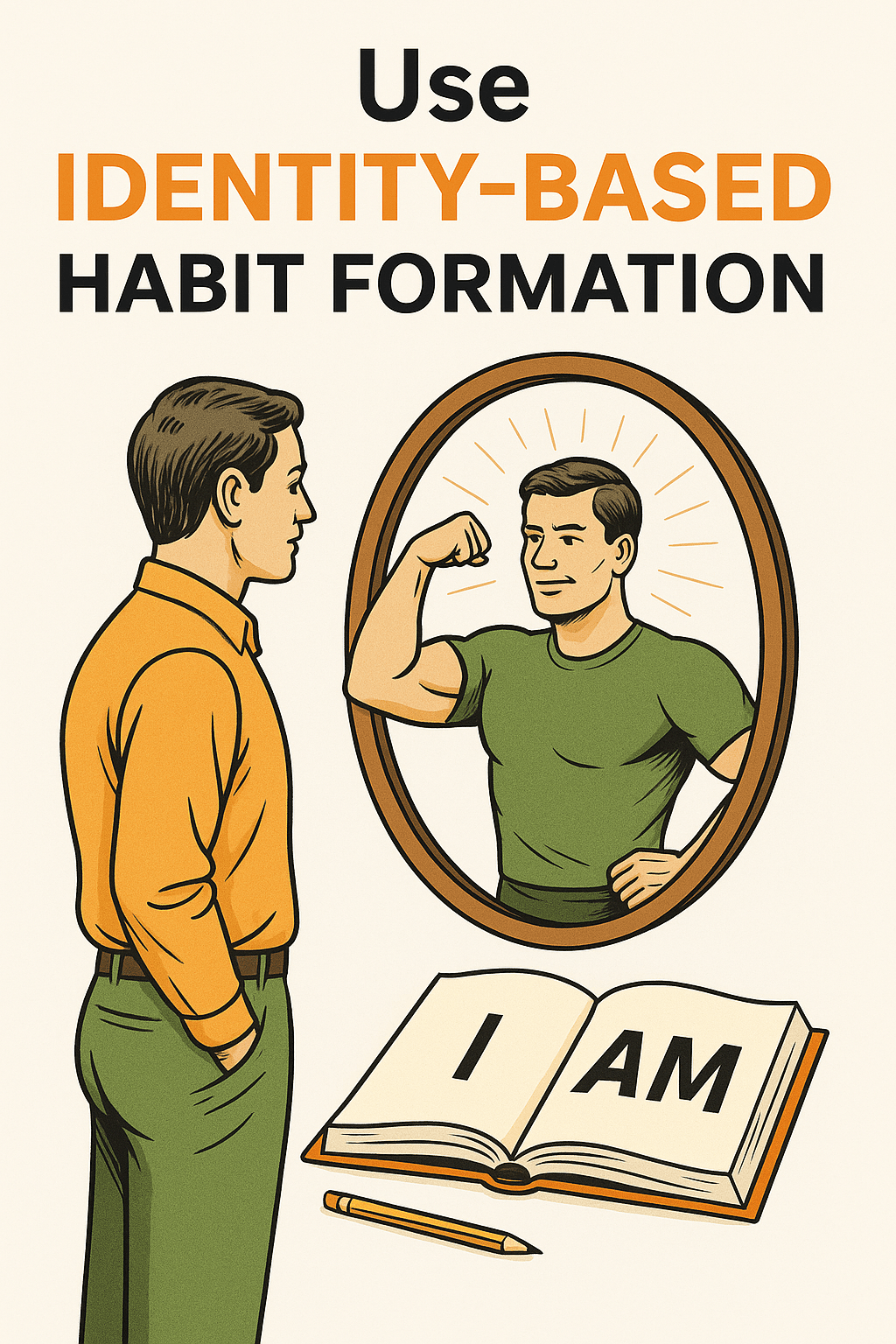
  • Use Identity-Based Habit Formation

    Use Identity-Based Habit Formation

    Every new year or major goal season, we’ve all been there: fired up one day, and weeks later frustrated that the habit still didn’t stick. The problem may not be what you want to achieve, but who you think you are. Instead of focusing on outcome-driven goals, imagine shifting your mindset: “I am the type of person who [lets X happen].” This simple switch – an identity-based habit – can make habits far easier to form and sustain. As habits expert James Clear explains in Atomic Habits, “your current behaviors are simply a reflection of the type of person you believe that you are” . In other words, true habit change starts by creating a new self-image first.

    Outcome vs. Identity: Two Approaches to Habit Change

    Many people set goals like “I want to run a marathon” or “I want to lose 20 pounds.” These are outcome-based habits: the focus is on a result, not on the person you become. It’s no wonder they often fizzle out; once the goal is reached (or missed), motivation vanishes. In contrast, identity-based habits start by asking: Who do I want to become? For example: instead of “I want to run a marathon,” an identity-based thinker says, “I am a runner.”  When you see yourself as a runner, every action you take (training, eating right, getting enough sleep) feels like an expression of that identity – not just a means to an end .

    This identity-first mindset flips traditional habits on its head. As one habits coach puts it, “Who do I want to become?” replaces “What do I want to achieve?” . Seeing your habits as reflections of your self-image is powerful. For instance, if you identify as a healthy person, you’re naturally more likely to choose salad over fries. This happens because our actions follow our beliefs . If your inner story is “I am disciplined and fit,” you won’t struggle as much to eat well or exercise. In fact, psychologists find that when habits are tied to identity (especially core values), people integrate them more deeply and stick with them long-term .

    Why Identity-Based Habits Are More Powerful

    Identity-based habits build internal motivation and make lasting change more likely.  As one recent guide explains, “Identity-based habits work differently” – they “start with the question: ‘Who do I want to become?’ rather than ‘What do I want to achieve?’” . This creates three big advantages:

    Internal Motivation: When a habit is part of who you believe you are, it feels natural and purposeful. For example, if you think “I’m the kind of person who always exercises,” going to the gym isn’t a chore but an expression of you. This alignment boosts motivation – you’re not just chasing a number on a scale, you’re living your identity . Less Inner Conflict: Trying to quit a bad habit by force often creates internal war (“I should be healthy, but I really want junk food!”). With identity-based thinking, you eliminate that conflict. It’s easier to say “I am not a smoker” than “I’m trying to quit smoking” . There’s no battle between “should” and “want,” because your chosen identity has already won. Sustainable Change: Goals are by nature temporary, but identities endure. When your habits align with how you see yourself, they become part of your lifestyle, not just things to tick off. Research confirms that linking habits to identity helps new behaviors stick and leads to more effective behavior change . In short, identity-based habits turn once-a-day efforts into years-long routines, making personal growth feel more automatic than an uphill struggle.

    This identity-first approach is at the heart of James Clear’s bestselling strategy. In Atomic Habits (25+ million copies sold), Clear stresses that lasting change happens when “creating a new identity” comes before chasing results . When you internalize “I am X,” every choice reinforces that label. Even small victories (“I ate a healthy lunch today”) become proof that this new identity is real and powerful.

    Real-Life Examples: Turning Goals into Identities

    Let’s make this concrete with a few examples. Instead of saying “I want to lose weight,” reframe it as “I’m someone who moves my body every day.” You might start with tiny steps like a 5-minute walk after dinner. Each day you follow through, you prove to yourself “I am a person who stays active,” and that identity propels you further. For instance, James Clear shares a story: after his wife memorized all 30 names in a new class, she thought, “I’m the type of person who is good at remembering names.” From then on, she effortlessly remembered names everywhere she went . That shift in identity – from “I try to remember names” to “I do remember names” – turned a one-time success into a permanent habit.

    Here are a few more identity-based habits in action (adapted from habit experts):

    “I am a learner.” Action: Read 10 pages of a book or listen to an educational podcast each day . Over time, that micro-habit becomes a learning routine. “I am an organized person.” Action: Keep a daily to-do list and tidy your workspace at the end of each day . Small steps like these reinforce the belief that you’re naturally organized. “I am an early riser.” Action: Set a consistent bedtime and wake up 15 minutes earlier tomorrow. Repeat until this new schedule feels normal . Now mornings align with your identity, not just an alarm clock. “I am a writer.” Action: Write one paragraph or journal entry each morning. No pressure for brilliance – just ink a tiny bit and prove you’re “a writer” by writing.

    The key is consistency. Each small action – even a glass of water each morning if you aim to be healthy – serves as “evidence” for your self-image. Celebrate these wins! Every time you live up to your identity (by going on a run, preparing a healthy meal, writing a page), take a moment to acknowledge it. Studies show that reflecting on progress and celebrating identity-aligned actions not only feels good, but cements the new identity even further .

    How to Build Identity-Based Habits: Practical Steps

    Define Your New Identity.  Start by asking yourself, “Who do I want to be?” Pick a clear identity that matches your goals. It could be “the kind of person who reads daily,” “someone who values fitness,” or “a skilled communicator.” Be as specific as possible . For example, instead of just “I’m athletic,” try “I am a runner” or “I am the kind of person who never skips leg day.” Choose Tiny Habit Actions.  Identify one small habit that person would naturally do. If your identity is “I am a fit, healthy person,” you might start with 50 jumping jacks every evening or one extra serving of vegetables at dinner. The goal is to make the habit so easy that it requires no willpower – say, just 1% effort each day . These micro-wins accumulate and reinforce your identity. Attach Habits to Your Identity.  Whenever you perform the habit, mentally note “I am doing this because I am [identity].” For example, tell yourself “I’m having an apple snack because I am a healthy eater.” This mental link turns the action into a statement about you. According to experts, consciously proving your identity to yourself (even in tiny ways) is what makes the new identity stick . Track and Celebrate Wins.  Keep a simple log or journal of your habit actions. Every time you follow through, give yourself a quick pat on the back. This positive reinforcement is like flexing your identity muscle. Remember the birder in James Clear’s story: once she saw a proof (“I remembered that name!”), it confirmed her belief. You can do the same – a 10-minute workout or writing a paragraph is proof of the identity you claim. As researchers note, acknowledging these wins builds self-esteem and strengthens the new habits . Iterate and Deepen the Identity.  As these small habits become routine, you’ll notice your mindset shifting. Keep expanding: increase your habit slightly (walk 5 more minutes, write one more sentence) to continue proving your identity. Over time, “I am a runner” will feel completely natural, and skipping workouts will start to feel like stepping outside who you are.

    By following these steps, you’re literally becoming the person who lives the habits you want, rather than just chasing abstract goals. Each tiny act stacks up to make that identity undeniable.

    The Impact: Personal Growth That Lasts

    Imagine seeing yourself transform: tasks that once felt like chores now feel like parts of your character. That’s the power of identity-based habits. In Skill Stacker’s Personal Development System, we emphasize this approach because it aligns behavior change with personal growth. As you adapt your self-image, you’ll often find that other good habits naturally follow. A tidier desk might lead to clearer thinking, a consistent workout routine could boost your productivity at work, and so on. It becomes a virtuous cycle.

    Hundreds of thousands of people have seen this mindset shift work wonders. Authors, entrepreneurs, and athletes often report that telling themselves “I am the person who [practice X]” fundamentally changed their results. (Olympic runner Eliud Kipchoge, featured in Atomic Habits, is one high-profile example of mastering this mindset .) When you stop fighting your nature and instead transform your self-image, the change is profound.

    Join the Personal Growth Journey

    Ready to give identity-based habits a try? Start small this week: pick one new identity statement (like “I am a writer”) and one tiny action (even just one paragraph) to prove it. Stick to it consistently, celebrate each win, and watch how your behavior naturally shifts.

    Part 7 of our Personal Development System series shows that who you believe you are matters more than any goal. For more strategies on behavior change and personal growth, stay tuned to the Skill Stacker blog and follow our series. And don’t forget to grab our free Personal Development System workbook – it’s packed with practical exercises to help you apply identity-based habit formation and more. Your best self is waiting; become that person one habit at a time!

    Sources: Habit science and expert insights from James Clear’s Atomic Habits , modern habit coaching resources , and psychology research on habit-identity links . (Read more to see how identity-driven habits create lasting change!)

  • Atomic Habits: 6 Key Insights for Building Lasting Change

    Atomic Habits: 6 Key Insights for Building Lasting Change

    James Clear’s Atomic Habits shows that tiny daily changes lead to big results.  Small routines (“atomic habits”) may seem trivial alone, but compounded over time they produce remarkable outcomes .  Clear emphasizes building sustainable systems of behavior – focusing on the type of person you want to become – rather than chasing distant goals .  In practice this means shaping your identity and environment to make good habits automatic and bad habits difficult.  The book is packed with actionable strategies for anyone who wants to improve performance, productivity, and personal growth.

    1. Identity-Based Habits

    Clear argues that true habit change starts with identity.  Instead of obsessing over outcomes (like “lose 20 pounds”), focus on who you want to become (a healthy person) .  Every habit then becomes evidence of your new identity: reading one page a day proves you’re a reader, one push-up makes you a fitness-minded person.  By aligning habits with your self-image, you build lasting change from the inside out.

    Actionable Takeaway:  Define your ideal identity (“I am an active person,” “I am a reader”) and pick one tiny habit that reflects it.  For example, if you want to be a morning person, make your bed every day first thing.  This links behavior to identity and reinforces who you want to be.

    2. 1% Improvements

    A core insight is that tiny gains compound.  Clear calculates that “if you get one percent better each day for one year, you’ll end up thirty-seven times better by the time you’re done” .  Initially a 1% improvement isn’t noticeable, but small changes accumulate – like an airplane making a 1% course correction and landing in a completely different place .  This reframes success as the result of consistent tiny wins, not sudden overhauls.

    Actionable Takeaway:  Pick one micro-improvement and stick with it daily.  For example, add just one extra push-up each workout, or read one more paragraph of a book each night.  These 1% steps keep you motivated and compound into big gains over months.

    3. Habit Stacking

    “Habit stacking” leverages your existing routines as triggers for new habits.  Clear suggests using the formula “After/Before [CURRENT HABIT], I will [NEW HABIT]” .  For instance: “After I pour my morning coffee, I will meditate for one minute.”  By attaching a new action to a well-established habit, you create an obvious cue and make the new behavior easier to remember.  Over time, these little stacks chain into powerful routines (e.g. make coffee → meditate → write a to-do list).

    Actionable Takeaway:  Identify a daily habit you already do (like brushing teeth or taking off shoes) and attach one small new action.  For example, after you sit at your desk, open a book for two minutes.  Linking habits helps momentum build naturally.

    4. Environment Design

    Clear shows that context drives behavior: people often act according to their surroundings, not just willpower .  A simple cue in your environment can trigger (or break) a habit.  For example, placing your running shoes by the door makes morning jogs easier, while hiding junk food in the pantry reduces cravings.  In other words, “structuring your environment to favor good habits significantly increases adherence” .  Design your workspace, home, and schedule so that good choices are obvious and bad ones require extra effort.

    Actionable Takeaway:  Make habit cues visible and friction low.  If you want to write each night, leave your journal on your pillow.  If you want to eat healthier, put a fruit bowl on the counter and remove sugary snacks from view.  These small tweaks “nudge” you toward success.

    5. Make It Easy

    The third law of behavior change is to reduce friction.  Clear recommends using the Two-Minute Rule: start any habit so small it takes two minutes or less to do .  For example, if you want to read more, begin by reading just one page per day.  By dramatically lowering the barrier to start, you’ll actually begin the habit; once started, it often naturally expands.  This principle turns daunting goals into manageable steps.

    Actionable Takeaway:  Break down a habit into its smallest form.  If you aim to work out, start with just one push-up or one minute of exercise.  These tiny steps are easy to do on even your busiest day, and getting started builds momentum to keep going.

    6. Habit Tracking

    Keeping a visual log of progress makes habits more motivating and satisfying.  A simple habit tracker (X-ing off days on a calendar) provides immediate feedback that you “completed your habit” and signals daily progress .  Seeing a growing streak is motivating – nobody wants to break the chain .  Tracking also keeps you honest about your behavior (we often overestimate how well we’re doing).  By regularly marking achievements, you get quick wins and a sense of accomplishment each day.

    Actionable Takeaway:  Use a calendar, app, or journal to tick off each day you perform a habit.  For example, shade one square on a calendar whenever you practice a new skill.  The visual streak will encourage you to maintain consistency.

    1% Better Challenge

    Put these ideas into practice with a “1% Better” challenge.  Choose one tiny habit and commit to improving it slightly every day for a week.  For instance, add just one minute of movement to your daily walk, or answer one extra customer support email each day.  Track it visibly (on a calendar or whiteboard) and don’t let yourself break the streak twice in a row.  Remember, small changes compound: as Clear says, daily 1% improvements will make you exponentially better over time .

    Key Insights at a Glance

    Identity-Based Habits: Become the person you want to be (focus on identity, not just outcomes) . 1% Improvements: Tiny daily gains add up dramatically . Habit Stacking: Pair a new habit with an existing routine . Environment Design: Shape your surroundings to make good habits easy and bad habits hard . Make It Easy: Use the Two-Minute Rule to keep starting simple . Habit Tracking: Log each success to build momentum and accountability .

  • 5 Key Lessons from Atomic Habits (and How to Apply Them Today)

    5 Key Lessons from Atomic Habits (and How to Apply Them Today)

    https://jamesclear.com/atomic-habits-summaryAtomic Habits by James Clear has sold over 20 million copies worldwidejamesclear.com, a testament to how its practical strategies resonate with readers. This #1 New York Times bestseller carries the subtitle “Tiny Changes, Remarkable Results,” highlighting its core message: small daily habits can compound into life-changing outcomes. For busy professionals striving for self-improvement, Atomic Habits offers clear, actionable advice that fits into even the tightest schedule. Below, we summarize 5 key lessons from the book – each lesson explains what it means, why it matters, and how you can apply it in daily life to spark positive change.

    1. The 1% Rule: Small Habits, Big Results

    One of the most cited ideas from Atomic Habits is the power of tiny daily improvements. Clear famously illustrates that if you can get just 1% better each day for a year, you’ll end up 37 times better by year’s endjamesclear.com. These “tiny changes” often seem insignificant in the moment, but over time they compound into remarkable results. Instead of trying to overhaul your life overnight, focus on making small, consistent improvements. Every little habit – taking the stairs, writing a few more lines of code, tidying one shelf – adds up.

    Why does this matter? We often overestimate the impact of big moments and underestimate the power of daily routinesjamesclear.com. By embracing the 1% rule, you shift your mindset to value consistent progress over dramatic but unsustainable efforts. This is encouraging for busy professionals: you don’t need huge blocks of free time or grand gestures to improve your life. Meaningful change can start with just a few minutes a day. Habits are the compound interest of self-improvement – small deposits made daily will grow into substantial achievements. As Clear puts it, “Focus on getting 1 percent better every day.”jamesclear.com

    How to apply it:

    • Start very small: Identify one area to improve by a tiny amount. For example, send one extra thank-you email at work, read two pages of a book each night, or add one vegetable to your daily meals.
    • Be consistent, not intense: Commit to your 1% action every day (or every workday). Consistency matters more than doing a lot at once. A five-minute workout done daily beats a two-hour workout done once a month.
    • Track small wins: Keep a simple log or checklist to mark your daily habit. Seeing a chain of small wins builds momentum and shows how those micro-improvements are adding up over time. Each checkmark is a vote of confidence in your gradual growth.

    2. Focus on Systems, Not Goals

    James Clear advises: “Forget about setting goals. Focus on your system instead.” In other words, outcomes (goals) are lagging indicators of your processes (systems)jamesclear.com. While goals are useful for setting a direction, you won’t get results unless you have a reliable daily system to attain them. For example, if your goal is to write a book, your system might be waking up one hour early to write each morning. If your goal is to land more clients, your system could be reaching out to 5 prospects every day. By improving the processes you follow, you essentially create a pipeline that leads to your desired results.

    Why is this important? Clear argues that you do not rise to the level of your goals; you fall to the level of your systemsjamesclear.com. A poorly designed system will derail even the most ambitious goal. Many professionals set lofty goals (e.g. “increase sales by 20%” or “get fit this year”) but fail because they never establish habits and routines to support those goals. Focusing on systems means concentrating on what you can control daily – your habits, environment, and schedule – rather than fixating solely on the end result. The right system will carry you forward even when motivation wanes. It also turns success into a repeatable process rather than a one-time event. In short, good habits are the building blocks of success, and a good system is just a collection of good habits working together.

    How to apply it:

    • Translate goals into routines: For any goal you have, ask “What daily/weekly habit would make this achievement inevitable?” If your goal is to improve a skill, schedule a consistent practice time each day (that schedule is your system).
    • Build a workflow: Design your workday or personal routine with intentional habits. For instance, instead of a vague goal to “be more organized,” implement a system where every morning you spend 10 minutes planning your top priorities, and every evening you tidy your workspace.
    • Review and adjust: Treat your system as an ongoing project. Each week, review what’s working and where friction exists. Maybe you notice you skip workouts on busy days – a system tweak could be switching to morning workouts or preparing your gym bag ahead of time. Continuously refine your processes so they serve your objectives. Remember, the system is what delivers results, so nurture it diligently.

    3. Identity-Based Habits: Become the Person You Want to Be

    A powerful lesson in Atomic Habits is to shift your focus from outcomes to identity. Instead of asking “What goal do I want to achieve?” ask “Who do I want to become?”. Clear explains that the key to building lasting habits is to focus on creating a new identity firstjamesclear.com. Your habits will naturally align with how you see yourself. For example, if you aspire to be a more productive person, start viewing yourself as a productive person and then act accordingly. Every habit then becomes an evidence of that identity. In Clear’s words, “Your identity emerges out of your habits. Every action is a vote for the type of person you wish to become.”jamesclear.com. If you study for 30 minutes, you’re casting a vote for “I am a studious person.” If you skip dessert, you vote for “I am a healthy eater.” Over time, these votes build up and solidify your desired identity.

    Why it matters: True behavior change is identity changemedium.com. We tend to act in alignment with who we believe we are. If you simply chase goals, you might succeed temporarily (“I ran a marathon”), but if you haven’t shifted your identity (“I am a runner”), the new habit may not stick. By adopting identity-based habits, you tap into intrinsic motivation. It feels rewarding to become the kind of person you admire. This approach also helps override limiting beliefs. Instead of saying “I’m bad at networking,” you can decide to become “the kind of person who connects easily with others” and then start with one small networking habit. Busy professionals can especially benefit from this mindset shift: seeing yourself as an organized, proactive, or healthy person guides your daily choices more powerfully than any abstract goal. It turns habit change from an external effort into an internal one – essentially habits become an expression of your identity.

    How to apply it:

    • Define your desired identity: Take a moment to write down the kind of person you want to be. It could be in career (“a leader who mentors others”), health (“a person who exercises daily”), or personal life (“a patient parent”). Be specific and positive.
    • Start with small “identity votes”: Once clear on your identity, choose small wins that prove it to yourselfjamesclear.com. If you want to be “a calm person,” maybe begin a 5-minute morning meditation habit. To be “an informed person,” read the news or a book chapter each day. These habits should be tiny and manageable, especially at first – their main purpose is to reinforce your new self-image.
    • Use identity-based questions: When faced with decisions, ask “What would a <insert identity> do?” For example, if your identity is “I am a fit and energetic person,” that might answer what to eat for lunch or whether to take the stairs. This practice aligns your daily actions with the type of person you want to become.
    • Be patient and trust the process: Changing how you view yourself won’t happen overnight. Remind yourself that every action is a vote for the person you wish to becomejamesclear.com. You don’t need perfection, just a majority of positive “votes.” Over time, your identity will shift, and your habits will follow suit naturally.

    4. Make Good Habits Easy: Habit Stacking & Environment Design

    If you want to build better habits, make it as easy as possible to do the right thing. Clear’s framework (the Four Laws of Behavior Change) highlights that two effective ways to “make it obvious” and “make it easy” are through habit stacking and environment designjamesclear.coms3.amazonaws.com. Habit stacking means attaching a new habit to an existing one, so the current habit cues the new behaviorjamesclear.com. For instance, if you already have a habit of brewing coffee every morning, you can “stack” a new habit onto it: “After I brew my morning coffee, I will meditate for one minute.” The existing routine of making coffee triggers your meditation habit automatically because you’ve linked them. This technique leverages the strong neural connections of habits you already have – in essence, you’re plugging a new habit into the circuit of an old one.

    Environment design is about tweaking your surroundings to encourage good habits (and hinder bad ones). Our behaviors are often shaped by the cues around us. By designing your environment to make the cues of good habits obvious and visible, you greatly increase the chances of following throughs3.amazonaws.com. Practical example: if you want to practice guitar more often, keep the guitar on a stand in the middle of your living room (a visible cue) instead of in a closet. Conversely, if you’re trying to cut down on junk food, store sweets on a hard-to-reach shelf or remove them from your office – make the bad habit “invisible”. The goal is to reduce friction for positive behaviors and increase friction for negative ones. When your environment nudges you in the right direction, you don’t have to rely as much on willpower or memory – the good choice becomes the default choice.

    Why it matters: Both habit stacking and environment design address the reality that our brains respond to cues and convenience. Willpower is a limited resource, especially for busy professionals juggling many decisions. It’s far easier to stick to a habit if your context makes it a no-brainer. By embedding new habits into your pre-existing routine (through stacking), you create a logical trigger – you’re not adding another separate task to your day, just extending something you already dojamesclear.com. And by shaping your surroundings, you essentially set yourself up for success without having to “remember” or fight temptation in each instance. As Clear notes, “environment is the invisible hand that shapes human behavior” – a tidy desk can promote focus, a bedroom with no TV makes it easier to read before bed, a water bottle on your desk prompts you to hydrate, and so on. Small changes to your context can lead to big differences in behavior. For professionals, optimizing your workspace and schedule triggers (like a routine of starting work after a certain song or after your coffee) can dramatically improve productivity and reduce procrastination.

    How to apply it:

    • Use habit stacking: Think of an existing habit you do reliably (morning coffee, lunch break, commuting home, etc.) and choose a new habit you want to add. Form an explicit recipe: “After [CURRENT HABIT], I will [NEW HABIT].”jamesclear.com For example, after I get into the office, I’ll immediately write down my top 3 priorities for the day. Or after I brush my teeth at night, I’ll read 10 pages of a book. This pairing anchors the new behavior to an established routine, so you’re less likely to forget it.
    • Adjust your environment: Make good behaviors frictionless and obvious. If you plan to go running in the morning, lay out your running clothes and shoes by your bed the night before. If you want to eat healthier, prep cut fruits/veggies and place them at eye level in the fridgejonathanrintala.com. Simplify the path to start your desired habit. Simultaneously, add friction to bad habits: e.g., if you’re distracted by your phone, leave it in another room during work, or disable notifications. If TV consumes your evening, unplug it and put the remote in a drawer to make it less convenient.
    • Create habit-friendly zones: Designate physical spaces for certain habits. Maybe a corner of your living room becomes the “reading nook” with a comfy chair and no electronics. Or your desk at work has only work-related items during office hours. By mentally and physically associating spaces with specific behaviors, you strengthen context cues that trigger the right habit.
    • Leverage visual cues: Use reminders that you literally can’t miss. Want to floss daily? Put the floss container on top of your toothpaste. Need to remember an important task in the morning? Leave a sticky note on your computer screen. These visual prompts are part of environment design – they shout at you at the right moment, so the habit is obvious and easy to start.

    5. The Two-Minute Rule: Make New Habits Too Easy to Fail

    Whenever you’re struggling to start a new habit, James Clear recommends the Two-Minute Rule: “When you start a new habit, it should take less than two minutes to do.” In practice, this means scale down any habit to a super easy 2-minute action. Want to start jogging each morning? Make your first step “put on running shoes and step out the door” – something you can do in two minutes. Planning to read more? Begin with “read one page.” The idea is that anyone can do something for two minutesjamesclear.com, and that’s the smallest gateway to building a lasting habit. The Two-Minute Rule works because it overcomes the inertia of starting. Often, getting started is the hardest part – once you begin, it’s much easier to keep goingjamesclear.com. By making the start so simple, you essentially trick yourself into showing up. And showing up consistently is more important in the beginning than the duration or intensity of your habit.

    Why it matters: This lesson is a game-changer for busy people and procrastinators alike. Big goals or habits can feel overwhelming – “write a report” or “exercise 30 minutes” can be intimidating when you’re tired or short on time. The Two-Minute Rule eliminates the pressure. It allows you to focus on the ritual of habit, not the outcome. As Clear puts it, “a habit must be established before it can be improved… You have to standardize before you can optimize.”jamesclear.com In the beginning, volume matters more than intensity – you’re honing the skill of showing up. Even if you only do the two-minute version, you keep the habit alive and maintain momentum. Interestingly, people often end up doing more once they start (you might end up reading for 10 minutes once you’ve read one page, because you’re already comfortable). But the real trick is: even if you don’t do more, two minutes is better than nothing. You’re still casting a vote for your new identity (e.g. you did read tonight, so you are a reader)jamesclear.com. Over time, those votes and those extra minutes add up. Clear shares a striking example of a reader who used this approach to lose over 100 pounds – at first, he went to the gym each day but only allowed himself 5 minutes there. After a few weeks of simply showing up consistently, he naturally started staying longer and building intensity, once the habit of going to the gym was firmly establishedjamesclear.com. The Two-Minute Rule works because it builds confidence and automaticity first. You prove to yourself “I can do this every day,” which is a powerful foundation for scaling up later.

    How to apply it:

    • Miniaturize your new habit: Whatever habit you want to adopt, define a version that can be done in 120 seconds or less. Make it ridiculously easy. If you want to journal, start with writing just one sentence per day. If you aim to meditate, begin with two minutes of sitting and breathing. No habit is too small – if 2 minutes is too long, make it 1 minute. The goal is to make starting so easy you can’t say no.
    • Focus on the habit gateway: Treat the first two minutes as the entire habit for now. For example, your exercise habit is “put on workout clothes and do a 2-minute stretch.” Do that consistently and celebrate completion. Don’t worry that “this isn’t a real workout” – you’re mastering the first step. Once the startup ritual is strong, you can gradually do more after it becomes second nature to begin.
    • Use it for beating procrastination: The Two-Minute Rule isn’t just for lifestyle habits, it’s also great for any task you’re putting off. Commit to working on a dreaded report or email for just 2 minutes. Often, you’ll continue past two minutes once you’ve started. But even if you stop, you’ve made a little progress and reduced the intimidation factor for next time.
    • Gradually expand (after consistency): After you’ve successfully kept the 2-minute habit for, say, a few weeks, consider extending the time or effort if you feel ready. The key is your baseline habit is now ingrained. For instance, reading one page per night can become reading for 10 minutes once it feels weird not to read. Some days you might still only do the two-minute minimum (and that’s okay!), but as your capacity grows, you can build on this solid foundation.

    Conclusion & Call to Action: Tiny Steps, Big Changes

    The lessons of Atomic Habits prove that you don’t need to radically revamp your life to see meaningful improvement. Tiny steps, taken consistently, lead to big changes. By focusing on getting 1% better, building supportive systems, adopting an identity, and making habits easy and obvious, you create a positive feedback loop of continuous improvement. Remember, success is the product of daily habits—not once-in-a-lifetime transformations.

    Now it’s your turn. Choose one principle from above and put it into practice today. For example, identify one habit you want to start and shrink it down to a two-minute version – do it right now if you can. Or, decide the kind of professional you want to be and take one small action that “votes” for that identity before the day ends. If you’re feeling inspired, write down a simple system for tomorrow morning that incorporates a habit stack (e.g. “After I grab my coffee, I’ll spend 5 minutes planning my day”).

    By implementing these ideas, you’ll build momentum and confidence. Don’t underestimate the impact of these modest changes – as James Clear reminds us, meaningful change doesn’t require radical action; small habits, when repeated daily, will compound into extraordinary resultsjamesclear.com. Start today with a tiny, meaningful step, and let it grow. Your future self will thank you. Take that first small step now, and begin your journey of continuous improvement – one atomic habit at a time.jamesclear.comjamesclear.com

    (Interested in learning more? Consider reading James Clear’s Atomic Habits in full, or visit his website for additional resources and weekly habit tips. The best way to see change is to start acting on these principles – so why not start now?)