Tag: Kaizen

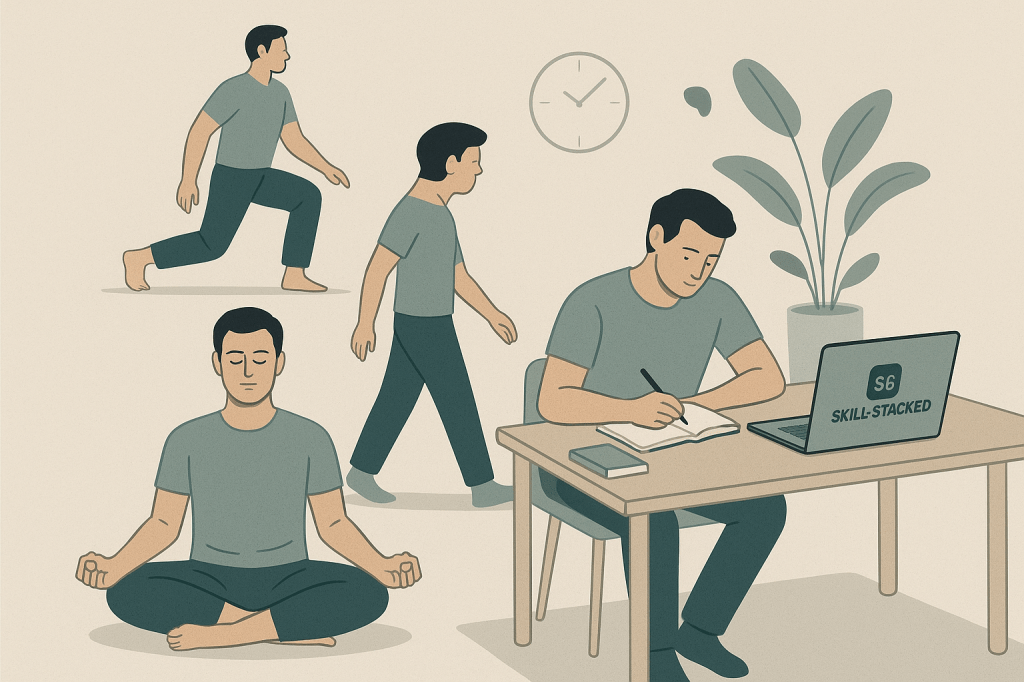
  • 🏃‍♂️ Daily Kaizen: Move First Thing

    🏃‍♂️ Daily Kaizen: Move First Thing

    Before the coffee. Before the scrolling. Before your brain talks you out of it—move.

    This isn’t about crushing a workout or logging a 10K run. It’s about momentum.

    Just move your body as the first thing you do today.

    10 push-ups. 20 air squats. 1-minute plank. A walk around the block. Stretching on the floor.

    Doesn’t matter. What matters is that your first act of the day is physical.

    Why?

    Because the body leads the mind.

    You don’t wait to feel motivated—you generate momentum.

    And that energy carries into everything else.

    The Rule:

    🧠 Don’t think.

    📱 Don’t scroll.

    🚿 Don’t shower.

    Just move.

    Mini-Challenge:

    Set a timer for 5 minutes. Move nonstop. Then start your day.

    Small shift. Big ripple.

  • 5 Key Lessons from The 7 Habits of Highly Effective People

    5 Key Lessons from The 7 Habits of Highly Effective People

    Introduction
    Stephen R. Covey’s The 7 Habits of Highly Effective People is a worldwide bestseller (30+ million copies sold) and a cornerstone in personal development literaturebookey.app. The book distills timeless principles of effectiveness – covering proactive behavior, clear goal-setting, smart prioritization, mutual benefit in relationships, empathic communication, synergy, and continuous self-improvementfranklincovey.com. For busy professionals, these habits offer powerful, actionable lessons to boost productivity and personal growth. In this post, we focus on five of Covey’s most universally applicable habits and how you can apply each one in daily life. These key lessons will help you take charge of your schedule, work with purpose, improve your relationships, and avoid burnout. Let’s dive in!

    1. Be Proactive (Take Initiative and Responsibility)

    What it means: “Be Proactive” is Covey’s first habit and the foundation for all the others. It’s about taking responsibility for your life and actions instead of blaming circumstances. In practice, being proactive means you focus your time and energy on what you can control and influence rather than worrying about things outside your controlfranklincovey.com. Covey emphasizes that proactive people choose their responses consciously and make things happen instead of waiting to be acted uponfranklincovey.com. This mindset shift – from reactive to proactive – puts you in the driver’s seat of your life.

    Why it matters: When you’re proactive, you feel more empowered and less stressed. You realize that while you can’t control everything, you can control how you respond. This habit builds the confidence to initiate change and tackle challenges head-on. It’s especially vital for busy professionals: rather than reacting to every email or crisis, you take charge of your agenda and outcomes. Proactivity is contagious too – it encourages a culture of accountability and initiative in teamsfranklincovey.com. Essentially, Be Proactive is about recognizing that you are “response-able” (able to choose your response) and that your decisions shape your effectiveness. It’s the first step toward personal leadership.

    How to apply it:

    • Focus on your Circle of Influence: Direct your efforts toward issues you can actually do something about – for example, improving a skill or solving a work problem – and let go of unproductive worry over things you can’t changefranklincovey.com.
    • Use proactive language: Pay attention to your words and thoughts. Replace “I can’t” or “I have to” with “I can” or “I will.” This subtle shift reinforces that you have a choice in each situationfranklincovey.com.
    • Take initiative each day: Don’t wait to be told what to do. Whether it’s starting a project you’ve been postponing or reaching out to a client proactively, seize the opportunity to move things forward without waiting for perfect conditions.

    2. Begin with the End in Mind (Have a Clear Vision)

    What it means: To “Begin with the End in Mind” is to start any task, project, or day with a clear vision of your desired outcome. Covey explains that if you don’t consciously decide what you want in life – your goals, values, and direction – you allow circumstances or others to shape your destinyfranklincovey.com. In other words, all things are created twice: first mentally, then physically. This habit is about defining what success looks like for you (whether in a meeting, a project, or your life as a whole) and then planning how to achieve it. It encourages you to clarify your principles and goals upfront so you’re not climbing the ladder only to realize it’s “leaning against the wrong wall”franklincovey.com.

    Why it matters: In the rush of a busy professional life, it’s easy to get caught up in day-to-day urgencies and lose sight of the big picture. Beginning with the end in mind ensures that your daily actions align with your long-term purpose and values. Covey warns that it’s all too easy to work hard and “achieve” a bunch of milestones that ultimately don’t fulfill youfranklincovey.com. Having a clear end in mind acts as a compass – it guides your decisions, helps you prioritize what truly matters, and gives meaning to your work. This clarity not only boosts motivation but also prevents the regret of realizing you’ve pursued the wrong goals. For example, if your “end” is to build a successful product that improves customers’ lives, keeping that vision front and center will inform how you plan your projects and allocate your time.

    How to apply it:

    • Create a personal mission statement: Take time to write down your core values and long-term objectives. Covey suggests crafting a personal mission statement as “your own personal constitution” to clarify who you want to be and what you want to achievefranklincovey.com. This can serve as a guiding star for major decisions.
    • Visualize success for every project: Before starting a project or even a meeting, pause and imagine the ideal outcome. Ask yourself, “What do I want to accomplish here?” By defining success at the start, you can reverse-engineer the steps to get there.
    • Set goals with the end in mind: Break down your vision into concrete goals (yearly, monthly, weekly). Ensure your weekly plans include actions that move you toward those meaningful goals, not just tasks that keep you busy. Regularly check in: Are you spending time on what truly matters to your desired results?

    3. Put First Things First (Prioritize Important Over Urgent)

    What it means: “Put First Things First” is the practical fulfillment of Habit 2. It’s about prioritization and time management – organizing your day-to-day activities to focus on what’s truly important. In Covey’s terms, this means differentiating between what’s important and what’s merely urgent. Important things are those that contribute to your values and long-term goals; urgent things call for immediate attention (like ringing phones or last-minute requests) but aren’t always meaningful. Habit 3 is about “protecting time for what’s most important to us.”franklincovey.com It requires discipline to say no to distractions and lesser priorities so you can say yes to the tasks and people that align with your “end in mind.” In short, schedule your priorities before your priorities get overwhelmed by your schedule.

    Why it matters: For a busy professional, the day can easily become a blur of back-to-back meetings, emails, and crises – you feel productive for handling them, but did you actually make progress on your key goals? Covey argues that effective people are driven by importance rather than urgency. By putting first things first, you ensure that the critical projects, strategic planning, and personal growth activities don’t get perpetually postponed by daily firefighting. This habit reduces stress, because you’re not constantly scrambling at the last minute – you’ve proactively made space for high-value work. It also increases your effectiveness: working on important tasks when you’re most fresh (for example, tackling a key project in the morning) means you produce better results. As Covey famously said, “The key is not to prioritize what’s on your schedule, but to schedule your priorities.”goodreads.com In other words, plan your week so that your top priorities get the time and attention they deserve.

    How to apply it:

    • Identify your top priorities: At the start of each week (or day), list the 2–3 most important outcomes you need to achieve – those that align with your big goals. Make these your “first things.”
    • Block time for important tasks: Proactively schedule time on your calendar for your priority work before other less critical stuff fills your day. Treat these time blocks as non-negotiable appointments with yourself to work on high-impact activities.
    • Learn to say no (tactfully): Guard your time. If a request or interruption comes that isn’t important in the long run, be willing to say no or delegate it. Every time you say yes to something unimportant, you may be saying no to a truly important task. Keep Covey’s advice in mind and stay focused on “keeping the main thing the main thing.”
    • Use a planning system: Whether it’s a digital app or a paper planner, use tools to prioritize tasks by importance and urgency. Covey’s Time Management Matrix (urgent vs. important) can help – aim to spend more time in Quadrant II (important but not urgent activities like strategic planning, relationship building, exercise) and reduce time in other quadrants. This ensures you’re investing in things that pay off long-term rather than just putting out fires.

    4. Seek First to Understand, Then to Be Understood (Listen Before You Speak)

    What it means: Habit 5, “Seek First to Understand, Then to Be Understood,” is all about empathic communication. In simple terms, it means listen before you talk. Covey points out that we typically spend years learning how to read, write, and speak, but we rarely learn how to truly listenfranklincovey.com. Our default is to rush to get our point across – often interrupting or formulating responses in our head while the other person is still talking. This habit asks you to do the opposite: focus on understanding the other person’s perspective fully before expressing your own. It’s based on the principle of respect and empathy. Practicing Habit 5 involves listening with the intent to really understand – not just hearing words, but grasping the feelings and meaning behind them. Only after you’ve sincerely understood the other person do you then seek to be understood by sharing your view. Covey calls this “empathetic listening,” as opposed to listening autobiographically (with our own frame of reference)franklincovey.com.

    Why it matters: In any professional environment (and personal relationships too), communication is key. Misunderstandings and conflicts often arise because people aren’t truly listening to each other. By seeking first to understand, you build trust and rapport. Colleagues and clients feel respected and heard, which makes them more open to hearing your side. Covey even noted that if he were to summarize the single most important principle in human relationships, it would be exactly this habitfranklincovey.com. For busy professionals, Habit 5 can transform teamwork and leadership: you’ll make better decisions when you’ve understood all viewpoints, and you’ll solve the right problems because you took time to discern others’ needs. Moreover, when it’s your turn to speak, others are more likely to listen to you in return – because you’ve earned credibility as someone who listens. It’s a win-win for communication and effectiveness.

    How to apply it:

    • Practice active listening: When someone else is speaking, give them your full attention. Put away distractions (close your laptop, silence your phone) and maintain eye contact. Use encouraging body language (nod, smile) and interject only to clarify, not to shift to your own agenda.
    • Listen to understand, not to reply: Train yourself to not immediately mentally rebut or form a response. Instead, try to paraphrase what the other person said once they finish, e.g., “So if I’m hearing correctly, your concern is…”. This forces you to truly process their words and shows them you value their perspective.
    • Empathize with their feelings: Pay attention not just to what is said, but how it’s said. Tone of voice and body language carry meaning. Acknowledge emotions by saying things like, “I can sense you’re frustrated about this deadline.” Validating someone’s feelings helps them feel understood, which is crucial before you offer solutions or your own viewpoint.
    • Then share your perspective clearly: After – and only after – you’ve thoroughly understood the other side, present your ideas or feedback. When you do, frame your points with respect to their needs. For example, “Given what you’ve told me, I think option X might address your concern about quality while also meeting the timeline.” By connecting your message to their perspective, you’re more likely to be understood in return.

    5. Sharpen the Saw (Invest in Self-Renewal)

    What it means: The phrase “Sharpen the Saw” comes from a simple analogy: if you were cutting wood, a sharp saw would cut faster and better than a dull one. In Covey’s terms, you are the saw – your mind, body, skills, and spirit are the tools through which you accomplish everything. Habit 7, Sharpen the Saw, is about preserving and enhancing your greatest asset: yourselffranklincovey.com. It emphasizes the importance of continuous self-improvement and self-care. Covey urges us to seek balance in what he calls four dimensions of renewal: Body, Heart, Mind, and Spiritfranklincovey.comfranklincovey.com. In practice, this means regularly renewing your physical energy, nurturing your relationships and emotional well-being, expanding your knowledge and skills, and connecting with your values or spirituality. By “sharpening” these saws, you increase your capacity to handle life’s challenges and effectively practice the other habitsfranklincovey.com. Simply put, you can’t be highly effective if you’re running yourself ragged; you must pause to recharge and continuously grow.

    Why it matters: Busy professionals often struggle with this – it’s tempting to cut more logs (get more work done) without stopping to sharpen the saw (rest and improve). But neglecting self-renewal leads straight to burnout and declining effectiveness. Covey warns that without regular renewal, we’ll soon face exhaustion and diminished performancefranklincovey.com. On the flip side, investing time in yourself boosts your productivity, creativity, and overall well-being. For example, a well-rested mind can solve problems faster, and an educated mind brings more innovation to work. Regular exercise can give you more energy at the office. Strong relationships and a sense of purpose provide motivation and resilience during tough times. By sharpening the saw, you’re building the capacity to juggle a busy life successfully. This habit is a reminder that “me time” is not a luxury; it’s a necessity for sustainable success. Effective people continually seek to learn, adapt, and renew themselves so they can keep performing at a high level.

    How to apply it:

    • Physical renewal (Body): Prioritize your health. Schedule routine exercise that you enjoy – even a daily walk or a gym class. Get adequate sleep and pay attention to nutrition. When you’re healthy and energized, you can handle stress and work longer with better focus.
    • Social/Emotional renewal (Heart): Nurture your relationships. Make time for family and friends despite your busy schedule – a quick coffee with a friend or an evening with loved ones can rejuvenate you emotionally. Also, practice gratitude or journaling to keep a positive emotional state.
    • Mental growth (Mind): Continuously learn new things. Read books or articles outside of your immediate job to broaden your horizons. Attend a workshop, take an online course, or simply learn from a colleague. Keeping your mind sharp and curious will enhance your creativity and problem-solving abilities.
    • Spiritual well-being (Spirit): Connect with what inspires you and gives you purpose. This could be meditation, prayer, spending time in nature, or engaging in a hobby that you’re passionate about. Reflect on your values regularly – this ensures your work aligns with a deeper sense of meaning.
    • Schedule downtime: Just as you plan work tasks, plan your renewal activities. Set aside small blocks of “saw sharpening” time each day or week – whether it’s 30 minutes of reading, a workout session, or a quiet morning routine. Treat this time as sacred. By doing so, you’ll come back to your work recharged and more effective. Remember Covey’s principle: renewal is what keeps you on an “upward spiral” of growth, continually improving rather than stagnatingfranklincovey.com.

    Conclusion & Call to Action
    Covey’s five habits above – Be Proactive, Begin with the End in Mind, Put First Things First, Seek First to Understand, and Sharpen the Saw – are powerful lessons that can transform your professional and personal life. They encourage you to take charge of your priorities, clarify your vision, communicate better, and take care of yourself, all of which lead to greater effectiveness and fulfillment. The key is to apply these principles consistently. Change doesn’t happen overnight, but step by step you’ll build these habits into your routine.

    Now, here’s your challenge: Pick one habit from the list and start practicing it today. For example, you might begin by being proactive about a lingering issue at work, or by scheduling your top priority first thing tomorrow morning. Commit to focusing on that one habit for the next week. Write it down, remind yourself daily, and notice the difference it makes. Once you’ve made progress, add the next habit. Over time, these positive practices will compound, and you’ll find yourself becoming more organized, motivated, and effective.

    Remember, knowledge without action is meaningless. So take action now – be proactive and implement these lessons in your life. Your future self (and your colleagues and loved ones) will thank you for it. Here’s to your personal growth and success! 🚀

  • Best Bodyweight Exercises for Busy Professionals

    Best Bodyweight Exercises for Busy Professionals

    For busy professionals, finding time for the gym can be a challenge. But you don’t need fancy equipment to build strength, mobility, and fitness. Bodyweight exercises are simple, effective, and can be done anywhere—at home, in a hotel room, or even during a lunch break.

    Here’s a list of the best bodyweight exercises for busy professionals, plus tips to maximize your workout in minimal time.


    🏋️ Top Bodyweight Exercises

    Push-Ups
    Target chest, shoulders, triceps, and core. Modify by dropping to your knees or elevating hands for beginners.

    Bodyweight Squats
    Work the quads, hamstrings, glutes, and calves. Keep chest lifted, and push knees out to track toes.

    Lunges
    Strengthen legs and improve balance. Step forward or backward, or try walking lunges if space allows.

    Glute Bridges
    Engage the posterior chain and improve hip mobility. Perfect for countering long hours of sitting.

    Planks
    Strengthen the entire core. Start with 20-30 second holds and build from there. Side planks target obliques.

    Burpees
    For a quick cardio blast. Do as many as possible in 30 seconds for a mini HIIT session.


    💡 Quick Tips for Busy Professionals

    Keep it simple: Choose 3–4 exercises and do them as a circuit for 10–15 minutes.
    Work with intervals: 30 seconds on, 30 seconds rest, for 3–4 rounds.
    Focus on form: Quality over quantity. Proper technique prevents injury and maximizes effectiveness.
    Use micro-breaks: Squeeze in 2-minute sets between tasks or meetings.


    🚀 Kaizen Tip:

    Start with just 1 exercise per day if you’re short on time. For example, do 10 squats every morning. Build from there. Tiny, consistent steps lead to long-term strength.


    💬 Which bodyweight move will you try today? Comment below and let’s share ideas!

  • Mastering Active Listening: A Busy Professional’s Guide to Better Communication and Relationships

    Mastering Active Listening: A Busy Professional’s Guide to Better Communication and Relationships

    Introduction

    In a world full of distractions and rapid-fire conversations, truly listening has become a superpower. Many of us nod along in meetings or conversations, thinking we’re good listeners. Yet how often do we walk away missing key points or making someone feel unheard? This is where active listening comes in. It’s more than just hearing words – it’s an intentional way of engaging that can transform how we connect with colleagues, clients, friends, and family. Busy professionals and growth-minded individuals will find that honing this skill pays off in stronger relationships, fewer misunderstandings, and better outcomes in both work and life. Let’s explore what active listening really means, why it’s so valuable, and how you can start mastering it today.

    What Is Active Listening and Why It Matters

    Active listening goes beyond passively hearing the speaker; it means fully attuning to their words, tone, and body language to truly understand the messagefundbox.com. Think of it as listening on purpose: you’re not just absorbing information like a sponge, but responding and interacting – almost like a trampoline that gives energy and feedback to the speakerfundbox.com. This two-way engagement signals to the other person that you genuinely care about what they’re saying.

    Why is this skill so valuable? For one, active listening is a cornerstone of effective communication and trust-building. When people feel truly heard, it has a powerful effect. Research indicates that when we actively listen, the person speaking feels understood and secure, which builds trust and increases empathy in the relationshipextension.usu.edu. In professional settings, leaders who listen actively create an environment where team members feel valued, leading to stronger engagement and loyalty. In fact, demonstrating listening as a leader directly helps build trust and commitment on teamspmc.ncbi.nlm.nih.govfundbox.com. On the flip side, active listening also prevents problems – it reduces misunderstandings and errors that arise when we only half-listenfundbox.com. Whether you’re resolving a conflict or collaborating on a project, the ability to listen well makes the difference between a positive outcome and a frustrating miscommunication. In short, active listening is the bedrock of great relationships and effective teamwork, making it a must-have skill in your professional toolkit and personal life.

    Common Active Listening Mistakes to Avoid

    Even with the best intentions, many people slip into bad listening habits that undermine communication. Here are some common mistakes that can sabotage active listening, and why you should avoid them:

    • Interrupting or jumping to conclusions: Finishing someone’s sentences or cutting them off is a quick way to make a speaker feel frustrated and ignored. It also means you might miss important details by assuming you know their point. Good listeners wait for the speaker to finish and resist the urge to interject, which avoids misunderstandings and shows respectlinkedin.com.
    • Giving unsolicited advice or solutions: Jumping in with advice before someone has fully expressed themselves can make them feel judged or defensive. Often people just want to be heard, not fixed. If you immediately offer feedback that wasn’t asked for, it may discourage the speaker from opening uplinkedin.com. Instead, practice empathy first—ask if they want help or simply a listening ear.
    • Getting distracted (multitasking): It’s a mistake to think you can check your email or phone and still listen effectively. Multitasking or letting your mind wander sends the message that the speaker’s words aren’t important. This can make them feel unimportant or disrespectedlinkedin.com. Avoid this by eliminating distractions – put your phone away, close your laptop, and give the person your full attention.
    • Being biased or defensive: If you listen with a filter – for example, already formulating a rebuttal or judging what’s being said – you’re not truly listening. Letting your biases, ego, or emotions take over can make the speaker feel attacked or dismissed. It also means you might miss their actual message. Stay open-minded and non-judgmental, even if you disagree. As experts note, recognizing your own assumptions and focusing on understanding (rather than debating) fosters a much more productive dialoguelinkedin.com.

    Avoiding these pitfalls is the first step toward better listening. By being aware of them, you can catch yourself in the moment (e.g. “Oops, I’m about to interrupt – let me stay quiet and listen”). Now, let’s look at how active listening can tangibly improve your relationships and results.

    How Active Listening Improves Relationships and Results

    One of the greatest benefits of active listening is its positive impact on both personal and professional relationships. When you make someone feel heard, you’re doing more than just exchanging information – you’re strengthening the connection.

    In personal relationships, practicing active listening leads to deeper understanding and trust between partners, friends, or family members. Studies have shown that couples who practice active listening and empathy report higher relationship satisfaction and lower conflict levelspsychologytoday.com. By listening attentively to your loved one’s concerns or stories (instead of planning your comeback or checking your phone), you validate their feelings and show that you care. This can diffuse tensions and prevent small issues from escalating. Being a good listener with those close to you creates a safe space where they feel comfortable sharing – ultimately fostering intimacy and mutual respect.

    In professional settings, active listening can be a game-changer for your career. Clear communication is consistently ranked as a top leadership skill, and listening is half of communication. When you actively listen to colleagues, clients, or employees, you build rapport and signal respect. Coworkers and team members are more likely to trust and cooperate with a leader or peer who listens to them. In fact, teams with leaders who actively listen report significantly higher engagement and job satisfactionpsico-smart.com. Clients and customers, too, feel valued when you take the time to understand their needs fully. For example, in customer service or sales roles, listening attentively can boost customer satisfaction by around 28%psico-smart.com – often making the difference in earning loyalty or closing a deal. Furthermore, by listening well, you gather more accurate information, which leads to better decisions and solutions. You’ll catch problems early, find win-win solutions in negotiations, and avoid costly misunderstandings.

    Bottom line: Active listening is a simple skill that yields powerful returns. It improves your personal relationships by building empathy and trust, and it improves your professional life by enhancing teamwork, client relations, and leadership effectiveness. Now, let’s break down a concrete plan to build this skill step by step.

    A Step-by-Step Plan to Master Active Listening

    Mastering active listening doesn’t happen overnight – it’s a skill you develop with intentional practice. Here is a step-by-step plan to sharpen your listening skills, with actionable steps you can start using right away:

    1. Set the Stage (Eliminate Distractions): Begin by creating an environment where you can focus. Whenever you’re about to have an important conversation or meeting, pause and remove potential distractions. Silence your phone, close unrelated tabs or emails, and turn your body toward the speaker. If you’re busy, it’s okay to ask to reconvene at a better time – it’s worse to pretend to listen when you can’t. Setting the stage like this tells your brain (and the other person) that listening is your priority extension.usu.edu.
    2. Be Fully Present: This sounds simple, but it’s powerful. Commit to being mentally present with the speaker. That means avoiding the urge to daydream or think about your to-do list. Catch yourself when your mind drifts and refocus on their words. Use body language to ground yourself in the moment: maintain comfortable eye contact, nod occasionally, and face the person who’s speaking. These non-verbal cues not only keep you engaged, but also signal to the speaker that you’re paying attentionextension.usu.edu. By staying in the “here and now” of the conversation, you’ll absorb more and show respect.
    3. Listen Without Interrupting or Judging: This step is the heart of active listening. As the person speaks, give them space to express their full thoughtsdon’t interrupt, even if you’re excited to respond or think you know what they’ll say. Also, set aside any preconceived notions or snap judgments. Try to listen with an open mind, the way a scientist gathers data. If you feel defensive or tempted to argue, take a breath and continue listening. By holding back on your own commentary and really hearing them out, you’ll understand better. Often, just not interrupting and letting someone finish can dramatically improve communication (people feel respected)linkedin.com. If you’re worried about forgetting a point you want to make, quickly jot it down mentally or on paper, then return your focus to listening.
    4. Use Encouragers and Open-Ended Questions: To keep the conversation flowing and show that you’re engaged, use brief verbal encouragers and ask questions. Simple phrases like “I see,” “Go on,” or a well-timed nod can encourage the speaker to continue. When they pause, ask open-ended questions that invite them to elaborate, such as “Can you tell me more about that?” or “How did you feel when that happened?”. This not only clarifies their message, but also shows you’re genuinely interestedlinkedin.com. For example, instead of a yes/no question (“Did that bother you?”), you might ask, “What are your thoughts on how that went?”. Open-ended questions deepen the dialogue and often reveal insights that would have been missed otherwise.
    5. Reflect and Paraphrase: A critical active listening technique is reflection – essentially, paraphrasing what you heard to confirm understanding. Once the speaker has shared their thoughts, summarize or reflect back some key points. You might start with, “So, if I’m hearing correctly, you’re saying that… [paraphrase their main idea]. Did I get that right?”extension.usu.edu. This step serves two purposes: it lets the speaker know you truly listened and understood, and it gives them a chance to correct anything you misinterpreted. Don’t just parrot their words; try to capture the essence in your own words. For instance, “It sounds like you felt left out of the project discussion, and that’s made you frustrated.” Reflection is incredibly validating for the speaker – they’ll feel “heard.” It also cements your comprehension. Many conflicts or confusions melt away at this stage because both parties reach a shared understanding of the issue.
    6. Empathize and Validate: As you reflect, make sure to acknowledge the speaker’s feelings or perspective. Empathy is a key part of active listening. Phrases like, “I can understand why that would be upsetting,” or “That makes sense given what you’ve experienced,” show that you’re not only hearing the content but also appreciating the emotions or values behind it. Validation doesn’t mean you agree with everything; it means you accept that the person’s feelings or viewpoint are legitimate. For example, if a coworker is stressed about a deadline, you might say, “I hear you – this timeline is tight, and I can imagine it’s stressful.” This kind of response strengthens trust and rapport, because the speaker feels seen as a human, not just a source of information.
    7. Respond Thoughtfully (and Follow Up): Now it’s your turn to speak – respond in a way that directly addresses what was said. Whether you’re answering a question, offering help, or sharing your own view, tie it to the speaker’s points to show you were listening. For instance, begin with, “Thank you for sharing that – it sounds like the key issue is X, so let’s talk about how we can address it,” rather than a canned response. If action or a decision is needed, make sure to follow through on it. Active listening doesn’t end when the conversation is over; taking appropriate action afterward (like providing a promised resource or checking in later) shows that you valued the exchange. One common mistake is forgetting to follow up, which can make the initial listening effort seem insincerelinkedin.com. Don’t let that happen – if you agreed to do something or simply said you’d continue thinking about the issue, do it and circle back. This cements you as a reliable communicator in the other person’s mind.

    By following these steps, you’re essentially retraining your habits from passive hearing to active engagement. It might feel unnatural at first – especially the part about pausing and not interjecting your thoughts immediately. But with practice, these steps will start to flow together as your natural communication style. Next, let’s look at where you can apply active listening in real-world scenarios.

    Active Listening in Action: Real-World Scenarios

    Active listening isn’t just for one-on-one talks in a quiet room – it’s useful in nearly every communication scenario. Here are a few common real-world situations where active listening can make a huge difference, along with how to apply it:

    • Conflict Resolution: When disagreements arise (whether with a coworker or a loved one), active listening is often the secret sauce to finding a resolution. Instead of talking past each other or launching into arguments, take turns truly listening. Let each person fully express their perspective and feelings, and reflect back what you hear before responding. This helps defuse anger and clear up misunderstandings. In fact, a study in the Journal of Communication found that using active listening can improve conflict resolution outcomes by up to 50%psico-smart.com. By paraphrasing the other side’s points and showing you understand, you create a calmer atmosphere where both sides are more willing to find common ground. For example, if two coworkers are clashing over responsibilities, an actively listening manager might have each describe their concerns while the other listens quietly, then repeat back the other’s points. This process uncovers the real issues and paves the way for a compromise.
    • Sales and Customer Service: Ever notice how the best salespeople or customer support reps often spend more time listening than talking? Active listening is a powerful tool in these scenarios. When you attentively listen to a customer – asking questions to get at their real needs, and echoing back their concerns – you build trust and rapport. The customer feels valued and confident that you get them. Practically, this means you can propose solutions that truly fit what they want. Businesses have found that actively listening to customers leads to higher satisfaction and loyalty (one analysis showed about a 28% higher customer satisfaction rate when reps used active listening techniques)psico-smart.com. For example, in a sales meeting, rather than pitching a product immediately, a savvy salesperson will ask the client open-ended questions and listen closely: “What challenges are you facing?” then “So, it sounds like your team needs a more efficient system for X, is that right?” Only after fully hearing the client will they tailor their pitch. This consultative approach often closes more deals because the client feels heard and understood.
    • Leadership and Team Management: If you’re in a leadership role (or aspiring to be), mastering active listening is non-negotiable. Leaders who actively listen to their team earn greater trust, motivation, and loyalty from their employeesfundbox.com. People are far more likely to go the extra mile when they feel their input matters. For instance, in team meetings, a manager practicing active listening will invite quieter members to share, listen without interrupting even if an employee is critiquing something, and summarize what was said to ensure clarity. Such a leader might say in a one-on-one, “Let me make sure I understand – you’re concerned about the timeline and would like more support on task Y, correct?” This approach makes employees feel valued. No surprise, then, that teams with listening leaders report higher engagement and job satisfactionpsico-smart.com, and employees often wish their bosses would listen more. Active listening also helps leaders catch issues early and make better decisions by incorporating diverse perspectives. The culture created by a listening leader is one where communication is open and problems can be solved collaboratively rather than hidden.
    • Personal Relationships: Whether with your partner, family, or friends, active listening can transform your relationships. We all want to feel heard by the people we care about. By giving a loved one your full attention and empathy, you strengthen the emotional bond between you. For example, if your partner comes home upset about a bad day, practicing active listening means you put down your phone, listen quietly as they vent, nod and say “I hear you – that sounds really tough,” instead of immediately offering solutions or turning the conversation to yourself. This validation can immediately ease their stress. Couples who make a habit of active listening tend to have better mutual understanding and fewer fights – in fact, research shows couples who actively listen to each other report higher satisfaction and significantly lower conflict in their marriagepsychologytoday.com. Similarly, in friendships, being the friend who truly listens (instead of one-upping or drifting off into thought) sets you apart as someone trustworthy and supportive. Next time a friend shares a problem, try focusing intently, summarizing their issue (“So the new job is exciting but also overwhelming because…?”), and see how much closer it makes you. Active listening in personal life creates a safe, supportive environment where everyone feels valued – the foundation of any strong relationship.

    These scenarios show that active listening is a versatile skill. It applies whether you’re mediating a heated dispute, closing a business deal, guiding a team, or simply being a good friend. In each case, the core approach is the same: listen first, respond second. Now, how do you actually build the habit of doing this every day? The answer lies in small daily practices.

    Daily Micro-Habits to Boost Your Listening Skills (Kaizen Approach)

    Improving your listening skills is best achieved through consistent, small steps – a Kaizen-style approach of continuous improvement. By weaving a few micro-habits into your daily routine, you can gradually reprogram yourself to listen better without it feeling overwhelming. Here are some simple daily practices to get you started:

    • Listen 80% (Speak 20%): Make it a daily rule in your conversations to try to listen far more than you talk – aim for the 80/20 rule of communication. This means consciously letting others do most of the talking. When you do speak, perhaps use that opportunity to summarize what you heard or ask a question. For example, in your next meeting or even at dinner, notice if you’re dominating the talk. Challenge yourself to hold back and genuinely listen. This habit trains you to prioritize understanding over being heard. (And as a bonus, people will appreciate you as a great conversationalist without you saying much at all!)
    • Pause Before Responding: Starting today, practice inserting a brief pause (2-3 seconds) before you reply in conversations. This tiny habit prevents you from reflexively interrupting or blurting out thoughts, especially in heated discussions. It might feel awkward at first, but those few seconds are golden – you ensure the speaker is finished, and you give yourself a moment to really consider their words. This can reduce misunderstandings and impulsive reactionslinkedin.com. Try it in your next phone call or after a coworker shares an idea: silently count “one… two…” in your head before you respond. You’ll be surprised how often the other person has more to say – and how much deeper the conversation goes.
    • Ask an Open-Ended Question in Every Conversation: Make it a point to ask at least one open-ended question each time you have a substantive conversation. It could be as simple as “How do you feel about that?” or “What do you think we should do next?” or “Can you tell me more?”. This habit forces you to listen (since the other person will naturally elaborate) and signals your interest. Over time, you’ll start instinctively asking these questions, which keeps dialogues interactive and engaging. As a plus, you’ll gain a reputation as someone who’s genuinely curious and respectful of others’ opinions. Remember, open questions (starting with “what,” “how,” “tell me about…”) can dramatically improve clarity and collaboration in discussionslinkedin.com.
    • Mirror Non-Verbal Cues: Starting now, pay attention to people’s body language and tone, and try subtly mirroring positive cues. If the person leans in and seems engaged, you do the same. If they speak softly, you ensure your tone is warm and calm. This isn’t about mimicking awkwardly, but about tuning in to their non-verbal communication. It helps you stay focused (since you’re observing actively) and builds rapport by subconsciously signaling “I’m with you.” For instance, in your next one-on-one conversation, notice if the person is smiling or nodding, and mirror some of that openness. Research shows that non-verbal cues like these play a huge role in communication effectiveness (often cited around 55% of communication is non-verbal)linkedin.com. By being mindful of this daily, you’ll become more attentive and responsive as a listener.
    • Put Away Your Phone (at Least Once a Day): Choose one or two conversations each day – perhaps when you get home, or during a key meeting – where you deliberately put your phone out of reach and out of sight. This habit combats the reflex to glance at notifications that sap your attention. You might even tell the person, “I’m putting my phone aside so I can focus on what you’re saying,” which sets a positive tone. Over time, you’ll find it easier to do this in all important conversations. It’s a simple practice that yields immediate improvements: you’ll catch nuances you’d otherwise miss, and the people you’re with will notice your full presence. (They may even feel inspired to do the same.)
    • End Each Day with a Quick Reflection: A powerful micro-habit is a daily 2-minute reflection: ask yourself, “What’s one conversation I had today, and could I have listened better in it? How?” This isn’t to beat yourself up – it’s to spot opportunities for improvement. Maybe you realize you interrupted your colleague in a meeting, or you were distracted during your spouse’s story because you were cooking at the same time. By reflecting, you can plan one thing to do differently next time (like, “Tomorrow, I’ll schedule a time to talk when I can give my full attention”). This continuous, small adjustment approach is the essence of Kaizen – making tiny improvements day by day. Over weeks and months, these micro-habits compound into dramatically better listening skills.

    Remember, the goal with these micro-habits is consistency, not perfection. Pick one or two to focus on this week, and add others over time. Even a 1% improvement each day adds up—before long, you’ll notice you interrupt less, understand more, and even hear the feelings behind people’s words. Those around you will certainly notice the change for the better.

    Conclusion & Call to Action

    Active listening is a skill that delivers high value for every aspect of your life. By understanding what it truly means to listen actively, avoiding common pitfalls, and practicing with a step-by-step approach, you can become the person who makes others feel heard and respected. This leads to stronger personal bonds, a more positive reputation at work, and better outcomes in conflicts or negotiations.

    The best part? You can start today with small changes. Try one of the micro-habits mentioned above right now – for example, in your very next conversation, decide to listen 80% of the time and summarize what you heard. You’ll likely see an immediate difference in how the other person responds. Keep building on these small wins daily.

    Call to Action: Ready to level up your communication skills further? Make a commitment to practice active listening in one conversation every day this week. Jot down what you learn from these interactions. We’d love to hear about your experiences – feel free to share your progress or any challenges in the comments. If you found this guide useful, consider subscribing to our newsletter on Skill Stacker for more actionable tips on personal and professional growth. Now, put down your phone, step away from the noise, and give someone the gift of your full attention – your journey to mastering active listening starts now!

  • Mastering Time Blocking: How to Plan Your Day for Maximum Productivity

    Mastering Time Blocking: How to Plan Your Day for Maximum Productivity

    Time blocking is a simple but powerful skill that can transform your productivity. Instead of working reactively—responding to emails, messages, and distractions—you create a structured schedule where every task has its own dedicated time slot. This method helps you focus deeply, avoid procrastination, and accomplish more in less time.


    What is Time Blocking?

    Time blocking means planning your day in advance by assigning specific blocks of time to tasks or categories of tasks. For example:

    • 8:00–9:00 – Morning routine & planning
    • 9:00–11:00 – Deep work (project focus)
    • 11:00–12:00 – Meetings & emails
    • 1:00–2:00 – Lunch & movement
    • 2:00–4:00 – Creative work
    • 4:00–4:30 – Wrap-up & tomorrow’s planning

    💡 Why It Works:

    Reduces decision fatigue – You already know what to do and when.
    Limits distractions – You’re less likely to switch tasks or multitask.
    Prioritizes important work – Deep work gets a dedicated time block.
    Creates balance – You make space for breaks and personal time.


    🛠 How to Start Time Blocking Today:

    1️⃣ Plan your day the night before: Write down key tasks and assign time slots.
    2️⃣ Use a calendar or planner: Google Calendar, paper planner, or an app like Notion.
    3️⃣ Start with realistic blocks: Avoid overpacking your day; leave buffer time.
    4️⃣ Include breaks and flexibility: Short breaks between blocks help you recharge.
    5️⃣ Stick to your plan: Treat each block like an appointment.


    🔥 Kaizen Tip:

    Start small. Block just one hour tomorrow for a priority task—whether it’s deep work, a workout, or planning your supplement launch. Build the habit from there.


    🚀 Conclusion

    Time blocking isn’t about micromanaging every minute—it’s about being intentional with your time. Start small, stay consistent, and watch your productivity soar.

    💬 Which time block are you going to try tomorrow? Comment below!

  • Kaizen for Busy Professionals: 3 Micro-Habits You Can Start Today

    Kaizen for Busy Professionals: 3 Micro-Habits You Can Start Today


    In a world where productivity feels like a never-ending sprint, the Japanese philosophy of Kaizen offers a refreshing, sustainable approach. Kaizen emphasizes continuous improvement through small, consistent actions. Instead of massive overhauls or overwhelming changes, Kaizen invites us to focus on tiny steps that, over time, lead to significant personal and professional growth.

    For busy professionals, this is game-changing. Time is often scarce, but progress doesn’t have to wait. Today, I’ll show you three micro-habits you can start today—each taking just a few minutes but offering compounding benefits over time.


    🔑 1. The 2-Minute Rule: Tackle Small Tasks Immediately

    We’ve all faced the creeping anxiety of a to-do list that grows faster than it shrinks. Enter the 2-Minute Rule, a simple principle that says:
    If a task takes two minutes or less, do it immediately.

    This approach, popularized by productivity expert David Allen, helps eliminate the mental load of tiny tasks that pile up and weigh on your mind.

    Examples You Can Apply Today:

    • Respond to a short email or message.
    • File that one document cluttering your desk.
    • Empty your recycling bin.
    • Stretch your legs or do a few neck rolls.
    • Prep a healthy snack for later.

    By completing these micro-tasks as they arise, you reduce clutter—both physical and mental—and maintain a sense of control throughout the day. It’s a small act that creates a ripple effect of productivity and calm.

    💡 Kaizen twist: Even if you’re swamped, taking these mini-actions reinforces a “can-do” mindset and builds positive momentum.


    🔑 2. Morning Movement: Jumpstart Your Day with Energy

    How often do you reach for your phone before you even get out of bed? Let’s flip the script. Instead of scrolling, use those first few minutes to invest in yourself.

    A 5-minute morning movement ritual can set a powerful tone for your day. It doesn’t have to be a full workout. Simple stretching, a few push-ups, or a brisk walk can be enough to wake up your body and focus your mind.

    Quick Routine to Try:

    • 30 seconds neck and shoulder rolls to release tension.
    • 5–10 push-ups to get your blood pumping.
    • 1-minute forward fold to stretch your hamstrings and back.
    • A short walk around your home or outside to energize.

    Why It Works:

    • Activates your body’s systems for focus and clarity.
    • Reduces morning stress and sets a proactive tone.
    • Builds confidence—if you can conquer movement first thing, you can handle whatever the day throws at you.

    💡 Kaizen twist: Start with just one exercise for a few days. Once it feels natural, layer on another. The key is sustainability, not intensity.


    🔑 3. Evening Reflection: Learn, Acknowledge, and Reset

    The end of the day often feels like a blur. But what if you took just one minute to pause, reflect, and reset? This micro-habit helps you track progress, identify areas for improvement, and prime your mind for tomorrow.

    How to Practice Evening Reflection:

    • Grab a sticky note, journal, or your phone’s notes app.
    • Ask yourself:
      • What’s one thing I did well today?
      • What’s one thing I can improve tomorrow?
    • Write it down. That’s it.

    Benefits:

    • Reinforces a sense of achievement, no matter how small.
    • Encourages continuous growth through daily reflection.
    • Clears mental clutter and improves sleep quality.

    💡 Kaizen twist: Don’t aim for perfection. Some days your “win” might be as simple as remembering to take a deep breath during a stressful moment. Celebrate it.


    🌿 Bringing It All Together

    The beauty of Kaizen is its simplicity and sustainability. You don’t need hours of free time or an elaborate system. You just need the willingness to start small and the discipline to keep going.

    These three micro-habits—tackling 2-minute tasks, morning movement, and evening reflection—are your stepping stones. They’re flexible, adaptable, and powerful when practiced consistently.

    🚀 Your Kaizen Challenge

    Pick one of these micro-habits and commit to it for the next seven days. Notice how even the smallest shifts create positive momentum in your life.

    Comment below: Which micro-habit are you starting today? Let’s inspire each other to embrace continuous improvement!

  • 5 Key Strategies for Consistent Fitness Success

    5 Key Strategies for Consistent Fitness Success

    Fitness success isn’t about grand gestures; it’s built on small, consistent habits that fit into your daily life. Have you ever started a workout plan with sky-high motivation, only to find yourself back on the couch a few weeks later? If so, you’re not alone. As a personal trainer, I’ve seen countless beginners and busy professionals struggle to stick to exercise routines despite the best intentions. The truth is, getting fit (and staying fit) isn’t simply about willpower or finding more hours in the day – it’s about avoiding common pitfalls and leveraging simple strategies from habit psychology. In this post, we’ll explore why most people fail at fitness and how to stay consistent for the long haul.

    1. The All-or-Nothing Mindset

    One of the biggest fitness traps is the all-or-nothing mentality. This is the idea that you have to be “100% all-in” with your fitness program – working out every single day, eating perfectly clean – or else you label yourself a failure. I see this often: A newbie starts strong with daily intense workouts and a strict diet. But as soon as life happens (a missed workout or an inevitable treat), they feel like they’ve blown it and throw in the towel entirely. Psychology experts note that if you live by an all-or-nothing mindset, you’re much more likely to “give up” the moment you slip upjamesclear.comjamesclear.com. In other words, the first missed workout isn’t what ruins your progress – it’s the spiral of guilt and quitting that follows.

    How to overcome it: Embrace a consistency-over-perfection approach. Fitness is a lifelong journey, not a pass/fail test. Nobody is perfect – even seasoned athletes skip workouts or indulge sometimes. The key is to be flexible, not rigid. If you miss a workout, reschedule it for tomorrow. If you eat a donut, enjoy it and plan a healthier meal next time. By prioritizing consistency and allowing small imperfections, you’ll create a sustainable routine that fits into real lifepsychologytoday.compsychologytoday.com. A helpful rule is “never miss twice” – as habit expert James Clear says, missing one workout is just an accident, but missing two in a row starts a new bad habitjamesclear.com. So you had an off day? Shrug it off and make sure the next day you’re back on track. Over time, this mindset builds resilience and keeps you moving forward instead of restarting from scratch.

    2. Unrealistic Goals and Expectations

    Another reason people give up is setting unrealistic goals. It’s great to be ambitious, but goals like “lose 20 pounds in a month” or “work out 2 hours every day” can set you up for disappointment. When results don’t come as fast as hoped, motivation crashes. I’ve had clients proudly announce extreme goals in our first session – only to feel defeated a few weeks later because they aimed for an overnight transformation. Unrealistic expectations create a vicious cycle: you push too hard too soon, burn out or get discouraged, and then quit, reinforcing the belief that you “failed.” In fact, drastic all-at-once changes often lead to overtraining and burnout rather than lasting progressthirdspace.london.

    How to overcome it: Focus on progress, not perfection. Set realistic, incremental goals that you can build on. For example, aim to work out 3 days a week (not 7), or to jog 5 minutes longer than last week rather than expecting a marathon in a month. Research shows that small, consistent improvements compound into major results over time – the classic “1% better every day” approachthirdspace.londonthirdspace.london. This principle of continuous improvement (sometimes called the Kaizen method) makes change manageable and sustainable. It’s far more motivating to hit modest milestones and celebrate those “small wins” than to constantly fall short of a lofty goalpsychologytoday.compsychologytoday.com. For instance, if you could do 5 push-ups last week and you can do 8 now, that’s a victory – recognize it! These little victories trigger a dopamine boost that keeps you motivated to continuethirdspace.london. Over time, your confidence grows as you see consistent progress, and those initially modest goals snowball into significant improvements.

    Crucially, set goals based on actions (the process), not just outcomes. Instead of “I must lose 30 lbs,” focus on habits like “I will walk 30 minutes on weekdays.” Outcome goals can be discouraging if you don’t hit the number fast, but process goals give you something achievable to do now. And as you repeat those actions, the results will follow. Remember: getting fit is a marathon, not a sprint – pace yourself so you can actually sustain it.

    3. Lack of Structure or Routine

    Many people fail at fitness simply due to a lack of routine or structure. When exercise isn’t built into your schedule or lifestyle, it’s the first thing to drop when you get busy. Think about it – if you’re always deciding “Should I work out today or not?” on the fly, you’re relying on willpower each time. And after a long work day or when motivation is low, willpower loses. Busy people especially struggle here: without a concrete plan, the day fills up with emails, meetings, family obligations – and the workout never happens.

    How to overcome it: Make fitness a scheduled part of your week – as non-negotiable as a work meeting. Planning ahead greatly increases consistencypsychologytoday.com. In fact, research has found that people who exercise at a regular time (same time of day, most days) are more likely to stick with their routine long-termmedicine.at.brown.edu. So find a realistic time slot you can commit to, whether it’s early morning before the day’s chaos, a lunch-break walk, or an evening bike ride. Treat that appointment with yourself seriously. If you put a 30-minute workout on your calendar every Monday, Wednesday, Friday at 7am, you remove the daily decision and make it a habit.

    Another powerful technique is habit stacking. This comes from Stanford behavior scientist BJ Fogg and is popularized by James Clear’s Atomic Habits. The idea is to attach a new habit to an existing habit so you have an automatic cuejamesclear.comjamesclear.com. For example, if you already brew coffee every morning, right after you pour your coffee, do 10 minutes of stretching or yoga. If you commute home from work, make it a routine that as soon as you change out of work clothes, you put on sneakers and go for a walkjamesclear.com. By linking the workout to something you already do reliably, it piggybacks on your established routine. This method makes the new behavior almost an extension of your current lifestyle rather than a disruptive addition. Studies show habit stacking works because it leverages your brain’s existing neural networks – you’re basically chaining a new link onto a well-worn chainjamesclear.com. Over time, the cue (coffee, arriving home, etc.) triggers the exercise habit automatically, no extra willpower required.

    To summarize, create structure. Plan your workouts for specific days and times, prepare your gear beforehand, and use cues (like a packed gym bag by the door or an alarm reminder) to prompt you. When fitness is woven into your routine, it becomes just “what you do” instead of a daily struggle to prioritize. As boring as routines can seem, they are the backbone of fitness consistency.

    4. Neglecting Rest and Recovery

    In the enthusiasm to get fit, people often forget that rest is part of the process. Ironically, pushing yourself too hard – never taking a day off, doing high-intensity exercise 7 days a week – can lead to burnout or injury, derailing your progress completely. I’ve met clients who insist on training intensely every single day when they start, thinking more is better. Within a few weeks, they’re exhausted, ache all over, or get hurt, and then they’re out of the game. Overtraining (too much exercise with too little recovery) backfires by overstressing your body and mind. It can sap your motivation and even suppress your immune system, making you more prone to getting sick or injuredunm.eduunm.edu. In short, no recovery = no consistency, because you’ll be forced to stop eventually.

    How to overcome it: Build recovery into your plan just like you build in workouts. Remember that fitness improvements happen during recovery – your muscles repair and grow stronger on rest days, and your mind stays fresh and motivated when it gets periodic breaks. Make sure you’re taking at least 1–2 rest days per week (more if you’re doing very intense training). Prioritize sleep as well – it’s hard to overstate how much quality sleep aids muscle recovery, hormone balance, and energy levels. If you’re a type-A person who hates the idea of resting, reframe it as “active recovery.” On off days, do gentle yoga, take a leisurely walk, or stretch. You’re still moving, but giving your system a chance to reset.

    Also, listen to your body’s signals. Consistent fatigue, lingering soreness, irritability, or declining performance are signs you might be overdoing it. Don’t ignore those red flags – back off a bit or take an extra rest day. In the long run, avoiding overtraining improves your fitness and prevents burnout and injury that could knock you off courseunm.edu. Think of recovery as investment in your next workout – it’s what allows you to come back stronger and keep going week after week. The most consistent (and successful) people in fitness are not those who go hard for a month and then flame out, but those who pace themselves and find a sustainable rhythm of effort and recovery.

    Science-Backed Strategies to Stay Consistent

    So how do you put this all together and actually stick with your fitness plan? Here are a few realistic, science-supported strategies to help you stay consistent:

    • Start Small (Tiny Habits Method): When motivation is high, it’s tempting to overhaul everything at once – but that often leads to burnout. Instead, start with ridiculously small steps. Behavior scientists like BJ Fogg recommend designing tiny habits that are so easy you can do them even on your busiest dayssuccess.com. For example, begin with 5-10 minutes of exercise or a couple of exercises like 5 push-ups or a short walk. Making it easy builds momentum. Once the tiny habit feels automatic, you can gradually increase it. The key is it should be easy enough that you can’t make excuses. On days when you’re really strapped for time, do your 5-minute mini-workout rather than nothing at all – it keeps your streak alive. And whenever you do accomplish even a small goal, celebrate it in some way (yes, Fogg literally suggests doing a little happy dance or fist pump). It might feel silly, but that positive emotion creates a reward feedback in your brain, which helps lock in the habitsuccess.comsuccess.com. Over time, those tiny steps add up to huge gains.
    • Stack New Habits onto Existing Ones: We discussed habit stacking above because it’s a game-changer for busy people. Take advantage of behaviors you already do reliably, and attach a new fitness habit to them. If you always eat lunch, walk for 10 minutes right after lunch. If you watch a TV show at night, do some light stretching or core exercises during the commercials. By pairing a new habit with an established routine, you create a built-in reminder and make it much more likely the new habit will stickjamesclear.com. Research in habit formation shows that our brains latch onto contextual cues; when you repeat a behavior in the same context (time, place, or preceding action), it starts becoming automaticjamesclear.comjamesclear.com. Use this to your advantage by consciously planning when and where you’ll exercise, and linking it to something you won’t forget. Over time, your day will have multiple “triggers” that get you moving without you even having to think about it.
    • Adopt an Identity-Based Mindset: One powerful insight from habit psychology (championed by author James Clear) is to focus on your identity rather than just your goalsjamesclear.comthirdspace.london. In other words, start thinking of yourself as someone who exercises regularly. When you consistently perform a behavior, it becomes part of how you see yourselfpsychologytoday.com. This identity shift is crucial: if you see yourself as an “active person” or “someone who doesn’t quit,” you’re more likely to show up, even on tough days. On the flip side, if you maintain the mindset of “Ugh, I’m so out of shape and lazy,” it’s easy to find evidence for that and give up. So, even if you’re just starting out, embrace the identity of a fit, active individual. Each small workout is a vote for this new identity. Over time, your brain begins to believe it: This is just who I am. This approach is backed by psychology research – consistency in actions builds self-confidence and reinforces the desire to continuepsychologytoday.com. A practical tip is to use affirmations or simple self-talk: after a workout, tell yourself “Nice work – I’m getting stronger and more resilient.” It might sound cheesy, but it helps cement a positive self-image aligned with your fitness journey.
    • Plan, Monitor, and Adjust: Lastly, make use of basic behavior-change tools: planning, tracking, and reflecting. Plan your workouts each week (what days, what times, and what you’ll do). This removes decision fatigue and sets clear intentions. Consider tracking your workouts – even if just ticking off a calendar or using a habit-tracking app – to visually see your consistency streak. Seeing a chain of completed workouts can be very motivating (you won’t want to break the chain!). And if you miss a day, remember the “never miss twice” rule and get right back at itjamesclear.comjamesclear.com. Also, regularly review your progress and how you feel. Are the workouts too hard or too easy? Is your schedule working or do you need to switch things around? Adjust as needed rather than quitting. Think of it as an ongoing experiment to find what routine sticks best for you. By staying proactive and flexible, you’ll navigate life’s curveballs (busy weeks, low-energy days, etc.) without derailing your habit completely.

    Consistency Over Time = Results

    The big secret is that consistency beats intensity. Doing moderate workouts you can sustain wins out over doing insane workouts for a month and then stopping. When you string together weeks and months of consistent exercise, that’s when you see real transformation – not only in your strength or weight, but in your confidence and mood. You’re essentially reprogramming your lifestyle and even your identity to be a healthier, fitter person.

    The best part is, consistency gets easier the longer you keep at it. Those first few weeks require effort and planning, but soon your fitness routine becomes second nature – something you actually miss if you skip! And you absolutely can reach your fitness goals by taking it step by step, day by day. As the saying goes, “Rome wasn’t built in a day, but they were laying bricks every hour.” Lay your fitness “bricks” each day, no matter how small, and trust that they’ll build something amazing over time.

    Remember, every workout counts, every healthy choice matters, and every time you get back up after a setback, you’re strengthening your consistency muscle. So keep it up – your future self will thank you.

    CTA: If you found these tips helpful, stay connected with us! Subscribe to the Skill-Stacked newsletter for more practical fitness and habit-building insights. As a bonus, you’ll get our free Skill-Stacked Daily Blueprint, a handy guide to designing your day for success (including a simple workout routine you can actually stick to). Don’t miss out on leveling up your health and habits – join the Skill-Stacked community today!

  • Transform Your Life with 5-Minute Habits

    Transform Your Life with 5-Minute Habits

    Feeling too busy to stick with healthy habits? You’re not alone. The good news is that big results can come from tiny changes. In fact, researchers and habit experts agree: consistent small habits beat occasional big efforts mindful.org. As James Clear (author of Atomic Habits) advises, scale new routines down so they take just a few minutes jamesclear.com. These 5-minute habits below transformed my fitness, mindset, and productivity – and they can do the same for you. They’re quick, science-backed, and realistic for even the busiest schedule.

    1. 5-Minute Morning Workout (Move to Boost Energy)

    Kick-start your day with just five minutes of movement. It might not sound like much, but short daily workouts can deliver surprising benefits. One study found that just 5 minutes of daily strength exercises improved participants’ muscle strength, endurance, and flexibility, and even gave a mental health boost sciencealert.comsciencealert.com. Over 80% of people in the study kept the habit going after 4 weeks – a testament to how sustainable mini-workouts can besciencealert.com.

    Real-life example: try a quick bodyweight circuit each morning. For instance, do 10 squats, 10 push-ups, and 10 jumping jacks, repeating as many rounds as you can in five minutes. Or follow a short “5-minute morning HIIT” video. The key is raising your heart rate. Even a brief burst of moderate-to-vigorous exercise can sharpen your brain for hours afterward – studies show cognitive functions like memory and focus improve with as little as five minutes of aerobic activityneurosciencenews.comneurosciencenews.com. Over time, these micro-workouts add up. They build strength and stamina, and often inspire you to be more active later. Remember, consistency matters more than length. A quick workout you actually do every day beats an hour-long session you never find time for.

    2. 5-Minute Mindfulness Meditation (Mental Clarity on the Go)

    When schedules are packed, meditation might feel impossible to fit in – but just five minutes a day can make a real difference. Research indicates that frequency is more important than duration for mindfulness benefits mindful.org. In fact, a meditation teacher in one study noted that “if you meditate five minutes a day, every day, it’s a lot better than meditating half an hour once a week.” mindful.org Short daily sessions can reduce stress and improve your mood and attention span. One experiment with busy students found those who did a brief mindfulness practice each day reported lower stress and better mental health compared to a control group mindful.org.

    How to do it? Find a comfortable spot (sitting up in bed or even in your parked car before work) and focus on your breath for five minutes. You can use a guided meditation app set to 5 minutes, or simply take slow breaths and notice sensations. Some days you might only manage 2 or 3 minutes – that’s okay. The goal is to show up daily. These mini “mindfulness breaks” train your brain to pause and center itself. Over time, you may find you’re less reactive to stress and more focused in your work. Think of it as a mental reset button you can press anytime. Consistency will compound your results, much like physical exercise: tiny daily calm moments build an overall calmer, clearer mind.

    3. 5-Minute Gratitude Journaling (Boost Your Mood and Mindset)

    Taking a few minutes to write in a journal can dramatically improve your mindset. I was skeptical at first – what can you accomplish in 5 minutes? – but it turns out even a short gratitude journal habit packs a punch. Positive psychology research shows that a 5-minute daily gratitude journal can boost long-term well-being by over 10% tetonscience.org. (For context, that’s about the same impact as doubling your income on your happiness!) Journaling helps because it forces a moment of reflection and positive focus, shifting your mind away from stresses. In one study, people who journaled about their thoughts and goals each day saw a 23% drop in stress levels and improved decision-making after two months horizonpointconsulting.com.

    To start, pick a time – morning or evening – and jot down a few prompts. Write 3 things you’re grateful for (big or small), or list a couple of wins from the day. You could also do a quick “brain dump” of anything weighing on your mind, to gain clarity. Keep it simple: bullet points or short sentences are fine. The power is in doing it regularly, not in writing an essay. For example, each night I spend five minutes writing highlights of the day and one thing I learned. This little ritual helps me go to bed on a positive note, rather than ruminating over what went wrong. Over weeks, you’ll likely notice you feel more optimistic and resilient. Your 5-minute journal is a tiny investment that yields a calmer, happier you.

    4. 5-Minute Daily Planning (Prioritize Like a Pro)

    Ever start your day feeling overwhelmed by everything on your plate? Taking five minutes to plan can change that. Whether it’s first thing in the morning or the night before, a brief planning session brings laser focus to your day. Productivity coaches often suggest writing down your top 3 priorities for tomorrow as the last task of your workday. Why? Because planning ahead reduces decision fatigue and conserves your willpower for what matters medium.com. If you already know your game plan, you won’t waste mental energy figuring out where to start each day. As one productivity expert put it, if you “plan your days the night before, you’ll not only get more done in less time, you’ll also experience more flow.” medium.commedium.com

    A simple way to implement this habit is to use a template like the Skill-Stacked Daily Blueprint. Each evening, I spend 5 minutes with my Daily Blueprint sheet: I list the top tasks or goals for the next day, any appointments, and one healthy habit (like “morning workout”) I’ll do. This quick ritual gives me a head start. When a new day begins, I can jump right into my most important work instead of reacting to random emails or feeling unsure what to do first. You can also do it in the morning if that suits you better – write down a quick agenda while having your coffee. The point is to clarify your priorities. Those few minutes of planning will pay back an hour of extra productivity during the day. Busy people swear by this habit because it creates structure amid chaos. Try it for a week and see how much more directed and in control you feel.

    5. 5-Minute Movement Breaks (Refresh Your Body and Brain)

    Sitting all day wreaks havoc on both our bodies and focus. But the antidote doesn’t have to be hour-long gym sessions – short movement breaks sprinkled through your day can dramatically improve your health and concentration. Science is now telling us that even a 5-minute walk every half-hour can offset many of the negative effects of prolonged sitting health.harvard.edu. In one study, participants who took these mini walking breaks had 58% lower blood sugar spikes and reduced blood pressure compared to those who sat all day health.harvard.edu. Fatigue went down and mood went up too with frequent short walks health.harvard.edu. In other words, moving briefly but regularly helps keep your body energized and your brain sharp.

    You can adapt this idea to your routine. If you’re working from home, try doing a quick 5-minute stretch or walk around the block between Zoom meetings. In an office, take the long route to the restroom or do a lap of the floor. Even standing up to stretch your arms, neck, and back for a few minutes is worthwhile. I set a timer on my computer to remind me to “get up and move” every hour. Those mini-breaks are great for clearing mental fog. Often when I return to my desk, I find I can concentrate better on the next task. Over time, you’ll also notice less stiffness and more daily steps adding up. The key is making it a habit: tie it to something (for example, every time you refill your water, do a 5-minute walk). By treating movement as a non-negotiable part of your schedule, you’ll feel more alert and lively each day.

    Conclusion: Small Habits, Big Results

    Each of these habits takes only a few minutes, but together they’ve had a massive impact on my fitness and focus. The secret is consistency. Five minutes today doesn’t revolutionize your life – but five minutes every day? That builds momentum. These routines are so quick and easy that it’s hard to come up with an excuse not to do them. And on tough days when motivation is low, remember BJ Fogg’s advice: make it even easier. Do one minute, or one push-up, if that’s all you can – it still counts. What matters is showing up.

    Give these 5-minute habits a try. Start with one that speaks to you, and build from there. In a few weeks, you might be amazed at the changes in your energy, mood, and productivity. Tiny habits truly compound into big improvements over time, turning into an upward spiral of wellness and success.

    Ready to take the next step? To help you stay on track, we’ve created a handy tool – the Skill-Stacked Daily Blueprint. It’s a free, printable template for your 5-minute planning ritual (with space for your habits too!). [Download your free Daily Blueprint here] and start stacking those small wins each day. You’ve got this! 🚀

  • Embrace Kaizen: Tiny Steps to Big Wins

    Embrace Kaizen: Tiny Steps to Big Wins

    Ever have a day where just changing into workout clothes feels like climbing a mountain? We all do. Maybe you slept poorly, work was draining, or motivation is at rock-bottom. On days like these, pursuing fitness or learning a new skill can feel impossible. But here’s a secret: you can still make progress even on your worst days. The key is embracing the Kaizen principle – the art of continuous improvement through tiny daily changes. This approach, rooted in science and psychology, lets you turn even the smallest action into momentum toward your goals.

    In this post, I’ll share how Kaizen works and how to apply it to fitness, skill development, and everyday performance. You’ll see why small daily wins – like a single push-up, one page of reading, or a brief journal entry – truly matter. We’ll cover the science of habit formation (thanks to experts like BJ Fogg and James Clear), practical examples, and simple steps to get started. By the end, you’ll have a game plan for building strength, skill, and self one tiny step at a time, even when motivation is nowhere to be found. Let’s dive in!

    The Kaizen Approach: 1% Better Every Day

    Kaizen is a Japanese term that literally means “change for the good” (from kai = change and zen = good). It’s a philosophy of continuous improvement through small, consistent actions. Instead of trying to overhaul your life overnight, Kaizen says start small and improve gradually. These little gains compound over time into big resultsbetterup.com. In fact, making just 1% progress each day can make you 37 times better in a year! That’s the power of tiny gains.

    Why do these micro-improvements work? At first, a choice that’s 1% better (or worse) barely makes a dent. But over weeks and months, those tiny differences add up. It’s like compound interest for your habits. This means that consistency trumps intensity. Doing something small every day beats doing something big once and burning out. As author James Clear puts it, “It’s better to do less than you hoped than nothing at all. No zero days.”jamesclear.com. In other words, any progress is better than none – especially on tough days.

    Importantly, Kaizen focuses on action over pure visualization. Dreaming of the end result isn’t enough; you need to do. The good news: these “do’s” can be tiny. Research on habit formation shows that small behaviors, done consistently, can become life-changing habits. Stanford behavior scientist BJ Fogg found that making a habit “as simple and tiny as possible” helps it stick – so easy that even when you’re rushed, sick, or distracted, you can still do it. By lowering the bar to something achievable on your worst days, you ensure no day is ever a total loss.

    Why Tiny Habits Work (The Science Behind Small Wins)

    Small daily actions not only add up – they also harness powerful psychology and brain science to keep you going:

    • They wire your brain for improvement. Every time you learn a new skill or repeat a healthy action, your brain connections change through neuroplasticity. In other words, practice literally makes physical progress in your brain. Neuroscientists confirm that your brain changes whenever you learn or do something new, continually rewiring itself throughout life. So even a short practice session – a few lines of code, one sketch, a 5-minute language lesson – is biologically meaningful. You’re laying a neural brick each time, strengthening pathways that make the skill easier and more automatic.
    • They generate positive momentum and motivation. Psychologists refer to the “small wins” effect: achieving a tiny goal gives you a hit of success that boosts your mood and confidencesummer.harvard.edu. That emotional lift isn’t trivial – it’s fuel to do more. BJ Fogg emphasizes that feeling successful is what truly wires habits into your brain. Each small win triggers a little dopamine reward, training your brain to crave that activity again. Over time, these wins build a mindset that progress is possible and enjoyable. Even on a lousy day, doing one positive thing (like taking a walk around the block) can improve your mood and self-belief, which makes it easier to show up again tomorrowsummer.harvard.edu.
    • They sidestep the motivation trap. We often assume we need high motivation to act, but in truth, motivation fluctuates. On bad days it can be near zero. Tiny habits allow you to act without relying on willpower – they’re so easy that you don’t need a surge of inspiration to do them. As Fogg says, “Habits are easier to form than most people think… if you do it in the right way”. The “right way” is designing the habit to be effortless. For example, if you commit to just 2 minutes of stretching before bed, you can likely do it no matter how unmotivated you feel. And once you start, you often do a bit more. But even if you don’t, you’ve succeeded. This consistency keeps the habit alive on the hardest days.
    • They compound into big improvements. Tiny daily efforts benefit from the magic of compounding. Like we saw with the 1% rule, small gains each day snowball into huge gains over time. It’s not linear – it’s exponential growth. A classic example comes from sports: British Cycling famously improved in many tiny areas (seat comfort, tire pressure, even slightly better pillow for sleep) and reaped massive performance wins. The same applies to your personal goals. Improving a bunch of little things – e.g. sleep 5 minutes earlier, add one vegetable to your meals, do a brief morning meditation – can transform your health and skills when all added together. This approach also builds resilience; if one day’s effort is small, it’s okay because you’re back at it the next day. Over a year, you’ll be astonished at how far you’ve come.

    Bottom line: Small habits might seem insignificant in the moment, but they are scientifically potent. They rewire your brain, boost your motivation, and accumulate into meaningful change. By embracing small wins, you set yourself up for sustainable progress without the usual dread or burnout. Now, let’s look at how to put this into practice.

    Small Daily Wins in Action: Tiny Examples with Big Impact

    What do tiny daily improvements look like in real life? Basically, take any goal and scale it down to a version you can do on your worst day. Here are some practical examples of small wins I’ve applied (and you can try too):

    • Fitness: Can’t manage a full workout? Do a mini-exercise. For example, drop and do 5 push-ups (or even just 1 perfect push-up). No energy for cardio? Try a 10-minute walk or even a single lap up and down your stairs. Too tired for yoga class? Do a 2-minute stretching routine in your living room. Even a short burst of activity releases endorphins and can lift your mood. I’ve had days where I felt awful, but after 10 minutes of gentle movement I felt noticeably better – and proud that I did something.
    • Skill Development: Want to learn a language, instrument, or craft, but feel overwhelmed? Commit to one tiny practice. Play one song on the guitar, draw for 5 minutes in your sketchbook, or code one simple function. If you’re studying for an exam or learning a subject, read just one page of a textbook or watch a short tutorial video. For example, I’m practicing Brazilian Jiu-Jitsu and on off-days I’ll do a solo BJJ drill for a few minutes (like shrimping or bridging on the living room floor). It’s not much, but it keeps my muscle memory and interest alive. Remember: a single page or one rep is infinitely better than zero. You maintain momentum and keep your mind engaged with the skill.
    • Mindset & Mental Health: Stressful day? Aim for a tiny mindset win. Write one sentence in your journal (even if it’s “Today was tough, but I’m glad I called a friend”). Or practice three deep breaths to calm yourself. If you’re trying to build a reading habit for personal growth, read one paragraph of a self-improvement book. These little actions still count. They give you a sense of agency and control when life feels chaotic. On many anxious days, I’ll do just a 2-minute meditation – literally set a timer for 120 seconds. It seems almost too small to matter, yet it helps me re-center and often I continue longer. The hardest part is starting; once you start, you often feel better and carry on.
    • Productivity & Daily Performance: Huge to-do list and no motivation? Pick the easiest, smallest task and do it for 5 minutes. Clean one corner of your desk, respond to a single email, or outline just one slide of that presentation. This tiny progress can break the ice of procrastination. For instance, if I’m dreading a project, I tell myself “just work on it for 5 minutes”. Often that leads to 30 minutes of decent work once I get in the flow. But even if it doesn’t, I’ve at least moved the needle. Celebrate that win and let it be enough for today. As Harvard researchers note, even small steps forward at work boost our inner work life and motivationhbs.edusummer.harvard.edu. Each minor task done is a psychological win that can spark the next one.

    These examples show that there is always a “micro-win” available, no matter how unproductive or unmotivated you feel. The key is to reduce the scope, but stick to the schedule. Do 1% of your normal routine if 100% is out of reach. By doing so, you reinforce your identity as someone who keeps showing up. Over time, these tiny wins add up to major improvements in strength, skills, and confidence.

    How to Start (Even When You Don’t Feel Like It)

    Getting started with Kaizen and tiny habits is simple and very forgiving. Here’s how to begin:

    1. Pick one tiny action. Identify a micro-habit related to an important goal. Make it so easy it sounds almost silly. If your goal is fitness, your tiny action might be “do 2 push-ups” or “walk for 5 minutes.” For learning a skill, it could be “practice piano for 2 minutes” or “write 50 words for my book.” The rule of thumb: on your hardest, laziest day, could you still do this? If yes, you’ve found a good starting point.
    2. Anchor it to your routine. Choose when you’ll do this tiny action by tying it to something you already do each day. For example, after you brew your morning coffee, you will do your 2 push-ups. Or when you finish dinner, you immediately take a 5-minute walk. Anchoring a new habit to an existing one (called habit stacking) helps you remember to do it. It creates a trigger: “After I [existing routine], I will [new tiny habit].”
    3. Do it daily (or as often as reasonable). Consistency is your goal – frequency matters more than intensity. Strive to do your tiny action every day (or every weekday, etc., depending on the habit). This “no zero days” mindset keeps the chain unbroken. Remember, doing a little is always better than doing nothing. If you feel good and want to do more, great – but all you must do is that tiny baseline. Some days you’ll exceed it, some days you’ll just check the minimal box, and that’s perfect.
    4. Celebrate your win. As soon as you complete the tiny habit, give yourself a mental high-five. It might feel funny, but literally say “Yes! I did it.” or pump your fist. Celebrating reinforces the positive emotion, and as behavior science shows, that feeling of success is what helps lock in the habit. No achievement is too small to celebrate. Take a moment to recognize that you made progress today – you honored your commitment to yourself. That’s a big deal, and you should feel proud.
    5. Gradually build up (if you want). After stringing together many tiny successes, you’ll likely find yourself naturally doing more. Maybe 2 push-ups become 5, or 5 minutes of coding turns into 15 as your capacity grows. You can raise your daily minimum very slowly over time, or keep it the same and simply do extra whenever you’re motivated. There’s no rush. Kaizen is about lifetime improvement. If you have a bad day or setback, just fall back to your tiny habit. It’s your safety net to ensure you never completely stop progressing.

    By following these steps, you’ll create a sustainable cycle of improvement. You’re effectively training the “habit muscle” – starting small and strengthening it with each repetition. In a few weeks, you might be surprised that your 5-minute habits have turned into routines you do automatically, and you’re eager to expand them. But it all starts with that first tiny step.

    Keep Moving Forward – One Tiny Step at a Time

    In the journey of health, skills, and personal growth, consistency beats intensity. Especially on those dark, difficult days, remember that you have nothing to prove to anyone – you just need to show up for yourself, however modestly. Do a little something that pushes you 1% forward, and you’ve won the day. Over time, those 1% wins build a healthier, more skillful, more resilient you. As the saying goes, “a journey of a thousand miles begins with a single step” – and sometimes that step is as small as a push-up or a paragraph.

    I speak from experience. There have been mornings I’ve felt completely unmotivated, but I told myself “just warm up with one quick set of squats.” Lo and behold, that one set turned into a full workout – but even if it hadn’t, I’d have been happy that I did something. By embracing Kaizen, I’ve learned to trust the process of continuous daily improvement. It’s a relief knowing that even on low-energy days, I can maintain momentum and avoid the vicious cycle of guilt and inconsistency.

    Now it’s your turn. Try the tiny habit approach for yourself. Pick one micro-action and do it today. Then do it again tomorrow. Watch what happens. I guarantee you’ll start to feel the changes – in your mood, in your confidence, and in your progress. Remember, greatness is built on the backs of small daily wins.

    If you enjoyed this post and want more tips on building strength, skill, and self through small daily improvements, consider subscribing to Skill-Stacked. Join our community of lifelong learners and get fresh insights every week to help you stay motivated and keep growing – even on the tough days. Let’s keep moving forward together! 🚀