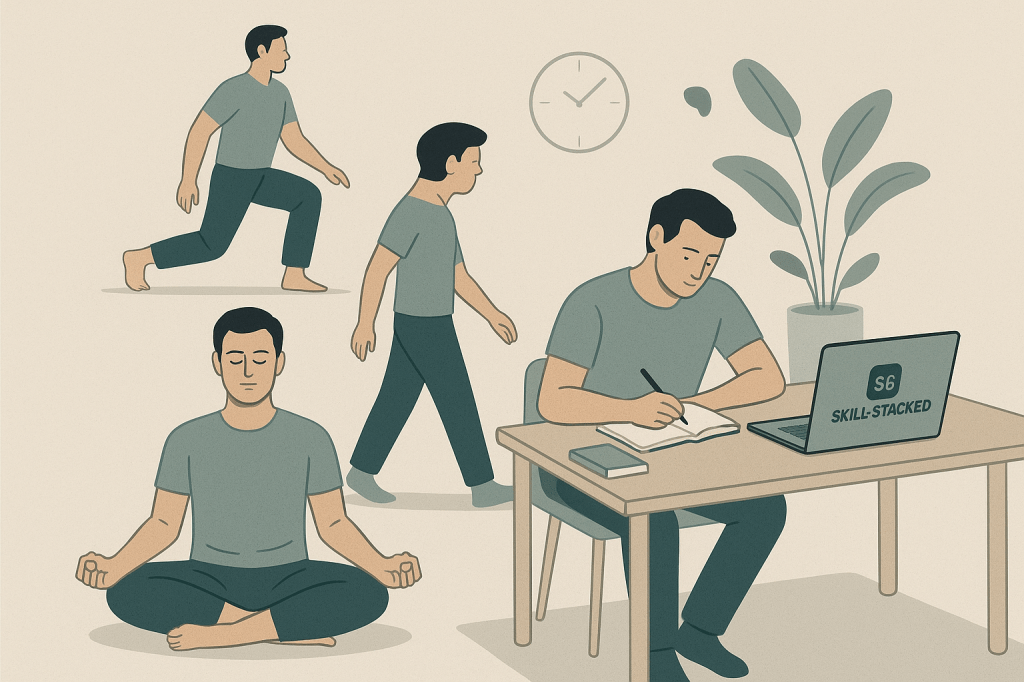
Tag: Mental Clarity

  • 🧠 Daily Kaizen 008: Spend 5 Minutes Doing Nothing (Literally Nothing)

    🧠 Daily Kaizen 008: Spend 5 Minutes Doing Nothing (Literally Nothing)

    You don’t need another productivity hack.

    You need a moment to be a human being again.

    🛑 The Kaizen

    Spend 5 minutes doing absolutely nothing.

    No scrolling.

    No reading.

    No music.

    No “guided meditation.”

    Just sit. Breathe. Exist.

    💡 Why It Works

    We live in a world addicted to inputs:

    📱 Screens

    📢 Noise

    🧠 Dopamine hits every 7 seconds

    But your brain isn’t built to run like that.

    It needs space. Stillness. Quiet.

    Doing nothing for 5 minutes per day gives your nervous system the message:

    “You’re safe. You can rest. You don’t have to perform right now.”

    From that stillness?

    Clarity returns.

    Creativity rises.

    Self-awareness sharpens.

    🧪 What the Science Says

    Mind-wandering mode (Default Mode Network) is where deep insight, memory consolidation, and creative problem-solving happen Brief moments of intentional stillness reduce cortisol and improve focus The “do-nothing” state activates parasympathetic regulation (rest-and-digest mode)

    ✅ How to Do It

    Set a timer for 5 minutes Sit somewhere still. No goals. No breathing techniques. Just… nothing. Let your mind go wherever it wants. Just don’t act on it.

    That’s it.

    This is the opposite of hustle culture.

    It’s where your real power starts to return.

    ⚙️ How It Stacks

    This habit connects to:

    Emotional regulation Mental clarity Stress reduction Intuition Creativity Long-term discipline (because you’re not always running on fumes)

    🧠 Final Thought

    You don’t need to fill every gap in your day.

    Sometimes the most productive thing you can do…

    is nothing at all.

  • Daily Kaizen #6 – Set Your Phone to Greyscale for the Day

    Daily Kaizen #6 – Set Your Phone to Greyscale for the Day

    Ever feel like your phone owns your brain?

    You pick it up to check one thing… and 40 minutes disappear.

    That’s not your fault — it’s by design.

    Phones are engineered to hijack your attention with colour. Bright reds, flashy blues, dopamine-pumping notifications — they’re visual sugar. Your brain lights up like a slot machine.

    But there’s a fix so simple, most people ignore it:

    Set your phone to greyscale.

    It instantly strips away the addictiveness of apps.

    Instagram looks boring. YouTube thumbnails lose their punch. TikTok feels lifeless. And suddenly… you don’t want to scroll anymore.

    Here’s Your Kaizen for Today:

    Go into your phone’s settings and turn on Greyscale mode for the next 24 hours.

    You’ll still be able to function — texts, calls, navigation — but the craving to scroll mindlessly? Gone.

    This is digital minimalism in one tap.

    Why it works:

    ✅ Reduces screen time without willpower

    ✅ Boosts focus for real-life tasks

    ✅ Makes social media less stimulating

    ✅ Reconnects you to your surroundings

    ✅ Calms your nervous system

    The truth is:

    Most of us are over-caffeinated, under-slept, and mentally hijacked by colour.

    This tiny change can give you back hours of clarity.

    Don’t underestimate it.

    Try it.

    Then notice what else becomes easier.

    This is Daily Kaizen. One tiny win at a time

  • 🧹 Daily Kaizen #5: Do One Chore You’ve Been Ignoring for 5+ Days

    🧹 Daily Kaizen #5: Do One Chore You’ve Been Ignoring for 5+ Days

    Small mess. Big drain.

    We all have one chore that’s been quietly haunting us.

    The overflowing laundry basket.

    The bin that needs emptying.

    That one dish that’s somehow avoided the sink all week.

    Here’s your Kaizen today:

    Do one chore you’ve been ignoring for 5+ days.

    Just one. The one that keeps whispering “later” every time you walk by.

    Because it’s not about being spotless — it’s about reclaiming your environment, one small victory at a time.

    🧠 Why this works:

    ✅ You clear the visual noise that subtly increases stress

    ✅ You disrupt the procrastination cycle (which bleeds into everything else)

    ✅ You earn a fast win that builds self-respect and momentum

    And when you complete it, something shifts:

    You move differently.

    Think more clearly.

    Feel more in control.

    🛠️ Try this:

    Set a 5-minute timer Pick the task you least want to do Don’t aim for perfection — just forward motion

    That one act becomes a ripple.

    And ripples become waves.

    ⚡ Final thought:

    If you can conquer a small thing you hate,

    you’re on your way to conquering bigger things that matter.

    So stop scrolling —

    and go dominate the dish, the drawer, or the damn laundry.

    You got this.

  • 🧠 Daily Kaizen #4 – Replace Your Morning Scroll With a 10-Minute Walk

    🧠 Daily Kaizen #4 – Replace Your Morning Scroll With a 10-Minute Walk

    Here’s a brutal truth:

    Most people wake up and immediately flood their brain with:

    📱 News they can’t control

    📱 People they’ll never meet

    📱 Stress they didn’t ask for

    All before they’ve even had a glass of water.

    We scroll ourselves into anxiety.

    And we wonder why we feel overwhelmed before 9am.

    💡 Here’s your Kaizen for today:

    Before you pick up your phone — step outside.

    Even if it’s raining. Even if it’s just around the block.

    Set a timer for 10 minutes. Walk with no music, no podcast, no agenda.

    Let your brain breathe.

    🧩 Why this works:

    It lowers cortisol (stress hormone) Increases dopamine and serotonin (mood + focus) Anchors you in the real world, not the digital one Builds a calm, clear foundation for your day

    Walking in natural light also resets your circadian rhythm, helping you sleep better at night.

    ✏️ The Hidden Benefit:

    You reclaim your agency.

    You tell your brain:

    “I run the show — not the algorithm.”

    That shift? That’s freedom.

    And it starts with a single walk.

    🛠️ Make it easier:

    Leave your shoes by the door Set a recurring reminder called “Walk > Scroll” Track your streak on a post-it note

    Start today. No excuses.

    Because the first 10 minutes of your day shape the next 10 hours.

    🔁 Follow @SkillStacked for a new Daily Kaizen every day.

    Simple mindset upgrades that compound.

    One win at a time.

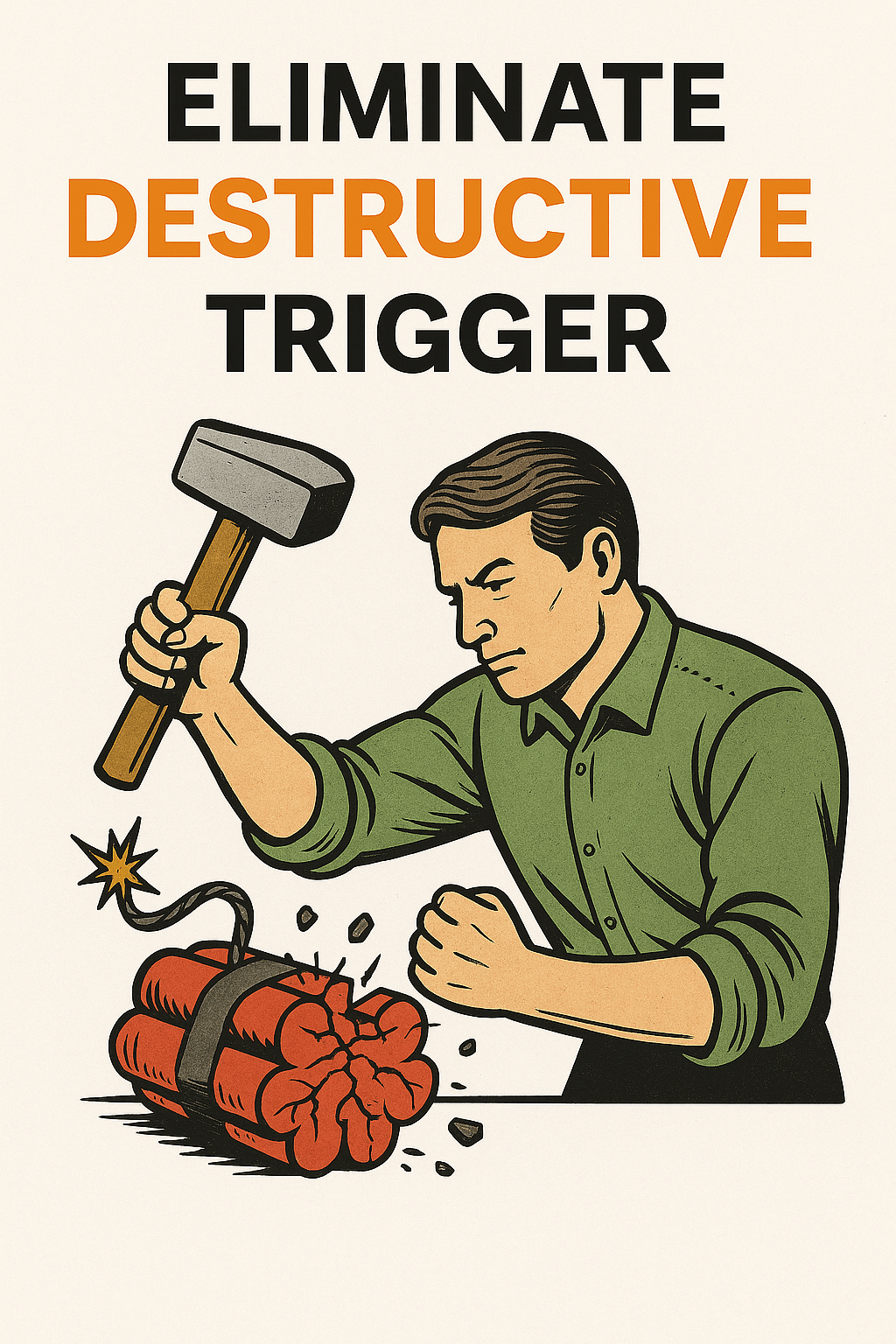
  • Eliminate One Destructive Trigger: Break Bad Habits and Upgrade Your Daily Routine

    Eliminate One Destructive Trigger: Break Bad Habits and Upgrade Your Daily Routine

    We all have that one invisible saboteur – a hidden cue or habit that derails our best intentions.  Perhaps it’s the ping of a phone notification that pulls you off task, a snack stored in plain sight that triggers mindless munching, or a late-night routine that leads to sleep loss.  These destructive triggers can quietly sabotage productivity, health goals, and personal growth, even when our motivation is high.  Imagine flipping the script: by identifying and eliminating just one key trigger, you could stop the chain reaction of self-sabotage and take control of your day.  In this post (Part 9 of our series on self-mastery), we’ll dive into the psychology and neuroscience of habit triggers, help you spot your own biggest trigger, and guide you through practical steps to remove or replace it.

    “Identify one destructive cue, remove it, and watch the dominoes of your day fall into place.”

    What Is a Destructive Trigger?

    Every habit starts with a cue – an environmental or emotional trigger that ignites a routine .  In psychology, this is often called the “cue” in the habit loop (cue–routine–reward). For example, seeing your smartphone buzz is the cue that launches a scrolling session, or feeling stressed at the office cues the routine of stress-snacking.  Over time, these cue–response loops become wired into the brain’s habit centers (the basal ganglia) .  The result is automatic behavior: you don’t even think before you reach for that cookie or flip open your phone – the trigger did it for you.

    A destructive trigger is simply one of those cues that consistently leads you off-track.  It’s a part of your environment or routine that sparks an unwanted behavior.  Importantly, removing or modifying this one trigger can prevent the unwanted habit from ever starting.  As cognitive neuroscience research shows, removing the environmental cue for a bad habit can “disrupt[]” the loop that keeps it going .  In other words, break the cue and you break the habit.

    A destructive trigger might be a time of day (e.g. 8 PM signals snack time), an emotion (like stress or boredom), a person, or even a physical object (like a cluttered desk or a pile of unfinished tasks on your calendar).  Whatever it is, it’s a predictable catalyst for self-sabotage.  It aligns closely with what experts call self-sabotage – behaviors that create problems in daily life and interfere with long-term goals .  For instance, Psychology Today notes that procrastination, comfort eating, or phone addiction can all be forms of self-sabotage triggered by specific cues .  Our job is to uncover which cue is your culprit, so you can stop it.

    The Brain and Habit Loops

    Understanding why triggers have such power means looking at your brain’s wiring. Neuroscience tells us that the brain uses habits to conserve energy – routine actions move from the deliberate prefrontal cortex down into the automatic basal ganglia .  Once this happens, a cue can flip the switch on a habitual routine without much conscious thought.  As one science news article summarizes: “habits happen when automatic responses outweigh our ability to consciously control them” .

    In practice, this means even a tiny cue (like your phone lighting up) can hijack your attention and automatically pull you into a familiar, often unwanted behavior .  For example, researchers have found that just hearing your phone buzz (even in your pocket) is enough to break your focus: “Unless your phone is fully silenced or off, it’s probably still distracting you…The familiar buzz buzz of a new notification is not as innocuous as it seems” .  That buzzing sound is literally a trigger that your brain has learned to respond to automatically, over and over again.

    The key insight from neuroscience is that good or bad, habits form from repeated cue–action pairings .  Repetition plus reward cements these associations.  But this also means that those same principles can be used in your favor.  You can replace an unwanted routine with a new one by linking it to the same cue or creating a new cue.  For example, if stress is your cue to snack, you might attach a different routine to that stress cue (like a short walk or a breathing exercise) that still delivers a reward (calm, or a sense of accomplishment) but is healthier . Over time, your brain will forge a new habit loop around the positive routine instead.

    Spot the Cue: Identifying Your Trigger

    First, let’s shine a light on that destructive trigger. This often takes conscious attention, because triggers act on autopilot.  Start by observing and documenting the problem behavior.  Keep a brief “trigger log” or journal. Whenever you catch yourself doing something unhelpful (procrastinating, over-snacking, doomscrolling, etc.), note what happened just before: the time, your location, your feelings, even who or what was around.  Psychology Today advises that “documenting and analyzing behavior is a key component of preventing self-sabotage” . In practice, this might mean writing down, “It’s 3 PM, I feel stressed and the first thing I did was open Instagram,” or “After dinner, saw chips on counter and snacked.” Over days or weeks, patterns will emerge.

    You can also apply a simple question when a negative habit occurs: “What was the trigger?”  Ask yourself what thought or emotion popped up just before the urge hit .  Often we find it was something like boredom, anxiety, or even a specific place or time.  For example, many people discover that Mondays in the office cue a sugary coffee or that arguing with family cues comfort eating.  By bringing this automatic link into awareness, you can catch the trigger in the act.

    Another check is to evaluate whether your behavior is aligned with your goals . If it’s not, the environment or cue around you may be to blame.  Psychology Today notes that misaligned behaviors that repeatedly undermine long-term goals are the hallmark of self-sabotage .  If you find yourself repeatedly veering off-course, look at what external or emotional cue led there.

    “Your environment is a radar; remove one blip, and your signals clear up.”

    Why That One Trigger Matters

    It might sound simple – one cue – but its effect can be huge.  Think of triggers as the first domino in a long chain.  When a trigger hits, it sets off a chain reaction of habits and justifications. For instance, one email notification at the wrong time can spiral into a day lost to distraction, or seeing a piece of cake can spark an entire evening of overeating.  Productivity and habit experts often point out that bad habits and procrastination usually start with an unnoticed trigger .

    Research confirms that even brief distractions have an outsize impact.  A Harvard Business Review article highlights how simply hearing your phone buzz—even if you don’t pick it up—harms your performance .  Similarly, studies on habit change emphasize that even one environmental cue can sustain a pattern of behavior .  That’s why zeroing in on one destructive trigger can feel so effective: when you remove that cue, the whole routine often fizzles out.

    Moreover, eliminating a trigger can help you break the cycle of self-sabotage.  Instead of using willpower alone, you starve the habit of its signal.  Scientists stress that removing triggers is often more reliable than fighting the urge after it appears .  In practice, that means you can stop unwanted habits before they even start.  Personal growth happens incrementally: by tackling just one habit loop at a time, you lay the foundation for bigger change .

    Remove or Replace: Transforming Your Trigger

    Once you’ve identified the culprit trigger, it’s time to eliminate or rewire it.  Here are evidence-based strategies:

    Modify Your Environment. Adjust your surroundings to cut off exposure to the trigger. As researchers note, “making desired behaviors easier to access encourages good habits, while removing cues that trigger unwanted behavior disrupts bad habits” .  For example, if junk food on the counter is your trigger, put it away or replace it with fruit. If your phone buzz distracts you, turn off notifications or place it in another room during focus times. Psychology Today even finds that changing locations can reset patterns: when people visit a new place or rearrange their space, their old habits “don’t stand a chance” thanks to different cues .

    A clutter-free, intentional workspace eliminates many visual cues that could derail focus.

    Use Implementation Intentions. This is a fancy term for “if-then” planning. Set a clear plan for what you’ll do when the trigger appears. For instance, “If I feel stressed in the afternoon, then I will take three deep breaths and stretch for two minutes.”  This kind of pre-planning has been shown to bridge the gap between intention and action by giving your brain an alternative response to an old cue . Replace the Routine. You’re not just ripping out a habit; you’re grafting in a new one. Decide on a positive action to follow the trigger instead. For example, if TV time at night cues snacking, vow to drink herbal tea instead whenever you start that show. Over time, your brain will form a new habit loop: the same cue (TV) now triggers tea and relaxation, not chips.  Western University research on habit change emphasizes this: instead of eliminating a behavior, “the routine can be replaced with a healthier alternative” so long as the new routine yields a satisfying reward .  Consistency is key: each time you honor the new routine, the old neural pathway for the bad habit weakens and the new one strengthens . Practice Mindfulness. Cultivate awareness of the trigger in the moment. Mindfulness slows down the automatic pilot. When you feel the cue or crave hit, pause and take three deep breaths. Ask yourself if you really want to follow the old routine or if there’s another choice. Science suggests that staying mindful and intentional can prevent you from defaulting into bad habits under stress .  Even a few seconds of breathing or noting your thoughts can break the automatic link. Align with Your Identity. Shift your mindset to reinforce the change. According to habit experts, lasting change often starts with believing you are the kind of person who doesn’t fall for that trigger .  Consciously tell yourself, “I am someone who doesn’t use my phone during dinner,” or “I’m the kind of person who chooses a short walk over a sugary snack.”  Each time you act in line with this identity, you gather small wins that prove it to yourself (for example, taking a walk three nights in a row) . Over time, your brain starts to embody that identity and the new behavior becomes second nature.

    These steps combine to break the trigger–habit loop. First, you starve the trigger of its power (by hiding or avoiding it). Then you rewire the loop with a new, healthy response and reward.  Remember: change is most achievable gradually, one small step at a time . Trying to remove every trigger at once can be overwhelming, so focus on the single most destructive one.  Once you eliminate that cue, celebrate the progress and notice how the rest of your day flows more smoothly.

    Action Steps: Your Daily Routine Upgrade

    Ready to put this into practice? Follow these action steps to eliminate your top trigger:

    Identify and Log: Keep a simple log for a few days. Note each time you slip or procrastinate. Write down the preceding cue (time, place, feeling) and your response. This will reveal your key trigger(s) . Analyze the Impact: Ask yourself, “How does this cue derail me?” and “How does the routine serve me (or not)?” Recognize the cycle of self-sabotage it creates . Alter Your Environment: Remove or hide the cue. If possible, take the object or context off the table entirely. (E.g., block distracting websites, put the candy dish out of sight, switch up your workspace .) Plan an Alternative: Decide on a healthier habit to follow the cue. Write an “If trigger, then do X” statement. Practice it until it feels natural . Leverage Identity: Frame the change in terms of who you want to become. Use affirmations or small identity-based goals (e.g. “I’m the type of person who …” ). Each time you act consistently, mentally tick it as a win. Reflect and Reward: Notice the difference when the trigger strikes and you make a new choice. Celebrate any success, no matter how small. This reward reinforces the new habit.

    By taking control of one destructive trigger, you upgrade your daily routine and break free from that nagging cycle of failure.  Over time, your progress compounds.  Eliminate the smallest trigger, and you might find yourself accomplishing tasks you once resisted, sleeping better, or finally sticking to a workout plan. This is the power of habit change: small shifts, big results.

    Actionable Takeaway: Commit right now to tackle one trigger. Carry a notebook or use a phone app for 3 days and track when your bad habit happens and why. Identify the cue. Then remove or change that cue in your environment (move it, hide it, silence it) and plan a positive alternative.  Use your identity (“I am someone who…”) to reinforce this change.  You will be amazed how one smart, research-backed tweak can turn your self-sabotaging patterns into empowerment for personal growth
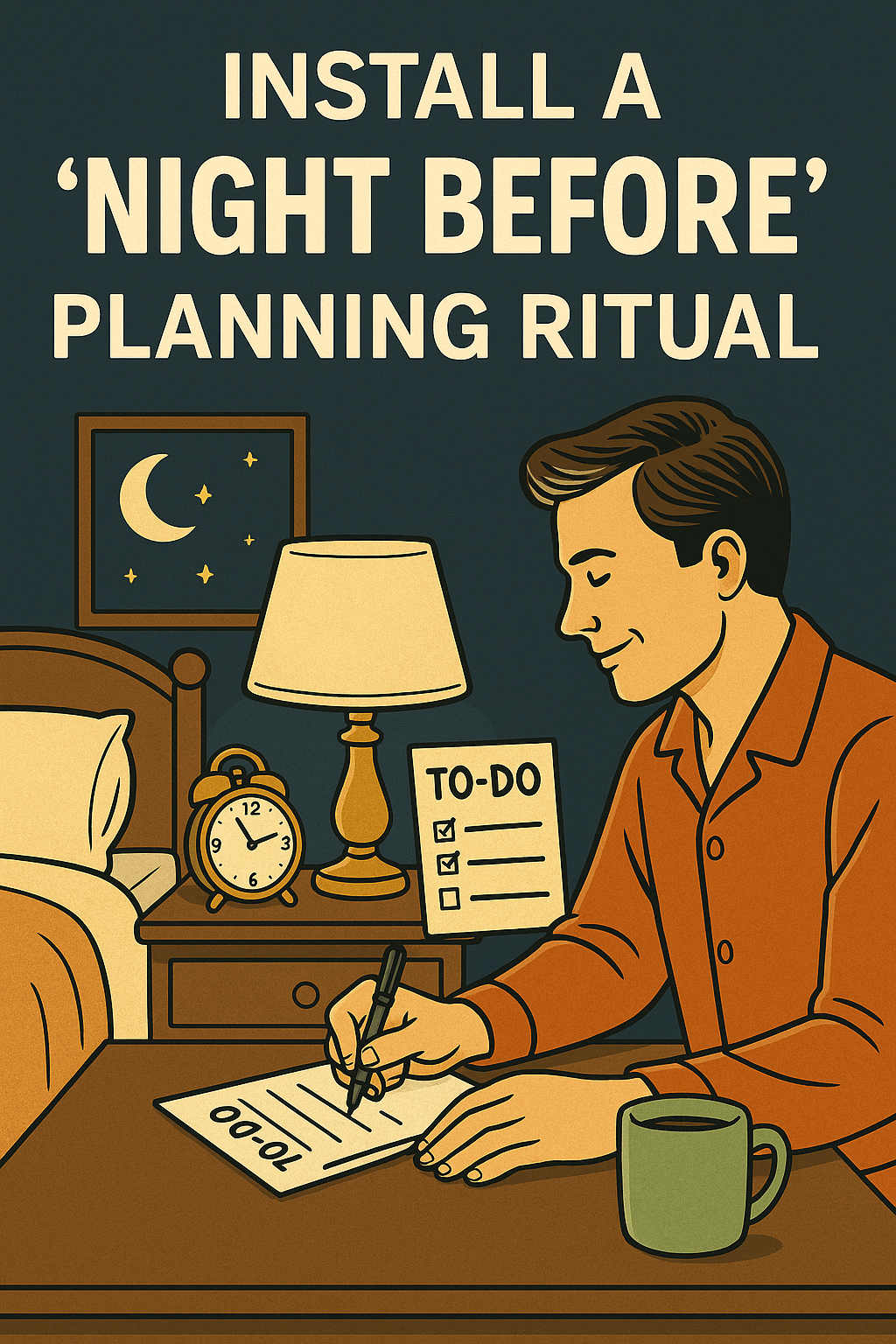
  • Install a Night-Before Planning Ritual

    Install a Night-Before Planning Ritual

    End your day with purpose by planning tomorrow tonight. A simple evening routine of reflecting on today’s progress and mapping out tasks for tomorrow can calm your mind, sharpen your focus, and set you up for a productive morning. Scientific studies show that writing a detailed to-do list at bedtime helps “offload” worries and speeds sleep onset . By making this a habit, you save willpower and reduce decision fatigue – instead of wasting precious morning energy deciding what to do, you wake up with a clear roadmap .

    Benefits of a Nightly Planning Ritual

    Reduced decision fatigue.  When you plan ahead, you eliminate many small morning choices (like what to wear or what task to tackle first). Decision fatigue – a state where mental energy for making choices runs low – builds up each day .  Productivity experts note that by planning the night before you “reduce decision fatigue, and preserve your willpower for your deepest most meaningful work.” . In short, having a plan means your brain isn’t drained by easy decisions, leaving more energy for what matters. Lower stress and anxiety. Jotting down unfinished tasks and worries before bed lets you offload them from your mind. Research found that participants who wrote a to-do list before sleep fell asleep about 9 minutes faster than those who journaled about completed tasks . Writing out tomorrow’s tasks (rather than mentally rehearsing them) reduces “cognitive arousal” and racing thoughts . Doctors advise “don’t take your problems to bed” – instead, schedule a worry-free planning session earlier in the evening . This practice clears your head and can improve sleep quality. Better sleep quality. A consistent bedtime routine signals to your brain that it’s time to wind down. Studies show that structured evening habits – especially a soothing ritual before sleep – are linked to better sleep habits and family well-being .  The sleep study above also found that the more specifically participants wrote their to-do lists, the faster they fell asleep . In other words, the act of detailed planning helps your brain let go of work concerns and drift off more easily. Morning momentum and clarity.  Waking up knowing exactly what to do first creates immediate focus and momentum. As one productivity writer notes, planning your day the night before means you’ll “get more done in less time” and experience “more flow” in the morning . By reviewing your priorities tonight, you remove guesswork from tomorrow’s morning – you know which tasks are top priority, so you can dive in confidently. A clear game plan built the night before means you start each day already moving forward.

    How to Build Your Nightly Planning Ritual

    Reflect on Today.  Spend a few minutes reviewing what you accomplished and what’s pending. Check off completed tasks and celebrate small wins. Noting down what went well (and what didn’t) helps you learn and ensures nothing important slips through the cracks. This reflection closes out the day and makes it easier to move on. Set Tomorrow’s Priorities.  Write a concise to-do list or pick the 3–5 most important things for tomorrow.  The classic Ivy Lee method suggests listing your top tasks before bed and tackling them first thing. Be specific: the sleep research found that detailed to-do lists offload more mental stress . Focus on high-impact goals that align with your bigger objectives. Jotting down these items (on paper, in a planner, or an app) gives your mind permission to rest, knowing you won’t forget them. Prepare Your Space.  Lay out anything you’ll need in the morning: clothes, tools, documents, or even a pre-set coffee mug.  For example, one schedule recommends “prepare for the next day: pack your stuff, choose your outfit” before bed .  Setting out tomorrow’s outfit on the bed (and packing your bag or work supplies) eliminates a key morning decision.  Another habit-stack is setting out your coffee mug or brewing supplies – James Clear points out a simple nighttime stack: after cleaning up, set out your coffee mug for tomorrow morning . These small cues make your morning routine run effortlessly. Wind Down Mindfully.  Turn off work and screens at least 30 minutes before bed. Do a relaxing activity like reading, gentle stretching, or deep breathing. A calming ritual signals it’s time to sleep .  You might also write a brief journal entry – either a gratitude log or a “worry list” – to further clear your mind (many therapists use worry lists to calm anxious thoughts). By separating your planning from active problem-solving, you give your brain the cue that the workday is done and it’s time to rest. Keep a Consistent Schedule.  Try to do this planning ritual at the same time each evening. Habits form best when they’re tied to a routine . For example, plan right after dinner or immediately after your evening shower. Over time, this consistency will make evening planning second nature. The more automatic it is, the easier it is to maintain – soon, writing tomorrow’s list will feel like a normal part of winding down.

    Examples of Effective Nightly Rituals

    One powerful nightly habit is to lay out tomorrow’s essentials before bed.  For example, prepare your outfit and work bag ahead of time – a schedule note advises “prepare for the next day: pack your stuff, choose your outfit” before sleep .  Even small cues help: setting out your coffee mug and ingredients can streamline your morning (as one habit example notes, “After I wipe down the counter, I will set out my coffee mug for tomorrow morning.” ).

    Review Big Goals and Wins.  Take 1–2 minutes to look over your long-term goals or project milestones. Celebrate any progress today and adjust tomorrow’s tasks if needed. This keeps your nightly plan aligned with the big picture. Write a To-Do List.  Handwrite or type the top tasks for tomorrow. Be clear and action-oriented. (Remember: researchers found that a detailed pre-sleep to-do list can actually help you fall asleep faster , so don’t skimp on specifics!) Check Tomorrow’s Calendar.  Scan your schedule for upcoming meetings or deadlines. Confirm any appointments and note what preparations you need. This ensures you wake up mentally prepared for events, not scrambling. Lay Out Clothes or Gear.  Decide what you’ll wear and put it out, or pack your gym/laptop bag. This removes a “morning decision” and can save precious time. Prep Breakfast or Lunch.  If you bring lunch or make morning coffee at home, prepare the night before. Fill the coffee maker, pack ingredients, or set out dishes. These tiny steps can make your morning smoother. Write a Worry List.  Quickly jot down any nagging worries or tasks that are on your mind. Just writing them down can quiet anxious thoughts (a Cognitive Behavioral Therapy technique ), making it easier to relax into sleep. Prep Your Technology.  Charge your phone and laptop so they’re ready. Set your phone to Do Not Disturb or put it away from the bed. Fewer notifications in the morning means a calmer start.

    Each of these simple rituals takes only a few minutes but can have a big payoff. Over time, they add up into a powerful habit loop that makes every morning easier. As one productivity coach puts it, giving yourself a framework for the next day “means there’s no guesswork as to what you’ll be doing when you sit down to work in the morning.”

    Conclusion: Try It Tonight

    Installing a night-before planning ritual is a small step that can transform your days. Imagine waking up calm and confident, with all your priorities lined up. Tonight, before bed, give it a try: spend five minutes jotting down your top goals for tomorrow and set out one item you’ll need (like your outfit or coffee mug). Notice how this clears your mind and jumpstarts your productivity. You might be surprised by how much more focused and energized you feel in the morning. Experiment with this ritual tonight and see the difference tomorrow .

    Give yourself one night to start – your tomorrow will thank you.

  • Build a Morning Routine That Works on Autopilot

    Build a Morning Routine That Works on Autopilot

    Starting your day with structure and clarity sets you up for success.  A consistent morning routine eliminates decision overload and jumpstarts your energy, focus and positivity.  As productivity experts note, tiny “pre-game” habits – like drinking a glass of water or opening the blinds – cue your brain that the day has begun .  By anchoring new habits to stable cues (a strategy James Clear calls habit stacking ), you’ll build a morning routine that feels automatic and effortless.  In this post we’ll break down six core morning habits – from waking at the same time every day to planning your day’s goals – explaining why each works and how to implement it for maximum impact.

    1. Wake Up at the Same Time Every Day

    A reliable wake-up time is the cornerstone of any successful morning routine.  When you rise at (nearly) the same hour each day, you synchronize your body’s circadian rhythm – the internal clock that regulates sleep, hormone release and metabolism .  This regularity makes it easier to fall asleep at night and feel alert in the morning.  For example, sleep experts at Michigan Medicine note that waking up at the same time “anchors” the circadian clock and can improve sleep quality and daytime energy .  To implement this habit, set a consistent alarm (yes, even on weekends!) and resist the snooze button.  Go to bed at a reasonable hour so you can wake up refreshed.  Opening the curtains or getting morning sunlight right away also helps signal your brain that it’s time to be awake .  Over time, your body will adapt and this consistent wake-up cue will kick on autopilot alertness each morning.

    2. Rehydrate and Fuel Your Body

    A reliable wake-up time is the cornerstone of any successful morning routine.  When you rise at (nearly) the same hour each day, you synchronize your body’s circadian rhythm – the internal clock that regulates sleep, hormone release and metabolism .  This regularity makes it easier to fall asleep at night and feel alert in the morning.  For example, sleep experts at Michigan Medicine note that waking up at the same time “anchors” the circadian clock and can improve sleep quality and daytime energy .  To implement this habit, set a consistent alarm (yes, even on weekends!) and resist the snooze button.  Go to bed at a reasonable hour so you can wake up refreshed.  Opening the curtains or getting morning sunlight right away also helps signal your brain that it’s time to be awake .  Over time, your body will adapt and this consistent wake-up cue will kick on autopilot alertness each morning.

    2. Rehydrate and Fuel Your Body

    Get your blood flowing to really wake up!  Even a brief bout of exercise first thing – whether it’s stretching, yoga, walking or a quick home workout – releases energy-boosting hormones.  Regular exercise “is excellent for boosting energy and reducing fatigue,” one medical source explains, because it pumps oxygen and nutrients to your heart, lungs and muscles .  Morning movement also triggers feel-good neurotransmitters: during exercise your brain produces extra endorphins, natural “happy” chemicals that reduce stress and boost mood .  A 2019 study even found that morning workouts sharpen attention and decision-making for hours afterward .  To implement: start small (even 5–10 minutes of stretching or a brisk walk around the block).  Build consistency first, then gradually add a few more minutes or new moves.  Lay out your workout clothes the night before (habit stacking: for example, “After I brush my teeth, I will put on my sneakers” ) to make moving in the morning automatic.  Physical movement in the AM not only wakes your body but also builds confidence and momentum that carries through the day.

    4. Mindful Practice (Meditation, Journaling or Breathing)

    Spend a few quiet minutes grounding yourself with mindfulness.  This could be a short meditation, deep breathing, or journaling about your priorities and feelings.  Science shows that morning mindfulness has powerful benefits: it calms the mind, reduces anxiety and sets a positive tone.  As one expert writes, practicing meditation in the morning has “beneficial effects on your brain, heart, immune system, and hormones,” which last throughout the day and improve focus, attitude, decision-making and energy .  Journaling can similarly clear mental clutter.  Writing down thoughts or to-dos in a journal helps organize your mind: people who journal often report feeling more relaxed and prepared, with improved productivity .  To implement, find a quiet spot (even your kitchen table or bedside) and spend just 5–10 minutes.  Sit comfortably, close your eyes and focus on your breath, or write three things you’re grateful for.  Many people find “simple affirmations can create a positive mindset” and reduce stress .  Apps like Headspace or Calm can guide a quick meditation, or simply jot a few bullet points in a notebook.  This mindful pause acts like a mental “reset button,” helping you approach the day with clarity and calm.

    5. Cultivate Gratitude and Positivity

    Starting the day with gratitude shifts your focus to the positive.  Take a moment to note two or three things you’re grateful for (your health, family, a new opportunity, etc.) or repeat a positive affirmation.  Research shows that gratitude practices can significantly reduce stress and anxiety while increasing happiness and well-being .  You don’t need fancy words – even thinking “I’m thankful to see this new day” can prime your brain for optimism.  For example, you might write “I appreciate my health” or “I look forward to today’s challenges” on your journal page.  By consciously adopting a grateful mindset in the morning, you set an uplifting tone that colors your thoughts and actions all day.

    6. Plan Your Day’s Top Priorities

    Finally, take a few minutes to outline your most important tasks.  Writing a brief to-do list or identifying two “must-do” goals for the day puts structure around your intentions.  As one productivity source notes, “Taking a few minutes to plan your day in the morning can set the tone for productivity.”  Jotting down tasks or appointments forces you to prioritize by importance, so you’re not scrambling later .  This doesn’t have to be a long list – even listing 3–5 items in order of priority is enough.  Many habit experts recommend habit-stacking this with your journaling or breakfast (for example, “After I make my coffee, I will write down my top three tasks”).  That way, planning becomes a natural part of the sequence.  Having a written plan clears mental space (no more trying to remember everything) and keeps you accountable.  When unexpected events arise, you can confidently adjust because you already know what truly matters for the day ahead .

    Pro Tip: Automate via Habit Stacking

    The ultimate key to an effortless routine is linking (or “stacking”) each step together.  As James Clear teaches in Atomic Habits, tie a new habit to an existing one so it triggers automatically .  For instance, “After I drink my morning water, I will do my stretches,” or “After I meditate, I will immediately review today’s tasks.”  Start with tiny actions – even just one minute – and grow gradually.  Each completed habit strengthens neural connections, making the routine easier and more ingrained over time .  Finally, prepare the night before: set out your exercise gear, journal and a glass of water.  By removing friction and using clear cues, your morning ritual will run on autopilot, leaving you energized, focused and ready to own your day.  Good morning!

    Sources: Science and expert insights on morning habits and circadian rhythm .  (Consult cited links for detailed studies and advice.)

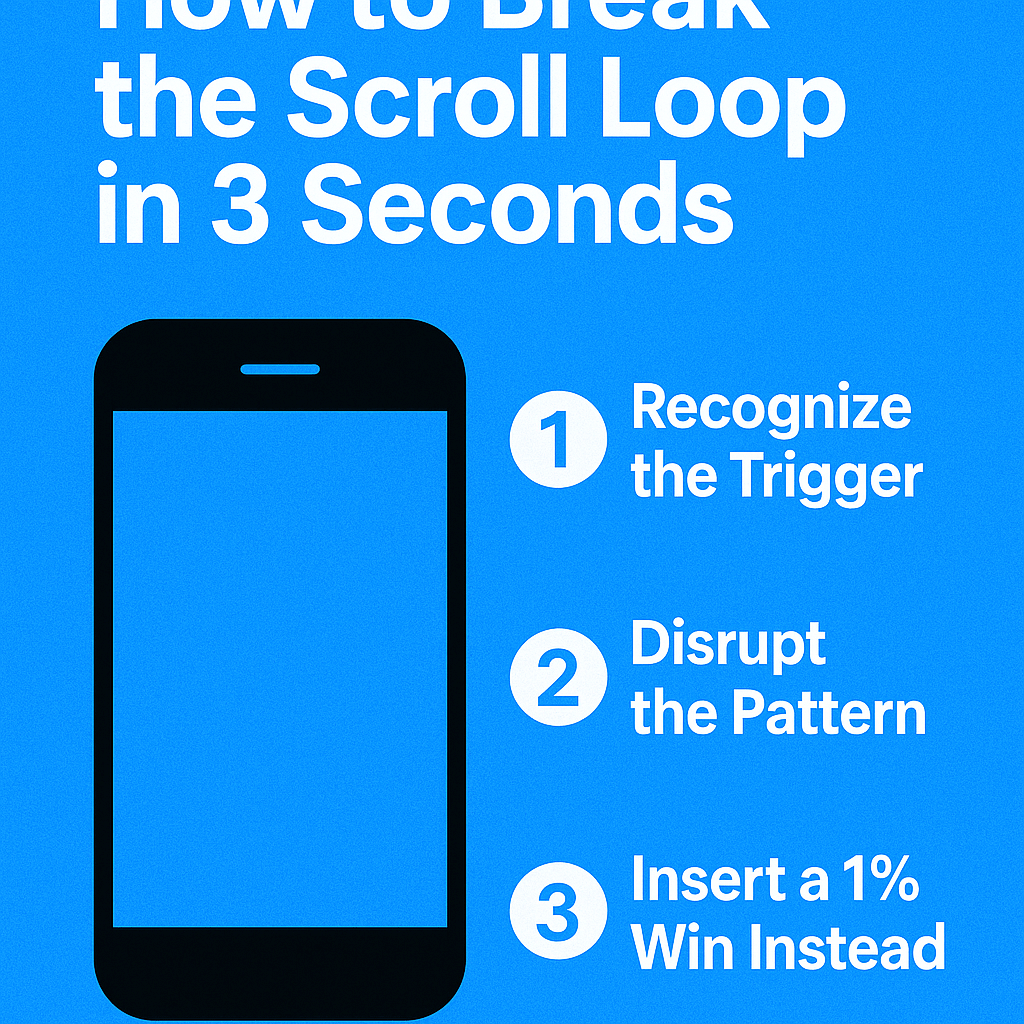
  • 🧠 Skill of the Day: How to Break the Scroll Loop in 3 Seconds

    🧠 Skill of the Day: How to Break the Scroll Loop in 3 Seconds

    Let’s be honest — you didn’t mean to open that app.

    You just did. Again.

    The scroll loop is a mental trap:

    Open phone Tap app without thinking Lose 5–50 minutes Exit app… and repeat later

    This isn’t a willpower problem.

    It’s a cue–reward loop hijacking your brain.

    🚨 Break the Loop in 3 Seconds:

    Recognize the Trigger: Pause and say out loud (or in your head): → “I didn’t choose this.” Disrupt the Pattern: Physically lock the phone, flip it face down, and stand up. Insert a 1% Win Instead: One deep breath One glass of water One stretch One micro-task you’d actually be proud of

    🛠 Why This Works:

    Interrupting a habit loop requires awareness + physical break Replacing it with a micro-win reclaims control and momentum 3 seconds of action prevents 30 minutes of regret

    🔁 Repeat Until Automatic:

    Each time you break the loop, your brain rewires.

    Each scroll you avoid, your discipline compounds.

    You don’t need to quit your phone.

    You just need to stop letting it lead.

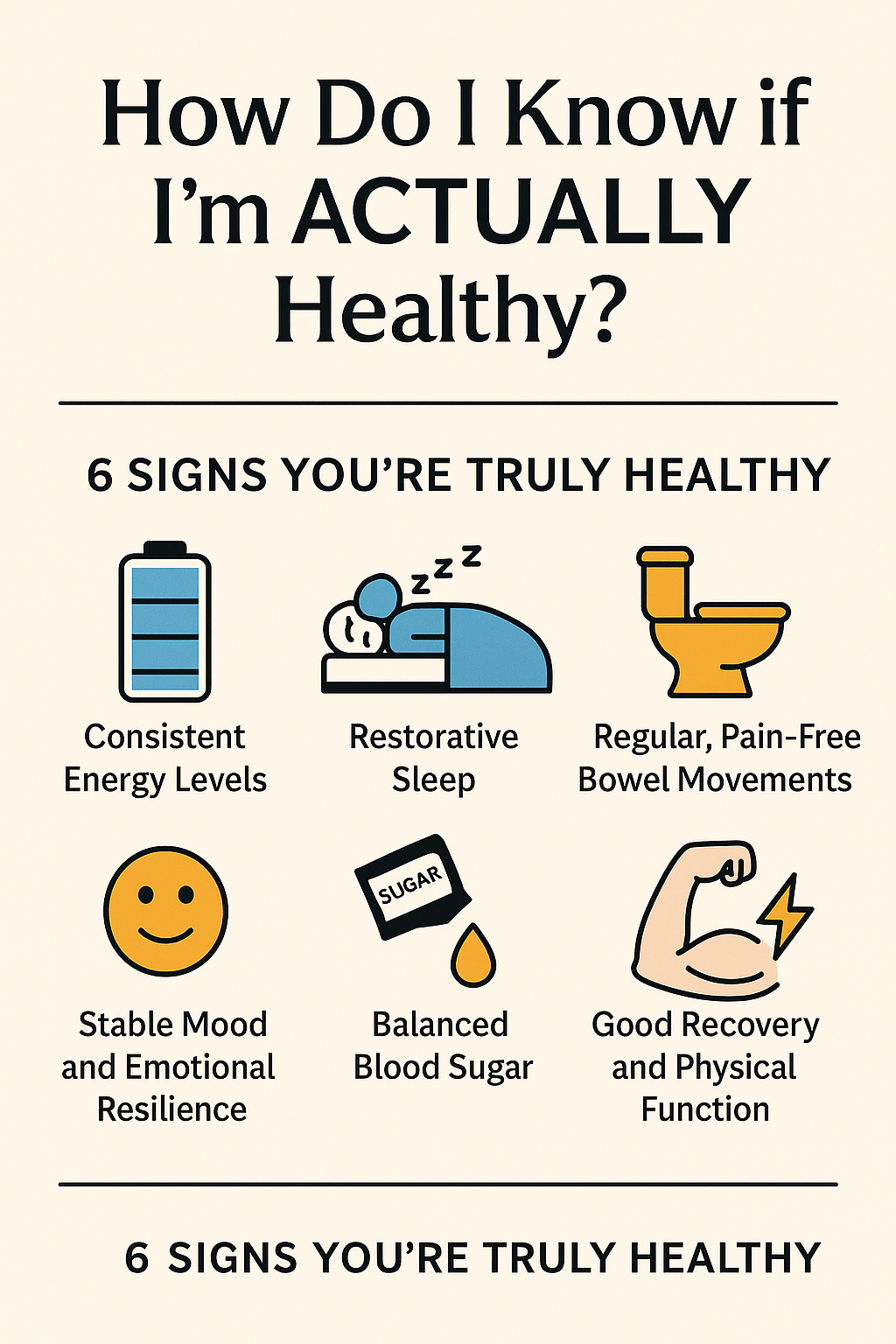
  • FAQ of the Day: How Do I Know If I’m Actually Healthy?

    FAQ of the Day: How Do I Know If I’m Actually Healthy?

    There’s a big difference between looking healthy and being healthy. Six-pack abs don’t guarantee metabolic health. Running 10K doesn’t mean you’re sleeping enough. So what actually counts?

    ✅ 6 Signs You’re Truly Healthy

    Consistent Energy Levels You wake up refreshed and maintain steady energy throughout the day (without needing caffeine to survive). Restorative Sleep You fall asleep quickly, stay asleep, and wake up without feeling groggy. Regular, Pain-Free Bowel Movements Daily, easy-to-pass stools are a clear sign your gut—and your diet—are in a good place. Stable Mood and Emotional Resilience You don’t feel like you’re on a constant emotional rollercoaster. You can handle stress without snapping or shutting down. Balanced Blood Sugar No extreme hunger, dizziness, or “hangry” crashes. You feel satisfied after meals and don’t obsess over snacks. Good Recovery and Physical Function You bounce back after workouts. Your joints feel good. You move well and don’t constantly ache.

    👀 Bonus Insight:

    Just because you’re not sick doesn’t mean you’re healthy.

    Symptoms like bloating, brain fog, and poor concentration are early whispers your body’s off track. Listen to them.

    🚀 How to Audit Yourself:

    Track energy levels and sleep quality for a week Use a basic food and mood journal Notice how long it takes to recover after a workout Reflect: do you feel good most days?

    If you’re falling short in one or more of these areas—it’s not a crisis, it’s a signal. Health is a dial, not a switch.

  • Transform Your Life with 5-Minute Habits

    Transform Your Life with 5-Minute Habits

    Feeling too busy to stick with healthy habits? You’re not alone. The good news is that big results can come from tiny changes. In fact, researchers and habit experts agree: consistent small habits beat occasional big efforts mindful.org. As James Clear (author of Atomic Habits) advises, scale new routines down so they take just a few minutes jamesclear.com. These 5-minute habits below transformed my fitness, mindset, and productivity – and they can do the same for you. They’re quick, science-backed, and realistic for even the busiest schedule.

    1. 5-Minute Morning Workout (Move to Boost Energy)

    Kick-start your day with just five minutes of movement. It might not sound like much, but short daily workouts can deliver surprising benefits. One study found that just 5 minutes of daily strength exercises improved participants’ muscle strength, endurance, and flexibility, and even gave a mental health boost sciencealert.comsciencealert.com. Over 80% of people in the study kept the habit going after 4 weeks – a testament to how sustainable mini-workouts can besciencealert.com.

    Real-life example: try a quick bodyweight circuit each morning. For instance, do 10 squats, 10 push-ups, and 10 jumping jacks, repeating as many rounds as you can in five minutes. Or follow a short “5-minute morning HIIT” video. The key is raising your heart rate. Even a brief burst of moderate-to-vigorous exercise can sharpen your brain for hours afterward – studies show cognitive functions like memory and focus improve with as little as five minutes of aerobic activityneurosciencenews.comneurosciencenews.com. Over time, these micro-workouts add up. They build strength and stamina, and often inspire you to be more active later. Remember, consistency matters more than length. A quick workout you actually do every day beats an hour-long session you never find time for.

    2. 5-Minute Mindfulness Meditation (Mental Clarity on the Go)

    When schedules are packed, meditation might feel impossible to fit in – but just five minutes a day can make a real difference. Research indicates that frequency is more important than duration for mindfulness benefits mindful.org. In fact, a meditation teacher in one study noted that “if you meditate five minutes a day, every day, it’s a lot better than meditating half an hour once a week.” mindful.org Short daily sessions can reduce stress and improve your mood and attention span. One experiment with busy students found those who did a brief mindfulness practice each day reported lower stress and better mental health compared to a control group mindful.org.

    How to do it? Find a comfortable spot (sitting up in bed or even in your parked car before work) and focus on your breath for five minutes. You can use a guided meditation app set to 5 minutes, or simply take slow breaths and notice sensations. Some days you might only manage 2 or 3 minutes – that’s okay. The goal is to show up daily. These mini “mindfulness breaks” train your brain to pause and center itself. Over time, you may find you’re less reactive to stress and more focused in your work. Think of it as a mental reset button you can press anytime. Consistency will compound your results, much like physical exercise: tiny daily calm moments build an overall calmer, clearer mind.

    3. 5-Minute Gratitude Journaling (Boost Your Mood and Mindset)

    Taking a few minutes to write in a journal can dramatically improve your mindset. I was skeptical at first – what can you accomplish in 5 minutes? – but it turns out even a short gratitude journal habit packs a punch. Positive psychology research shows that a 5-minute daily gratitude journal can boost long-term well-being by over 10% tetonscience.org. (For context, that’s about the same impact as doubling your income on your happiness!) Journaling helps because it forces a moment of reflection and positive focus, shifting your mind away from stresses. In one study, people who journaled about their thoughts and goals each day saw a 23% drop in stress levels and improved decision-making after two months horizonpointconsulting.com.

    To start, pick a time – morning or evening – and jot down a few prompts. Write 3 things you’re grateful for (big or small), or list a couple of wins from the day. You could also do a quick “brain dump” of anything weighing on your mind, to gain clarity. Keep it simple: bullet points or short sentences are fine. The power is in doing it regularly, not in writing an essay. For example, each night I spend five minutes writing highlights of the day and one thing I learned. This little ritual helps me go to bed on a positive note, rather than ruminating over what went wrong. Over weeks, you’ll likely notice you feel more optimistic and resilient. Your 5-minute journal is a tiny investment that yields a calmer, happier you.

    4. 5-Minute Daily Planning (Prioritize Like a Pro)

    Ever start your day feeling overwhelmed by everything on your plate? Taking five minutes to plan can change that. Whether it’s first thing in the morning or the night before, a brief planning session brings laser focus to your day. Productivity coaches often suggest writing down your top 3 priorities for tomorrow as the last task of your workday. Why? Because planning ahead reduces decision fatigue and conserves your willpower for what matters medium.com. If you already know your game plan, you won’t waste mental energy figuring out where to start each day. As one productivity expert put it, if you “plan your days the night before, you’ll not only get more done in less time, you’ll also experience more flow.” medium.commedium.com

    A simple way to implement this habit is to use a template like the Skill-Stacked Daily Blueprint. Each evening, I spend 5 minutes with my Daily Blueprint sheet: I list the top tasks or goals for the next day, any appointments, and one healthy habit (like “morning workout”) I’ll do. This quick ritual gives me a head start. When a new day begins, I can jump right into my most important work instead of reacting to random emails or feeling unsure what to do first. You can also do it in the morning if that suits you better – write down a quick agenda while having your coffee. The point is to clarify your priorities. Those few minutes of planning will pay back an hour of extra productivity during the day. Busy people swear by this habit because it creates structure amid chaos. Try it for a week and see how much more directed and in control you feel.

    5. 5-Minute Movement Breaks (Refresh Your Body and Brain)

    Sitting all day wreaks havoc on both our bodies and focus. But the antidote doesn’t have to be hour-long gym sessions – short movement breaks sprinkled through your day can dramatically improve your health and concentration. Science is now telling us that even a 5-minute walk every half-hour can offset many of the negative effects of prolonged sitting health.harvard.edu. In one study, participants who took these mini walking breaks had 58% lower blood sugar spikes and reduced blood pressure compared to those who sat all day health.harvard.edu. Fatigue went down and mood went up too with frequent short walks health.harvard.edu. In other words, moving briefly but regularly helps keep your body energized and your brain sharp.

    You can adapt this idea to your routine. If you’re working from home, try doing a quick 5-minute stretch or walk around the block between Zoom meetings. In an office, take the long route to the restroom or do a lap of the floor. Even standing up to stretch your arms, neck, and back for a few minutes is worthwhile. I set a timer on my computer to remind me to “get up and move” every hour. Those mini-breaks are great for clearing mental fog. Often when I return to my desk, I find I can concentrate better on the next task. Over time, you’ll also notice less stiffness and more daily steps adding up. The key is making it a habit: tie it to something (for example, every time you refill your water, do a 5-minute walk). By treating movement as a non-negotiable part of your schedule, you’ll feel more alert and lively each day.

    Conclusion: Small Habits, Big Results

    Each of these habits takes only a few minutes, but together they’ve had a massive impact on my fitness and focus. The secret is consistency. Five minutes today doesn’t revolutionize your life – but five minutes every day? That builds momentum. These routines are so quick and easy that it’s hard to come up with an excuse not to do them. And on tough days when motivation is low, remember BJ Fogg’s advice: make it even easier. Do one minute, or one push-up, if that’s all you can – it still counts. What matters is showing up.

    Give these 5-minute habits a try. Start with one that speaks to you, and build from there. In a few weeks, you might be amazed at the changes in your energy, mood, and productivity. Tiny habits truly compound into big improvements over time, turning into an upward spiral of wellness and success.

    Ready to take the next step? To help you stay on track, we’ve created a handy tool – the Skill-Stacked Daily Blueprint. It’s a free, printable template for your 5-minute planning ritual (with space for your habits too!). [Download your free Daily Blueprint here] and start stacking those small wins each day. You’ve got this! 🚀