Tag: Mindset

  • The System I Wish I Had Years Ago

    The System I Wish I Had Years Ago

    Most self-improvement advice sounds great in theory.
    But when it comes time to apply it consistently, especially when life gets hard, it falls apart.

    Motivation fades.
    Discipline cracks.
    We revert back to default.

    I’ve spent the last year reverse-engineering why.

    The truth is:
    You don’t need more “inspiration.”
    You need a system that meets you where you are—and builds you brick by brick.

    That’s why I’m creating the 100-Step Personal Development System,
    A step-by-step framework to help you:

    • Build real discipline
    • Level up in all key areas of life
    • Stop relying on motivation
    • Become someone you actually respect

    It’s not finished yet.
    But it’s getting close.
    And when it drops, you’ll have the full blueprint.

    Until then, I’ll be dropping sneak peeks here.
    Mini-lessons. Daily wins. Foundational principles.

    Watch this space.

  • The Four Agreements by Don Miguel Ruiz: 4 Rules That Will Change Your Life

    The Four Agreements by Don Miguel Ruiz: 4 Rules That Will Change Your Life

    What if your life could be transformed by just four simple agreements?

    Don Miguel Ruiz’s The Four Agreements offers ancient Toltec wisdom in a modern package — and the results are radical. These aren’t fluffy affirmations. They are practical commitments to self-liberation.

    By breaking the mental “agreements” we’ve unconsciously made with fear, guilt, and conditioning, we unlock freedom, peace, and personal power.

    Let’s break down each of the Four Agreements and how to live them today.

    1️⃣ Be Impeccable with Your Word

    Your words create your world.

    Ruiz says this is the most important agreement. To be “impeccable” means to use your word with integrity — no gossip, no self-hate, no lies (especially to yourself). Speak truth. Speak life.

    🔁 Takeaway:

    Speak to yourself like someone you deeply love.

    Before speaking, ask: Is this kind, true, and necessary?

    2️⃣ Don’t Take Anything Personally

    Nothing others do is because of you — it’s a projection of their own world.

    When you take things personally, you hand your power to someone else’s emotional state. Ruiz says: “Even when a situation seems so personal, even if others insult you directly, it has nothing to do with you.”

    🔁 Takeaway:

    Someone cut you off, criticized your work, ignored your text?

    Say it to yourself: “That’s about them, not me.”

    3️⃣ Don’t Make Assumptions

    Assumptions create drama. Clarity creates peace.

    We assume people understand us. We assume we know their intentions. And then we get angry over things that aren’t even real. Ruiz urges: Ask. Clarify. Communicate.

    🔁 Takeaway:

    If something feels off, don’t spiral — ask.

    Just say: “Can I clarify something?”

    It saves relationships.

    4️⃣ Always Do Your Best

    Not perfection. Not overachievement. Just your best — and it changes daily.

    This agreement reminds us that our “best” will look different when we’re rested, stressed, or learning. But if you consistently give your honest best effort, you’ll avoid regret, shame, and self-judgment.

    🔁 Takeaway:

    Whatever you do today — training, working, resting — do it fully, with intention. That’s your best.

    💡 1% Better Challenge:

    Choose one agreement you’ve broken lately.

    Recommit to it just for today.

    Maybe it’s pausing to clarify (no assumptions) or saying something kind to yourself (impeccable word).

    One small act of integrity shifts everything.

  • Use Identity-Based Habit Formation

    Use Identity-Based Habit Formation

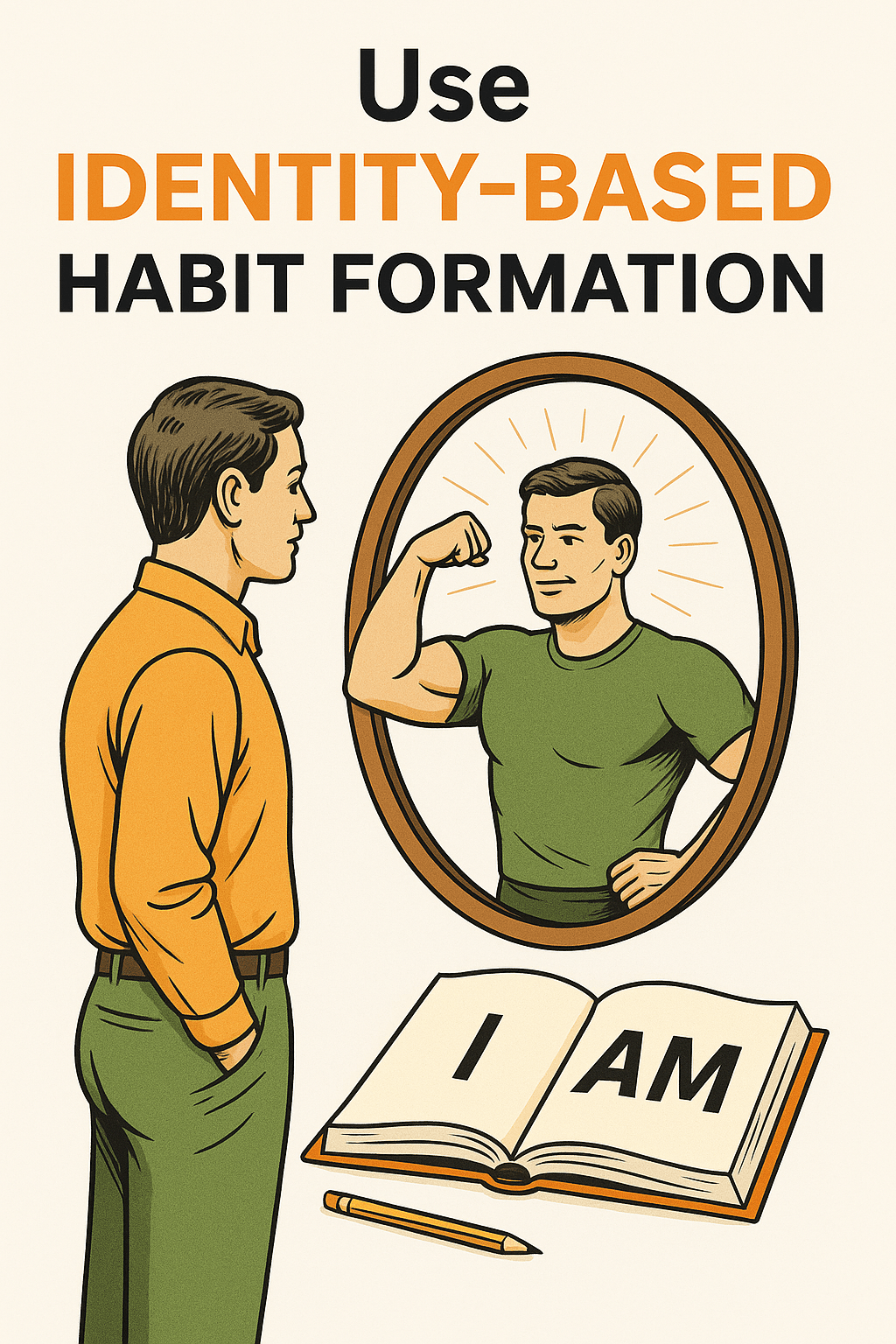
    Every new year or major goal season, we’ve all been there: fired up one day, and weeks later frustrated that the habit still didn’t stick. The problem may not be what you want to achieve, but who you think you are. Instead of focusing on outcome-driven goals, imagine shifting your mindset: “I am the type of person who [lets X happen].” This simple switch – an identity-based habit – can make habits far easier to form and sustain. As habits expert James Clear explains in Atomic Habits, “your current behaviors are simply a reflection of the type of person you believe that you are” . In other words, true habit change starts by creating a new self-image first.

    Outcome vs. Identity: Two Approaches to Habit Change

    Many people set goals like “I want to run a marathon” or “I want to lose 20 pounds.” These are outcome-based habits: the focus is on a result, not on the person you become. It’s no wonder they often fizzle out; once the goal is reached (or missed), motivation vanishes. In contrast, identity-based habits start by asking: Who do I want to become? For example: instead of “I want to run a marathon,” an identity-based thinker says, “I am a runner.”  When you see yourself as a runner, every action you take (training, eating right, getting enough sleep) feels like an expression of that identity – not just a means to an end .

    This identity-first mindset flips traditional habits on its head. As one habits coach puts it, “Who do I want to become?” replaces “What do I want to achieve?” . Seeing your habits as reflections of your self-image is powerful. For instance, if you identify as a healthy person, you’re naturally more likely to choose salad over fries. This happens because our actions follow our beliefs . If your inner story is “I am disciplined and fit,” you won’t struggle as much to eat well or exercise. In fact, psychologists find that when habits are tied to identity (especially core values), people integrate them more deeply and stick with them long-term .

    Why Identity-Based Habits Are More Powerful

    Identity-based habits build internal motivation and make lasting change more likely.  As one recent guide explains, “Identity-based habits work differently” – they “start with the question: ‘Who do I want to become?’ rather than ‘What do I want to achieve?’” . This creates three big advantages:

    Internal Motivation: When a habit is part of who you believe you are, it feels natural and purposeful. For example, if you think “I’m the kind of person who always exercises,” going to the gym isn’t a chore but an expression of you. This alignment boosts motivation – you’re not just chasing a number on a scale, you’re living your identity . Less Inner Conflict: Trying to quit a bad habit by force often creates internal war (“I should be healthy, but I really want junk food!”). With identity-based thinking, you eliminate that conflict. It’s easier to say “I am not a smoker” than “I’m trying to quit smoking” . There’s no battle between “should” and “want,” because your chosen identity has already won. Sustainable Change: Goals are by nature temporary, but identities endure. When your habits align with how you see yourself, they become part of your lifestyle, not just things to tick off. Research confirms that linking habits to identity helps new behaviors stick and leads to more effective behavior change . In short, identity-based habits turn once-a-day efforts into years-long routines, making personal growth feel more automatic than an uphill struggle.

    This identity-first approach is at the heart of James Clear’s bestselling strategy. In Atomic Habits (25+ million copies sold), Clear stresses that lasting change happens when “creating a new identity” comes before chasing results . When you internalize “I am X,” every choice reinforces that label. Even small victories (“I ate a healthy lunch today”) become proof that this new identity is real and powerful.

    Real-Life Examples: Turning Goals into Identities

    Let’s make this concrete with a few examples. Instead of saying “I want to lose weight,” reframe it as “I’m someone who moves my body every day.” You might start with tiny steps like a 5-minute walk after dinner. Each day you follow through, you prove to yourself “I am a person who stays active,” and that identity propels you further. For instance, James Clear shares a story: after his wife memorized all 30 names in a new class, she thought, “I’m the type of person who is good at remembering names.” From then on, she effortlessly remembered names everywhere she went . That shift in identity – from “I try to remember names” to “I do remember names” – turned a one-time success into a permanent habit.

    Here are a few more identity-based habits in action (adapted from habit experts):

    “I am a learner.” Action: Read 10 pages of a book or listen to an educational podcast each day . Over time, that micro-habit becomes a learning routine. “I am an organized person.” Action: Keep a daily to-do list and tidy your workspace at the end of each day . Small steps like these reinforce the belief that you’re naturally organized. “I am an early riser.” Action: Set a consistent bedtime and wake up 15 minutes earlier tomorrow. Repeat until this new schedule feels normal . Now mornings align with your identity, not just an alarm clock. “I am a writer.” Action: Write one paragraph or journal entry each morning. No pressure for brilliance – just ink a tiny bit and prove you’re “a writer” by writing.

    The key is consistency. Each small action – even a glass of water each morning if you aim to be healthy – serves as “evidence” for your self-image. Celebrate these wins! Every time you live up to your identity (by going on a run, preparing a healthy meal, writing a page), take a moment to acknowledge it. Studies show that reflecting on progress and celebrating identity-aligned actions not only feels good, but cements the new identity even further .

    How to Build Identity-Based Habits: Practical Steps

    Define Your New Identity.  Start by asking yourself, “Who do I want to be?” Pick a clear identity that matches your goals. It could be “the kind of person who reads daily,” “someone who values fitness,” or “a skilled communicator.” Be as specific as possible . For example, instead of just “I’m athletic,” try “I am a runner” or “I am the kind of person who never skips leg day.” Choose Tiny Habit Actions.  Identify one small habit that person would naturally do. If your identity is “I am a fit, healthy person,” you might start with 50 jumping jacks every evening or one extra serving of vegetables at dinner. The goal is to make the habit so easy that it requires no willpower – say, just 1% effort each day . These micro-wins accumulate and reinforce your identity. Attach Habits to Your Identity.  Whenever you perform the habit, mentally note “I am doing this because I am [identity].” For example, tell yourself “I’m having an apple snack because I am a healthy eater.” This mental link turns the action into a statement about you. According to experts, consciously proving your identity to yourself (even in tiny ways) is what makes the new identity stick . Track and Celebrate Wins.  Keep a simple log or journal of your habit actions. Every time you follow through, give yourself a quick pat on the back. This positive reinforcement is like flexing your identity muscle. Remember the birder in James Clear’s story: once she saw a proof (“I remembered that name!”), it confirmed her belief. You can do the same – a 10-minute workout or writing a paragraph is proof of the identity you claim. As researchers note, acknowledging these wins builds self-esteem and strengthens the new habits . Iterate and Deepen the Identity.  As these small habits become routine, you’ll notice your mindset shifting. Keep expanding: increase your habit slightly (walk 5 more minutes, write one more sentence) to continue proving your identity. Over time, “I am a runner” will feel completely natural, and skipping workouts will start to feel like stepping outside who you are.

    By following these steps, you’re literally becoming the person who lives the habits you want, rather than just chasing abstract goals. Each tiny act stacks up to make that identity undeniable.

    The Impact: Personal Growth That Lasts

    Imagine seeing yourself transform: tasks that once felt like chores now feel like parts of your character. That’s the power of identity-based habits. In Skill Stacker’s Personal Development System, we emphasize this approach because it aligns behavior change with personal growth. As you adapt your self-image, you’ll often find that other good habits naturally follow. A tidier desk might lead to clearer thinking, a consistent workout routine could boost your productivity at work, and so on. It becomes a virtuous cycle.

    Hundreds of thousands of people have seen this mindset shift work wonders. Authors, entrepreneurs, and athletes often report that telling themselves “I am the person who [practice X]” fundamentally changed their results. (Olympic runner Eliud Kipchoge, featured in Atomic Habits, is one high-profile example of mastering this mindset .) When you stop fighting your nature and instead transform your self-image, the change is profound.

    Join the Personal Growth Journey

    Ready to give identity-based habits a try? Start small this week: pick one new identity statement (like “I am a writer”) and one tiny action (even just one paragraph) to prove it. Stick to it consistently, celebrate each win, and watch how your behavior naturally shifts.

    Part 7 of our Personal Development System series shows that who you believe you are matters more than any goal. For more strategies on behavior change and personal growth, stay tuned to the Skill Stacker blog and follow our series. And don’t forget to grab our free Personal Development System workbook – it’s packed with practical exercises to help you apply identity-based habit formation and more. Your best self is waiting; become that person one habit at a time!

    Sources: Habit science and expert insights from James Clear’s Atomic Habits , modern habit coaching resources , and psychology research on habit-identity links . (Read more to see how identity-driven habits create lasting change!)

  • Book of the Day: Mindset — The New Psychology of Success by Carol Dweck

    Book of the Day: Mindset — The New Psychology of Success by Carol Dweck

    Introduction: Why Mindset Matters

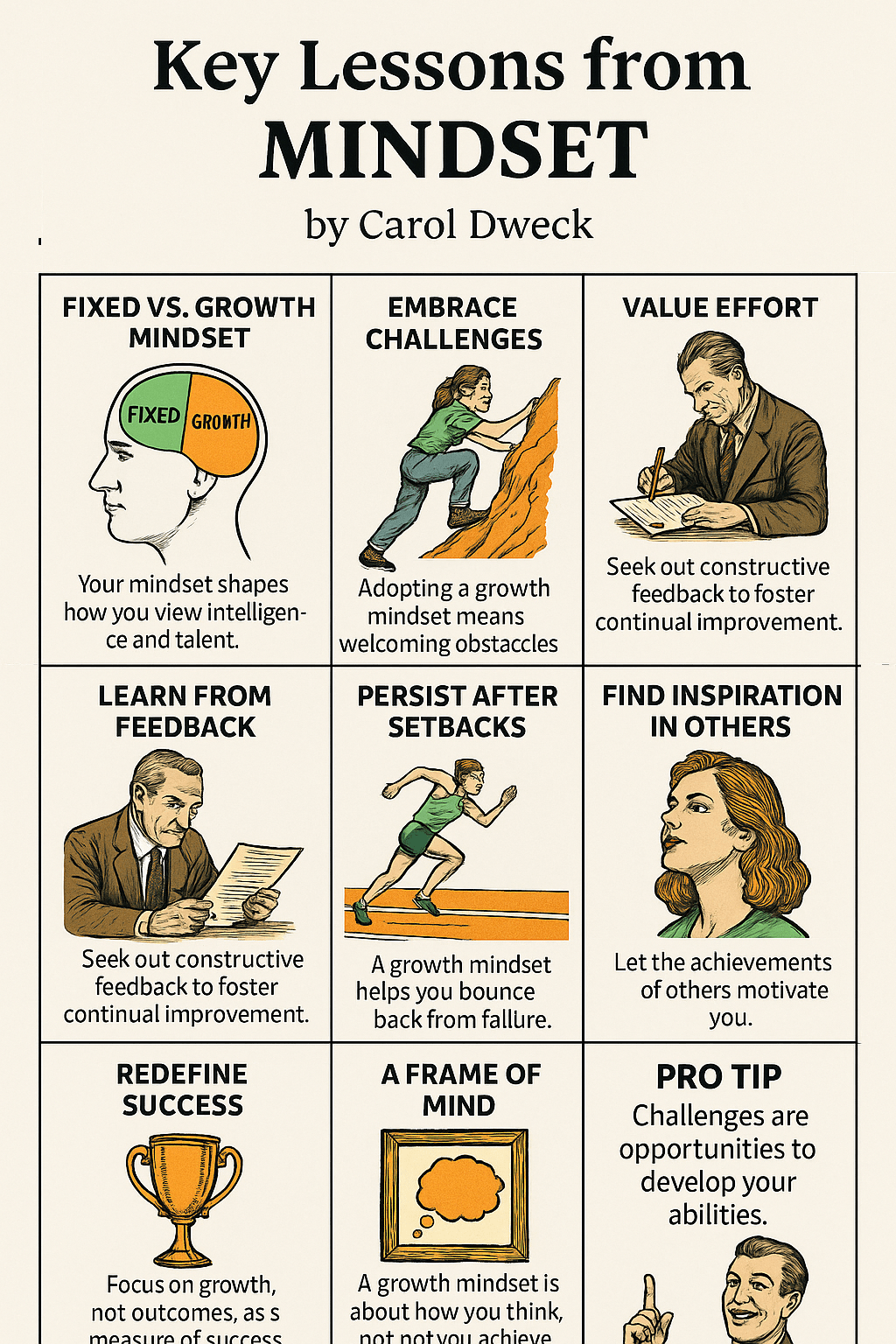
    Have you ever caught yourself thinking, “I’m just not a math person” or “I’ll never be a natural leader”? In Mindset, Stanford psychologist Carol Dweck calls out these self-defeating scripts and shows how a simple shift in mindset can change everything. She identifies two main mindsets – fixed and growth – and argues that developing a growth mindset is essential for success . In short, Mindset reveals how the way you think about talent and effort might be the single most important factor in your personal development and high performance. This isn’t just feel-good hype; it’s grounded in decades of research on achievement and learning.

    Fixed vs. Growth Mindset (The Core Idea)

    In a fixed mindset, you believe traits like intelligence or talent are set in stone. The result? You’re constantly trying to prove yourself. Challenges are scary because failing would mean you’re “not enough.” Dweck explains that if you think your qualities are unchangeable, you’ll likely avoid difficult tasks or criticism to protect your ego . Mistakes feel like personal failures.

    By contrast, a growth mindset means you see abilities as skills to be developed. Talent isn’t a fixed hand you’re dealt, but a starting point – and effort, good strategies, and help from others can grow your capabilities . A growth-minded person embraces challenges and views setbacks as feedback rather than defeat. If you struggle with something, it just means you don’t get it yet . This mindset creates a passion for learning and “stretching” yourself, even when things are tough . In fact, pushing outside your comfort zone (where real growth happens) becomes exciting instead of intimidating.

    3 Key Lessons for Skill Mastery

    Embrace Challenges & Failures: Don’t shy away from challenges – run toward them. People with growth mindsets don’t just accept challenges, they thrive on them . Each tough problem or even failure is actually a chance to learn. Instead of thinking “I failed – I’m no good,” ask “What can I learn from this?” When you treat failures as valuable feedback, you build resilience and bounce back stronger (growth-minded folks see setbacks as a motivating wake-up call ).

    Focus on Effort & Process, Not Talent: Under a fixed mindset, we might assume “If I’m not instantly good, I’ll never be.” Mindset flips that script. Effort is the path to mastery. Dweck’s research found that even geniuses have to work hard – natural talent only takes you so far. It’s consistent effort, practice, and effective strategies that turn potential into accomplishment . In other words, systems and habits beat raw smarts. So celebrate effort and persistence. By focusing on the process (the daily 1% improvements, the habits, the practice sessions), you’ll inevitably get better over time.

    Adopt a “Learner” Identity: Changing your results starts with changing how you see yourself. If you’ve been telling yourself “I’m just bad at ___,” start telling yourself “I’m learning ___.” Dweck often cites sociologist Benjamin Barber: “I don’t divide the world into the weak and the strong… I divide the world into the learners and nonlearners.” Be a learner. This identity-level shift keeps you curious, humble, and willing to try new things. When you identify as someone who is always learning and improving, challenges become part of your mission. You’ll seek out mentors, feedback, and routines that reinforce that identity (this is the essence of the Skill Stacker approach: continuously stacking new skills). Over time, those tiny 1% gains compound into major expertise.

    Daily Kaizen: Flip “Not Yet” into Action

    Today’s 1% improvement: Identify one “fixed mindset” thought you’ve had recently (“I’m just no good at this…”) and add one word to it: “yet.” Then take a small action in that direction. For example, if you’ve been thinking “I can’t speak in public,” tell yourself “I can’t do it yet,” then practice a 2-minute talk in front of a mirror or friend. Embrace the initial discomfort – that’s your growth in progress. This tiny exercise is your 1% better challenge for today.

    Key Takeaways (Infographic-Friendly)

    Fixed Mindset: Believes talent is fixed; often avoids challenges to avoid failure . Growth Mindset: Believes skills can be improved; embraces challenges to learn and grow . Effort Unlocks Ability: No matter your starting talent, effort and practice ignite ability into achievement . Failure = Feedback: Mistakes and setbacks aren’t the end – they’re lessons that guide you toward improvement . Learner Identity: See yourself as a work-in-progress. Choose to be a learner, not a non-learner , and you’ll keep evolving. 1% Better Daily: Small daily improvements compound to massive gains – 1% better each day makes you ~37x better in a year .

  • Book of the Day: The Obstacle Is the Way by Ryan Holiday

    Book of the Day: The Obstacle Is the Way by Ryan Holiday

    The Obstacle Is the Way by Ryan Holiday is a modern manifesto for turning adversity into advantage. A cult classic embraced by athletes, entrepreneurs, and leaders, it offers a framework for overcoming the obstacles life inevitably throws at us . The core idea, drawn from ancient Stoic wisdom, is that how we respond to challenges defines us . As Marcus Aurelius wrote, “The impediment to action advances action. What stands in the way becomes the way.” Instead of seeing roadblocks as setbacks, Holiday shows that each obstacle can become an opportunity to practice virtue, build strength, and move forward .

    Key Takeaways: Stoic Strategies for Overcoming Obstacles

    Holiday’s method centers on three interrelated disciplines—Perception, Action, and Will —forming a reliable approach to any challenge. Here are five powerful ways to apply these principles immediately:

    Reframe Your Perspective: When faced with a problem, choose to see it objectively rather than with fear or frustration. Our perceptions can be a source of strength or weakness—there is no good or bad until we assign meaning to events . By staying calm and seeing things as they are (without exaggeration or panic), you can spot the opportunity hidden in each obstacle instead of feeling defeated .

    Focus on What You Can Control: Direct your energy only toward what you can change, and let go of the rest. Stoics teach that zeroing in on your own actions and attitudes (and not obsessing over external factors) greatly magnifies your power and effectiveness . When you stop wasting effort worrying about things outside your control, you free up mental bandwidth to solve the problem at hand more creatively and efficiently .

    Take Decisive Action: No amount of worry or theory will remove an obstacle—only deliberate action will . Holiday emphasizes directed, persistent effort: tackle the issue step by step, using ingenuity and courage rather than brute force . Even small wins build momentum. Don’t wait for perfect conditions or permission to start; as Holiday bluntly advises, stop waiting for a miracle and start looking for angles to make progress . In short, action is the antidote—boldly do what you can, and do it right now.

    See Failure as Feedback: Every setback is a lesson in disguise. “Failure shows us the way—by showing us what isn’t the way,” Holiday writes . Instead of interpreting failure as a permanent defeat, view it as valuable feedback. Each unsuccessful attempt reveals what to adjust or avoid next time (recall Thomas Edison’s 10,000 “ways that won’t work”). Adopting this attitude turns failures into data points on the path to success, keeping you resilient and motivated to try new approaches until you triumph .

    Build Inner Resilience (Will): Some challenges can’t be changed; they can only be endured and met with character. Holiday encourages building an “Inner Citadel” of strength that no external adversity can break . This means preparing yourself mentally to handle hard times and choosing to find meaning in hardship rather than despair. For example, Abraham Lincoln endured lifelong bouts of depression yet used that suffering to develop profound patience, humility, and compassion in service of a cause greater than himself . By cultivating quiet endurance, humility, and faith that “this too shall pass,” you fortify your will . With a resilient mindset, even the worst trials become fuel for growth.

    Embrace the Obstacle – Closing Thoughts

    In essence, The Obstacle Is the Way reframes life’s difficulties as the raw material for greatness. Obstacles are not roadblocks to success—they are the path to success. Every challenge provides a chance to practice excellence and strengthen yourself . As Holiday summarizes: “See things for what they are. Do what we can. Endure and bear what we must.” Adopt this mindset, and the obstacles that once intimidated you will become stepping stones on your journey of self-mastery.

  • ❓FAQ of the Day: “Should I Train When I’m Tired?”

    ❓FAQ of the Day: “Should I Train When I’m Tired?”

    We’ve all been there: you didn’t sleep well, work was brutal, and now the gym is calling your name. The big question is — should you go anyway?

    ✅ The Short Answer:

    Yes… but with a plan.

    🧠 How to Decide:

    Tired or Exhausted? If you’re mentally tired but physically fine → train. If you’re physically wrecked → modify or rest. Type of Fatigue? Sleep-deprived? Keep it light. Stressed? Training might help reset your mood. Goal-Driven Adjustments: Strength day? Drop the load, focus on form. Cardio? Go Zone 2 and just move.

    🛑 When to Skip:

    You’re sick, injured, or feeling warning signs (e.g., dizziness, joint pain). You’ve had multiple nights of poor sleep. You’re dragging emotionally and training feels destructive.

    💡 The Rule:

    “Show up, scale down, or shift to recovery.

    But keep the habit loop alive.”

    Consistency beats perfection. Tired sessions still count — mentally, physically, and habitually.