Complaining is easy.
Curiosity is hard.
But curiosity is where growth begins.
🛑 The Kaizen
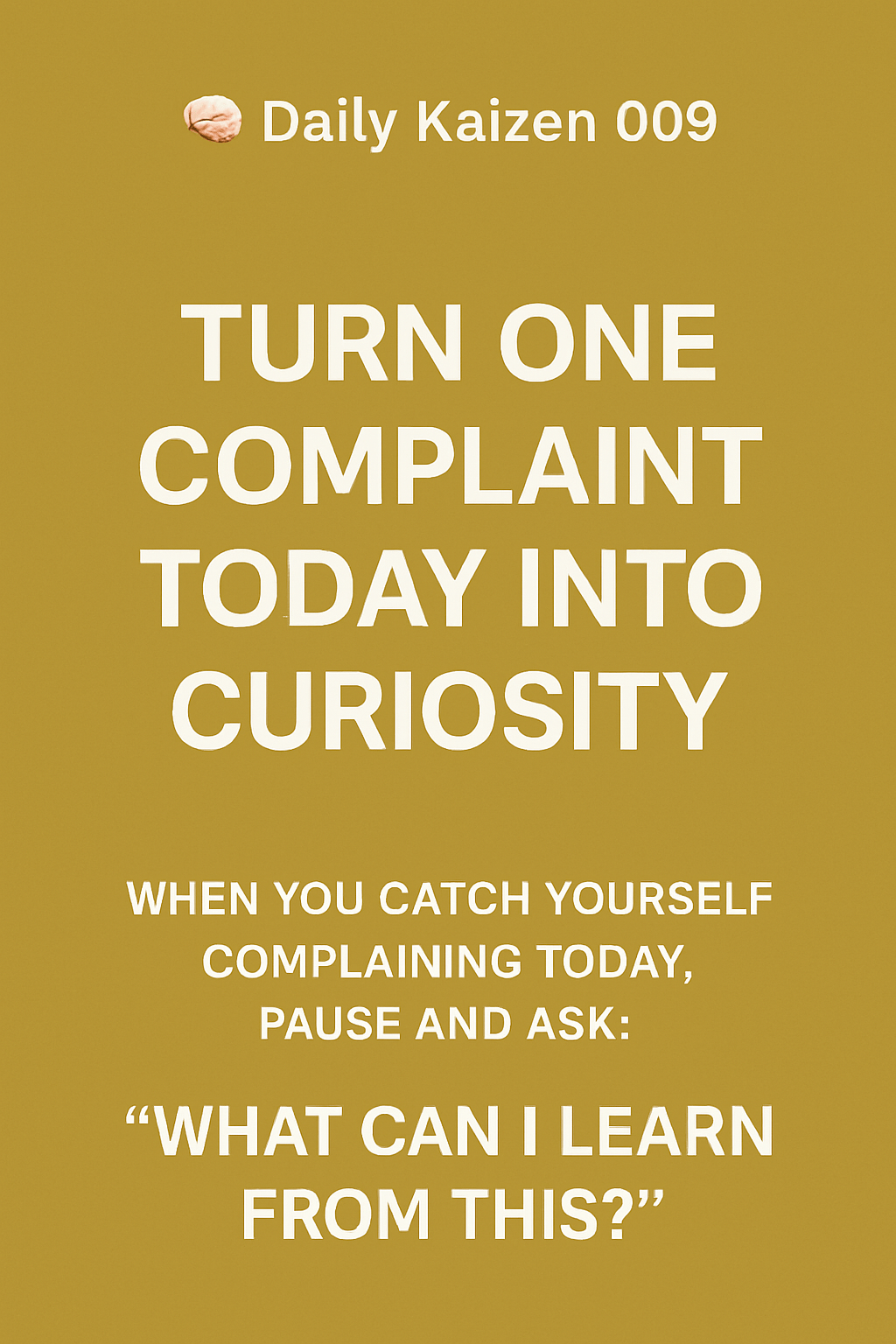
When you catch yourself complaining today, pause and ask:
“What can I learn from this?”
Instead of spiraling into frustration, use that moment to explore. Shift from judging the situation to understanding it.
💡 Why It Works
Complaining feels good in the moment—it’s a release valve for negative energy.
But it also:
Lowers your mood Drains your energy Makes you a victim of your circumstances
Curiosity flips the script.
It changes the narrative from “This is happening to me” to “Why is this happening, and what can I do with it?”
🧪 What the Science Says
Curiosity activates the dopamine reward pathway, the same one triggered by novelty and problem-solving Studies show that asking better questions reduces stress and improves emotional regulation The simple act of reframing a complaint increases mental resilience over time
✅ How to Do It
Catch the complaint Notice when you’re about to vent (out loud or in your head) Pause and reframe Ask yourself: “What can I learn here?” “What’s the full picture?” “What’s one small thing I can do differently?” Stay curious, not judgmental Curiosity doesn’t mean liking the situation. It just means you’re open to understanding it.
🔄 Examples
Complaint:
“Traffic is the worst. I’m wasting my time.”
Curiosity:
“What’s one podcast or audiobook I can enjoy while I drive?”
Complaint:
“This meeting is pointless.”
Curiosity:
“What question could I ask to make this conversation productive?”
⚙️ How It Stacks
This habit builds:
Emotional control Problem-solving Optimism Stronger relationships (less negativity rubs off on others)
Over time, you’ll catch complaints faster and turn them into productive energy.
🧠 Final Thought
Your complaints don’t make life easier—they make it heavier.
Curiosity makes it lighter.
Today’s challenge:
Catch one complaint and ask a better question.