Tag: Morning Routine

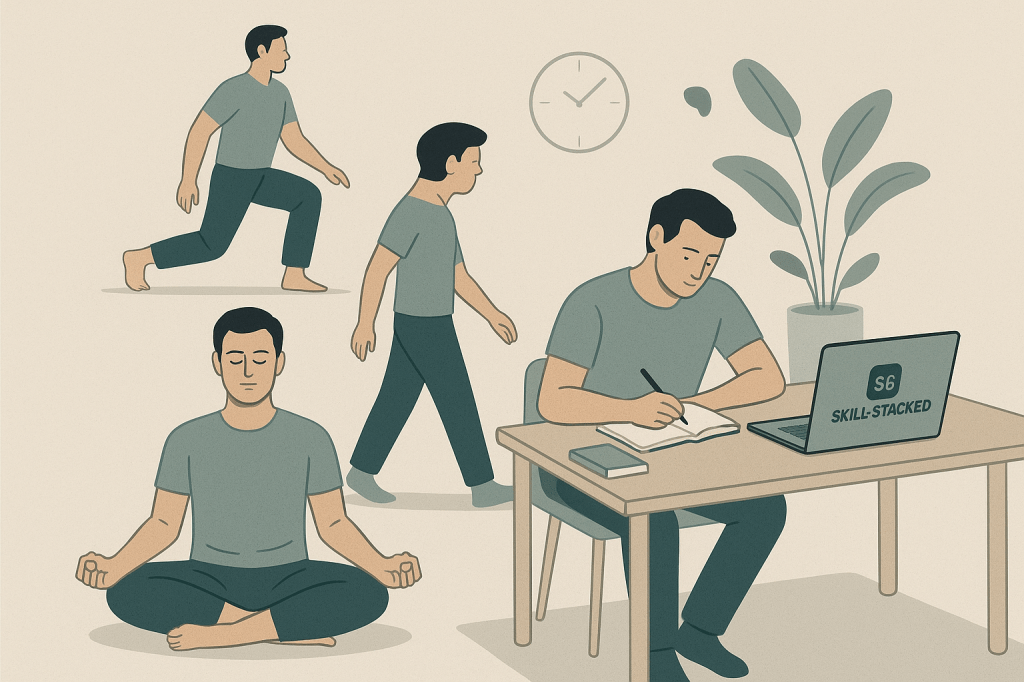
  • 🧠 Daily Kaizen #4 – Replace Your Morning Scroll With a 10-Minute Walk

    🧠 Daily Kaizen #4 – Replace Your Morning Scroll With a 10-Minute Walk

    Here’s a brutal truth:

    Most people wake up and immediately flood their brain with:

    📱 News they can’t control

    📱 People they’ll never meet

    📱 Stress they didn’t ask for

    All before they’ve even had a glass of water.

    We scroll ourselves into anxiety.

    And we wonder why we feel overwhelmed before 9am.

    💡 Here’s your Kaizen for today:

    Before you pick up your phone — step outside.

    Even if it’s raining. Even if it’s just around the block.

    Set a timer for 10 minutes. Walk with no music, no podcast, no agenda.

    Let your brain breathe.

    🧩 Why this works:

    It lowers cortisol (stress hormone) Increases dopamine and serotonin (mood + focus) Anchors you in the real world, not the digital one Builds a calm, clear foundation for your day

    Walking in natural light also resets your circadian rhythm, helping you sleep better at night.

    ✏️ The Hidden Benefit:

    You reclaim your agency.

    You tell your brain:

    “I run the show — not the algorithm.”

    That shift? That’s freedom.

    And it starts with a single walk.

    🛠️ Make it easier:

    Leave your shoes by the door Set a recurring reminder called “Walk > Scroll” Track your streak on a post-it note

    Start today. No excuses.

    Because the first 10 minutes of your day shape the next 10 hours.

    🔁 Follow @SkillStacked for a new Daily Kaizen every day.

    Simple mindset upgrades that compound.

    One win at a time.

  • Build a Morning Routine That Works on Autopilot

    Build a Morning Routine That Works on Autopilot

    Starting your day with structure and clarity sets you up for success.  A consistent morning routine eliminates decision overload and jumpstarts your energy, focus and positivity.  As productivity experts note, tiny “pre-game” habits – like drinking a glass of water or opening the blinds – cue your brain that the day has begun .  By anchoring new habits to stable cues (a strategy James Clear calls habit stacking ), you’ll build a morning routine that feels automatic and effortless.  In this post we’ll break down six core morning habits – from waking at the same time every day to planning your day’s goals – explaining why each works and how to implement it for maximum impact.

    1. Wake Up at the Same Time Every Day

    A reliable wake-up time is the cornerstone of any successful morning routine.  When you rise at (nearly) the same hour each day, you synchronize your body’s circadian rhythm – the internal clock that regulates sleep, hormone release and metabolism .  This regularity makes it easier to fall asleep at night and feel alert in the morning.  For example, sleep experts at Michigan Medicine note that waking up at the same time “anchors” the circadian clock and can improve sleep quality and daytime energy .  To implement this habit, set a consistent alarm (yes, even on weekends!) and resist the snooze button.  Go to bed at a reasonable hour so you can wake up refreshed.  Opening the curtains or getting morning sunlight right away also helps signal your brain that it’s time to be awake .  Over time, your body will adapt and this consistent wake-up cue will kick on autopilot alertness each morning.

    2. Rehydrate and Fuel Your Body

    A reliable wake-up time is the cornerstone of any successful morning routine.  When you rise at (nearly) the same hour each day, you synchronize your body’s circadian rhythm – the internal clock that regulates sleep, hormone release and metabolism .  This regularity makes it easier to fall asleep at night and feel alert in the morning.  For example, sleep experts at Michigan Medicine note that waking up at the same time “anchors” the circadian clock and can improve sleep quality and daytime energy .  To implement this habit, set a consistent alarm (yes, even on weekends!) and resist the snooze button.  Go to bed at a reasonable hour so you can wake up refreshed.  Opening the curtains or getting morning sunlight right away also helps signal your brain that it’s time to be awake .  Over time, your body will adapt and this consistent wake-up cue will kick on autopilot alertness each morning.

    2. Rehydrate and Fuel Your Body

    Get your blood flowing to really wake up!  Even a brief bout of exercise first thing – whether it’s stretching, yoga, walking or a quick home workout – releases energy-boosting hormones.  Regular exercise “is excellent for boosting energy and reducing fatigue,” one medical source explains, because it pumps oxygen and nutrients to your heart, lungs and muscles .  Morning movement also triggers feel-good neurotransmitters: during exercise your brain produces extra endorphins, natural “happy” chemicals that reduce stress and boost mood .  A 2019 study even found that morning workouts sharpen attention and decision-making for hours afterward .  To implement: start small (even 5–10 minutes of stretching or a brisk walk around the block).  Build consistency first, then gradually add a few more minutes or new moves.  Lay out your workout clothes the night before (habit stacking: for example, “After I brush my teeth, I will put on my sneakers” ) to make moving in the morning automatic.  Physical movement in the AM not only wakes your body but also builds confidence and momentum that carries through the day.

    4. Mindful Practice (Meditation, Journaling or Breathing)

    Spend a few quiet minutes grounding yourself with mindfulness.  This could be a short meditation, deep breathing, or journaling about your priorities and feelings.  Science shows that morning mindfulness has powerful benefits: it calms the mind, reduces anxiety and sets a positive tone.  As one expert writes, practicing meditation in the morning has “beneficial effects on your brain, heart, immune system, and hormones,” which last throughout the day and improve focus, attitude, decision-making and energy .  Journaling can similarly clear mental clutter.  Writing down thoughts or to-dos in a journal helps organize your mind: people who journal often report feeling more relaxed and prepared, with improved productivity .  To implement, find a quiet spot (even your kitchen table or bedside) and spend just 5–10 minutes.  Sit comfortably, close your eyes and focus on your breath, or write three things you’re grateful for.  Many people find “simple affirmations can create a positive mindset” and reduce stress .  Apps like Headspace or Calm can guide a quick meditation, or simply jot a few bullet points in a notebook.  This mindful pause acts like a mental “reset button,” helping you approach the day with clarity and calm.

    5. Cultivate Gratitude and Positivity

    Starting the day with gratitude shifts your focus to the positive.  Take a moment to note two or three things you’re grateful for (your health, family, a new opportunity, etc.) or repeat a positive affirmation.  Research shows that gratitude practices can significantly reduce stress and anxiety while increasing happiness and well-being .  You don’t need fancy words – even thinking “I’m thankful to see this new day” can prime your brain for optimism.  For example, you might write “I appreciate my health” or “I look forward to today’s challenges” on your journal page.  By consciously adopting a grateful mindset in the morning, you set an uplifting tone that colors your thoughts and actions all day.

    6. Plan Your Day’s Top Priorities

    Finally, take a few minutes to outline your most important tasks.  Writing a brief to-do list or identifying two “must-do” goals for the day puts structure around your intentions.  As one productivity source notes, “Taking a few minutes to plan your day in the morning can set the tone for productivity.”  Jotting down tasks or appointments forces you to prioritize by importance, so you’re not scrambling later .  This doesn’t have to be a long list – even listing 3–5 items in order of priority is enough.  Many habit experts recommend habit-stacking this with your journaling or breakfast (for example, “After I make my coffee, I will write down my top three tasks”).  That way, planning becomes a natural part of the sequence.  Having a written plan clears mental space (no more trying to remember everything) and keeps you accountable.  When unexpected events arise, you can confidently adjust because you already know what truly matters for the day ahead .

    Pro Tip: Automate via Habit Stacking

    The ultimate key to an effortless routine is linking (or “stacking”) each step together.  As James Clear teaches in Atomic Habits, tie a new habit to an existing one so it triggers automatically .  For instance, “After I drink my morning water, I will do my stretches,” or “After I meditate, I will immediately review today’s tasks.”  Start with tiny actions – even just one minute – and grow gradually.  Each completed habit strengthens neural connections, making the routine easier and more ingrained over time .  Finally, prepare the night before: set out your exercise gear, journal and a glass of water.  By removing friction and using clear cues, your morning ritual will run on autopilot, leaving you energized, focused and ready to own your day.  Good morning!

    Sources: Science and expert insights on morning habits and circadian rhythm .  (Consult cited links for detailed studies and advice.)

  • Choose One Core Habit to Build Your Day Around

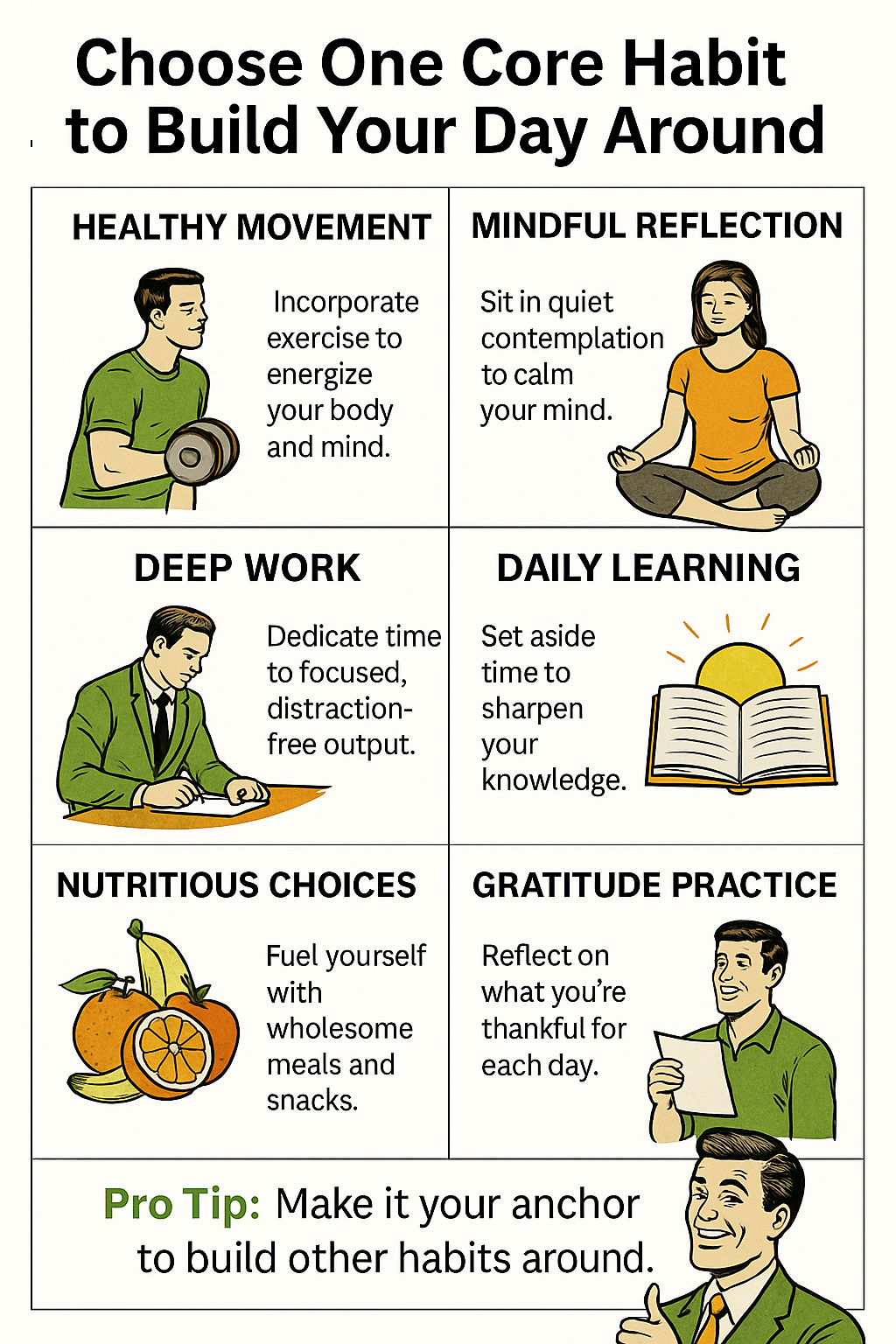
    Choose One Core Habit to Build Your Day Around

    Building lasting change often starts with one keystone habit – a single routine that becomes the anchor of your day.  Focusing on one habit at a time is key. In fact, research shows that people who make specific plans for one habit (the when, where, and how) are 2–3× more likely to follow through .  Crucially, implementation intentions only work if you focus on one thing: people juggling many goals tend to fail more often than those committed to a single goal .  By picking one meaningful habit, you give yourself the best chance to automate it into your routine.

    Anchoring your day to one core habit has a ripple effect across your life.  As Psychology Today explains, “keystone habits” are foundational routines that create a domino effect of positive changes .  For example, establishing a regular exercise routine not only boosts fitness, but often leads to improved diet, better sleep, higher energy and productivity .  In other words, one good habit tends to spawn others.  By consistently practicing just one high-impact habit, you build momentum and confidence that carries over to every part of your day.  This habit becomes the stable foundation on which other healthy routines can be built.

    Why a Core Habit Matters: Relying on autopilot routines relieves decision fatigue and conserves willpower . When one key habit is locked in place each morning, the rest of your day tends to flow better.  You develop a “success mindset” as each completed habit reinforces your identity (for instance, thinking of yourself as “someone who journals every morning” or “a regular exerciser”).  And science backs this up: our brains form habits in the basal ganglia, automatically linking cues to routines .  By designing a single keystone habit and its cues, you work with your brain’s natural wiring.

    Catalyst for change: One core habit can trigger a cascade of other good habits . For example, starting the day with exercise often leads to healthier eating, better sleep, and sharper focus in the afternoon . Momentum builder: Completing a meaningful habit each day boosts motivation and confidence.  When you see progress in one area, it’s easier to tackle other challenges. Routine anchor: Your keystone habit anchors your schedule. Making it a fixed part of your morning or evening routine creates stability, so other habits “slot in” around it . Identity shift: Focusing on one habit helps reshape your self-image.  You begin to think, “I am the kind of person who [habits]”, which reinforces consistent behavior. Simplicity wins: Psychology research finds that trying too many new habits at once undermines progress. People focusing on a single specific habit are far more likely to succeed .

    Together, these points show why it’s better to master one core habit than spread yourself thin.

    Examples of Powerful Core Habits

    Which habits make good core routines?  Think of activities that energize you, support your biggest goals, or simply feel rewarding.  Here are some examples that many people find transformative:

    Morning Journaling: Spend 5–10 minutes writing after you wake up. Journaling clears your mind, sets your intentions for the day, and helps process emotions. Studies show that expressing thoughts on paper “enhances mental clarity and emotional processing,” helping to manage stress and anxiety .  Over time, this practice can improve mood and self-awareness. Daily Exercise: A short workout or brisk walk each morning gets your body moving and brain alert.  Exercise not only strengthens muscles and heart, it also “boosts memory and thinking indirectly by improving mood and sleep, and by reducing stress and anxiety” .  Many people who exercise daily report clearer thinking and more energy throughout the day. Daily Reading: Even 15–30 minutes of reading (non-fiction, personal development, or inspirational material) can prime your mind. Reading regularly is like a gym session for your brain – it “improves memory, concentration, and [reduces] stress,” according to education experts .  Starting the day with learning sets a positive tone and gradually builds knowledge. Morning Meditation or Mindfulness: Sitting quietly for a few minutes each morning to meditate or breathe deeply trains your attention and calms your nervous system.  Research on meditation shows that brief daily practice can decrease negative mood and anxiety while improving attention and working memory .  Over weeks, people report better focus and emotional balance. Gratitude Practice: Noticing things you’re thankful for – even mentally or by writing a quick list – can reframe your mindset.  Regular gratitude journaling has been linked to better well-being and reduced stress .  It’s a simple habit that shifts your outlook to the positive. Evening Review or Planning: End your day by reviewing successes and planning tomorrow’s top priority.  This sets up your next morning with clarity and can improve sleep by reducing rumination.  (This habit aligns with identity and goal-setting research .)

    (Tailor this list to what appeals to you: exercise could be yoga or dance, reading could be podcasts, and journaling could be notes on wins. The specific habit is less important than consistency.)

    How to Pick the Right Habit for You

    The best habit is one that aligns with your goals, lifestyle, and natural energy. Here are some guidelines:

    Match Your Goals: What is your top priority? If you want more energy, a morning workout or walk might be ideal. If you seek calm and focus, meditation or journaling could help. If personal growth is key, reading or learning fits. Choose a habit that directly supports what you care about most. Consider Your Daily Rhythm: Pay attention to when you feel most alert.  Morning “larks” often have more willpower and energy early, so they might tackle exercise or writing right after waking.  Night owls might start with something simpler (like sipping tea while reading) and schedule more demanding habits later.  Research shows people perform best at their preferred time of day – morning types in the a.m. and evening types later .  Pick a habit and time of day when you naturally feel energetic and clear-headed. Test for Enjoyment and Feasibility: A habit doesn’t have to be fun, but it should be something you don’t dread.  For example, if 30 minutes of exercise feels impossible, start with 5 minutes.  If journaling every day is too much, try 3 days a week.  The goal is consistency, not intensity. Simplicity and Resources: Keep it simple. You’re much more likely to maintain a basic habit (5-minute meditation, 10-minute walk) than a complex one.  Also, ensure you have what you need: if you choose exercise, place workout clothes where you see them; if writing, keep a notebook handy. Identity Alignment: Frame the habit in identity terms.  Instead of “I want to exercise,” tell yourself “I am the sort of person who exercises regularly.”  This mindset (identity-based habits) makes it easier to stick with your choice .

    When you settle on one habit, commit to it wholeheartedly. Remember, focusing on that one habit increases your chance of success . You can always add another habit later. For now, give your first habit all your attention and energy.

    Making Your Habit Stick: Practical Steps

    Once you’ve chosen your keystone habit and timing, use these strategies to turn it into an automatic part of your day:

    Plan It Precisely (Implementation Intention): Decide exactly when, where, and how you will do your habit.  For example: “Every morning right after I brush my teeth, I will meditate for 5 minutes.” Studies find that writing down such specific plans doubles or even triples the likelihood you’ll follow through .  Having a concrete plan (“If X happens, then I will Y”) makes it much easier to act. Habit Stacking: Attach your new habit to an existing routine.  This is called “habit stacking.”  For instance, after you make coffee, then sit down to journal; or after you put away your shoes at night, then do 5 minutes of stretching.  Psychology experts note that habit stacking “anchors” a new habit to something you already do, making the change feel effortless . Over time the linked behaviors become second nature. Time-Blocking: Put the habit on your calendar and treat it as an appointment.  Block a short fixed window each day (e.g. 7:00–7:10 AM) for your habit.  This way you won’t accidentally skip it.  Scheduling a daily reminder or alarm can help signal it’s time. Design Your Environment: Make the habit obvious and easy by arranging your surroundings. Keep cues and tools in sight: place your journal on your desk, lay workout gear out before bed, or put a water bottle where you’ll see it . Conversely, hide or remove distractions: turn off notifications, log out of social apps, or keep junk food out of the house.  As one habit expert advises, small environmental tweaks (like “keeping a water bottle on your desk” or “placing a book on your nightstand instead of your phone”) can automatically nudge you toward the right behavior . Start Small and Build: Resist the urge to overdo it.  Consistency is more important than duration.  If you miss a day, don’t criticize yourself – just do it again tomorrow.  Gradually increase the habit as it becomes easier.  For example, add one more minute to your meditation or one extra page of reading each week. Use Rewards and Tracking: Give yourself a small reward after completing the habit (even just a mental high-five).  Keep track of your progress – a checkmark on a calendar or a habit-tracking app can reinforce your commitment.  Seeing a streak build can be motivating. Get Accountability: Tell a friend or family member about your habit goal, or join a group (online or offline) for support.  Sometimes sharing your intention publicly makes you more likely to stick with it.

    Following these steps harnesses the best strategies from behavioral science.  As Neuroscience Today explains, our brains form strong habits when we consistently pair a cue (like a time of day) with a routine, which eventually becomes automatic . By stacking your habit, time-blocking it, and shaping your environment, you effectively engineer success.

    Your Takeaway: Start Today

    You now have the blueprint: pick one single habit to build your daily routine around.  Make it specific, plan it, and slot it into your schedule.  Use habit-stacking and environmental cues to make it automatic.  Remember that even a few minutes of daily focus can spark broader improvements.

    The most important step is to start. Don’t wait for the “perfect” time or until you have more willpower.  Tomorrow morning, for example, wake up a bit earlier and begin.  Write those first journal lines, put on your sneakers for a walk, or sit for a short meditation.  Once you’ve built a streak of a few days, you’ll feel the momentum building.

    Key takeaways: Choose one core habit aligned with your goals.  Treat it like an unmissable appointment.  Set up cues and remove friction so the habit happens almost automatically .  Focus on this habit fully before adding more.  Scientific research confirms this focused approach is the most effective route to lasting change .

    You’re ready – start your new habit today and let it become the anchor of a better, more productive day!

    Sources: Practical tips and examples above are backed by psychology and neuroscience research , which highlight how keystone habits and smart habit-design lead to lasting success. Use these insights as your guide, and watch the positive ripple effect in your life. You’ve got this!

  • 🛡️ Daily Kaizen: Delay Your First Phone Check by 30 Minutes

    🛡️ Daily Kaizen: Delay Your First Phone Check by 30 Minutes

    Your brain wakes up hungry — not for dopamine, but direction.

    The first thing you feed it sets the tone for the day.

    📵 Delay your first phone check by 30 minutes.

    🧠 Use that time to move, think, write, or breathe.

    Reclaim the opening scene.

    Win the day before it begins.

  • Transform Your Life with 5-Minute Habits

    Transform Your Life with 5-Minute Habits

    Feeling too busy to stick with healthy habits? You’re not alone. The good news is that big results can come from tiny changes. In fact, researchers and habit experts agree: consistent small habits beat occasional big efforts mindful.org. As James Clear (author of Atomic Habits) advises, scale new routines down so they take just a few minutes jamesclear.com. These 5-minute habits below transformed my fitness, mindset, and productivity – and they can do the same for you. They’re quick, science-backed, and realistic for even the busiest schedule.

    1. 5-Minute Morning Workout (Move to Boost Energy)

    Kick-start your day with just five minutes of movement. It might not sound like much, but short daily workouts can deliver surprising benefits. One study found that just 5 minutes of daily strength exercises improved participants’ muscle strength, endurance, and flexibility, and even gave a mental health boost sciencealert.comsciencealert.com. Over 80% of people in the study kept the habit going after 4 weeks – a testament to how sustainable mini-workouts can besciencealert.com.

    Real-life example: try a quick bodyweight circuit each morning. For instance, do 10 squats, 10 push-ups, and 10 jumping jacks, repeating as many rounds as you can in five minutes. Or follow a short “5-minute morning HIIT” video. The key is raising your heart rate. Even a brief burst of moderate-to-vigorous exercise can sharpen your brain for hours afterward – studies show cognitive functions like memory and focus improve with as little as five minutes of aerobic activityneurosciencenews.comneurosciencenews.com. Over time, these micro-workouts add up. They build strength and stamina, and often inspire you to be more active later. Remember, consistency matters more than length. A quick workout you actually do every day beats an hour-long session you never find time for.

    2. 5-Minute Mindfulness Meditation (Mental Clarity on the Go)

    When schedules are packed, meditation might feel impossible to fit in – but just five minutes a day can make a real difference. Research indicates that frequency is more important than duration for mindfulness benefits mindful.org. In fact, a meditation teacher in one study noted that “if you meditate five minutes a day, every day, it’s a lot better than meditating half an hour once a week.” mindful.org Short daily sessions can reduce stress and improve your mood and attention span. One experiment with busy students found those who did a brief mindfulness practice each day reported lower stress and better mental health compared to a control group mindful.org.

    How to do it? Find a comfortable spot (sitting up in bed or even in your parked car before work) and focus on your breath for five minutes. You can use a guided meditation app set to 5 minutes, or simply take slow breaths and notice sensations. Some days you might only manage 2 or 3 minutes – that’s okay. The goal is to show up daily. These mini “mindfulness breaks” train your brain to pause and center itself. Over time, you may find you’re less reactive to stress and more focused in your work. Think of it as a mental reset button you can press anytime. Consistency will compound your results, much like physical exercise: tiny daily calm moments build an overall calmer, clearer mind.

    3. 5-Minute Gratitude Journaling (Boost Your Mood and Mindset)

    Taking a few minutes to write in a journal can dramatically improve your mindset. I was skeptical at first – what can you accomplish in 5 minutes? – but it turns out even a short gratitude journal habit packs a punch. Positive psychology research shows that a 5-minute daily gratitude journal can boost long-term well-being by over 10% tetonscience.org. (For context, that’s about the same impact as doubling your income on your happiness!) Journaling helps because it forces a moment of reflection and positive focus, shifting your mind away from stresses. In one study, people who journaled about their thoughts and goals each day saw a 23% drop in stress levels and improved decision-making after two months horizonpointconsulting.com.

    To start, pick a time – morning or evening – and jot down a few prompts. Write 3 things you’re grateful for (big or small), or list a couple of wins from the day. You could also do a quick “brain dump” of anything weighing on your mind, to gain clarity. Keep it simple: bullet points or short sentences are fine. The power is in doing it regularly, not in writing an essay. For example, each night I spend five minutes writing highlights of the day and one thing I learned. This little ritual helps me go to bed on a positive note, rather than ruminating over what went wrong. Over weeks, you’ll likely notice you feel more optimistic and resilient. Your 5-minute journal is a tiny investment that yields a calmer, happier you.

    4. 5-Minute Daily Planning (Prioritize Like a Pro)

    Ever start your day feeling overwhelmed by everything on your plate? Taking five minutes to plan can change that. Whether it’s first thing in the morning or the night before, a brief planning session brings laser focus to your day. Productivity coaches often suggest writing down your top 3 priorities for tomorrow as the last task of your workday. Why? Because planning ahead reduces decision fatigue and conserves your willpower for what matters medium.com. If you already know your game plan, you won’t waste mental energy figuring out where to start each day. As one productivity expert put it, if you “plan your days the night before, you’ll not only get more done in less time, you’ll also experience more flow.” medium.commedium.com

    A simple way to implement this habit is to use a template like the Skill-Stacked Daily Blueprint. Each evening, I spend 5 minutes with my Daily Blueprint sheet: I list the top tasks or goals for the next day, any appointments, and one healthy habit (like “morning workout”) I’ll do. This quick ritual gives me a head start. When a new day begins, I can jump right into my most important work instead of reacting to random emails or feeling unsure what to do first. You can also do it in the morning if that suits you better – write down a quick agenda while having your coffee. The point is to clarify your priorities. Those few minutes of planning will pay back an hour of extra productivity during the day. Busy people swear by this habit because it creates structure amid chaos. Try it for a week and see how much more directed and in control you feel.

    5. 5-Minute Movement Breaks (Refresh Your Body and Brain)

    Sitting all day wreaks havoc on both our bodies and focus. But the antidote doesn’t have to be hour-long gym sessions – short movement breaks sprinkled through your day can dramatically improve your health and concentration. Science is now telling us that even a 5-minute walk every half-hour can offset many of the negative effects of prolonged sitting health.harvard.edu. In one study, participants who took these mini walking breaks had 58% lower blood sugar spikes and reduced blood pressure compared to those who sat all day health.harvard.edu. Fatigue went down and mood went up too with frequent short walks health.harvard.edu. In other words, moving briefly but regularly helps keep your body energized and your brain sharp.

    You can adapt this idea to your routine. If you’re working from home, try doing a quick 5-minute stretch or walk around the block between Zoom meetings. In an office, take the long route to the restroom or do a lap of the floor. Even standing up to stretch your arms, neck, and back for a few minutes is worthwhile. I set a timer on my computer to remind me to “get up and move” every hour. Those mini-breaks are great for clearing mental fog. Often when I return to my desk, I find I can concentrate better on the next task. Over time, you’ll also notice less stiffness and more daily steps adding up. The key is making it a habit: tie it to something (for example, every time you refill your water, do a 5-minute walk). By treating movement as a non-negotiable part of your schedule, you’ll feel more alert and lively each day.

    Conclusion: Small Habits, Big Results

    Each of these habits takes only a few minutes, but together they’ve had a massive impact on my fitness and focus. The secret is consistency. Five minutes today doesn’t revolutionize your life – but five minutes every day? That builds momentum. These routines are so quick and easy that it’s hard to come up with an excuse not to do them. And on tough days when motivation is low, remember BJ Fogg’s advice: make it even easier. Do one minute, or one push-up, if that’s all you can – it still counts. What matters is showing up.

    Give these 5-minute habits a try. Start with one that speaks to you, and build from there. In a few weeks, you might be amazed at the changes in your energy, mood, and productivity. Tiny habits truly compound into big improvements over time, turning into an upward spiral of wellness and success.

    Ready to take the next step? To help you stay on track, we’ve created a handy tool – the Skill-Stacked Daily Blueprint. It’s a free, printable template for your 5-minute planning ritual (with space for your habits too!). [Download your free Daily Blueprint here] and start stacking those small wins each day. You’ve got this! 🚀