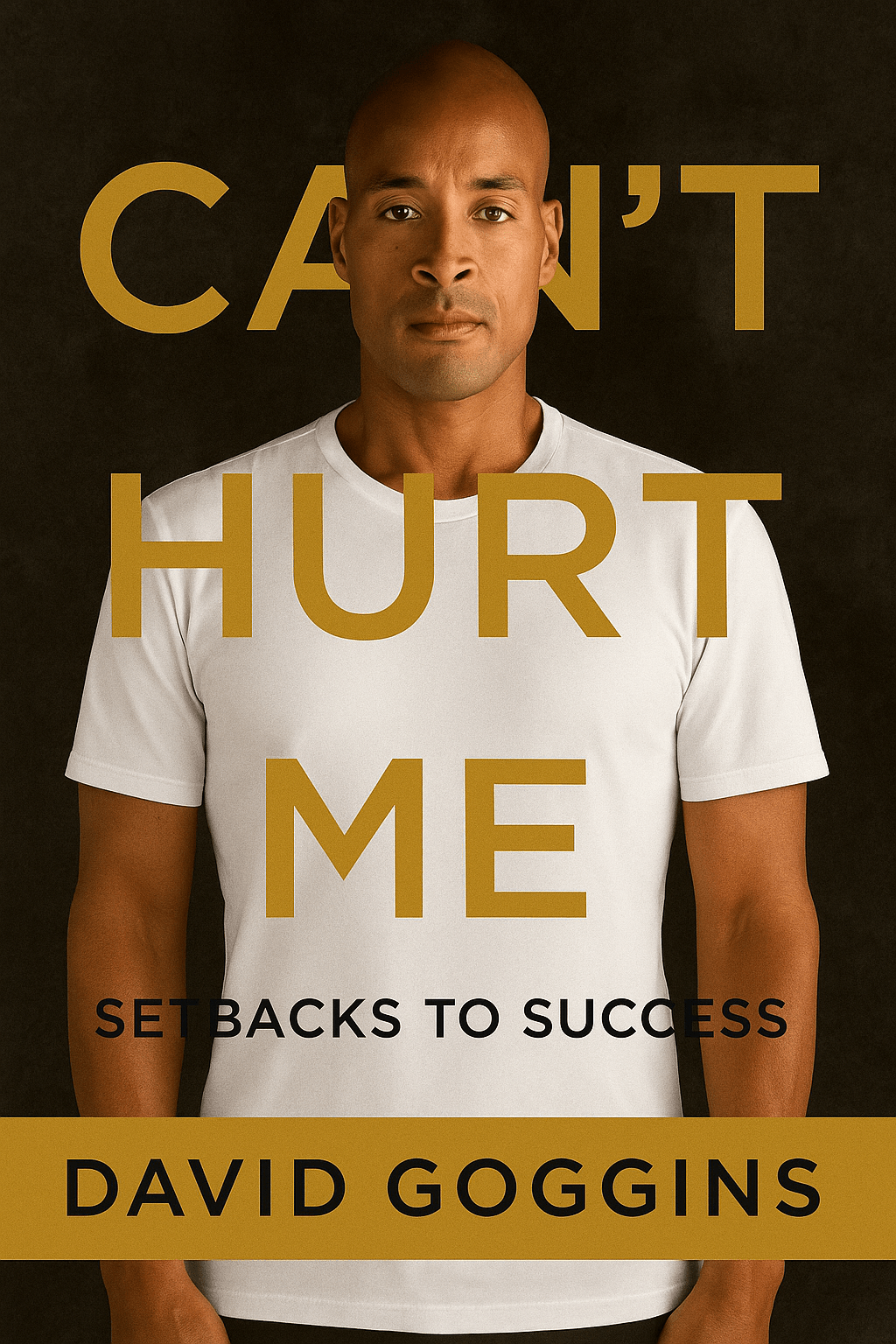
David Goggins’ story reads like a war journal. Born into abuse and grinding poverty , he turned every trauma into fuel. A former Navy SEAL and ultramarathon legend, Goggins literally wrote down phrases like “callus your mind” and “accountability mirror” to survive the hardest trials . Can’t Hurt Me is his unflinching playbook: a raw, no-excuses roadmap to mind over matter. Let’s break down his core mindset tools and how you can use them.
The 40% Rule: You’re Only Getting Started
Your brain is a liar. Goggins’ famous 40% Rule means: when your mind screams “I’m done,” you’ve only tapped ~40% of your potential . In practice, this meant that during a 135-mile Death Valley ultramarathon, Goggins felt completely spent — yet somehow dug deeper and kept moving. In his weight-loss crusade he was 300 pounds, but refused to stop before losing 100 pounds in 3 months to qualify for Navy SEAL training . His mantra? “Don’t stop when you’re tired, stop when you’re done.”
Actionable Insight: Next time you feel like quitting (a workout, a late-night project, a hard deadline), pause. Remember Goggins: you haven’t even reached your limit yet. Force yourself to do just 10–20% more work. For example, finish one more lap when your legs burn, or write one more paragraph when you feel “finished.” You’ll train your mind to tolerate far more than you think possible.
The Accountability Mirror: Brutal Self-Honesty
Goggins taught himself to look in the mirror every day and call himself out. He covered mirrors with sticky notes spelling out truths like “you’re fat” or “you’re not smart enough” . Every morning he faced the most important conversation of all – the one with himself – and confronted excuses head-on. If he saw weight gain, the note read “very fucking unhealthy” – a slap of honesty. If he felt weak, he posted reminders of how hard he needs to work. This daily drill forces radical accountability. No excuses. If you lie to yourself, you’ll never grow .
Actionable Insight: Set up your own accountability mirror. Write 2–3 questions or statements on post-its (e.g. “Are you living up to your goals? Why not?” or “Stop coddling yourself!”) and stick them to your bathroom mirror. Each morning, stare yourself in the eye and answer honestly. Point out laziness or half-effort and demand better. This gut-check fuels discipline. Make it a ritual: the most powerful conversations you’ll have are the ones with yourself .
Callus Your Mind: Embrace the Suck
If hands can get calluses, so can your mind. Goggins “callused his mind” by willingly exposing himself to pain and boredom until the mental sting faded . He ran in the freezing rain, did brutal workouts, and relived trauma – over and over – until resistance vanished. “Some people say triple down on your strengths… but if you really want true mental toughness you have to triple down on your weaknesses. And that’s the only way you can callous your mind.” He literally embraced the suck of discomfort.
Actionable Insight: Seek out a daily “suck workout” or challenge. It could be a freezing cold shower, a set of burpees to failure, a pre-dawn run, or diving into a topic you hate. The first time will hurt. The second time hurts less. Keep repeating. Each “initiation” adds another layer of mental callus. Over time, situations that once made you quit will barely phase you.
Fill Your Cookie Jar – Strength from Successes
Goggins carries an inner cookie jar of hard-won victories, and he dips into it whenever life gets brutal . These aren’t half-forgotten memories – he taps into the exact feelings of overcoming odds. As he says, “I actually tapped into the emotional state I felt during those victories… We all have a cookie jar inside us… Even if you’re feeling low and beat down by life right now, I guarantee you can think of a time or two when you overcame odds and tasted success.” Remembering those moments floods your system with confidence and strength.
Actionable Insight: Create your own cookie jar. Keep a running list (in a notebook or phone) of past wins: times you crushed a goal, endured pain, or bounced back from failure. When you face a tough day, read through them. Feel the pride and power again. Your past toughness is proof you can handle today’s challenge.
Key Battles That Forged the Goggins Mindset
David’s core principles didn’t spring from a textbook – they were hammered out in real life:
Abusive Childhood: He grew up abused by his father and living in fear on the family’s Skateland rink . Instead of breaking, this trauma made him obsessed with never feeling weak again. (“He wants you to be obsessed to the point where people will think you’re nuts,” is his warning .) Flipping the Script on Laziness: In his 20s he was 300 pounds and depressed. Horrified, he flipped a switch: in three months he blasted off the first 100 pounds so he could “get some purpose” . He learned that action cures fear, so he embarked on grueling training. Navy SEAL Hell Weeks: He became a SEAL after multiple attempts (including failing Air Force tech school and a heart surgery). Each failure and injury just fueled his obsession. He refused to quit, logging countless extra workouts. The message: “There are no shortcuts”, no governor on effort. Ultramarathon Legend: When he ran 135 miles through Death Valley (Badwater) in 2007, he nearly died on the course – but kept going. He used the 40% Rule on brutal mountain climbs and 130°F heat. His third-place finish (beating his own time by 4 hours!) was achieved by embracing every ounce of pain. Personal Mottos: After each ordeal, Goggins jotted down lessons. Hence the odd but powerful phrases: “Armor your mind,” “Get comfortable being uncomfortable,” “Perform without purpose” (meaning don’t train aimlessly) . These maxims defined his ethos.
Each crucible chipped away excuses and built the Goggins philosophy: Comfort is the enemy of achievement. He learned that success comes from saying “no” to easy and “yes” to hardship, day after day.
Who Can’t Hurt Me Is Not For
This book is NOT a gentle read or fluffy pep-talk. It’s a merciless gut-punch. If you’re looking for shortcuts, feel-good affirmation, or an easy ride, move on. Can’t Hurt Me isn’t for:
People content with comfort. (Goggins lives under constant self-imposed suffering to grow. If you don’t want to embrace the suck, this will feel insane.) Those who blame outside factors. (If you’re not willing to take 100% accountability for your situation, the accountability mirror will be brutal.) Anyone scared of hard work. (Goggins demands obsessiveness. He’s not into motivation as a feel-good vibe – he wants you so driven that others call you “fucking nuts” .) Readers seeking a quick fix. (These principles work only if you do the work. There’s no magic pill – he’ll make you own your failures and grind through them.)
In short: if you expect coddling, this book will slap you. But if you crave real growth through relentless self-discipline, it will change your life.
Ready to Get Hard? Reflect and Act
Now the ball is in your court. Goggins sets the bar high to show you it can be done. Ask yourself: “What challenge am I going to push through today that I would normally quit?” Are you ready to confront your own mirror and push past 40%? The struggle begins now. Stand up, embrace the pain, and grow.
What’s your first uncomfortable step? Choose one tiny pain point to tackle this week – a cold shower, an extra mile, an honest mirror check – and report back to you.
Sources: Lessons and quotes above are drawn from David Goggins’ Can’t Hurt Me and related interviews/transcripts , as well as biographical summaries that reveal the real-life crucibles behind his mindset.