Tag: Productivity

  • 🧠 Daily Kaizen 008: Spend 5 Minutes Doing Nothing (Literally Nothing)

    🧠 Daily Kaizen 008: Spend 5 Minutes Doing Nothing (Literally Nothing)

    You don’t need another productivity hack.

    You need a moment to be a human being again.

    🛑 The Kaizen

    Spend 5 minutes doing absolutely nothing.

    No scrolling.

    No reading.

    No music.

    No “guided meditation.”

    Just sit. Breathe. Exist.

    💡 Why It Works

    We live in a world addicted to inputs:

    📱 Screens

    📢 Noise

    🧠 Dopamine hits every 7 seconds

    But your brain isn’t built to run like that.

    It needs space. Stillness. Quiet.

    Doing nothing for 5 minutes per day gives your nervous system the message:

    “You’re safe. You can rest. You don’t have to perform right now.”

    From that stillness?

    Clarity returns.

    Creativity rises.

    Self-awareness sharpens.

    🧪 What the Science Says

    Mind-wandering mode (Default Mode Network) is where deep insight, memory consolidation, and creative problem-solving happen Brief moments of intentional stillness reduce cortisol and improve focus The “do-nothing” state activates parasympathetic regulation (rest-and-digest mode)

    ✅ How to Do It

    Set a timer for 5 minutes Sit somewhere still. No goals. No breathing techniques. Just… nothing. Let your mind go wherever it wants. Just don’t act on it.

    That’s it.

    This is the opposite of hustle culture.

    It’s where your real power starts to return.

    ⚙️ How It Stacks

    This habit connects to:

    Emotional regulation Mental clarity Stress reduction Intuition Creativity Long-term discipline (because you’re not always running on fumes)

    🧠 Final Thought

    You don’t need to fill every gap in your day.

    Sometimes the most productive thing you can do…

    is nothing at all.

  • The System I Wish I Had Years Ago

    The System I Wish I Had Years Ago

    Most self-improvement advice sounds great in theory.
    But when it comes time to apply it consistently, especially when life gets hard, it falls apart.

    Motivation fades.
    Discipline cracks.
    We revert back to default.

    I’ve spent the last year reverse-engineering why.

    The truth is:
    You don’t need more “inspiration.”
    You need a system that meets you where you are—and builds you brick by brick.

    That’s why I’m creating the 100-Step Personal Development System,
    A step-by-step framework to help you:

    • Build real discipline
    • Level up in all key areas of life
    • Stop relying on motivation
    • Become someone you actually respect

    It’s not finished yet.
    But it’s getting close.
    And when it drops, you’ll have the full blueprint.

    Until then, I’ll be dropping sneak peeks here.
    Mini-lessons. Daily wins. Foundational principles.

    Watch this space.

  • Create Your Environment to Force Success

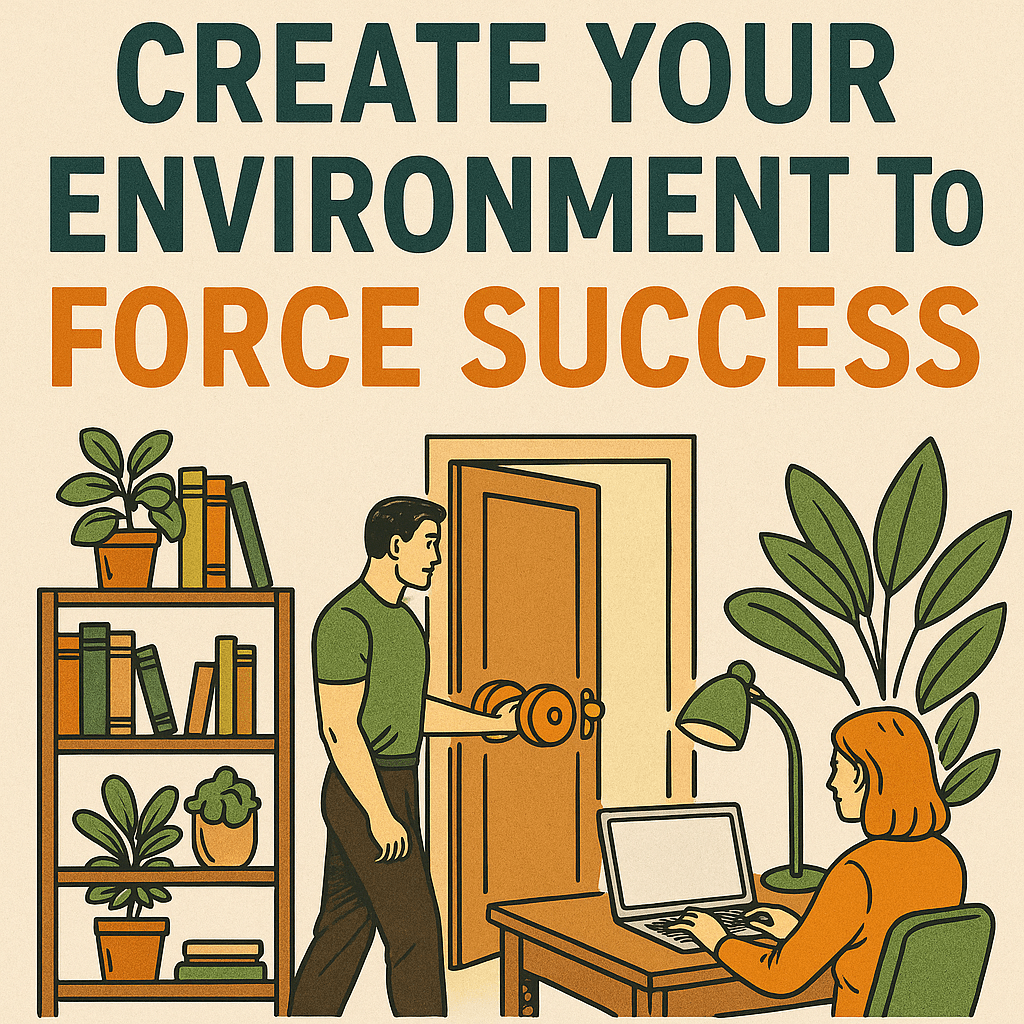
    Create Your Environment to Force Success

    Ever set a goal – like hitting the gym at 6 AM or finally cutting out late-night snacks – only to see your willpower fizzle out by day two? It’s not just you. In fact, studies show that a large portion of our daily actions are automatic responses to the cues around us . Your kitchen counter and living room layout might be quietly training you more than your intentions. As Stanford researcher B.J. Fogg puts it, “There’s just one way to radically change your behavior: radically change your environment” . In other words, if willpower isn’t doing the trick, change your surroundings. By redesigning your space, you can turn good habits into the easy, default choice and make bad habits much harder.

    Why Environment Trumps Willpower

    Habit experts agree that willpower alone is a weak strategy. James Clear bluntly notes, “in the long-run (and often in the short-run), your willpower will never beat your environment” . People who seem ultra-disciplined aren’t superhuman – they’ve simply structured their lives so they don’t have to rely on heroic self-control . For example, nearly identical neighbors can behave very differently if their environments differ. In one striking study, Denmark and Sweden had wildly different organ donation rates (4% vs 86%) even though their cultures are similar . The only difference was the forms people were given – in Sweden citizens were by default organ donors (opt-out), whereas Danes had to opt in. This tiny tweak in the choice architecture shows how your environment can heavily sway decisions .

    Instead of expecting yourself to fight every craving or distraction, make the healthy or productive choice the path of least resistance. Each time you step into your kitchen, gym, or home office, you should ideally be funneled toward positive actions – not sabotaged by hidden temptations. Remember James Clear’s insight: your environment is the “default option to which you are assigned” . If junk food is on the counter and veggies are hidden, you’ll snack mindlessly. If your desk is cluttered and your phone is buzzing, focus will slip away. The good news? You can design your environment for success . By placing hurdles in the way of bad habits and removing barriers to good ones, healthy choices become automatic and willpower is freed up for truly tough tasks.

    5 Ways to Create a Habit-Friendly Environment

    Pre-Plan and Prepare: Reduce friction for good habits. Lay out your gym clothes or set your sneakers by the door the night before so it’s easy to exercise in the morning . Fill a few water bottles each morning and place them in spots you frequently visit . If you want to take vitamins or medications, leave the bottle right next to your toothbrush or coffee mug. These small prep steps mean you have one less excuse to skip your new habit. In a habit-friendly environment, the right tools and gear are always within reach. Make Healthy Choices Obvious: Arrange visual cues so the good stuff grabs your attention. Keep a bowl of fruit on the counter and hide sugary treats in a cupboard or another room . Buy fun, colored plates that make veggies look more appealing – one study found people serve themselves 30% more on larger, dark-green dishes . Similarly, if you want to read more, place books or study materials in clear sight (and put your remote out of sight). When the reminder is right in front of you, you’re far more likely to act. As James Clear advises, make cues for your preferred habits big and prominent, so the best choice is also the obvious one . Increase Friction for Bad Habits: Do the opposite for temptations. Put the cookie jar on a high shelf or empty it entirely. Hide the TV remote in a drawer and toss a book in its place . In one clever example, simply turning living room chairs so they don’t face the TV made people watch way less TV (and pick up a book instead!) . The goal is to create tiny hurdles for bad habits – even an extra 10-second walk to the snack drawer or phone creates a pause where you can choose differently. Remember: if the junk food is visible, you’ll eat it . Out of sight usually means out of mind, so clear the clutter that triggers your worst impulses. Optimize Your Work Space: Clear, focused spaces foster productivity. Designate a tidy “work only” area and keep it free of entertainment cues . Silence or put your phone on Do-Not-Disturb, and if needed use website blockers during deep work sessions. Organize your desk so only what you need is on it – for example, leave your computer on a page you want to study or a project to work on tomorrow. As one writer found, strictly associating his desk with writing (and removing “fun” apps and games) eliminated most distractions . By treating your environment like a training partner, you set yourself up to succeed: a clutter-free space and clean desktop mean you expend less mental energy fighting distractions . Leverage Your Social and Digital Environment: The people and platforms around you count too. Join a workout group, find a study buddy, or post your goals to friends – social pressure can be a powerful cue. In digital spaces, uninstall apps or mute channels that derail you, and fill your feeds with inspirational or educational content instead. For example, if you want to write more code, join an online coding community; if you want healthier eating, follow recipe bloggers. Surrounding yourself with supportive friends and positive influencers creates a naturally habit-friendly environment. As FasterCapital points out, even our homes benefit from social cues – think about coworkers reaching for doughnuts less often when everyone in the office is on a shared health kick .

    Each of these tweaks follows one core idea: make the right choice the easy choice . Reduce steps to good behavior and add steps to bad behavior. Over time, these small changes compound. As Fogg reminds us, “Don’t rely on willpower alone, design your environment to support your desired behavior” .

    Your Next Move: Redesign One Thing Today

    Don’t wait for “motivation” to strike. Be proactive. Ask yourself: What one change in my surroundings would make success inevitable? It might be as simple as placing a water bottle on your desk or moving your alarm clock across the room so you have to get up. Maybe unplug the TV for the week, or park your bike right by the front door. Take action now: pick one key area (kitchen, bedroom, office, or digital space) and tweak it.

    By taking control of your space, you’re “the designer of your world and not merely the consumer of it” . A well-designed environment is a powerful ally – it nudges you toward workouts, healthy meals, focus sessions and away from bad habits, often without any extra effort. Remember the mantra of environment design: if you can’t change yourself, change your surroundings. Transform one corner of your life today and watch how easy, automatic success becomes in your new, habit-friendly world.

    Bold takeaway: Start small but think big – make one small environment change now and let your space help you succeed.

  • Atomic Habits: 6 Key Insights for Building Lasting Change

    Atomic Habits: 6 Key Insights for Building Lasting Change

    James Clear’s Atomic Habits shows that tiny daily changes lead to big results.  Small routines (“atomic habits”) may seem trivial alone, but compounded over time they produce remarkable outcomes .  Clear emphasizes building sustainable systems of behavior – focusing on the type of person you want to become – rather than chasing distant goals .  In practice this means shaping your identity and environment to make good habits automatic and bad habits difficult.  The book is packed with actionable strategies for anyone who wants to improve performance, productivity, and personal growth.

    1. Identity-Based Habits

    Clear argues that true habit change starts with identity.  Instead of obsessing over outcomes (like “lose 20 pounds”), focus on who you want to become (a healthy person) .  Every habit then becomes evidence of your new identity: reading one page a day proves you’re a reader, one push-up makes you a fitness-minded person.  By aligning habits with your self-image, you build lasting change from the inside out.

    Actionable Takeaway:  Define your ideal identity (“I am an active person,” “I am a reader”) and pick one tiny habit that reflects it.  For example, if you want to be a morning person, make your bed every day first thing.  This links behavior to identity and reinforces who you want to be.

    2. 1% Improvements

    A core insight is that tiny gains compound.  Clear calculates that “if you get one percent better each day for one year, you’ll end up thirty-seven times better by the time you’re done” .  Initially a 1% improvement isn’t noticeable, but small changes accumulate – like an airplane making a 1% course correction and landing in a completely different place .  This reframes success as the result of consistent tiny wins, not sudden overhauls.

    Actionable Takeaway:  Pick one micro-improvement and stick with it daily.  For example, add just one extra push-up each workout, or read one more paragraph of a book each night.  These 1% steps keep you motivated and compound into big gains over months.

    3. Habit Stacking

    “Habit stacking” leverages your existing routines as triggers for new habits.  Clear suggests using the formula “After/Before [CURRENT HABIT], I will [NEW HABIT]” .  For instance: “After I pour my morning coffee, I will meditate for one minute.”  By attaching a new action to a well-established habit, you create an obvious cue and make the new behavior easier to remember.  Over time, these little stacks chain into powerful routines (e.g. make coffee → meditate → write a to-do list).

    Actionable Takeaway:  Identify a daily habit you already do (like brushing teeth or taking off shoes) and attach one small new action.  For example, after you sit at your desk, open a book for two minutes.  Linking habits helps momentum build naturally.

    4. Environment Design

    Clear shows that context drives behavior: people often act according to their surroundings, not just willpower .  A simple cue in your environment can trigger (or break) a habit.  For example, placing your running shoes by the door makes morning jogs easier, while hiding junk food in the pantry reduces cravings.  In other words, “structuring your environment to favor good habits significantly increases adherence” .  Design your workspace, home, and schedule so that good choices are obvious and bad ones require extra effort.

    Actionable Takeaway:  Make habit cues visible and friction low.  If you want to write each night, leave your journal on your pillow.  If you want to eat healthier, put a fruit bowl on the counter and remove sugary snacks from view.  These small tweaks “nudge” you toward success.

    5. Make It Easy

    The third law of behavior change is to reduce friction.  Clear recommends using the Two-Minute Rule: start any habit so small it takes two minutes or less to do .  For example, if you want to read more, begin by reading just one page per day.  By dramatically lowering the barrier to start, you’ll actually begin the habit; once started, it often naturally expands.  This principle turns daunting goals into manageable steps.

    Actionable Takeaway:  Break down a habit into its smallest form.  If you aim to work out, start with just one push-up or one minute of exercise.  These tiny steps are easy to do on even your busiest day, and getting started builds momentum to keep going.

    6. Habit Tracking

    Keeping a visual log of progress makes habits more motivating and satisfying.  A simple habit tracker (X-ing off days on a calendar) provides immediate feedback that you “completed your habit” and signals daily progress .  Seeing a growing streak is motivating – nobody wants to break the chain .  Tracking also keeps you honest about your behavior (we often overestimate how well we’re doing).  By regularly marking achievements, you get quick wins and a sense of accomplishment each day.

    Actionable Takeaway:  Use a calendar, app, or journal to tick off each day you perform a habit.  For example, shade one square on a calendar whenever you practice a new skill.  The visual streak will encourage you to maintain consistency.

    1% Better Challenge

    Put these ideas into practice with a “1% Better” challenge.  Choose one tiny habit and commit to improving it slightly every day for a week.  For instance, add just one minute of movement to your daily walk, or answer one extra customer support email each day.  Track it visibly (on a calendar or whiteboard) and don’t let yourself break the streak twice in a row.  Remember, small changes compound: as Clear says, daily 1% improvements will make you exponentially better over time .

    Key Insights at a Glance

    Identity-Based Habits: Become the person you want to be (focus on identity, not just outcomes) . 1% Improvements: Tiny daily gains add up dramatically . Habit Stacking: Pair a new habit with an existing routine . Environment Design: Shape your surroundings to make good habits easy and bad habits hard . Make It Easy: Use the Two-Minute Rule to keep starting simple . Habit Tracking: Log each success to build momentum and accountability .

  • Thinking, Fast and Slow – Mastering Your Mind for Better Decisions

    Thinking, Fast and Slow – Mastering Your Mind for Better Decisions

    Thinking, Fast and Slow by Daniel Kahneman is a modern classic on how our minds work. Kahneman’s main thesis is that we have two modes of thought: “System 1”, which is fast, instinctive and emotional, and “System 2”, which is slower, deliberate and logical . The book shows how these two systems shape our daily judgments: often we rely on quick gut reactions (System 1) and only occasionally engage careful analysis (System 2). Along the way, Kahneman catalogs dozens of cognitive biases – systematic thinking errors – that subtly distort our perception of reality . In short, Thinking, Fast and Slow is a deep dive into the “why” behind our decision habits and how to become more aware of them.

    System 1 vs System 2

    Our brain runs on dual tracks . System 1 is the autopilot: it works automatically and quickly with little effort or awareness . It handles routine tasks (like reading simple sentences or recognizing faces) in a snap. System 2 is the pilot that kicks in when things get hard: it allocates attention to effortful mental activities, like solving a math problem or learning a new skill . Most of the time we glide on System 1 without noticing.

    Takeaway: Recognize when you’re on autopilot. For important decisions or complex problems, slow down and engage System 2 (e.g. pause, gather more info, or run through a quick cost/benefit list) to avoid simple mistakes .

    Cognitive Biases

    Cognitive biases are hidden shortcuts in our thinking that skew judgments . They arise because our brain tries to simplify decisions by filling gaps with intuition. For example, we might favor information that’s easy to recall or ignore contradictory data. Kahneman and Tversky introduced this idea by showing we systematically deviate from rationality . In practice, this means even smart people can confidently hold flawed beliefs because they feel familiar or coherent.

    Takeaway: Be aware of bias traps. When you catch yourself jumping to conclusions, ask: “Could I be biased here?” For big decisions, list assumptions and seek diverse opinions to spot any unconscious bias.

    Anchoring

    Anchoring is a common bias where the first piece of information we hear sets the tone. Kahneman explains that people tend to rely heavily on the initial number or fact (the “anchor”), even if it’s irrelevant . For example, seeing a high “original” price tag makes a sale price feel like a great deal, even if the sale price is still overpriced.

    Takeaway: Before buying or deciding, try resetting the anchor. Consciously ignore any first number or reference, and consider a broader range of information. Pause and ask: “Is my judgment being skewed by the first value I saw?”

    Loss Aversion

    Loss aversion describes how losses hurt more than equivalent gains please . In Kahneman’s words, “losses loom larger than gains.” For example, losing $50 feels more painful than the joy of finding $50. This bias explains why we might avoid risks: we fear losing what we have far more than we value potential gains.

    Takeaway: Reframe how you think of choices. Whenever a decision feels scary, list both the potential losses and gains. Remind yourself that a missed gain isn’t as bad as you might feel. This balanced perspective can prevent over-cautious decisions driven by fear of loss.

    Overconfidence

    We tend to overestimate our abilities and the accuracy of our judgments . Kahneman shows that our confidence often comes from the easy “story” our mind tells, not from solid evidence . For instance, someone might overrate their skill at picking winning stocks or be sure a project will succeed because they underestimate hidden risks.

    Takeaway: Check your confidence with reality. When planning or forecasting, deliberately look for disconfirming evidence or run the numbers rather than relying on gut feeling. Cultivate a mindset that your first intuition might be wrong.

    Law of Least Effort

    Kahneman notes a psychological principle: a “law of least effort” . If there are multiple ways to do something, our brain will gravitate to the easiest path. We prefer routines, shortcuts and minimal mental work . This is why forming good habits is vital: once a task is automatic, it feels easy, but new or complex tasks activate System 2 and feel “hard.”

    Takeaway: Leverage this laziness for good. Design your environment so good decisions require minimal effort (e.g. lay out your gym clothes the night before). Conversely, if you want to challenge yourself, force a small additional effort step (like taking the longer route or reading the full report) to activate deeper thinking.

    1% Better Action

    Today’s 1% Challenge: Pick a decision or habit and apply one Kahneman idea. For example, next time you make a purchase, pause and ask if your mind is anchored by the first price you saw. Or before a meeting, do a 5-second check: am I running on autopilot (System 1)? If yes, take three deep breaths and set a goal to listen more actively (switch on System 2). This tiny pause builds the habit of mindful thinking, helping you grow a little bit every day.

    Key Takeaways

    System 1 vs System 2: Autopilot intuition vs. deliberate thought. Slow down for big decisions. Cognitive Bias: Mental shortcuts that skew reality. Question quick judgments. Anchoring: First info creates a mental “anchor.” Double-check if that number is biasing you. Loss Aversion: We dread losses more than we enjoy equal gains. Reframe with potential upside. Overconfidence: We often think we’re more right than we are. Seek facts and feedback to balance confidence. Law of Least Effort: The brain picks the easiest path. Make good choices effortless or add small hurdles to avoid automatic mistakes

  • Why Most People Fail at Skill Building—And How to Fix It

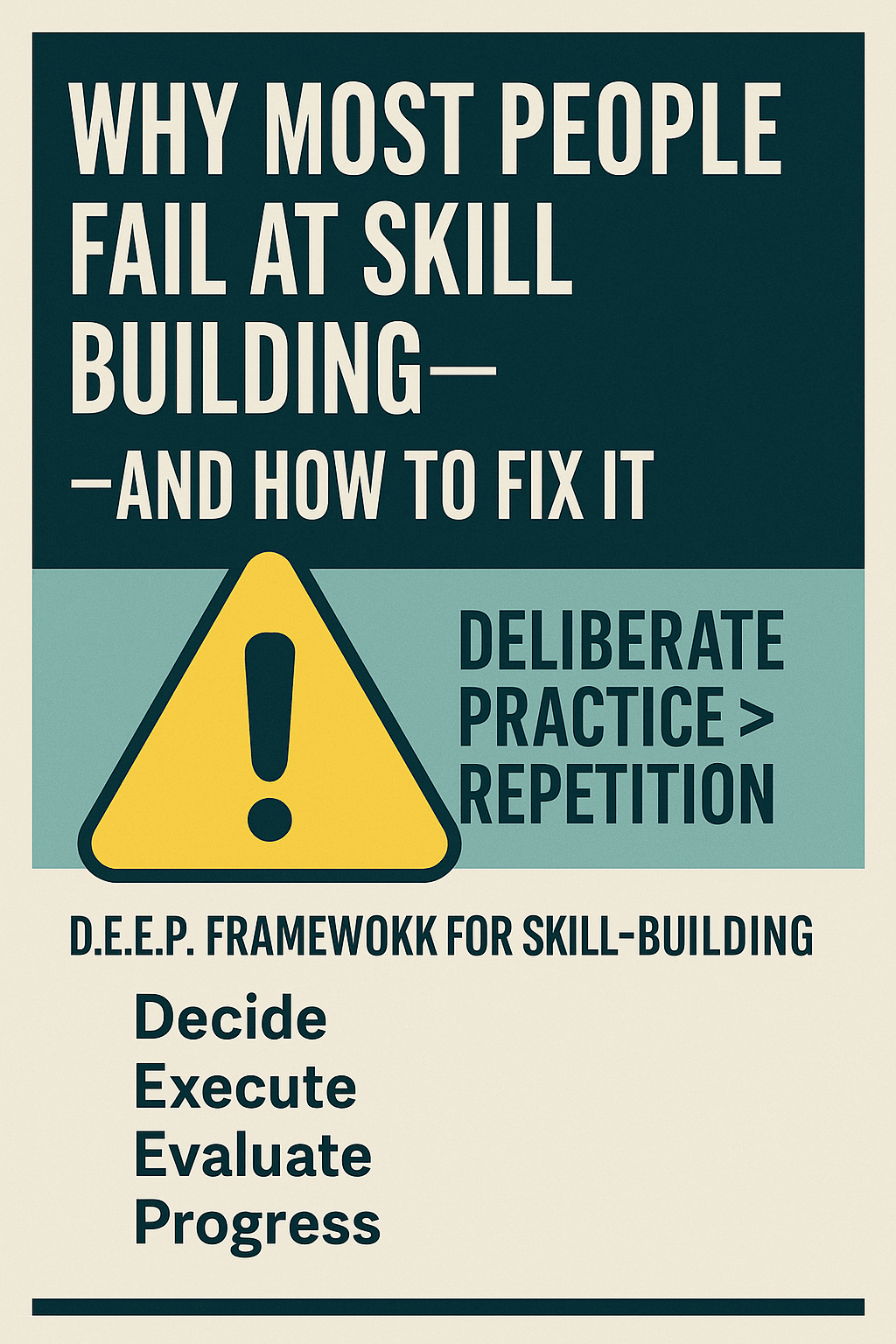
    Why Most People Fail at Skill Building—And How to Fix It

    85% of people quit learning a new skill before they ever master it . Why? Most are practicing wrong and end up discouraged.

    Common Pitfalls:

    Jumping in without clear goals (starting on impulse, then losing focus) . Mistaking passive learning for progress (watching tutorials without real practice) . Relying on mindless repetition with no feedback (reinforcing bad habits instead of improving).

    Deliberate Practice > Repetition: Not all practice is created equal. Simply grinding out hours on a skill doesn’t guarantee growth – you can repeat a bad technique 1,000 times and not get better . Deliberate practice, on the other hand, means practicing with purpose and focus. It’s about targeting specific weaknesses with full concentration and clear goals . This approach leads to real improvement, session after session. In fact, studies of top performers show their mastery was built on countless hours of deliberate practice – not just time on task .

    The D.E.E.P. Framework for Skill-Building:

    Decide: Pick one skill and set a clear, meaningful goal. Avoid vague aims or chasing every “shiny” new skill – clarity beats confusion. Execute: Commit to a consistent practice schedule. Focus on quality over quantity – each session should be purposeful. (You’re literally rewiring your brain with each focused repetition .) Evaluate: Regularly reflect and seek feedback. Identify what isn’t working and adjust. A coach, mentor, or even self-review can pinpoint weaknesses to fix . Progress: Raise the bar as you improve. Push slightly beyond your comfort zone each time – doing something a bit better or harder in every practice session ensures continuous growth .

    Mastery isn’t about how much you practice; it’s about how you practice. Practice with intention, and you’ll join the few who turn effort into real results.

  • 🏃‍♂️ Daily Kaizen: Move First Thing

    🏃‍♂️ Daily Kaizen: Move First Thing

    Before the coffee. Before the scrolling. Before your brain talks you out of it—move.

    This isn’t about crushing a workout or logging a 10K run. It’s about momentum.

    Just move your body as the first thing you do today.

    10 push-ups. 20 air squats. 1-minute plank. A walk around the block. Stretching on the floor.

    Doesn’t matter. What matters is that your first act of the day is physical.

    Why?

    Because the body leads the mind.

    You don’t wait to feel motivated—you generate momentum.

    And that energy carries into everything else.

    The Rule:

    🧠 Don’t think.

    📱 Don’t scroll.

    🚿 Don’t shower.

    Just move.

    Mini-Challenge:

    Set a timer for 5 minutes. Move nonstop. Then start your day.

    Small shift. Big ripple.

  • Daily Kaizen: One Tiny Change

    Daily Kaizen: One Tiny Change

    “Small hinges swing big doors.”

    Today’s Kaizen is simple but powerful: Pause before you reply.

    Before your next response – whether in a meeting, a text, or a face-to-face chat – take a slow breath, count to three, and let silence fill the gap. It gives your brain time to process, shows respect to the speaker, and transforms reactive habits into intentional choices.

    Do this just once today. Feel the shift.

    💬 What one conversation will you practice this with?

  • Transform Your Life with 5-Minute Habits

    Transform Your Life with 5-Minute Habits

    Feeling too busy to stick with healthy habits? You’re not alone. The good news is that big results can come from tiny changes. In fact, researchers and habit experts agree: consistent small habits beat occasional big efforts mindful.org. As James Clear (author of Atomic Habits) advises, scale new routines down so they take just a few minutes jamesclear.com. These 5-minute habits below transformed my fitness, mindset, and productivity – and they can do the same for you. They’re quick, science-backed, and realistic for even the busiest schedule.

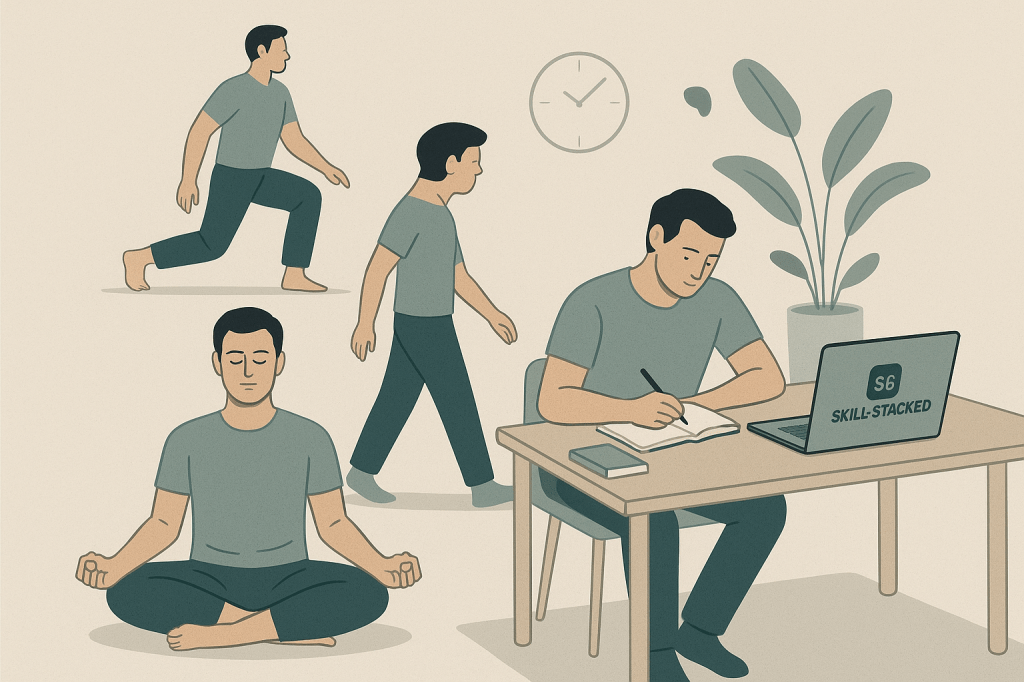
    1. 5-Minute Morning Workout (Move to Boost Energy)

    Kick-start your day with just five minutes of movement. It might not sound like much, but short daily workouts can deliver surprising benefits. One study found that just 5 minutes of daily strength exercises improved participants’ muscle strength, endurance, and flexibility, and even gave a mental health boost sciencealert.comsciencealert.com. Over 80% of people in the study kept the habit going after 4 weeks – a testament to how sustainable mini-workouts can besciencealert.com.

    Real-life example: try a quick bodyweight circuit each morning. For instance, do 10 squats, 10 push-ups, and 10 jumping jacks, repeating as many rounds as you can in five minutes. Or follow a short “5-minute morning HIIT” video. The key is raising your heart rate. Even a brief burst of moderate-to-vigorous exercise can sharpen your brain for hours afterward – studies show cognitive functions like memory and focus improve with as little as five minutes of aerobic activityneurosciencenews.comneurosciencenews.com. Over time, these micro-workouts add up. They build strength and stamina, and often inspire you to be more active later. Remember, consistency matters more than length. A quick workout you actually do every day beats an hour-long session you never find time for.

    2. 5-Minute Mindfulness Meditation (Mental Clarity on the Go)

    When schedules are packed, meditation might feel impossible to fit in – but just five minutes a day can make a real difference. Research indicates that frequency is more important than duration for mindfulness benefits mindful.org. In fact, a meditation teacher in one study noted that “if you meditate five minutes a day, every day, it’s a lot better than meditating half an hour once a week.” mindful.org Short daily sessions can reduce stress and improve your mood and attention span. One experiment with busy students found those who did a brief mindfulness practice each day reported lower stress and better mental health compared to a control group mindful.org.

    How to do it? Find a comfortable spot (sitting up in bed or even in your parked car before work) and focus on your breath for five minutes. You can use a guided meditation app set to 5 minutes, or simply take slow breaths and notice sensations. Some days you might only manage 2 or 3 minutes – that’s okay. The goal is to show up daily. These mini “mindfulness breaks” train your brain to pause and center itself. Over time, you may find you’re less reactive to stress and more focused in your work. Think of it as a mental reset button you can press anytime. Consistency will compound your results, much like physical exercise: tiny daily calm moments build an overall calmer, clearer mind.

    3. 5-Minute Gratitude Journaling (Boost Your Mood and Mindset)

    Taking a few minutes to write in a journal can dramatically improve your mindset. I was skeptical at first – what can you accomplish in 5 minutes? – but it turns out even a short gratitude journal habit packs a punch. Positive psychology research shows that a 5-minute daily gratitude journal can boost long-term well-being by over 10% tetonscience.org. (For context, that’s about the same impact as doubling your income on your happiness!) Journaling helps because it forces a moment of reflection and positive focus, shifting your mind away from stresses. In one study, people who journaled about their thoughts and goals each day saw a 23% drop in stress levels and improved decision-making after two months horizonpointconsulting.com.

    To start, pick a time – morning or evening – and jot down a few prompts. Write 3 things you’re grateful for (big or small), or list a couple of wins from the day. You could also do a quick “brain dump” of anything weighing on your mind, to gain clarity. Keep it simple: bullet points or short sentences are fine. The power is in doing it regularly, not in writing an essay. For example, each night I spend five minutes writing highlights of the day and one thing I learned. This little ritual helps me go to bed on a positive note, rather than ruminating over what went wrong. Over weeks, you’ll likely notice you feel more optimistic and resilient. Your 5-minute journal is a tiny investment that yields a calmer, happier you.

    4. 5-Minute Daily Planning (Prioritize Like a Pro)

    Ever start your day feeling overwhelmed by everything on your plate? Taking five minutes to plan can change that. Whether it’s first thing in the morning or the night before, a brief planning session brings laser focus to your day. Productivity coaches often suggest writing down your top 3 priorities for tomorrow as the last task of your workday. Why? Because planning ahead reduces decision fatigue and conserves your willpower for what matters medium.com. If you already know your game plan, you won’t waste mental energy figuring out where to start each day. As one productivity expert put it, if you “plan your days the night before, you’ll not only get more done in less time, you’ll also experience more flow.” medium.commedium.com

    A simple way to implement this habit is to use a template like the Skill-Stacked Daily Blueprint. Each evening, I spend 5 minutes with my Daily Blueprint sheet: I list the top tasks or goals for the next day, any appointments, and one healthy habit (like “morning workout”) I’ll do. This quick ritual gives me a head start. When a new day begins, I can jump right into my most important work instead of reacting to random emails or feeling unsure what to do first. You can also do it in the morning if that suits you better – write down a quick agenda while having your coffee. The point is to clarify your priorities. Those few minutes of planning will pay back an hour of extra productivity during the day. Busy people swear by this habit because it creates structure amid chaos. Try it for a week and see how much more directed and in control you feel.

    5. 5-Minute Movement Breaks (Refresh Your Body and Brain)

    Sitting all day wreaks havoc on both our bodies and focus. But the antidote doesn’t have to be hour-long gym sessions – short movement breaks sprinkled through your day can dramatically improve your health and concentration. Science is now telling us that even a 5-minute walk every half-hour can offset many of the negative effects of prolonged sitting health.harvard.edu. In one study, participants who took these mini walking breaks had 58% lower blood sugar spikes and reduced blood pressure compared to those who sat all day health.harvard.edu. Fatigue went down and mood went up too with frequent short walks health.harvard.edu. In other words, moving briefly but regularly helps keep your body energized and your brain sharp.

    You can adapt this idea to your routine. If you’re working from home, try doing a quick 5-minute stretch or walk around the block between Zoom meetings. In an office, take the long route to the restroom or do a lap of the floor. Even standing up to stretch your arms, neck, and back for a few minutes is worthwhile. I set a timer on my computer to remind me to “get up and move” every hour. Those mini-breaks are great for clearing mental fog. Often when I return to my desk, I find I can concentrate better on the next task. Over time, you’ll also notice less stiffness and more daily steps adding up. The key is making it a habit: tie it to something (for example, every time you refill your water, do a 5-minute walk). By treating movement as a non-negotiable part of your schedule, you’ll feel more alert and lively each day.

    Conclusion: Small Habits, Big Results

    Each of these habits takes only a few minutes, but together they’ve had a massive impact on my fitness and focus. The secret is consistency. Five minutes today doesn’t revolutionize your life – but five minutes every day? That builds momentum. These routines are so quick and easy that it’s hard to come up with an excuse not to do them. And on tough days when motivation is low, remember BJ Fogg’s advice: make it even easier. Do one minute, or one push-up, if that’s all you can – it still counts. What matters is showing up.

    Give these 5-minute habits a try. Start with one that speaks to you, and build from there. In a few weeks, you might be amazed at the changes in your energy, mood, and productivity. Tiny habits truly compound into big improvements over time, turning into an upward spiral of wellness and success.

    Ready to take the next step? To help you stay on track, we’ve created a handy tool – the Skill-Stacked Daily Blueprint. It’s a free, printable template for your 5-minute planning ritual (with space for your habits too!). [Download your free Daily Blueprint here] and start stacking those small wins each day. You’ve got this! 🚀