Tag: Productivity Hacks

  • 🧹 Daily Kaizen #5: Do One Chore You’ve Been Ignoring for 5+ Days

    🧹 Daily Kaizen #5: Do One Chore You’ve Been Ignoring for 5+ Days

    Small mess. Big drain.

    We all have one chore that’s been quietly haunting us.

    The overflowing laundry basket.

    The bin that needs emptying.

    That one dish that’s somehow avoided the sink all week.

    Here’s your Kaizen today:

    Do one chore you’ve been ignoring for 5+ days.

    Just one. The one that keeps whispering “later” every time you walk by.

    Because it’s not about being spotless — it’s about reclaiming your environment, one small victory at a time.

    🧠 Why this works:

    ✅ You clear the visual noise that subtly increases stress

    ✅ You disrupt the procrastination cycle (which bleeds into everything else)

    ✅ You earn a fast win that builds self-respect and momentum

    And when you complete it, something shifts:

    You move differently.

    Think more clearly.

    Feel more in control.

    🛠️ Try this:

    Set a 5-minute timer Pick the task you least want to do Don’t aim for perfection — just forward motion

    That one act becomes a ripple.

    And ripples become waves.

    ⚡ Final thought:

    If you can conquer a small thing you hate,

    you’re on your way to conquering bigger things that matter.

    So stop scrolling —

    and go dominate the dish, the drawer, or the damn laundry.

    You got this.

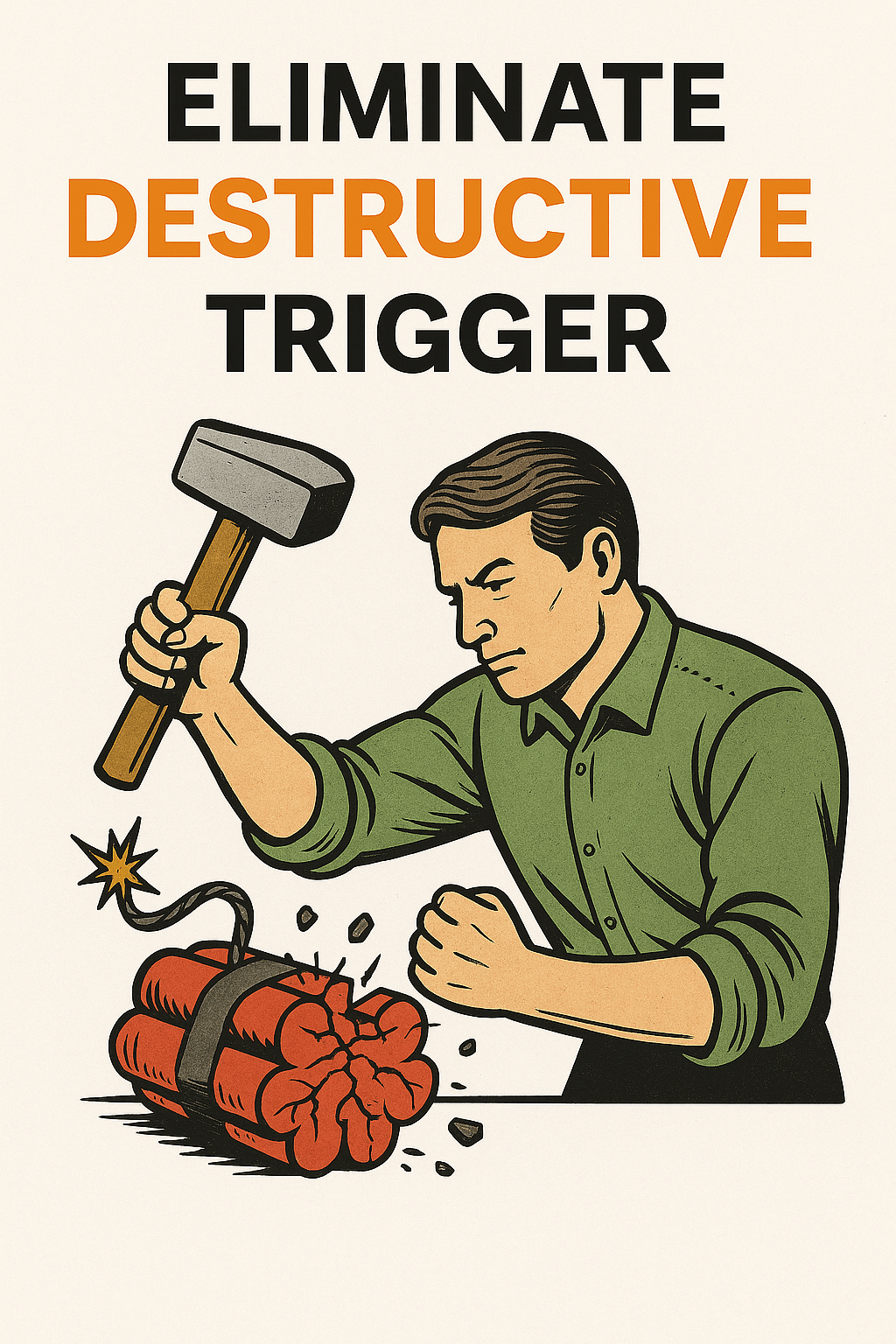
  • Eliminate One Destructive Trigger: Break Bad Habits and Upgrade Your Daily Routine

    Eliminate One Destructive Trigger: Break Bad Habits and Upgrade Your Daily Routine

    We all have that one invisible saboteur – a hidden cue or habit that derails our best intentions.  Perhaps it’s the ping of a phone notification that pulls you off task, a snack stored in plain sight that triggers mindless munching, or a late-night routine that leads to sleep loss.  These destructive triggers can quietly sabotage productivity, health goals, and personal growth, even when our motivation is high.  Imagine flipping the script: by identifying and eliminating just one key trigger, you could stop the chain reaction of self-sabotage and take control of your day.  In this post (Part 9 of our series on self-mastery), we’ll dive into the psychology and neuroscience of habit triggers, help you spot your own biggest trigger, and guide you through practical steps to remove or replace it.

    “Identify one destructive cue, remove it, and watch the dominoes of your day fall into place.”

    What Is a Destructive Trigger?

    Every habit starts with a cue – an environmental or emotional trigger that ignites a routine .  In psychology, this is often called the “cue” in the habit loop (cue–routine–reward). For example, seeing your smartphone buzz is the cue that launches a scrolling session, or feeling stressed at the office cues the routine of stress-snacking.  Over time, these cue–response loops become wired into the brain’s habit centers (the basal ganglia) .  The result is automatic behavior: you don’t even think before you reach for that cookie or flip open your phone – the trigger did it for you.

    A destructive trigger is simply one of those cues that consistently leads you off-track.  It’s a part of your environment or routine that sparks an unwanted behavior.  Importantly, removing or modifying this one trigger can prevent the unwanted habit from ever starting.  As cognitive neuroscience research shows, removing the environmental cue for a bad habit can “disrupt[]” the loop that keeps it going .  In other words, break the cue and you break the habit.

    A destructive trigger might be a time of day (e.g. 8 PM signals snack time), an emotion (like stress or boredom), a person, or even a physical object (like a cluttered desk or a pile of unfinished tasks on your calendar).  Whatever it is, it’s a predictable catalyst for self-sabotage.  It aligns closely with what experts call self-sabotage – behaviors that create problems in daily life and interfere with long-term goals .  For instance, Psychology Today notes that procrastination, comfort eating, or phone addiction can all be forms of self-sabotage triggered by specific cues .  Our job is to uncover which cue is your culprit, so you can stop it.

    The Brain and Habit Loops

    Understanding why triggers have such power means looking at your brain’s wiring. Neuroscience tells us that the brain uses habits to conserve energy – routine actions move from the deliberate prefrontal cortex down into the automatic basal ganglia .  Once this happens, a cue can flip the switch on a habitual routine without much conscious thought.  As one science news article summarizes: “habits happen when automatic responses outweigh our ability to consciously control them” .

    In practice, this means even a tiny cue (like your phone lighting up) can hijack your attention and automatically pull you into a familiar, often unwanted behavior .  For example, researchers have found that just hearing your phone buzz (even in your pocket) is enough to break your focus: “Unless your phone is fully silenced or off, it’s probably still distracting you…The familiar buzz buzz of a new notification is not as innocuous as it seems” .  That buzzing sound is literally a trigger that your brain has learned to respond to automatically, over and over again.

    The key insight from neuroscience is that good or bad, habits form from repeated cue–action pairings .  Repetition plus reward cements these associations.  But this also means that those same principles can be used in your favor.  You can replace an unwanted routine with a new one by linking it to the same cue or creating a new cue.  For example, if stress is your cue to snack, you might attach a different routine to that stress cue (like a short walk or a breathing exercise) that still delivers a reward (calm, or a sense of accomplishment) but is healthier . Over time, your brain will forge a new habit loop around the positive routine instead.

    Spot the Cue: Identifying Your Trigger

    First, let’s shine a light on that destructive trigger. This often takes conscious attention, because triggers act on autopilot.  Start by observing and documenting the problem behavior.  Keep a brief “trigger log” or journal. Whenever you catch yourself doing something unhelpful (procrastinating, over-snacking, doomscrolling, etc.), note what happened just before: the time, your location, your feelings, even who or what was around.  Psychology Today advises that “documenting and analyzing behavior is a key component of preventing self-sabotage” . In practice, this might mean writing down, “It’s 3 PM, I feel stressed and the first thing I did was open Instagram,” or “After dinner, saw chips on counter and snacked.” Over days or weeks, patterns will emerge.

    You can also apply a simple question when a negative habit occurs: “What was the trigger?”  Ask yourself what thought or emotion popped up just before the urge hit .  Often we find it was something like boredom, anxiety, or even a specific place or time.  For example, many people discover that Mondays in the office cue a sugary coffee or that arguing with family cues comfort eating.  By bringing this automatic link into awareness, you can catch the trigger in the act.

    Another check is to evaluate whether your behavior is aligned with your goals . If it’s not, the environment or cue around you may be to blame.  Psychology Today notes that misaligned behaviors that repeatedly undermine long-term goals are the hallmark of self-sabotage .  If you find yourself repeatedly veering off-course, look at what external or emotional cue led there.

    “Your environment is a radar; remove one blip, and your signals clear up.”

    Why That One Trigger Matters

    It might sound simple – one cue – but its effect can be huge.  Think of triggers as the first domino in a long chain.  When a trigger hits, it sets off a chain reaction of habits and justifications. For instance, one email notification at the wrong time can spiral into a day lost to distraction, or seeing a piece of cake can spark an entire evening of overeating.  Productivity and habit experts often point out that bad habits and procrastination usually start with an unnoticed trigger .

    Research confirms that even brief distractions have an outsize impact.  A Harvard Business Review article highlights how simply hearing your phone buzz—even if you don’t pick it up—harms your performance .  Similarly, studies on habit change emphasize that even one environmental cue can sustain a pattern of behavior .  That’s why zeroing in on one destructive trigger can feel so effective: when you remove that cue, the whole routine often fizzles out.

    Moreover, eliminating a trigger can help you break the cycle of self-sabotage.  Instead of using willpower alone, you starve the habit of its signal.  Scientists stress that removing triggers is often more reliable than fighting the urge after it appears .  In practice, that means you can stop unwanted habits before they even start.  Personal growth happens incrementally: by tackling just one habit loop at a time, you lay the foundation for bigger change .

    Remove or Replace: Transforming Your Trigger

    Once you’ve identified the culprit trigger, it’s time to eliminate or rewire it.  Here are evidence-based strategies:

    Modify Your Environment. Adjust your surroundings to cut off exposure to the trigger. As researchers note, “making desired behaviors easier to access encourages good habits, while removing cues that trigger unwanted behavior disrupts bad habits” .  For example, if junk food on the counter is your trigger, put it away or replace it with fruit. If your phone buzz distracts you, turn off notifications or place it in another room during focus times. Psychology Today even finds that changing locations can reset patterns: when people visit a new place or rearrange their space, their old habits “don’t stand a chance” thanks to different cues .

    A clutter-free, intentional workspace eliminates many visual cues that could derail focus.

    Use Implementation Intentions. This is a fancy term for “if-then” planning. Set a clear plan for what you’ll do when the trigger appears. For instance, “If I feel stressed in the afternoon, then I will take three deep breaths and stretch for two minutes.”  This kind of pre-planning has been shown to bridge the gap between intention and action by giving your brain an alternative response to an old cue . Replace the Routine. You’re not just ripping out a habit; you’re grafting in a new one. Decide on a positive action to follow the trigger instead. For example, if TV time at night cues snacking, vow to drink herbal tea instead whenever you start that show. Over time, your brain will form a new habit loop: the same cue (TV) now triggers tea and relaxation, not chips.  Western University research on habit change emphasizes this: instead of eliminating a behavior, “the routine can be replaced with a healthier alternative” so long as the new routine yields a satisfying reward .  Consistency is key: each time you honor the new routine, the old neural pathway for the bad habit weakens and the new one strengthens . Practice Mindfulness. Cultivate awareness of the trigger in the moment. Mindfulness slows down the automatic pilot. When you feel the cue or crave hit, pause and take three deep breaths. Ask yourself if you really want to follow the old routine or if there’s another choice. Science suggests that staying mindful and intentional can prevent you from defaulting into bad habits under stress .  Even a few seconds of breathing or noting your thoughts can break the automatic link. Align with Your Identity. Shift your mindset to reinforce the change. According to habit experts, lasting change often starts with believing you are the kind of person who doesn’t fall for that trigger .  Consciously tell yourself, “I am someone who doesn’t use my phone during dinner,” or “I’m the kind of person who chooses a short walk over a sugary snack.”  Each time you act in line with this identity, you gather small wins that prove it to yourself (for example, taking a walk three nights in a row) . Over time, your brain starts to embody that identity and the new behavior becomes second nature.

    These steps combine to break the trigger–habit loop. First, you starve the trigger of its power (by hiding or avoiding it). Then you rewire the loop with a new, healthy response and reward.  Remember: change is most achievable gradually, one small step at a time . Trying to remove every trigger at once can be overwhelming, so focus on the single most destructive one.  Once you eliminate that cue, celebrate the progress and notice how the rest of your day flows more smoothly.

    Action Steps: Your Daily Routine Upgrade

    Ready to put this into practice? Follow these action steps to eliminate your top trigger:

    Identify and Log: Keep a simple log for a few days. Note each time you slip or procrastinate. Write down the preceding cue (time, place, feeling) and your response. This will reveal your key trigger(s) . Analyze the Impact: Ask yourself, “How does this cue derail me?” and “How does the routine serve me (or not)?” Recognize the cycle of self-sabotage it creates . Alter Your Environment: Remove or hide the cue. If possible, take the object or context off the table entirely. (E.g., block distracting websites, put the candy dish out of sight, switch up your workspace .) Plan an Alternative: Decide on a healthier habit to follow the cue. Write an “If trigger, then do X” statement. Practice it until it feels natural . Leverage Identity: Frame the change in terms of who you want to become. Use affirmations or small identity-based goals (e.g. “I’m the type of person who …” ). Each time you act consistently, mentally tick it as a win. Reflect and Reward: Notice the difference when the trigger strikes and you make a new choice. Celebrate any success, no matter how small. This reward reinforces the new habit.

    By taking control of one destructive trigger, you upgrade your daily routine and break free from that nagging cycle of failure.  Over time, your progress compounds.  Eliminate the smallest trigger, and you might find yourself accomplishing tasks you once resisted, sleeping better, or finally sticking to a workout plan. This is the power of habit change: small shifts, big results.

    Actionable Takeaway: Commit right now to tackle one trigger. Carry a notebook or use a phone app for 3 days and track when your bad habit happens and why. Identify the cue. Then remove or change that cue in your environment (move it, hide it, silence it) and plan a positive alternative.  Use your identity (“I am someone who…”) to reinforce this change.  You will be amazed how one smart, research-backed tweak can turn your self-sabotaging patterns into empowerment for personal growth

  • Learn the 80/20 Rule (and Apply It Weekly)

    Learn the 80/20 Rule (and Apply It Weekly)

    Have you ever felt swamped by busywork while the real results barely budge? Imagine this: 80% of your impact comes from just 20% of your actions. That’s the magic of the 80/20 rule (Pareto Principle) – a proven productivity hack that can transform your week. Put simply, a small slice of tasks (the “vital few”) drives the lion’s share of success . Mastering this rule means focusing on high-impact habits and letting go of the rest – freeing up time and energy for what really matters. Don’t be the person wasting 80% of your effort on 20% of outcomes. Instead, unleash the power of focus, supercharge your productivity, and revolutionize your time management by applying 80/20 every week.

    Curious how it works? At its core, the Pareto Principle tells us that roughly 80% of consequences come from 20% of causes . For example, Asana explains that “for many outcomes, roughly 80% of consequences come from 20% of causes” . In other words, a tiny fraction of your inputs yields most of your results. This simple statistical pattern shows up everywhere: 80% of a company’s profits often come from 20% of its customers, 20% of tasks produce 80% of daily impact, and even 20% of your wardrobe gets 80% of your wear .

    Why the 80/20 Rule Matters for You

    Embracing the 80/20 rule is a game-changer for anyone chasing more time optimization and self-mastery. It’s the ultimate simplification hack: instead of spreading yourself thin, you concentrate on one-fifth of tasks that yield four-fifths of results . Productivity soars when you do this. As one productivity guide notes, focusing on the top 20% of tasks helps you “work smarter, not harder,” slashing busywork and creating outsized impact . You get more done in less time by ignoring low-value distractions.

    This laser focus also kills inefficiency. Most people scatter effort evenly across tasks, but 80/20 forces you to say no to the trivial many and yes to the vital few . This means less stress and overwhelm – you don’t need to tackle every little thing. Instead, you dramatically increase clarity on what truly moves the needle. With the 80/20 lens, you’ll spot that only a few habits or projects are worth your precious energy .

    Another huge perk: it frees up time for innovation and growth . When you trim away the 80% of tasks that add little value, you carve out space in your schedule. This leaves brain-space for creative thinking, relationship-building, or big-picture goal-setting – the real catalysts of long-term success . In short, the 80/20 rule is about doing less, but better. It helps you ditch the grind of busywork and focus on the key actions that transform your day and your life .

    Key Benefits of 80/20 (in brief):

    Massive impact: 80/20 lets you achieve the same (or better) results with a fraction of the tasks . Less stress: By blocking out the noise, you feel more in control and calm . Sharper focus: You spend your best hours on your most important work . Consistent growth: With weekly 80/20 planning, you continually refine your approach and iterate on what works .

    Find Your Personal 80/20: Action Steps

    Ready to harness this principle? Follow these tactical steps each week to uncover YOUR vital 20%:

    List everything. At the start of each week, dump all your tasks, goals, and projects into one place (paper, spreadsheet, or an app). ActiveCollab recommends doing this weekly so you only repeat the process once — planning five days ahead, which “not only makes it more efficient but also minimizes stress” . Seeing all tasks out in the open removes overwhelm and brings clarity . Spot the 20%. Go through your list and identify the tasks that truly move the needle. Ask: “Which 20% of my tasks will drive 80% of my desired results?” A time-tracking or value-ranking system helps. For example, rate each task on a 1–10 impact scale (like Supernormal suggests) . Or use the Eisenhower Matrix to flag important vs. busywork. The goal: spotlight your high-impact tasks – these are the ones you should prioritize. Prioritize them. Once you’ve identified your top 20%, rank or label them as Priority A. These tasks get top billing. Color-code or highlight them in your planner. ActiveCollab advises assigning your top tasks a “priority label” and making sure only about 20% of your tasks earn it . Schedule these priorities into your week’s calendar first, during your peak energy times . Eliminate or delegate the rest. The remaining ~80% of tasks are lower impact. Decide which of these can be dropped, delegated, or deferred. Think of it as spring cleaning: “constantly making more room for the work that matters and getting rid of the stuff that doesn’t add value” . For example, automate routine tasks, outsource admin work, or simply skip tasks that aren’t essential. Don’t cheat – ruthlessly cull the non-essentials so your schedule clears up. Review & repeat weekly. Each week, do a quick reflection: Did your top tasks produce big results? Tweak your list and strategy based on what you learn. Make a habit of asking: “Was that task part of my 20% most effective activities?” If not, consider cutting it next time. Over time, you’ll sharpen your instincts for high-leverage activities. A weekly 80/20 planning session ensures continuous improvement and keeps you on track .

    80/20 in Action: Real Examples

    Applying the 80/20 mindset works across every area of life. Here are a few real-world examples:

    Business/Work: Often, ~20% of clients or products generate ~80% of revenue. As one guide notes, “80% of a company’s profits come from 20% of customers” . Identify your top clients or projects and give them extra attention. The same applies to tasks: 20% of work tasks usually drive 80% of daily output . Focus meetings, calls, and strategy on that vital 20%. Health & Habits: A few core habits yield the majority of wellness benefits. For most people, regular exercise, good nutrition, and enough sleep (the “vital 20% habits”) produce about 80% of fitness and health outcomes . Instead of trying every trend, prioritize the basics that work for you. For example, a simple 30-minute walk or home workout beats spending hours on ineffective routines. Don’t waste time on 80% of fitness hacks – double down on the crucial few. Relationships: Not all relationships contribute equally to your happiness. Think of your social circle: usually a handful of friends or family (20% of people) provide 80% of your support and joy . Focus energy on those meaningful connections. Schedule quality time with the people who uplift you. By nurturing your vital few relationships and letting go of draining ones, you dramatically boost your personal fulfillment and support network.

    Build a Weekly 80/20 Habit

    The real power of the 80/20 rule comes when you make it a weekly routine. Here’s how to lock it in:

    Schedule a Sunday setup. Block 30–60 minutes each weekend to do your 80/20 planning. List upcoming tasks and identify which are worth your best time. Putting this on your calendar makes it simple and builds momentum. (Pro tip: doing it in one sitting makes your week 5 days smoother .) Time-block your priorities. Once your vital tasks are defined, schedule them on your calendar at high-energy times. Treat these blocks as non-negotiable deep work sessions . Protect them from interruptions (no meetings or notifications allowed!). This ensures the 20% tasks get done effectively. Reflect and adapt. At week’s end, quickly review: Which tasks moved the needle? What drained time without payoff? Adjust next week’s 20% accordingly. This iterative loop (plan → do → review) accelerates your growth. Remember: the goal isn’t to do more tasks, but to continuously hone in on the tasks that matter most. Celebrate 80/20 wins. Recognize the big wins from your high-impact tasks. Celebrate completing that crucial project or having a breakthrough conversation. These successes reinforce the habit and keep you motivated. Share progress with a coach or accountability partner to increase FOMO for not skipping this practice!

    By making 80/20 analysis part of your weekly rhythm, you turn it into a habit that compounds. Each cycle, you get better at spotting the vital few inputs to focus on. Over weeks and months, this commitment leads to massive productivity growth and personal progress.

    Start Today – Don’t Get Left Behind

    Ready to transform your productivity and growth? The 80/20 rule is simple, but its impact is profound. Don’t waste another week on busywork and mediocre results. Instead, decide now to do less, better. Identify your crucial 20% tasks this week, block time for them, and let go of the rest. Feel that surge of relief when your to-do list shrinks and clarity kicks in.

    Remember: time is your most valuable asset. By applying the Pareto principle weekly, you’ll inevitably do more of the work that matters and less of the stuff that doesn’t . Keep tweaking each week – this is your personal growth engine. Embrace the 80/20 mindset, and you’ll watch your productivity, time optimization, and self-mastery soar.

    Make this your highest-impact habit: start planning your next week with the 80/20 rule today, and keep refining it every Sunday. You’ll be amazed at how much you can achieve!

  • 🧠 Daily Kaizen: Add a “Why Am I Doing This?” Check

    🧠 Daily Kaizen: Add a “Why Am I Doing This?” Check

    Daily Kaizen – 1% Better Through Intentionality

    We live in a world wired for autopilot. Notifications, habits, and muscle memory often guide our actions more than conscious choice.

    But today’s Kaizen is simple and powerful:

    Before you do anything, pause for 3 seconds and ask yourself:

    “Why am I doing this right now?”

    ❓ What It Looks Like in Practice:

    You’re about to open Instagram… → “Why am I doing this right now?” → You realize you’re bored — not intentional — and choose to move instead. You’re halfway through rewriting the same sentence… → “Why am I doing this right now?” → You realize it’s procrastination in disguise. Hit publish. You start cleaning your inbox at peak creative time… → “Why am I doing this right now?” → You pause, close Gmail, and dive into deep work.

    💥 Why It Works:

    This one-second mental circuit breaker does two things:

    Interrupts automatic behavior Replaces it with intention

    You won’t always make the perfect decision. But you will start making conscious ones. And those compound.

    🪜 Kaizen Stack:

    Ask “Why am I doing this?” → Interrupt autopilot → Align with purpose → Stack wins that matter

    Try it once today. You’ll notice how often your time and energy try to drift off-course.

    This one habit pulls them back in.

  • 🧠 Daily Kaizen: Add a “Hard Thing First” Rule

    🧠 Daily Kaizen: Add a “Hard Thing First” Rule

    Action:

    Start your day by doing the one thing you’re most likely to avoid — before anything else.

    It could be:

    Sending the awkward email Starting the blog post Cleaning the nasty mess Hitting publish Going to the gym

    Why it works:

    That task weighs on you all day. Doing it first clears the mental fog and builds serious momentum.

    🪜 Kaizen Stack:

    Hard thing first → Fast confidence → Easier day overall

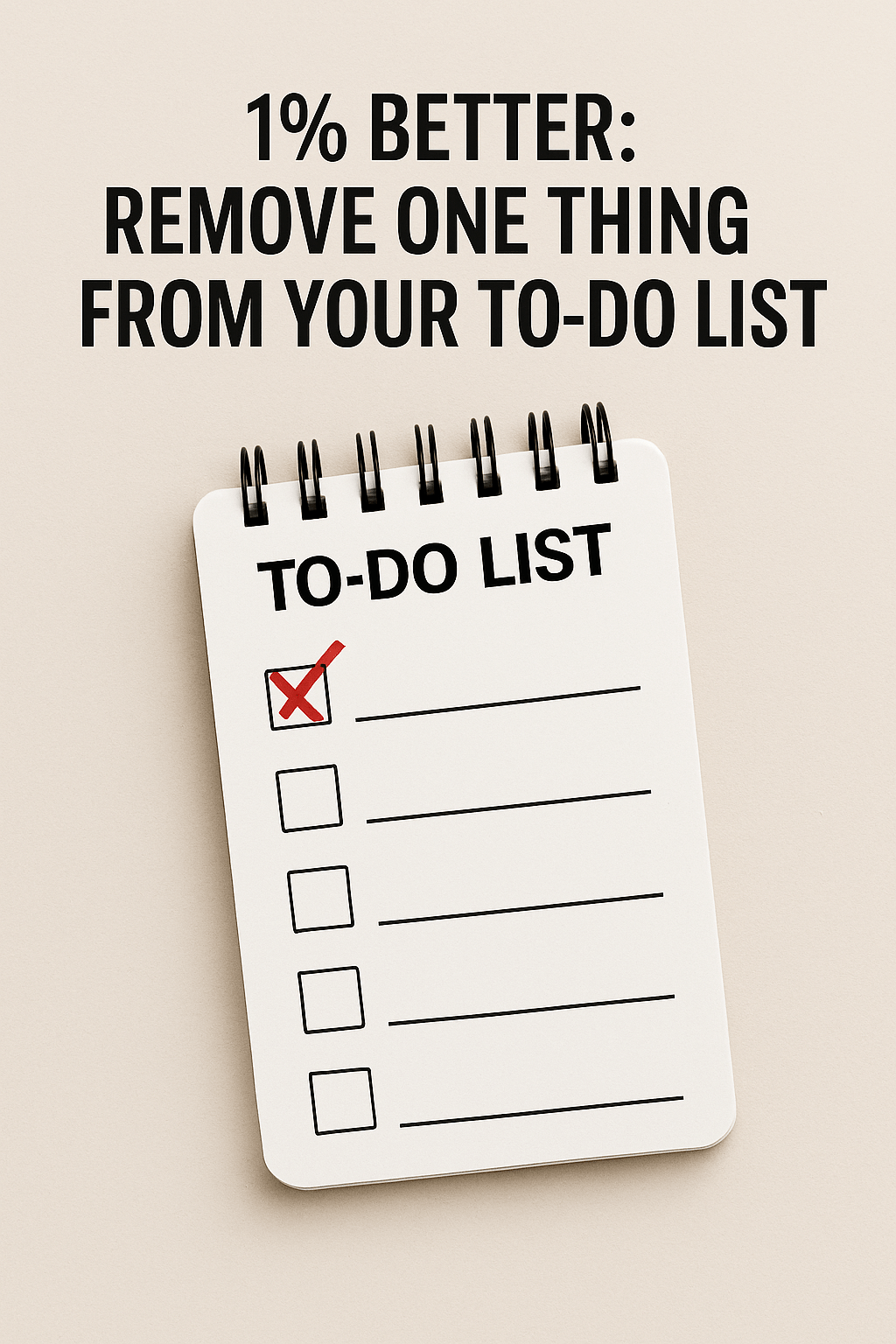
  • 🧠 1% Better: Remove One Thing From Your To-Do List

    🧠 1% Better: Remove One Thing From Your To-Do List

    You think you’re falling behind because you’re not doing enough.

    But often, you’re falling behind because you’re doing too much.

    1% better today means less clutter, more clarity.

    🧹 Look at your list.

    🗑️ Choose one item that’s low-leverage, low-impact, or not urgent.

    ❌ Delete it.

    You just created space to execute better on what actually matters.

  • 5 Key Lessons from The 7 Habits of Highly Effective People

    5 Key Lessons from The 7 Habits of Highly Effective People

    Introduction
    Stephen R. Covey’s The 7 Habits of Highly Effective People is a worldwide bestseller (30+ million copies sold) and a cornerstone in personal development literaturebookey.app. The book distills timeless principles of effectiveness – covering proactive behavior, clear goal-setting, smart prioritization, mutual benefit in relationships, empathic communication, synergy, and continuous self-improvementfranklincovey.com. For busy professionals, these habits offer powerful, actionable lessons to boost productivity and personal growth. In this post, we focus on five of Covey’s most universally applicable habits and how you can apply each one in daily life. These key lessons will help you take charge of your schedule, work with purpose, improve your relationships, and avoid burnout. Let’s dive in!

    1. Be Proactive (Take Initiative and Responsibility)

    What it means: “Be Proactive” is Covey’s first habit and the foundation for all the others. It’s about taking responsibility for your life and actions instead of blaming circumstances. In practice, being proactive means you focus your time and energy on what you can control and influence rather than worrying about things outside your controlfranklincovey.com. Covey emphasizes that proactive people choose their responses consciously and make things happen instead of waiting to be acted uponfranklincovey.com. This mindset shift – from reactive to proactive – puts you in the driver’s seat of your life.

    Why it matters: When you’re proactive, you feel more empowered and less stressed. You realize that while you can’t control everything, you can control how you respond. This habit builds the confidence to initiate change and tackle challenges head-on. It’s especially vital for busy professionals: rather than reacting to every email or crisis, you take charge of your agenda and outcomes. Proactivity is contagious too – it encourages a culture of accountability and initiative in teamsfranklincovey.com. Essentially, Be Proactive is about recognizing that you are “response-able” (able to choose your response) and that your decisions shape your effectiveness. It’s the first step toward personal leadership.

    How to apply it:

    • Focus on your Circle of Influence: Direct your efforts toward issues you can actually do something about – for example, improving a skill or solving a work problem – and let go of unproductive worry over things you can’t changefranklincovey.com.
    • Use proactive language: Pay attention to your words and thoughts. Replace “I can’t” or “I have to” with “I can” or “I will.” This subtle shift reinforces that you have a choice in each situationfranklincovey.com.
    • Take initiative each day: Don’t wait to be told what to do. Whether it’s starting a project you’ve been postponing or reaching out to a client proactively, seize the opportunity to move things forward without waiting for perfect conditions.

    2. Begin with the End in Mind (Have a Clear Vision)

    What it means: To “Begin with the End in Mind” is to start any task, project, or day with a clear vision of your desired outcome. Covey explains that if you don’t consciously decide what you want in life – your goals, values, and direction – you allow circumstances or others to shape your destinyfranklincovey.com. In other words, all things are created twice: first mentally, then physically. This habit is about defining what success looks like for you (whether in a meeting, a project, or your life as a whole) and then planning how to achieve it. It encourages you to clarify your principles and goals upfront so you’re not climbing the ladder only to realize it’s “leaning against the wrong wall”franklincovey.com.

    Why it matters: In the rush of a busy professional life, it’s easy to get caught up in day-to-day urgencies and lose sight of the big picture. Beginning with the end in mind ensures that your daily actions align with your long-term purpose and values. Covey warns that it’s all too easy to work hard and “achieve” a bunch of milestones that ultimately don’t fulfill youfranklincovey.com. Having a clear end in mind acts as a compass – it guides your decisions, helps you prioritize what truly matters, and gives meaning to your work. This clarity not only boosts motivation but also prevents the regret of realizing you’ve pursued the wrong goals. For example, if your “end” is to build a successful product that improves customers’ lives, keeping that vision front and center will inform how you plan your projects and allocate your time.

    How to apply it:

    • Create a personal mission statement: Take time to write down your core values and long-term objectives. Covey suggests crafting a personal mission statement as “your own personal constitution” to clarify who you want to be and what you want to achievefranklincovey.com. This can serve as a guiding star for major decisions.
    • Visualize success for every project: Before starting a project or even a meeting, pause and imagine the ideal outcome. Ask yourself, “What do I want to accomplish here?” By defining success at the start, you can reverse-engineer the steps to get there.
    • Set goals with the end in mind: Break down your vision into concrete goals (yearly, monthly, weekly). Ensure your weekly plans include actions that move you toward those meaningful goals, not just tasks that keep you busy. Regularly check in: Are you spending time on what truly matters to your desired results?

    3. Put First Things First (Prioritize Important Over Urgent)

    What it means: “Put First Things First” is the practical fulfillment of Habit 2. It’s about prioritization and time management – organizing your day-to-day activities to focus on what’s truly important. In Covey’s terms, this means differentiating between what’s important and what’s merely urgent. Important things are those that contribute to your values and long-term goals; urgent things call for immediate attention (like ringing phones or last-minute requests) but aren’t always meaningful. Habit 3 is about “protecting time for what’s most important to us.”franklincovey.com It requires discipline to say no to distractions and lesser priorities so you can say yes to the tasks and people that align with your “end in mind.” In short, schedule your priorities before your priorities get overwhelmed by your schedule.

    Why it matters: For a busy professional, the day can easily become a blur of back-to-back meetings, emails, and crises – you feel productive for handling them, but did you actually make progress on your key goals? Covey argues that effective people are driven by importance rather than urgency. By putting first things first, you ensure that the critical projects, strategic planning, and personal growth activities don’t get perpetually postponed by daily firefighting. This habit reduces stress, because you’re not constantly scrambling at the last minute – you’ve proactively made space for high-value work. It also increases your effectiveness: working on important tasks when you’re most fresh (for example, tackling a key project in the morning) means you produce better results. As Covey famously said, “The key is not to prioritize what’s on your schedule, but to schedule your priorities.”goodreads.com In other words, plan your week so that your top priorities get the time and attention they deserve.

    How to apply it:

    • Identify your top priorities: At the start of each week (or day), list the 2–3 most important outcomes you need to achieve – those that align with your big goals. Make these your “first things.”
    • Block time for important tasks: Proactively schedule time on your calendar for your priority work before other less critical stuff fills your day. Treat these time blocks as non-negotiable appointments with yourself to work on high-impact activities.
    • Learn to say no (tactfully): Guard your time. If a request or interruption comes that isn’t important in the long run, be willing to say no or delegate it. Every time you say yes to something unimportant, you may be saying no to a truly important task. Keep Covey’s advice in mind and stay focused on “keeping the main thing the main thing.”
    • Use a planning system: Whether it’s a digital app or a paper planner, use tools to prioritize tasks by importance and urgency. Covey’s Time Management Matrix (urgent vs. important) can help – aim to spend more time in Quadrant II (important but not urgent activities like strategic planning, relationship building, exercise) and reduce time in other quadrants. This ensures you’re investing in things that pay off long-term rather than just putting out fires.

    4. Seek First to Understand, Then to Be Understood (Listen Before You Speak)

    What it means: Habit 5, “Seek First to Understand, Then to Be Understood,” is all about empathic communication. In simple terms, it means listen before you talk. Covey points out that we typically spend years learning how to read, write, and speak, but we rarely learn how to truly listenfranklincovey.com. Our default is to rush to get our point across – often interrupting or formulating responses in our head while the other person is still talking. This habit asks you to do the opposite: focus on understanding the other person’s perspective fully before expressing your own. It’s based on the principle of respect and empathy. Practicing Habit 5 involves listening with the intent to really understand – not just hearing words, but grasping the feelings and meaning behind them. Only after you’ve sincerely understood the other person do you then seek to be understood by sharing your view. Covey calls this “empathetic listening,” as opposed to listening autobiographically (with our own frame of reference)franklincovey.com.

    Why it matters: In any professional environment (and personal relationships too), communication is key. Misunderstandings and conflicts often arise because people aren’t truly listening to each other. By seeking first to understand, you build trust and rapport. Colleagues and clients feel respected and heard, which makes them more open to hearing your side. Covey even noted that if he were to summarize the single most important principle in human relationships, it would be exactly this habitfranklincovey.com. For busy professionals, Habit 5 can transform teamwork and leadership: you’ll make better decisions when you’ve understood all viewpoints, and you’ll solve the right problems because you took time to discern others’ needs. Moreover, when it’s your turn to speak, others are more likely to listen to you in return – because you’ve earned credibility as someone who listens. It’s a win-win for communication and effectiveness.

    How to apply it:

    • Practice active listening: When someone else is speaking, give them your full attention. Put away distractions (close your laptop, silence your phone) and maintain eye contact. Use encouraging body language (nod, smile) and interject only to clarify, not to shift to your own agenda.
    • Listen to understand, not to reply: Train yourself to not immediately mentally rebut or form a response. Instead, try to paraphrase what the other person said once they finish, e.g., “So if I’m hearing correctly, your concern is…”. This forces you to truly process their words and shows them you value their perspective.
    • Empathize with their feelings: Pay attention not just to what is said, but how it’s said. Tone of voice and body language carry meaning. Acknowledge emotions by saying things like, “I can sense you’re frustrated about this deadline.” Validating someone’s feelings helps them feel understood, which is crucial before you offer solutions or your own viewpoint.
    • Then share your perspective clearly: After – and only after – you’ve thoroughly understood the other side, present your ideas or feedback. When you do, frame your points with respect to their needs. For example, “Given what you’ve told me, I think option X might address your concern about quality while also meeting the timeline.” By connecting your message to their perspective, you’re more likely to be understood in return.

    5. Sharpen the Saw (Invest in Self-Renewal)

    What it means: The phrase “Sharpen the Saw” comes from a simple analogy: if you were cutting wood, a sharp saw would cut faster and better than a dull one. In Covey’s terms, you are the saw – your mind, body, skills, and spirit are the tools through which you accomplish everything. Habit 7, Sharpen the Saw, is about preserving and enhancing your greatest asset: yourselffranklincovey.com. It emphasizes the importance of continuous self-improvement and self-care. Covey urges us to seek balance in what he calls four dimensions of renewal: Body, Heart, Mind, and Spiritfranklincovey.comfranklincovey.com. In practice, this means regularly renewing your physical energy, nurturing your relationships and emotional well-being, expanding your knowledge and skills, and connecting with your values or spirituality. By “sharpening” these saws, you increase your capacity to handle life’s challenges and effectively practice the other habitsfranklincovey.com. Simply put, you can’t be highly effective if you’re running yourself ragged; you must pause to recharge and continuously grow.

    Why it matters: Busy professionals often struggle with this – it’s tempting to cut more logs (get more work done) without stopping to sharpen the saw (rest and improve). But neglecting self-renewal leads straight to burnout and declining effectiveness. Covey warns that without regular renewal, we’ll soon face exhaustion and diminished performancefranklincovey.com. On the flip side, investing time in yourself boosts your productivity, creativity, and overall well-being. For example, a well-rested mind can solve problems faster, and an educated mind brings more innovation to work. Regular exercise can give you more energy at the office. Strong relationships and a sense of purpose provide motivation and resilience during tough times. By sharpening the saw, you’re building the capacity to juggle a busy life successfully. This habit is a reminder that “me time” is not a luxury; it’s a necessity for sustainable success. Effective people continually seek to learn, adapt, and renew themselves so they can keep performing at a high level.

    How to apply it:

    • Physical renewal (Body): Prioritize your health. Schedule routine exercise that you enjoy – even a daily walk or a gym class. Get adequate sleep and pay attention to nutrition. When you’re healthy and energized, you can handle stress and work longer with better focus.
    • Social/Emotional renewal (Heart): Nurture your relationships. Make time for family and friends despite your busy schedule – a quick coffee with a friend or an evening with loved ones can rejuvenate you emotionally. Also, practice gratitude or journaling to keep a positive emotional state.
    • Mental growth (Mind): Continuously learn new things. Read books or articles outside of your immediate job to broaden your horizons. Attend a workshop, take an online course, or simply learn from a colleague. Keeping your mind sharp and curious will enhance your creativity and problem-solving abilities.
    • Spiritual well-being (Spirit): Connect with what inspires you and gives you purpose. This could be meditation, prayer, spending time in nature, or engaging in a hobby that you’re passionate about. Reflect on your values regularly – this ensures your work aligns with a deeper sense of meaning.
    • Schedule downtime: Just as you plan work tasks, plan your renewal activities. Set aside small blocks of “saw sharpening” time each day or week – whether it’s 30 minutes of reading, a workout session, or a quiet morning routine. Treat this time as sacred. By doing so, you’ll come back to your work recharged and more effective. Remember Covey’s principle: renewal is what keeps you on an “upward spiral” of growth, continually improving rather than stagnatingfranklincovey.com.

    Conclusion & Call to Action
    Covey’s five habits above – Be Proactive, Begin with the End in Mind, Put First Things First, Seek First to Understand, and Sharpen the Saw – are powerful lessons that can transform your professional and personal life. They encourage you to take charge of your priorities, clarify your vision, communicate better, and take care of yourself, all of which lead to greater effectiveness and fulfillment. The key is to apply these principles consistently. Change doesn’t happen overnight, but step by step you’ll build these habits into your routine.

    Now, here’s your challenge: Pick one habit from the list and start practicing it today. For example, you might begin by being proactive about a lingering issue at work, or by scheduling your top priority first thing tomorrow morning. Commit to focusing on that one habit for the next week. Write it down, remind yourself daily, and notice the difference it makes. Once you’ve made progress, add the next habit. Over time, these positive practices will compound, and you’ll find yourself becoming more organized, motivated, and effective.

    Remember, knowledge without action is meaningless. So take action now – be proactive and implement these lessons in your life. Your future self (and your colleagues and loved ones) will thank you for it. Here’s to your personal growth and success! 🚀

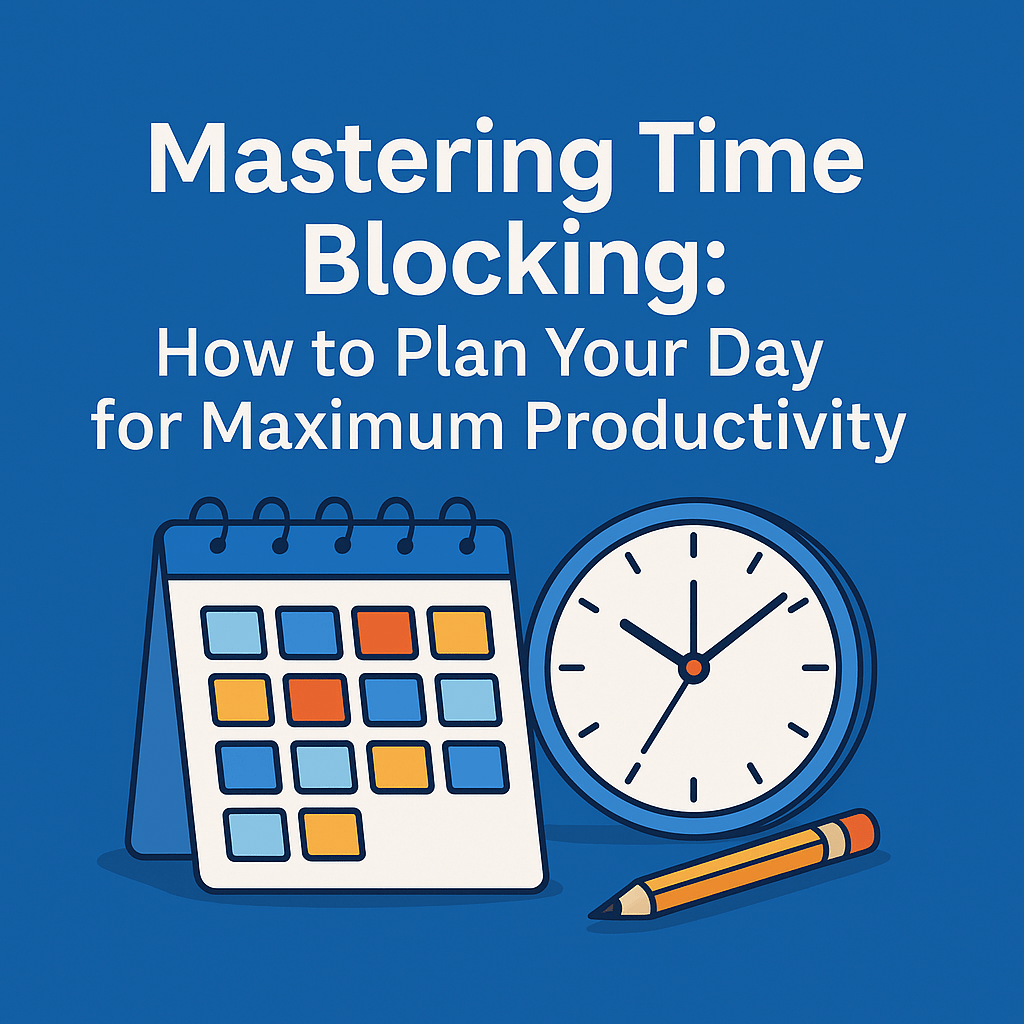
  • Mastering Time Blocking: How to Plan Your Day for Maximum Productivity

    Mastering Time Blocking: How to Plan Your Day for Maximum Productivity

    Time blocking is a simple but powerful skill that can transform your productivity. Instead of working reactively—responding to emails, messages, and distractions—you create a structured schedule where every task has its own dedicated time slot. This method helps you focus deeply, avoid procrastination, and accomplish more in less time.


    What is Time Blocking?

    Time blocking means planning your day in advance by assigning specific blocks of time to tasks or categories of tasks. For example:

    • 8:00–9:00 – Morning routine & planning
    • 9:00–11:00 – Deep work (project focus)
    • 11:00–12:00 – Meetings & emails
    • 1:00–2:00 – Lunch & movement
    • 2:00–4:00 – Creative work
    • 4:00–4:30 – Wrap-up & tomorrow’s planning

    💡 Why It Works:

    Reduces decision fatigue – You already know what to do and when.
    Limits distractions – You’re less likely to switch tasks or multitask.
    Prioritizes important work – Deep work gets a dedicated time block.
    Creates balance – You make space for breaks and personal time.


    🛠 How to Start Time Blocking Today:

    1️⃣ Plan your day the night before: Write down key tasks and assign time slots.
    2️⃣ Use a calendar or planner: Google Calendar, paper planner, or an app like Notion.
    3️⃣ Start with realistic blocks: Avoid overpacking your day; leave buffer time.
    4️⃣ Include breaks and flexibility: Short breaks between blocks help you recharge.
    5️⃣ Stick to your plan: Treat each block like an appointment.


    🔥 Kaizen Tip:

    Start small. Block just one hour tomorrow for a priority task—whether it’s deep work, a workout, or planning your supplement launch. Build the habit from there.


    🚀 Conclusion

    Time blocking isn’t about micromanaging every minute—it’s about being intentional with your time. Start small, stay consistent, and watch your productivity soar.

    💬 Which time block are you going to try tomorrow? Comment below!

  • 5 Key Lessons from Atomic Habits (and How to Apply Them Today)

    5 Key Lessons from Atomic Habits (and How to Apply Them Today)

    https://jamesclear.com/atomic-habits-summaryAtomic Habits by James Clear has sold over 20 million copies worldwidejamesclear.com, a testament to how its practical strategies resonate with readers. This #1 New York Times bestseller carries the subtitle “Tiny Changes, Remarkable Results,” highlighting its core message: small daily habits can compound into life-changing outcomes. For busy professionals striving for self-improvement, Atomic Habits offers clear, actionable advice that fits into even the tightest schedule. Below, we summarize 5 key lessons from the book – each lesson explains what it means, why it matters, and how you can apply it in daily life to spark positive change.

    1. The 1% Rule: Small Habits, Big Results

    One of the most cited ideas from Atomic Habits is the power of tiny daily improvements. Clear famously illustrates that if you can get just 1% better each day for a year, you’ll end up 37 times better by year’s endjamesclear.com. These “tiny changes” often seem insignificant in the moment, but over time they compound into remarkable results. Instead of trying to overhaul your life overnight, focus on making small, consistent improvements. Every little habit – taking the stairs, writing a few more lines of code, tidying one shelf – adds up.

    Why does this matter? We often overestimate the impact of big moments and underestimate the power of daily routinesjamesclear.com. By embracing the 1% rule, you shift your mindset to value consistent progress over dramatic but unsustainable efforts. This is encouraging for busy professionals: you don’t need huge blocks of free time or grand gestures to improve your life. Meaningful change can start with just a few minutes a day. Habits are the compound interest of self-improvement – small deposits made daily will grow into substantial achievements. As Clear puts it, “Focus on getting 1 percent better every day.”jamesclear.com

    How to apply it:

    • Start very small: Identify one area to improve by a tiny amount. For example, send one extra thank-you email at work, read two pages of a book each night, or add one vegetable to your daily meals.
    • Be consistent, not intense: Commit to your 1% action every day (or every workday). Consistency matters more than doing a lot at once. A five-minute workout done daily beats a two-hour workout done once a month.
    • Track small wins: Keep a simple log or checklist to mark your daily habit. Seeing a chain of small wins builds momentum and shows how those micro-improvements are adding up over time. Each checkmark is a vote of confidence in your gradual growth.

    2. Focus on Systems, Not Goals

    James Clear advises: “Forget about setting goals. Focus on your system instead.” In other words, outcomes (goals) are lagging indicators of your processes (systems)jamesclear.com. While goals are useful for setting a direction, you won’t get results unless you have a reliable daily system to attain them. For example, if your goal is to write a book, your system might be waking up one hour early to write each morning. If your goal is to land more clients, your system could be reaching out to 5 prospects every day. By improving the processes you follow, you essentially create a pipeline that leads to your desired results.

    Why is this important? Clear argues that you do not rise to the level of your goals; you fall to the level of your systemsjamesclear.com. A poorly designed system will derail even the most ambitious goal. Many professionals set lofty goals (e.g. “increase sales by 20%” or “get fit this year”) but fail because they never establish habits and routines to support those goals. Focusing on systems means concentrating on what you can control daily – your habits, environment, and schedule – rather than fixating solely on the end result. The right system will carry you forward even when motivation wanes. It also turns success into a repeatable process rather than a one-time event. In short, good habits are the building blocks of success, and a good system is just a collection of good habits working together.

    How to apply it:

    • Translate goals into routines: For any goal you have, ask “What daily/weekly habit would make this achievement inevitable?” If your goal is to improve a skill, schedule a consistent practice time each day (that schedule is your system).
    • Build a workflow: Design your workday or personal routine with intentional habits. For instance, instead of a vague goal to “be more organized,” implement a system where every morning you spend 10 minutes planning your top priorities, and every evening you tidy your workspace.
    • Review and adjust: Treat your system as an ongoing project. Each week, review what’s working and where friction exists. Maybe you notice you skip workouts on busy days – a system tweak could be switching to morning workouts or preparing your gym bag ahead of time. Continuously refine your processes so they serve your objectives. Remember, the system is what delivers results, so nurture it diligently.

    3. Identity-Based Habits: Become the Person You Want to Be

    A powerful lesson in Atomic Habits is to shift your focus from outcomes to identity. Instead of asking “What goal do I want to achieve?” ask “Who do I want to become?”. Clear explains that the key to building lasting habits is to focus on creating a new identity firstjamesclear.com. Your habits will naturally align with how you see yourself. For example, if you aspire to be a more productive person, start viewing yourself as a productive person and then act accordingly. Every habit then becomes an evidence of that identity. In Clear’s words, “Your identity emerges out of your habits. Every action is a vote for the type of person you wish to become.”jamesclear.com. If you study for 30 minutes, you’re casting a vote for “I am a studious person.” If you skip dessert, you vote for “I am a healthy eater.” Over time, these votes build up and solidify your desired identity.

    Why it matters: True behavior change is identity changemedium.com. We tend to act in alignment with who we believe we are. If you simply chase goals, you might succeed temporarily (“I ran a marathon”), but if you haven’t shifted your identity (“I am a runner”), the new habit may not stick. By adopting identity-based habits, you tap into intrinsic motivation. It feels rewarding to become the kind of person you admire. This approach also helps override limiting beliefs. Instead of saying “I’m bad at networking,” you can decide to become “the kind of person who connects easily with others” and then start with one small networking habit. Busy professionals can especially benefit from this mindset shift: seeing yourself as an organized, proactive, or healthy person guides your daily choices more powerfully than any abstract goal. It turns habit change from an external effort into an internal one – essentially habits become an expression of your identity.

    How to apply it:

    • Define your desired identity: Take a moment to write down the kind of person you want to be. It could be in career (“a leader who mentors others”), health (“a person who exercises daily”), or personal life (“a patient parent”). Be specific and positive.
    • Start with small “identity votes”: Once clear on your identity, choose small wins that prove it to yourselfjamesclear.com. If you want to be “a calm person,” maybe begin a 5-minute morning meditation habit. To be “an informed person,” read the news or a book chapter each day. These habits should be tiny and manageable, especially at first – their main purpose is to reinforce your new self-image.
    • Use identity-based questions: When faced with decisions, ask “What would a <insert identity> do?” For example, if your identity is “I am a fit and energetic person,” that might answer what to eat for lunch or whether to take the stairs. This practice aligns your daily actions with the type of person you want to become.
    • Be patient and trust the process: Changing how you view yourself won’t happen overnight. Remind yourself that every action is a vote for the person you wish to becomejamesclear.com. You don’t need perfection, just a majority of positive “votes.” Over time, your identity will shift, and your habits will follow suit naturally.

    4. Make Good Habits Easy: Habit Stacking & Environment Design

    If you want to build better habits, make it as easy as possible to do the right thing. Clear’s framework (the Four Laws of Behavior Change) highlights that two effective ways to “make it obvious” and “make it easy” are through habit stacking and environment designjamesclear.coms3.amazonaws.com. Habit stacking means attaching a new habit to an existing one, so the current habit cues the new behaviorjamesclear.com. For instance, if you already have a habit of brewing coffee every morning, you can “stack” a new habit onto it: “After I brew my morning coffee, I will meditate for one minute.” The existing routine of making coffee triggers your meditation habit automatically because you’ve linked them. This technique leverages the strong neural connections of habits you already have – in essence, you’re plugging a new habit into the circuit of an old one.

    Environment design is about tweaking your surroundings to encourage good habits (and hinder bad ones). Our behaviors are often shaped by the cues around us. By designing your environment to make the cues of good habits obvious and visible, you greatly increase the chances of following throughs3.amazonaws.com. Practical example: if you want to practice guitar more often, keep the guitar on a stand in the middle of your living room (a visible cue) instead of in a closet. Conversely, if you’re trying to cut down on junk food, store sweets on a hard-to-reach shelf or remove them from your office – make the bad habit “invisible”. The goal is to reduce friction for positive behaviors and increase friction for negative ones. When your environment nudges you in the right direction, you don’t have to rely as much on willpower or memory – the good choice becomes the default choice.

    Why it matters: Both habit stacking and environment design address the reality that our brains respond to cues and convenience. Willpower is a limited resource, especially for busy professionals juggling many decisions. It’s far easier to stick to a habit if your context makes it a no-brainer. By embedding new habits into your pre-existing routine (through stacking), you create a logical trigger – you’re not adding another separate task to your day, just extending something you already dojamesclear.com. And by shaping your surroundings, you essentially set yourself up for success without having to “remember” or fight temptation in each instance. As Clear notes, “environment is the invisible hand that shapes human behavior” – a tidy desk can promote focus, a bedroom with no TV makes it easier to read before bed, a water bottle on your desk prompts you to hydrate, and so on. Small changes to your context can lead to big differences in behavior. For professionals, optimizing your workspace and schedule triggers (like a routine of starting work after a certain song or after your coffee) can dramatically improve productivity and reduce procrastination.

    How to apply it:

    • Use habit stacking: Think of an existing habit you do reliably (morning coffee, lunch break, commuting home, etc.) and choose a new habit you want to add. Form an explicit recipe: “After [CURRENT HABIT], I will [NEW HABIT].”jamesclear.com For example, after I get into the office, I’ll immediately write down my top 3 priorities for the day. Or after I brush my teeth at night, I’ll read 10 pages of a book. This pairing anchors the new behavior to an established routine, so you’re less likely to forget it.
    • Adjust your environment: Make good behaviors frictionless and obvious. If you plan to go running in the morning, lay out your running clothes and shoes by your bed the night before. If you want to eat healthier, prep cut fruits/veggies and place them at eye level in the fridgejonathanrintala.com. Simplify the path to start your desired habit. Simultaneously, add friction to bad habits: e.g., if you’re distracted by your phone, leave it in another room during work, or disable notifications. If TV consumes your evening, unplug it and put the remote in a drawer to make it less convenient.
    • Create habit-friendly zones: Designate physical spaces for certain habits. Maybe a corner of your living room becomes the “reading nook” with a comfy chair and no electronics. Or your desk at work has only work-related items during office hours. By mentally and physically associating spaces with specific behaviors, you strengthen context cues that trigger the right habit.
    • Leverage visual cues: Use reminders that you literally can’t miss. Want to floss daily? Put the floss container on top of your toothpaste. Need to remember an important task in the morning? Leave a sticky note on your computer screen. These visual prompts are part of environment design – they shout at you at the right moment, so the habit is obvious and easy to start.

    5. The Two-Minute Rule: Make New Habits Too Easy to Fail

    Whenever you’re struggling to start a new habit, James Clear recommends the Two-Minute Rule: “When you start a new habit, it should take less than two minutes to do.” In practice, this means scale down any habit to a super easy 2-minute action. Want to start jogging each morning? Make your first step “put on running shoes and step out the door” – something you can do in two minutes. Planning to read more? Begin with “read one page.” The idea is that anyone can do something for two minutesjamesclear.com, and that’s the smallest gateway to building a lasting habit. The Two-Minute Rule works because it overcomes the inertia of starting. Often, getting started is the hardest part – once you begin, it’s much easier to keep goingjamesclear.com. By making the start so simple, you essentially trick yourself into showing up. And showing up consistently is more important in the beginning than the duration or intensity of your habit.

    Why it matters: This lesson is a game-changer for busy people and procrastinators alike. Big goals or habits can feel overwhelming – “write a report” or “exercise 30 minutes” can be intimidating when you’re tired or short on time. The Two-Minute Rule eliminates the pressure. It allows you to focus on the ritual of habit, not the outcome. As Clear puts it, “a habit must be established before it can be improved… You have to standardize before you can optimize.”jamesclear.com In the beginning, volume matters more than intensity – you’re honing the skill of showing up. Even if you only do the two-minute version, you keep the habit alive and maintain momentum. Interestingly, people often end up doing more once they start (you might end up reading for 10 minutes once you’ve read one page, because you’re already comfortable). But the real trick is: even if you don’t do more, two minutes is better than nothing. You’re still casting a vote for your new identity (e.g. you did read tonight, so you are a reader)jamesclear.com. Over time, those votes and those extra minutes add up. Clear shares a striking example of a reader who used this approach to lose over 100 pounds – at first, he went to the gym each day but only allowed himself 5 minutes there. After a few weeks of simply showing up consistently, he naturally started staying longer and building intensity, once the habit of going to the gym was firmly establishedjamesclear.com. The Two-Minute Rule works because it builds confidence and automaticity first. You prove to yourself “I can do this every day,” which is a powerful foundation for scaling up later.

    How to apply it:

    • Miniaturize your new habit: Whatever habit you want to adopt, define a version that can be done in 120 seconds or less. Make it ridiculously easy. If you want to journal, start with writing just one sentence per day. If you aim to meditate, begin with two minutes of sitting and breathing. No habit is too small – if 2 minutes is too long, make it 1 minute. The goal is to make starting so easy you can’t say no.
    • Focus on the habit gateway: Treat the first two minutes as the entire habit for now. For example, your exercise habit is “put on workout clothes and do a 2-minute stretch.” Do that consistently and celebrate completion. Don’t worry that “this isn’t a real workout” – you’re mastering the first step. Once the startup ritual is strong, you can gradually do more after it becomes second nature to begin.
    • Use it for beating procrastination: The Two-Minute Rule isn’t just for lifestyle habits, it’s also great for any task you’re putting off. Commit to working on a dreaded report or email for just 2 minutes. Often, you’ll continue past two minutes once you’ve started. But even if you stop, you’ve made a little progress and reduced the intimidation factor for next time.
    • Gradually expand (after consistency): After you’ve successfully kept the 2-minute habit for, say, a few weeks, consider extending the time or effort if you feel ready. The key is your baseline habit is now ingrained. For instance, reading one page per night can become reading for 10 minutes once it feels weird not to read. Some days you might still only do the two-minute minimum (and that’s okay!), but as your capacity grows, you can build on this solid foundation.

    Conclusion & Call to Action: Tiny Steps, Big Changes

    The lessons of Atomic Habits prove that you don’t need to radically revamp your life to see meaningful improvement. Tiny steps, taken consistently, lead to big changes. By focusing on getting 1% better, building supportive systems, adopting an identity, and making habits easy and obvious, you create a positive feedback loop of continuous improvement. Remember, success is the product of daily habits—not once-in-a-lifetime transformations.

    Now it’s your turn. Choose one principle from above and put it into practice today. For example, identify one habit you want to start and shrink it down to a two-minute version – do it right now if you can. Or, decide the kind of professional you want to be and take one small action that “votes” for that identity before the day ends. If you’re feeling inspired, write down a simple system for tomorrow morning that incorporates a habit stack (e.g. “After I grab my coffee, I’ll spend 5 minutes planning my day”).

    By implementing these ideas, you’ll build momentum and confidence. Don’t underestimate the impact of these modest changes – as James Clear reminds us, meaningful change doesn’t require radical action; small habits, when repeated daily, will compound into extraordinary resultsjamesclear.com. Start today with a tiny, meaningful step, and let it grow. Your future self will thank you. Take that first small step now, and begin your journey of continuous improvement – one atomic habit at a time.jamesclear.comjamesclear.com

    (Interested in learning more? Consider reading James Clear’s Atomic Habits in full, or visit his website for additional resources and weekly habit tips. The best way to see change is to start acting on these principles – so why not start now?)