Tag: Resilience

  • Daily Kaizen #2 – How Mental Forgiveness Frees Your Energy for What Matters

    Daily Kaizen #2 – How Mental Forgiveness Frees Your Energy for What Matters

    🧠 The Problem

    You’re not “over it” — you’re just carrying it quietly.

    We often think forgiveness is something we give to others.

    But the truth is: we forgive to free ourselves.

    The longer we carry resentment, the heavier our day becomes — even if we never say it out loud.

    🪞 My Story

    I used to tell myself I was “fine.”

    That what someone said or did didn’t bother me.

    But my body always knew better. Tension. Stress. Emotional weight I couldn’t explain.

    Then one day I whispered to myself:

    “I forgive them. Just for now.”

    Not forever.

    Not fully.

    Just for this moment — so I could stop replaying the tape and get back to living.

    It didn’t fix everything.

    But it lightened everything.

    🔨 Daily Kaizen #2:

    Forgive someone mentally — even if it’s just for now.

    You don’t have to text them.

    You don’t have to agree with them.

    You don’t have to forget what happened.

    Just choose — silently — to let it go for this moment.

    💡 Why It Works

    Forgiveness isn’t weakness.

    It’s emotional weightlifting.

    By mentally forgiving, you take back your attention, your calm, and your power.

    And even if the feeling creeps back later, you’ll know what to do:

    Forgive again. For now.

    🎯 The 1% Advantage

    You don’t have to forgive forever.

    Just enough to move forward with a lighter heart — and a clearer mind.

  • Book of the Day: The Obstacle Is the Way by Ryan Holiday

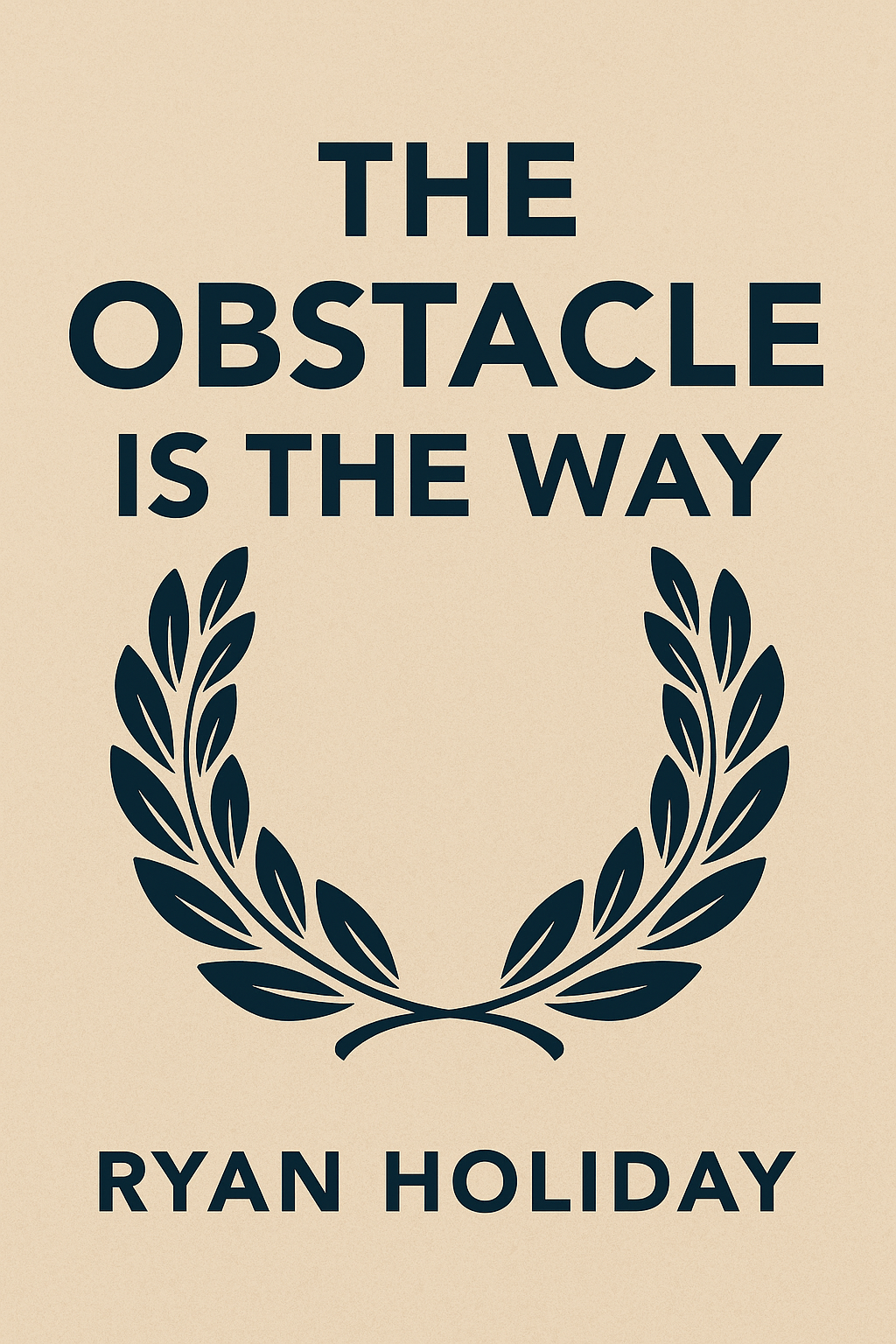
    Book of the Day: The Obstacle Is the Way by Ryan Holiday

    The Obstacle Is the Way by Ryan Holiday is a modern manifesto for turning adversity into advantage. A cult classic embraced by athletes, entrepreneurs, and leaders, it offers a framework for overcoming the obstacles life inevitably throws at us . The core idea, drawn from ancient Stoic wisdom, is that how we respond to challenges defines us . As Marcus Aurelius wrote, “The impediment to action advances action. What stands in the way becomes the way.” Instead of seeing roadblocks as setbacks, Holiday shows that each obstacle can become an opportunity to practice virtue, build strength, and move forward .

    Key Takeaways: Stoic Strategies for Overcoming Obstacles

    Holiday’s method centers on three interrelated disciplines—Perception, Action, and Will —forming a reliable approach to any challenge. Here are five powerful ways to apply these principles immediately:

    Reframe Your Perspective: When faced with a problem, choose to see it objectively rather than with fear or frustration. Our perceptions can be a source of strength or weakness—there is no good or bad until we assign meaning to events . By staying calm and seeing things as they are (without exaggeration or panic), you can spot the opportunity hidden in each obstacle instead of feeling defeated .

    Focus on What You Can Control: Direct your energy only toward what you can change, and let go of the rest. Stoics teach that zeroing in on your own actions and attitudes (and not obsessing over external factors) greatly magnifies your power and effectiveness . When you stop wasting effort worrying about things outside your control, you free up mental bandwidth to solve the problem at hand more creatively and efficiently .

    Take Decisive Action: No amount of worry or theory will remove an obstacle—only deliberate action will . Holiday emphasizes directed, persistent effort: tackle the issue step by step, using ingenuity and courage rather than brute force . Even small wins build momentum. Don’t wait for perfect conditions or permission to start; as Holiday bluntly advises, stop waiting for a miracle and start looking for angles to make progress . In short, action is the antidote—boldly do what you can, and do it right now.

    See Failure as Feedback: Every setback is a lesson in disguise. “Failure shows us the way—by showing us what isn’t the way,” Holiday writes . Instead of interpreting failure as a permanent defeat, view it as valuable feedback. Each unsuccessful attempt reveals what to adjust or avoid next time (recall Thomas Edison’s 10,000 “ways that won’t work”). Adopting this attitude turns failures into data points on the path to success, keeping you resilient and motivated to try new approaches until you triumph .

    Build Inner Resilience (Will): Some challenges can’t be changed; they can only be endured and met with character. Holiday encourages building an “Inner Citadel” of strength that no external adversity can break . This means preparing yourself mentally to handle hard times and choosing to find meaning in hardship rather than despair. For example, Abraham Lincoln endured lifelong bouts of depression yet used that suffering to develop profound patience, humility, and compassion in service of a cause greater than himself . By cultivating quiet endurance, humility, and faith that “this too shall pass,” you fortify your will . With a resilient mindset, even the worst trials become fuel for growth.

    Embrace the Obstacle – Closing Thoughts

    In essence, The Obstacle Is the Way reframes life’s difficulties as the raw material for greatness. Obstacles are not roadblocks to success—they are the path to success. Every challenge provides a chance to practice excellence and strengthen yourself . As Holiday summarizes: “See things for what they are. Do what we can. Endure and bear what we must.” Adopt this mindset, and the obstacles that once intimidated you will become stepping stones on your journey of self-mastery.
  • ❓FAQ of the Day: Why Do I Quit When Things Get Hard?

    ❓FAQ of the Day: Why Do I Quit When Things Get Hard?

    You’re not weak.
    You’re not lazy.
    You just haven’t trained your mind to stay in the fight when it gets uncomfortable.

    But you can.


    🧠 Quitting Is a Pattern — Not a Personality

    Most people quit when things get hard because hard is unfamiliar.

    Pain hits. Frustration builds. Doubt creeps in.
    And your brain says: “This means stop.”

    Why?
    Because that’s what you’ve trained it to expect.


    🔁 Your Brain Follows Patterns

    Every time you quit when it hurts, you’re reinforcing the loop:

    • Effort → Discomfort → Escape → Relief.

    That’s addictive. But it’s not fixed.

    Discipline is just delayed reward.

    You don’t break the quitting habit by feeling stronger.
    You break it by doing one thing: staying in the fire just a little longer each time.


    🔨 Enter: The Goggins 40% Rule

    When you feel done, you’re at 40%.
    That’s the red zone where most people tap out—and where growth actually begins.

    So when it gets hard?
    You’re exactly where you need to be.

    “Suffering is the true test of life.” – David Goggins


    🔧 How to Rewire the Response

    1. Label It: Say out loud, “This is the part where I usually quit.”
      It separates you from the pattern.
    2. Set a Rule: When you want to quit, go 1 more round.
      • One more rep.
      • One more minute.
      • One more sentence.
    3. Track the Wins: Keep a log of when you stayed.
      Call it your “Didn’t Quit List.” Revisit it often.

    🧱 Final Thought

    You quit because no one trained you to stay.

    Now you know. So stay.
    And next time it hurts, smile.

    That’s the signal:
    You’re not failing. You’re forging something new.

  • Skill of the Day: Developing Mental Toughness

    Skill of the Day: Developing Mental Toughness

    Introduction
    Mental toughness isn’t about being emotionless or fearless—it’s about staying grounded, focused, and disciplined when it matters most. Whether you’re under pressure at work, grinding through a tough workout, or navigating personal adversity, mental toughness is what keeps you moving forward when motivation fades. It’s a skill—and like any skill, it can be trained.


    🧠 What Is Mental Toughness?

    Mental toughness is your ability to stay resilient, focused, and composed under stress, especially when things get uncomfortable. It’s not about pretending nothing affects you—it’s about responding intentionally instead of reacting emotionally.

    You’ve likely seen it in action:

    • A fighter who keeps their composure after being knocked down.
    • A leader who stays calm while their team panics.
    • An entrepreneur who keeps going after multiple failures.

    Mental toughness is the bridge between goals and execution—the discipline to act even when it’s hard.


    ⚠️ Common Misconceptions

    • “You’re born with it” – False. Mental toughness is built through repetition, like a muscle.
    • “It means pushing through at all costs” – Wrong. True toughness includes knowing when to rest, adapt, or say no.
    • “It’s about being stoic and emotionless” – No. It’s about controlling your emotions, not erasing them.

    🛠️ Real-World Applications

    • Fitness: Pushing through fatigue, showing up on low-motivation days, and training consistently.
    • Career: Delivering under pressure, dealing with criticism, and making tough decisions.
    • Personal Life: Handling setbacks, managing stress, and staying calm during conflict.

    The more mentally tough you are, the better your outcomes—not because life gets easier, but because you get stronger.


    🔁 Step-by-Step Framework to Build It

    1. Embrace Discomfort on Purpose

    You grow tough by choosing challenge regularly. This could be:

    • Cold showers
    • Extra sets at the gym
    • Speaking up when it’s uncomfortable

    These “controlled struggles” expand your capacity for stress.

    2. Control the Inner Dialogue

    Your mind will offer excuses, fears, and doubts. Create a response:

    • “Just keep moving.”
    • “Discomfort is temporary.”
    • “This is how I grow.”

    Repetition rewires your default reactions.

    3. Visualize Pressure

    Prepare mentally for tough scenarios:

    • Imagine that high-stress meeting or hard roll at BJJ
    • Rehearse how you’ll breathe, move, and think

    Mental rehearsal makes the real thing easier.

    4. Set Clear, Unbreakable Standards

    Create rules that don’t bend based on mood:

    • “I don’t skip training.”
    • “I always finish what I start.”
    • “I speak calmly, even when triggered.”

    Then stick to them—especially when it’s hardest.

    5. Recover Like a Pro

    Toughness isn’t just push—it’s also bounce-back. Prioritize:

    • High-quality sleep
    • Intentional rest days
    • Reflection and journaling

    A resilient system doesn’t break—it bends and returns stronger.


    🔁 Kaizen Micro-Habits to Train Mental Toughness

    • Do something hard first thing in the morning (cold shower, exercise, no snooze button).
    • Set a 3-second pause rule before reacting emotionally.
    • Write down one “win under pressure” at the end of each day.
    • Track discomfort reps: Every time you lean into a hard task, note it—it builds pride and momentum.
    • Use a mantra (“Just keep breathing,” “This is where I grow”) when facing challenge.

    Small wins compound—this is the Kaizen path to a stronger mind.


    💬 Final Thoughts + Call to Action

    Mental toughness isn’t about never struggling—it’s about refusing to quit when things get hard. You don’t need to be fearless. You need to be consistent, clear-minded, and grounded in discomfort.

    Today’s challenge:
    Choose one small, uncomfortable action—and do it on purpose. A cold shower. An honest conversation. That task you’ve been avoiding. Then reflect: What did that teach you about yourself?

    Growth lives just beyond discomfort. Go get it.