Tag: Self Discipline

  • 🧠 Daily Kaizen #4 – Replace Your Morning Scroll With a 10-Minute Walk

    🧠 Daily Kaizen #4 – Replace Your Morning Scroll With a 10-Minute Walk

    Here’s a brutal truth:

    Most people wake up and immediately flood their brain with:

    📱 News they can’t control

    📱 People they’ll never meet

    📱 Stress they didn’t ask for

    All before they’ve even had a glass of water.

    We scroll ourselves into anxiety.

    And we wonder why we feel overwhelmed before 9am.

    💡 Here’s your Kaizen for today:

    Before you pick up your phone — step outside.

    Even if it’s raining. Even if it’s just around the block.

    Set a timer for 10 minutes. Walk with no music, no podcast, no agenda.

    Let your brain breathe.

    🧩 Why this works:

    It lowers cortisol (stress hormone) Increases dopamine and serotonin (mood + focus) Anchors you in the real world, not the digital one Builds a calm, clear foundation for your day

    Walking in natural light also resets your circadian rhythm, helping you sleep better at night.

    ✏️ The Hidden Benefit:

    You reclaim your agency.

    You tell your brain:

    “I run the show — not the algorithm.”

    That shift? That’s freedom.

    And it starts with a single walk.

    🛠️ Make it easier:

    Leave your shoes by the door Set a recurring reminder called “Walk > Scroll” Track your streak on a post-it note

    Start today. No excuses.

    Because the first 10 minutes of your day shape the next 10 hours.

    🔁 Follow @SkillStacked for a new Daily Kaizen every day.

    Simple mindset upgrades that compound.

    One win at a time.

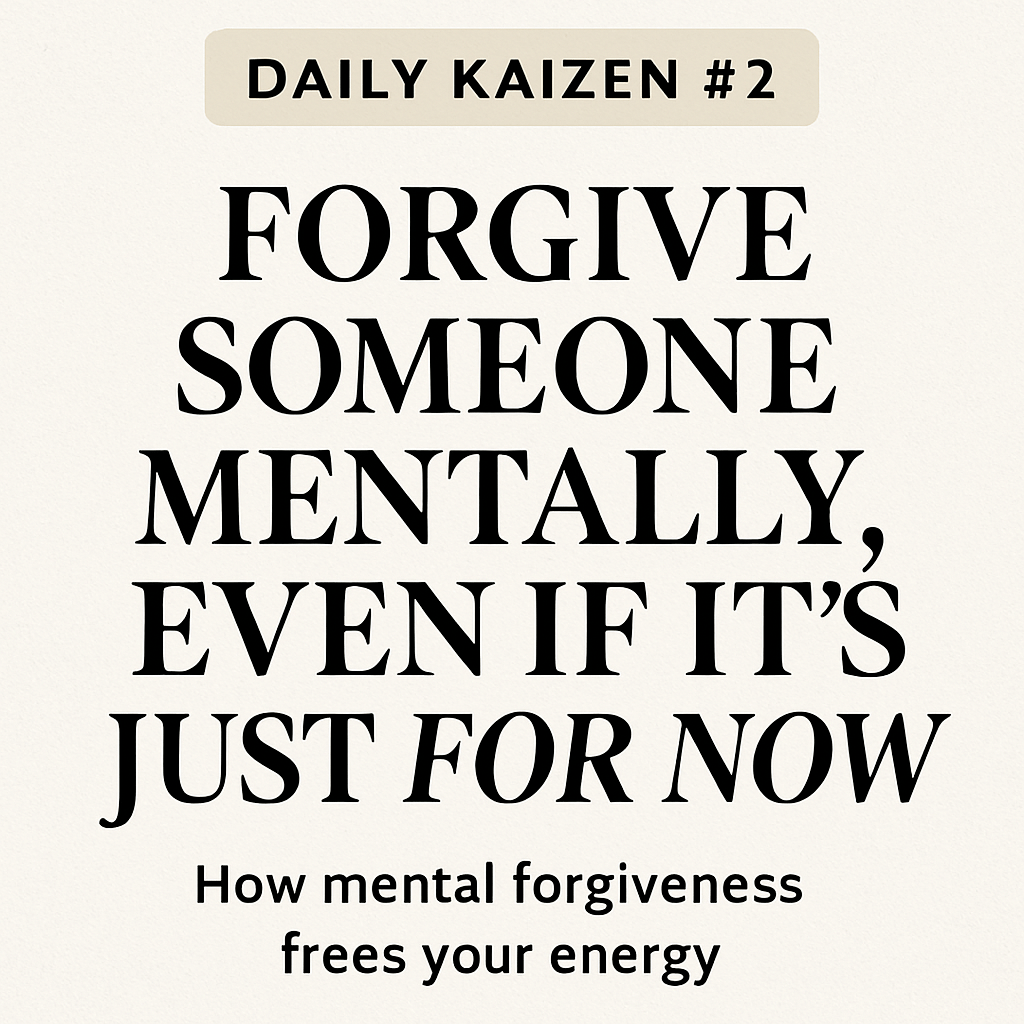
  • Daily Kaizen #2 – How Mental Forgiveness Frees Your Energy for What Matters

    Daily Kaizen #2 – How Mental Forgiveness Frees Your Energy for What Matters

    🧠 The Problem

    You’re not “over it” — you’re just carrying it quietly.

    We often think forgiveness is something we give to others.

    But the truth is: we forgive to free ourselves.

    The longer we carry resentment, the heavier our day becomes — even if we never say it out loud.

    🪞 My Story

    I used to tell myself I was “fine.”

    That what someone said or did didn’t bother me.

    But my body always knew better. Tension. Stress. Emotional weight I couldn’t explain.

    Then one day I whispered to myself:

    “I forgive them. Just for now.”

    Not forever.

    Not fully.

    Just for this moment — so I could stop replaying the tape and get back to living.

    It didn’t fix everything.

    But it lightened everything.

    🔨 Daily Kaizen #2:

    Forgive someone mentally — even if it’s just for now.

    You don’t have to text them.

    You don’t have to agree with them.

    You don’t have to forget what happened.

    Just choose — silently — to let it go for this moment.

    💡 Why It Works

    Forgiveness isn’t weakness.

    It’s emotional weightlifting.

    By mentally forgiving, you take back your attention, your calm, and your power.

    And even if the feeling creeps back later, you’ll know what to do:

    Forgive again. For now.

    🎯 The 1% Advantage

    You don’t have to forgive forever.

    Just enough to move forward with a lighter heart — and a clearer mind.

  • Daily Kaizen #1 – How Celebrating One Tiny Win Each Day Boosts Discipline

    Daily Kaizen #1 – How Celebrating One Tiny Win Each Day Boosts Discipline

    🧠 The Problem

    Most people sprint through their day, chasing productivity but rarely acknowledging progress.
    They believe only big wins deserve recognition — and in doing so, they miss the small moments that build real discipline.


    🪞 My Story

    I used to do everything “right”: eat clean, train, write, stay on track…
    But I’d still go to bed feeling like I hadn’t done enough.
    No satisfaction. Just another checkbox ticked.

    Then I tried something strange:
    I started celebrating the smallest wins — out loud.

    “I published my post.”
    “I trained even though I didn’t feel like it.”
    “I turned down a distraction.”

    It felt silly at first.
    But over time, it rewired how I saw myself.


    🔨 Daily Kaizen #1:

    Celebrate one tiny win out loud.

    • Say it.
    • Whisper it.
    • Write it down.
    • Tell someone.

    Just make it real.


    💡 Why It Works

    Your brain responds to what you reinforce.
    When you celebrate a tiny win, you tell your nervous system:

    “This matters. Let’s do more of this.”

    Tiny wins compound. But only if you notice them.
    This is how you build momentum from the inside out.


    🎯 The 1% Advantage

    You don’t need a perfect day to feel progress.
    You just need to honor one moment of self-respect.

    Start small.
    Say it out loud.
    Stack it tomorrow.


    📬 Want More Like This?

    I’m building a 100-Step Personal Development System – Coming Soon…

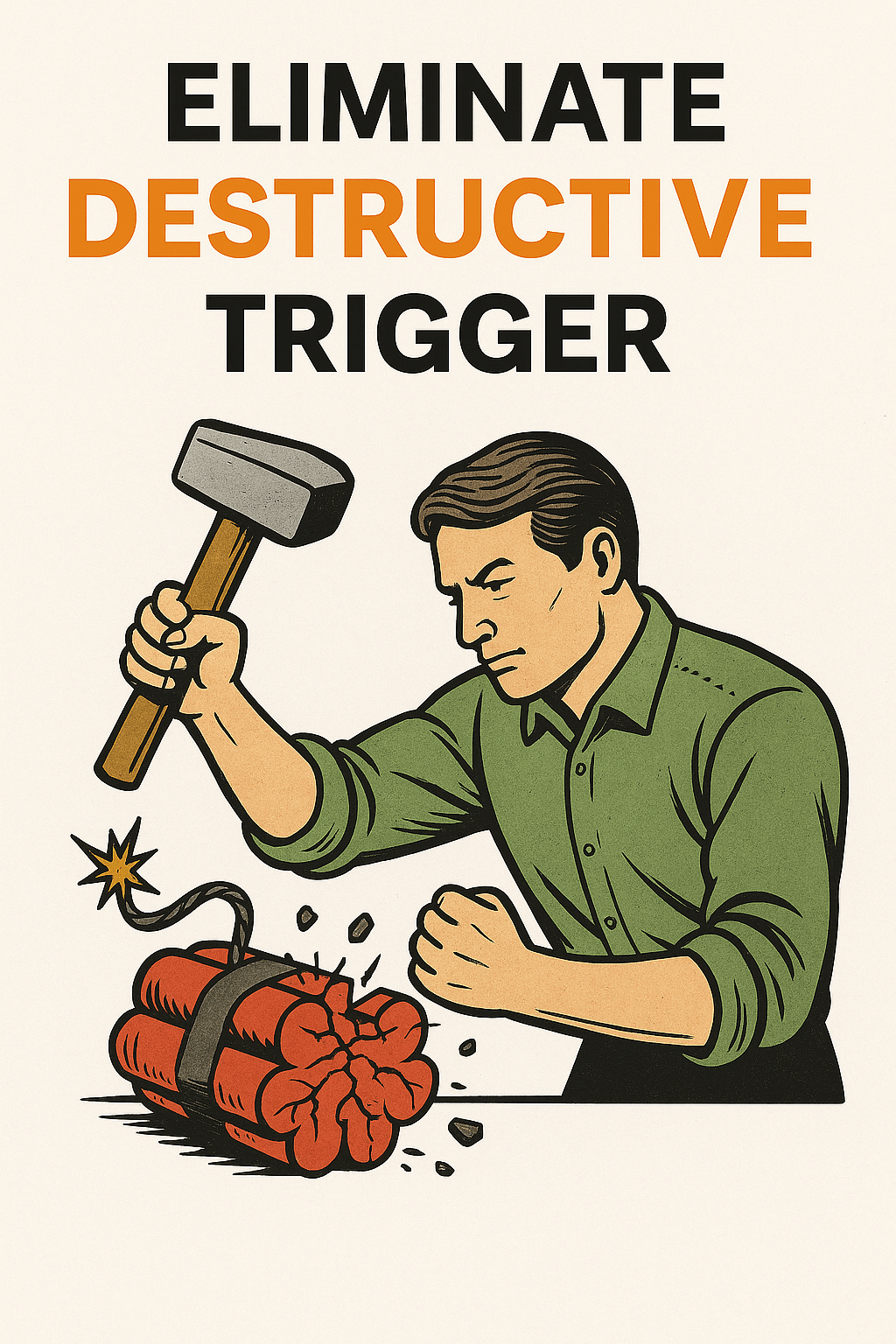
  • Eliminate One Destructive Trigger: Break Bad Habits and Upgrade Your Daily Routine

    Eliminate One Destructive Trigger: Break Bad Habits and Upgrade Your Daily Routine

    We all have that one invisible saboteur – a hidden cue or habit that derails our best intentions.  Perhaps it’s the ping of a phone notification that pulls you off task, a snack stored in plain sight that triggers mindless munching, or a late-night routine that leads to sleep loss.  These destructive triggers can quietly sabotage productivity, health goals, and personal growth, even when our motivation is high.  Imagine flipping the script: by identifying and eliminating just one key trigger, you could stop the chain reaction of self-sabotage and take control of your day.  In this post (Part 9 of our series on self-mastery), we’ll dive into the psychology and neuroscience of habit triggers, help you spot your own biggest trigger, and guide you through practical steps to remove or replace it.

    “Identify one destructive cue, remove it, and watch the dominoes of your day fall into place.”

    What Is a Destructive Trigger?

    Every habit starts with a cue – an environmental or emotional trigger that ignites a routine .  In psychology, this is often called the “cue” in the habit loop (cue–routine–reward). For example, seeing your smartphone buzz is the cue that launches a scrolling session, or feeling stressed at the office cues the routine of stress-snacking.  Over time, these cue–response loops become wired into the brain’s habit centers (the basal ganglia) .  The result is automatic behavior: you don’t even think before you reach for that cookie or flip open your phone – the trigger did it for you.

    A destructive trigger is simply one of those cues that consistently leads you off-track.  It’s a part of your environment or routine that sparks an unwanted behavior.  Importantly, removing or modifying this one trigger can prevent the unwanted habit from ever starting.  As cognitive neuroscience research shows, removing the environmental cue for a bad habit can “disrupt[]” the loop that keeps it going .  In other words, break the cue and you break the habit.

    A destructive trigger might be a time of day (e.g. 8 PM signals snack time), an emotion (like stress or boredom), a person, or even a physical object (like a cluttered desk or a pile of unfinished tasks on your calendar).  Whatever it is, it’s a predictable catalyst for self-sabotage.  It aligns closely with what experts call self-sabotage – behaviors that create problems in daily life and interfere with long-term goals .  For instance, Psychology Today notes that procrastination, comfort eating, or phone addiction can all be forms of self-sabotage triggered by specific cues .  Our job is to uncover which cue is your culprit, so you can stop it.

    The Brain and Habit Loops

    Understanding why triggers have such power means looking at your brain’s wiring. Neuroscience tells us that the brain uses habits to conserve energy – routine actions move from the deliberate prefrontal cortex down into the automatic basal ganglia .  Once this happens, a cue can flip the switch on a habitual routine without much conscious thought.  As one science news article summarizes: “habits happen when automatic responses outweigh our ability to consciously control them” .

    In practice, this means even a tiny cue (like your phone lighting up) can hijack your attention and automatically pull you into a familiar, often unwanted behavior .  For example, researchers have found that just hearing your phone buzz (even in your pocket) is enough to break your focus: “Unless your phone is fully silenced or off, it’s probably still distracting you…The familiar buzz buzz of a new notification is not as innocuous as it seems” .  That buzzing sound is literally a trigger that your brain has learned to respond to automatically, over and over again.

    The key insight from neuroscience is that good or bad, habits form from repeated cue–action pairings .  Repetition plus reward cements these associations.  But this also means that those same principles can be used in your favor.  You can replace an unwanted routine with a new one by linking it to the same cue or creating a new cue.  For example, if stress is your cue to snack, you might attach a different routine to that stress cue (like a short walk or a breathing exercise) that still delivers a reward (calm, or a sense of accomplishment) but is healthier . Over time, your brain will forge a new habit loop around the positive routine instead.

    Spot the Cue: Identifying Your Trigger

    First, let’s shine a light on that destructive trigger. This often takes conscious attention, because triggers act on autopilot.  Start by observing and documenting the problem behavior.  Keep a brief “trigger log” or journal. Whenever you catch yourself doing something unhelpful (procrastinating, over-snacking, doomscrolling, etc.), note what happened just before: the time, your location, your feelings, even who or what was around.  Psychology Today advises that “documenting and analyzing behavior is a key component of preventing self-sabotage” . In practice, this might mean writing down, “It’s 3 PM, I feel stressed and the first thing I did was open Instagram,” or “After dinner, saw chips on counter and snacked.” Over days or weeks, patterns will emerge.

    You can also apply a simple question when a negative habit occurs: “What was the trigger?”  Ask yourself what thought or emotion popped up just before the urge hit .  Often we find it was something like boredom, anxiety, or even a specific place or time.  For example, many people discover that Mondays in the office cue a sugary coffee or that arguing with family cues comfort eating.  By bringing this automatic link into awareness, you can catch the trigger in the act.

    Another check is to evaluate whether your behavior is aligned with your goals . If it’s not, the environment or cue around you may be to blame.  Psychology Today notes that misaligned behaviors that repeatedly undermine long-term goals are the hallmark of self-sabotage .  If you find yourself repeatedly veering off-course, look at what external or emotional cue led there.

    “Your environment is a radar; remove one blip, and your signals clear up.”

    Why That One Trigger Matters

    It might sound simple – one cue – but its effect can be huge.  Think of triggers as the first domino in a long chain.  When a trigger hits, it sets off a chain reaction of habits and justifications. For instance, one email notification at the wrong time can spiral into a day lost to distraction, or seeing a piece of cake can spark an entire evening of overeating.  Productivity and habit experts often point out that bad habits and procrastination usually start with an unnoticed trigger .

    Research confirms that even brief distractions have an outsize impact.  A Harvard Business Review article highlights how simply hearing your phone buzz—even if you don’t pick it up—harms your performance .  Similarly, studies on habit change emphasize that even one environmental cue can sustain a pattern of behavior .  That’s why zeroing in on one destructive trigger can feel so effective: when you remove that cue, the whole routine often fizzles out.

    Moreover, eliminating a trigger can help you break the cycle of self-sabotage.  Instead of using willpower alone, you starve the habit of its signal.  Scientists stress that removing triggers is often more reliable than fighting the urge after it appears .  In practice, that means you can stop unwanted habits before they even start.  Personal growth happens incrementally: by tackling just one habit loop at a time, you lay the foundation for bigger change .

    Remove or Replace: Transforming Your Trigger

    Once you’ve identified the culprit trigger, it’s time to eliminate or rewire it.  Here are evidence-based strategies:

    Modify Your Environment. Adjust your surroundings to cut off exposure to the trigger. As researchers note, “making desired behaviors easier to access encourages good habits, while removing cues that trigger unwanted behavior disrupts bad habits” .  For example, if junk food on the counter is your trigger, put it away or replace it with fruit. If your phone buzz distracts you, turn off notifications or place it in another room during focus times. Psychology Today even finds that changing locations can reset patterns: when people visit a new place or rearrange their space, their old habits “don’t stand a chance” thanks to different cues .

    A clutter-free, intentional workspace eliminates many visual cues that could derail focus.

    Use Implementation Intentions. This is a fancy term for “if-then” planning. Set a clear plan for what you’ll do when the trigger appears. For instance, “If I feel stressed in the afternoon, then I will take three deep breaths and stretch for two minutes.”  This kind of pre-planning has been shown to bridge the gap between intention and action by giving your brain an alternative response to an old cue . Replace the Routine. You’re not just ripping out a habit; you’re grafting in a new one. Decide on a positive action to follow the trigger instead. For example, if TV time at night cues snacking, vow to drink herbal tea instead whenever you start that show. Over time, your brain will form a new habit loop: the same cue (TV) now triggers tea and relaxation, not chips.  Western University research on habit change emphasizes this: instead of eliminating a behavior, “the routine can be replaced with a healthier alternative” so long as the new routine yields a satisfying reward .  Consistency is key: each time you honor the new routine, the old neural pathway for the bad habit weakens and the new one strengthens . Practice Mindfulness. Cultivate awareness of the trigger in the moment. Mindfulness slows down the automatic pilot. When you feel the cue or crave hit, pause and take three deep breaths. Ask yourself if you really want to follow the old routine or if there’s another choice. Science suggests that staying mindful and intentional can prevent you from defaulting into bad habits under stress .  Even a few seconds of breathing or noting your thoughts can break the automatic link. Align with Your Identity. Shift your mindset to reinforce the change. According to habit experts, lasting change often starts with believing you are the kind of person who doesn’t fall for that trigger .  Consciously tell yourself, “I am someone who doesn’t use my phone during dinner,” or “I’m the kind of person who chooses a short walk over a sugary snack.”  Each time you act in line with this identity, you gather small wins that prove it to yourself (for example, taking a walk three nights in a row) . Over time, your brain starts to embody that identity and the new behavior becomes second nature.

    These steps combine to break the trigger–habit loop. First, you starve the trigger of its power (by hiding or avoiding it). Then you rewire the loop with a new, healthy response and reward.  Remember: change is most achievable gradually, one small step at a time . Trying to remove every trigger at once can be overwhelming, so focus on the single most destructive one.  Once you eliminate that cue, celebrate the progress and notice how the rest of your day flows more smoothly.

    Action Steps: Your Daily Routine Upgrade

    Ready to put this into practice? Follow these action steps to eliminate your top trigger:

    Identify and Log: Keep a simple log for a few days. Note each time you slip or procrastinate. Write down the preceding cue (time, place, feeling) and your response. This will reveal your key trigger(s) . Analyze the Impact: Ask yourself, “How does this cue derail me?” and “How does the routine serve me (or not)?” Recognize the cycle of self-sabotage it creates . Alter Your Environment: Remove or hide the cue. If possible, take the object or context off the table entirely. (E.g., block distracting websites, put the candy dish out of sight, switch up your workspace .) Plan an Alternative: Decide on a healthier habit to follow the cue. Write an “If trigger, then do X” statement. Practice it until it feels natural . Leverage Identity: Frame the change in terms of who you want to become. Use affirmations or small identity-based goals (e.g. “I’m the type of person who …” ). Each time you act consistently, mentally tick it as a win. Reflect and Reward: Notice the difference when the trigger strikes and you make a new choice. Celebrate any success, no matter how small. This reward reinforces the new habit.

    By taking control of one destructive trigger, you upgrade your daily routine and break free from that nagging cycle of failure.  Over time, your progress compounds.  Eliminate the smallest trigger, and you might find yourself accomplishing tasks you once resisted, sleeping better, or finally sticking to a workout plan. This is the power of habit change: small shifts, big results.

    Actionable Takeaway: Commit right now to tackle one trigger. Carry a notebook or use a phone app for 3 days and track when your bad habit happens and why. Identify the cue. Then remove or change that cue in your environment (move it, hide it, silence it) and plan a positive alternative.  Use your identity (“I am someone who…”) to reinforce this change.  You will be amazed how one smart, research-backed tweak can turn your self-sabotaging patterns into empowerment for personal growth

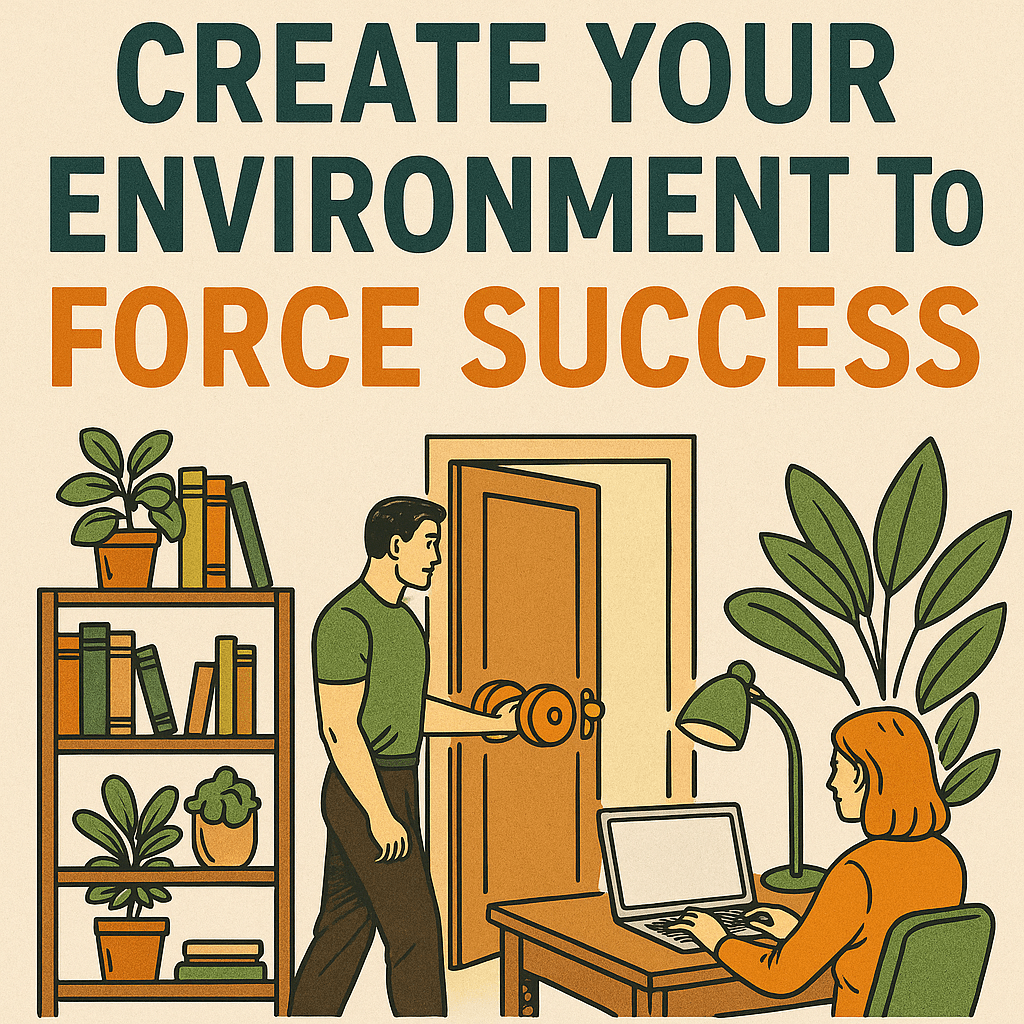
  • Create Your Environment to Force Success

    Create Your Environment to Force Success

    Ever set a goal – like hitting the gym at 6 AM or finally cutting out late-night snacks – only to see your willpower fizzle out by day two? It’s not just you. In fact, studies show that a large portion of our daily actions are automatic responses to the cues around us . Your kitchen counter and living room layout might be quietly training you more than your intentions. As Stanford researcher B.J. Fogg puts it, “There’s just one way to radically change your behavior: radically change your environment” . In other words, if willpower isn’t doing the trick, change your surroundings. By redesigning your space, you can turn good habits into the easy, default choice and make bad habits much harder.

    Why Environment Trumps Willpower

    Habit experts agree that willpower alone is a weak strategy. James Clear bluntly notes, “in the long-run (and often in the short-run), your willpower will never beat your environment” . People who seem ultra-disciplined aren’t superhuman – they’ve simply structured their lives so they don’t have to rely on heroic self-control . For example, nearly identical neighbors can behave very differently if their environments differ. In one striking study, Denmark and Sweden had wildly different organ donation rates (4% vs 86%) even though their cultures are similar . The only difference was the forms people were given – in Sweden citizens were by default organ donors (opt-out), whereas Danes had to opt in. This tiny tweak in the choice architecture shows how your environment can heavily sway decisions .

    Instead of expecting yourself to fight every craving or distraction, make the healthy or productive choice the path of least resistance. Each time you step into your kitchen, gym, or home office, you should ideally be funneled toward positive actions – not sabotaged by hidden temptations. Remember James Clear’s insight: your environment is the “default option to which you are assigned” . If junk food is on the counter and veggies are hidden, you’ll snack mindlessly. If your desk is cluttered and your phone is buzzing, focus will slip away. The good news? You can design your environment for success . By placing hurdles in the way of bad habits and removing barriers to good ones, healthy choices become automatic and willpower is freed up for truly tough tasks.

    5 Ways to Create a Habit-Friendly Environment

    Pre-Plan and Prepare: Reduce friction for good habits. Lay out your gym clothes or set your sneakers by the door the night before so it’s easy to exercise in the morning . Fill a few water bottles each morning and place them in spots you frequently visit . If you want to take vitamins or medications, leave the bottle right next to your toothbrush or coffee mug. These small prep steps mean you have one less excuse to skip your new habit. In a habit-friendly environment, the right tools and gear are always within reach. Make Healthy Choices Obvious: Arrange visual cues so the good stuff grabs your attention. Keep a bowl of fruit on the counter and hide sugary treats in a cupboard or another room . Buy fun, colored plates that make veggies look more appealing – one study found people serve themselves 30% more on larger, dark-green dishes . Similarly, if you want to read more, place books or study materials in clear sight (and put your remote out of sight). When the reminder is right in front of you, you’re far more likely to act. As James Clear advises, make cues for your preferred habits big and prominent, so the best choice is also the obvious one . Increase Friction for Bad Habits: Do the opposite for temptations. Put the cookie jar on a high shelf or empty it entirely. Hide the TV remote in a drawer and toss a book in its place . In one clever example, simply turning living room chairs so they don’t face the TV made people watch way less TV (and pick up a book instead!) . The goal is to create tiny hurdles for bad habits – even an extra 10-second walk to the snack drawer or phone creates a pause where you can choose differently. Remember: if the junk food is visible, you’ll eat it . Out of sight usually means out of mind, so clear the clutter that triggers your worst impulses. Optimize Your Work Space: Clear, focused spaces foster productivity. Designate a tidy “work only” area and keep it free of entertainment cues . Silence or put your phone on Do-Not-Disturb, and if needed use website blockers during deep work sessions. Organize your desk so only what you need is on it – for example, leave your computer on a page you want to study or a project to work on tomorrow. As one writer found, strictly associating his desk with writing (and removing “fun” apps and games) eliminated most distractions . By treating your environment like a training partner, you set yourself up to succeed: a clutter-free space and clean desktop mean you expend less mental energy fighting distractions . Leverage Your Social and Digital Environment: The people and platforms around you count too. Join a workout group, find a study buddy, or post your goals to friends – social pressure can be a powerful cue. In digital spaces, uninstall apps or mute channels that derail you, and fill your feeds with inspirational or educational content instead. For example, if you want to write more code, join an online coding community; if you want healthier eating, follow recipe bloggers. Surrounding yourself with supportive friends and positive influencers creates a naturally habit-friendly environment. As FasterCapital points out, even our homes benefit from social cues – think about coworkers reaching for doughnuts less often when everyone in the office is on a shared health kick .

    Each of these tweaks follows one core idea: make the right choice the easy choice . Reduce steps to good behavior and add steps to bad behavior. Over time, these small changes compound. As Fogg reminds us, “Don’t rely on willpower alone, design your environment to support your desired behavior” .

    Your Next Move: Redesign One Thing Today

    Don’t wait for “motivation” to strike. Be proactive. Ask yourself: What one change in my surroundings would make success inevitable? It might be as simple as placing a water bottle on your desk or moving your alarm clock across the room so you have to get up. Maybe unplug the TV for the week, or park your bike right by the front door. Take action now: pick one key area (kitchen, bedroom, office, or digital space) and tweak it.

    By taking control of your space, you’re “the designer of your world and not merely the consumer of it” . A well-designed environment is a powerful ally – it nudges you toward workouts, healthy meals, focus sessions and away from bad habits, often without any extra effort. Remember the mantra of environment design: if you can’t change yourself, change your surroundings. Transform one corner of your life today and watch how easy, automatic success becomes in your new, habit-friendly world.

    Bold takeaway: Start small but think big – make one small environment change now and let your space help you succeed.

  • Build a Morning Routine That Works on Autopilot

    Build a Morning Routine That Works on Autopilot

    Starting your day with structure and clarity sets you up for success.  A consistent morning routine eliminates decision overload and jumpstarts your energy, focus and positivity.  As productivity experts note, tiny “pre-game” habits – like drinking a glass of water or opening the blinds – cue your brain that the day has begun .  By anchoring new habits to stable cues (a strategy James Clear calls habit stacking ), you’ll build a morning routine that feels automatic and effortless.  In this post we’ll break down six core morning habits – from waking at the same time every day to planning your day’s goals – explaining why each works and how to implement it for maximum impact.

    1. Wake Up at the Same Time Every Day

    A reliable wake-up time is the cornerstone of any successful morning routine.  When you rise at (nearly) the same hour each day, you synchronize your body’s circadian rhythm – the internal clock that regulates sleep, hormone release and metabolism .  This regularity makes it easier to fall asleep at night and feel alert in the morning.  For example, sleep experts at Michigan Medicine note that waking up at the same time “anchors” the circadian clock and can improve sleep quality and daytime energy .  To implement this habit, set a consistent alarm (yes, even on weekends!) and resist the snooze button.  Go to bed at a reasonable hour so you can wake up refreshed.  Opening the curtains or getting morning sunlight right away also helps signal your brain that it’s time to be awake .  Over time, your body will adapt and this consistent wake-up cue will kick on autopilot alertness each morning.

    2. Rehydrate and Fuel Your Body

    A reliable wake-up time is the cornerstone of any successful morning routine.  When you rise at (nearly) the same hour each day, you synchronize your body’s circadian rhythm – the internal clock that regulates sleep, hormone release and metabolism .  This regularity makes it easier to fall asleep at night and feel alert in the morning.  For example, sleep experts at Michigan Medicine note that waking up at the same time “anchors” the circadian clock and can improve sleep quality and daytime energy .  To implement this habit, set a consistent alarm (yes, even on weekends!) and resist the snooze button.  Go to bed at a reasonable hour so you can wake up refreshed.  Opening the curtains or getting morning sunlight right away also helps signal your brain that it’s time to be awake .  Over time, your body will adapt and this consistent wake-up cue will kick on autopilot alertness each morning.

    2. Rehydrate and Fuel Your Body

    Get your blood flowing to really wake up!  Even a brief bout of exercise first thing – whether it’s stretching, yoga, walking or a quick home workout – releases energy-boosting hormones.  Regular exercise “is excellent for boosting energy and reducing fatigue,” one medical source explains, because it pumps oxygen and nutrients to your heart, lungs and muscles .  Morning movement also triggers feel-good neurotransmitters: during exercise your brain produces extra endorphins, natural “happy” chemicals that reduce stress and boost mood .  A 2019 study even found that morning workouts sharpen attention and decision-making for hours afterward .  To implement: start small (even 5–10 minutes of stretching or a brisk walk around the block).  Build consistency first, then gradually add a few more minutes or new moves.  Lay out your workout clothes the night before (habit stacking: for example, “After I brush my teeth, I will put on my sneakers” ) to make moving in the morning automatic.  Physical movement in the AM not only wakes your body but also builds confidence and momentum that carries through the day.

    4. Mindful Practice (Meditation, Journaling or Breathing)

    Spend a few quiet minutes grounding yourself with mindfulness.  This could be a short meditation, deep breathing, or journaling about your priorities and feelings.  Science shows that morning mindfulness has powerful benefits: it calms the mind, reduces anxiety and sets a positive tone.  As one expert writes, practicing meditation in the morning has “beneficial effects on your brain, heart, immune system, and hormones,” which last throughout the day and improve focus, attitude, decision-making and energy .  Journaling can similarly clear mental clutter.  Writing down thoughts or to-dos in a journal helps organize your mind: people who journal often report feeling more relaxed and prepared, with improved productivity .  To implement, find a quiet spot (even your kitchen table or bedside) and spend just 5–10 minutes.  Sit comfortably, close your eyes and focus on your breath, or write three things you’re grateful for.  Many people find “simple affirmations can create a positive mindset” and reduce stress .  Apps like Headspace or Calm can guide a quick meditation, or simply jot a few bullet points in a notebook.  This mindful pause acts like a mental “reset button,” helping you approach the day with clarity and calm.

    5. Cultivate Gratitude and Positivity

    Starting the day with gratitude shifts your focus to the positive.  Take a moment to note two or three things you’re grateful for (your health, family, a new opportunity, etc.) or repeat a positive affirmation.  Research shows that gratitude practices can significantly reduce stress and anxiety while increasing happiness and well-being .  You don’t need fancy words – even thinking “I’m thankful to see this new day” can prime your brain for optimism.  For example, you might write “I appreciate my health” or “I look forward to today’s challenges” on your journal page.  By consciously adopting a grateful mindset in the morning, you set an uplifting tone that colors your thoughts and actions all day.

    6. Plan Your Day’s Top Priorities

    Finally, take a few minutes to outline your most important tasks.  Writing a brief to-do list or identifying two “must-do” goals for the day puts structure around your intentions.  As one productivity source notes, “Taking a few minutes to plan your day in the morning can set the tone for productivity.”  Jotting down tasks or appointments forces you to prioritize by importance, so you’re not scrambling later .  This doesn’t have to be a long list – even listing 3–5 items in order of priority is enough.  Many habit experts recommend habit-stacking this with your journaling or breakfast (for example, “After I make my coffee, I will write down my top three tasks”).  That way, planning becomes a natural part of the sequence.  Having a written plan clears mental space (no more trying to remember everything) and keeps you accountable.  When unexpected events arise, you can confidently adjust because you already know what truly matters for the day ahead .

    Pro Tip: Automate via Habit Stacking

    The ultimate key to an effortless routine is linking (or “stacking”) each step together.  As James Clear teaches in Atomic Habits, tie a new habit to an existing one so it triggers automatically .  For instance, “After I drink my morning water, I will do my stretches,” or “After I meditate, I will immediately review today’s tasks.”  Start with tiny actions – even just one minute – and grow gradually.  Each completed habit strengthens neural connections, making the routine easier and more ingrained over time .  Finally, prepare the night before: set out your exercise gear, journal and a glass of water.  By removing friction and using clear cues, your morning ritual will run on autopilot, leaving you energized, focused and ready to own your day.  Good morning!

    Sources: Science and expert insights on morning habits and circadian rhythm .  (Consult cited links for detailed studies and advice.)

  • Book of the Day: The Slight Edge by Jeff Olson

    Book of the Day: The Slight Edge by Jeff Olson

    Overview

    The Slight Edge is a personal development classic that delivers one clear message: small, everyday choices compound into massive success (or failure) over time. Olson describes his philosophy as “a way of thinking… that enables you to make the daily choices that will lead you to the success and happiness you desire” . In other words, there’s no secret formula or grand leap to success – it’s about doing the little, seemingly insignificant things consistently until the outcomes snowball in your favor. The book shows that anyone can leverage this “slight edge” by using tools they already have (habits, attitude, time) to create powerful results from simple daily activities . It’s an empowering message for creators, writers, and entrepreneurs: your 1% daily improvements and disciplined actions, however minor they seem, are the gateway to extraordinary success.

    Key Takeaways (for Creators, Solopreneurs & Builders)

    Commit to Small Daily Wins – They Compound Over Time: Every big success is built on consistent small actions. Olson famously distills his formula: “consistently repeated daily actions + time = unconquerable results” . For example, improving by just 1% each day makes you 365% better in a year . Whether it’s writing 300 words daily for your blog or reaching out to one new client, those tiny efforts add up. Time and consistency are your allies – as Olson puts it, “time will be your friend or your enemy; it will promote you or expose you” . In practical terms, this means showing up every day even when the payoff isn’t immediate, trusting that your gradual gains will compound into significant results.

    Master the Mundane – Easy to Do, Easy Not to Do: The tasks that lead to success often seem trivial in the moment. They’re easy to do, but just as easy not to do . Skipping your morning writing session or neglecting that marketing email won’t ruin you today, but repeating such lapses over time can quietly put you on a downward curve. Olson warns that the difference between success and failure is often “so subtle, so mundane, that most people miss it” . Successful people separate themselves by doing the boring, beneficial tasks that others ignore. “Successful people do what unsuccessful people are not willing to do” – like writing one page even on uninspired days, or making that extra sales call when you’d rather relax. Embracing discipline in these little choices, especially when you don’t feel like it, gives you the slight edge. Over time, the mundane daily disciplines lead to remarkable outcomes, while daily neglect leads to regret .

    Your Philosophy Shapes Your Success: Olson argues that mindset is the root of achievement. “Your philosophy creates your attitudes, which create your actions, which create your results, which create your life.” In short, how you think about daily discipline and improvement sets the tone for your journey. If you believe small actions don’t matter, you’ll act accordingly – and stall. But if you adopt a philosophy that every day is an opportunity to grow, you’ll approach tasks with a productive attitude.

    This is self-mastery 101: cultivate a positive, growth-oriented mindset that fuels consistent action. For a solopreneur or creative, this might mean viewing each blog post, each design draft, each incremental code update as an important step in the long game. Olson encourages readers to develop success habits (like reading 10 pages of a good book daily, or practicing a skill every day) because these habits reinforce a winning philosophy. Over time, a humble daily routine – backed by the right mindset – produces stellar results. Attitude and perspective make all the difference in turning simple disciplines into success .

    Play the Long Game – Patience and Perseverance: The Slight Edge drives home that success is a long-term journey of planting and nurturing, not a one-time event. Olson writes, “There is a natural progression to everything in life: plant, cultivate, harvest.” The trouble is, many people want to skip the cultivation and jump straight to reaping rewards. But just as in farming, you can’t harvest the same day you plant. In your creative or business endeavors, consistency and patience are non-negotiable. Results often start off invisible – nothing seems to happen in the first weeks or months of effort . That’s when most people get frustrated and quit, or chase a shiny new idea. Don’t fall for the “instant success” illusion: embrace the process. Keep refining your craft, publishing content, building your product, even when progress is hard to see. Olson advises following the full Plant–Cultivate–Harvest cycle and not expecting something for nothing . If you cultivate long enough – keeping at those daily improvements – the harvest will come. Think in terms of years, not days. This long-game mindset is what separates the 5% who achieve extraordinary success from the 95% who lead a mediocre life . For an online business builder, that means focusing on sustainable growth and learning, rather than chasing overnight results. Stay the course, and let your efforts compound with time.

    Skill Stacker Take

    At Skill Stacker, we live and breathe the Slight Edge philosophy. The book’s core idea – that small daily wins lead to massive success through compounding effort – is the very foundation of our brand. Every article you write, every piece of code you push, every design tweak you make is a building block stacking toward your goals. Olson’s message validates our belief that consistency beats intensity: doing the 1% improvements daily and staying patient through the process. This is long-game thinking incarnate – the recognition that real mastery and business growth come from accumulated effort over time, not one-off strokes of genius. The Skill Stacker take is simple: embrace the Slight Edge in your own journey. Commit to those everyday disciplines and trust the process. When you do, you’ll create a momentum that’s hard to stop – the compounding curve of progress that turns skill stackers into success stories. Remember, the grind you put in today may seem small, but it’s paving the way for tomorrow’s big win. In Olson’s words, greatness is always in the moment of the decision – the decision you make today to show up and do the work, however small. Keep stacking those skills and wins daily, and watch the slight edge work its magic.

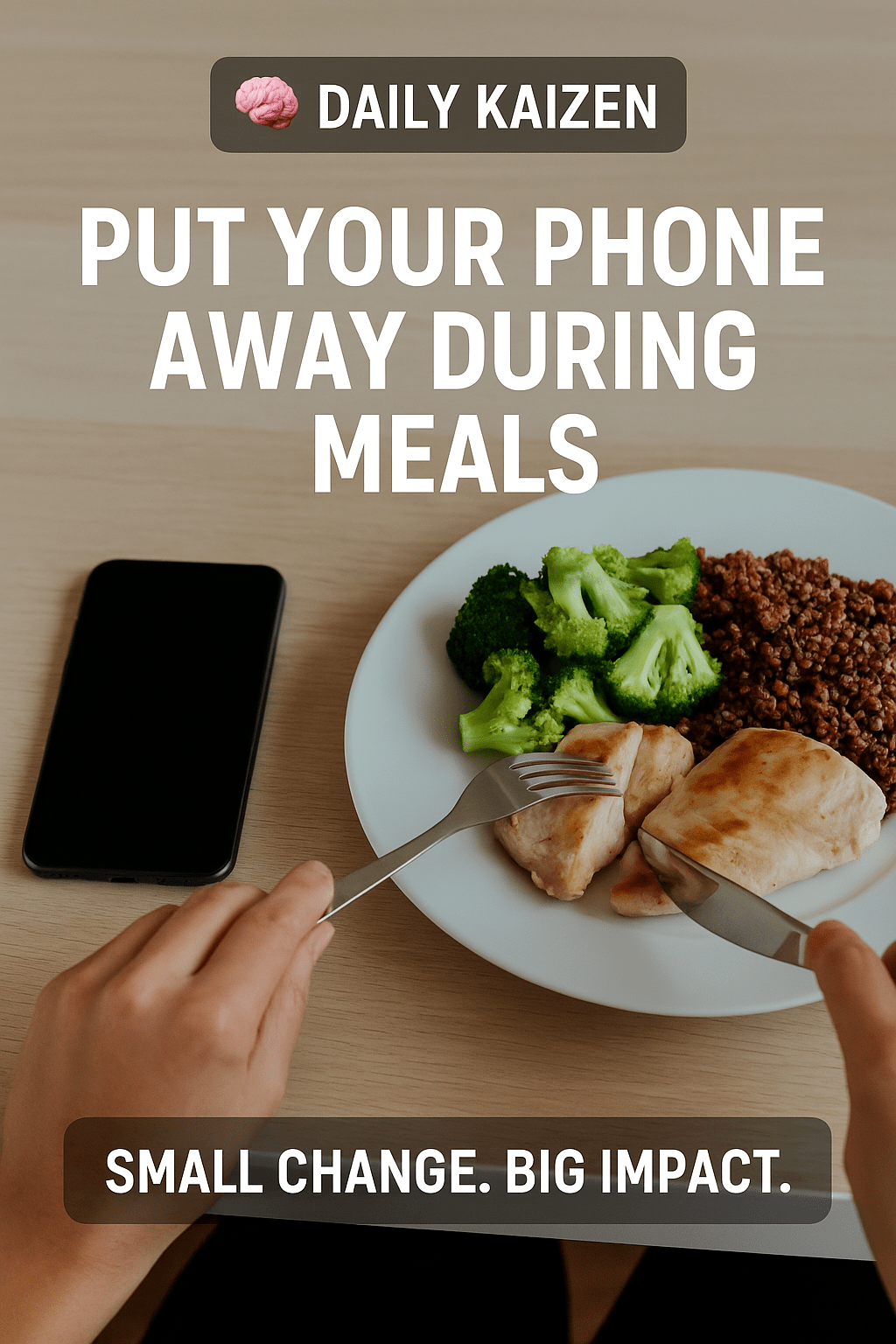
  • 🧠 Daily Kaizen: Put Your Phone Away During Meals

    🧠 Daily Kaizen: Put Your Phone Away During Meals

    Small change. Big impact.

    Today’s 1% improvement is simple:

    Put your phone in another room while you eat.

    You might think you’re just checking a message, watching a video, or reading something useful—but every glance at your phone pulls you out of the present moment.

    Eating while distracted lowers digestion quality, reduces nutrient absorption, and fragments your attention.

    But it’s not just about food. It’s about presence.

    When you eat with someone and leave your phone out of sight, you show respect. When you eat alone and stay unplugged, you show yourself respect.

    This tiny act rewires your brain for better attention, mindfulness, and discipline. It tells your nervous system:

    “This moment matters.”

    ✅ The 1% Better Task:

    Put your phone in another room—or at least face-down on airplane mode—during every meal today.

    Make eating a ritual, not a scroll session.

  • Kaizen for Busy Professionals: 3 Micro-Habits You Can Start Today

    Kaizen for Busy Professionals: 3 Micro-Habits You Can Start Today


    In a world where productivity feels like a never-ending sprint, the Japanese philosophy of Kaizen offers a refreshing, sustainable approach. Kaizen emphasizes continuous improvement through small, consistent actions. Instead of massive overhauls or overwhelming changes, Kaizen invites us to focus on tiny steps that, over time, lead to significant personal and professional growth.

    For busy professionals, this is game-changing. Time is often scarce, but progress doesn’t have to wait. Today, I’ll show you three micro-habits you can start today—each taking just a few minutes but offering compounding benefits over time.


    🔑 1. The 2-Minute Rule: Tackle Small Tasks Immediately

    We’ve all faced the creeping anxiety of a to-do list that grows faster than it shrinks. Enter the 2-Minute Rule, a simple principle that says:
    If a task takes two minutes or less, do it immediately.

    This approach, popularized by productivity expert David Allen, helps eliminate the mental load of tiny tasks that pile up and weigh on your mind.

    Examples You Can Apply Today:

    • Respond to a short email or message.
    • File that one document cluttering your desk.
    • Empty your recycling bin.
    • Stretch your legs or do a few neck rolls.
    • Prep a healthy snack for later.

    By completing these micro-tasks as they arise, you reduce clutter—both physical and mental—and maintain a sense of control throughout the day. It’s a small act that creates a ripple effect of productivity and calm.

    💡 Kaizen twist: Even if you’re swamped, taking these mini-actions reinforces a “can-do” mindset and builds positive momentum.


    🔑 2. Morning Movement: Jumpstart Your Day with Energy

    How often do you reach for your phone before you even get out of bed? Let’s flip the script. Instead of scrolling, use those first few minutes to invest in yourself.

    A 5-minute morning movement ritual can set a powerful tone for your day. It doesn’t have to be a full workout. Simple stretching, a few push-ups, or a brisk walk can be enough to wake up your body and focus your mind.

    Quick Routine to Try:

    • 30 seconds neck and shoulder rolls to release tension.
    • 5–10 push-ups to get your blood pumping.
    • 1-minute forward fold to stretch your hamstrings and back.
    • A short walk around your home or outside to energize.

    Why It Works:

    • Activates your body’s systems for focus and clarity.
    • Reduces morning stress and sets a proactive tone.
    • Builds confidence—if you can conquer movement first thing, you can handle whatever the day throws at you.

    💡 Kaizen twist: Start with just one exercise for a few days. Once it feels natural, layer on another. The key is sustainability, not intensity.


    🔑 3. Evening Reflection: Learn, Acknowledge, and Reset

    The end of the day often feels like a blur. But what if you took just one minute to pause, reflect, and reset? This micro-habit helps you track progress, identify areas for improvement, and prime your mind for tomorrow.

    How to Practice Evening Reflection:

    • Grab a sticky note, journal, or your phone’s notes app.
    • Ask yourself:
      • What’s one thing I did well today?
      • What’s one thing I can improve tomorrow?
    • Write it down. That’s it.

    Benefits:

    • Reinforces a sense of achievement, no matter how small.
    • Encourages continuous growth through daily reflection.
    • Clears mental clutter and improves sleep quality.

    💡 Kaizen twist: Don’t aim for perfection. Some days your “win” might be as simple as remembering to take a deep breath during a stressful moment. Celebrate it.


    🌿 Bringing It All Together

    The beauty of Kaizen is its simplicity and sustainability. You don’t need hours of free time or an elaborate system. You just need the willingness to start small and the discipline to keep going.

    These three micro-habits—tackling 2-minute tasks, morning movement, and evening reflection—are your stepping stones. They’re flexible, adaptable, and powerful when practiced consistently.

    🚀 Your Kaizen Challenge

    Pick one of these micro-habits and commit to it for the next seven days. Notice how even the smallest shifts create positive momentum in your life.

    Comment below: Which micro-habit are you starting today? Let’s inspire each other to embrace continuous improvement!

  • Embrace Kaizen: Tiny Steps to Big Wins

    Embrace Kaizen: Tiny Steps to Big Wins

    Ever have a day where just changing into workout clothes feels like climbing a mountain? We all do. Maybe you slept poorly, work was draining, or motivation is at rock-bottom. On days like these, pursuing fitness or learning a new skill can feel impossible. But here’s a secret: you can still make progress even on your worst days. The key is embracing the Kaizen principle – the art of continuous improvement through tiny daily changes. This approach, rooted in science and psychology, lets you turn even the smallest action into momentum toward your goals.

    In this post, I’ll share how Kaizen works and how to apply it to fitness, skill development, and everyday performance. You’ll see why small daily wins – like a single push-up, one page of reading, or a brief journal entry – truly matter. We’ll cover the science of habit formation (thanks to experts like BJ Fogg and James Clear), practical examples, and simple steps to get started. By the end, you’ll have a game plan for building strength, skill, and self one tiny step at a time, even when motivation is nowhere to be found. Let’s dive in!

    The Kaizen Approach: 1% Better Every Day

    Kaizen is a Japanese term that literally means “change for the good” (from kai = change and zen = good). It’s a philosophy of continuous improvement through small, consistent actions. Instead of trying to overhaul your life overnight, Kaizen says start small and improve gradually. These little gains compound over time into big resultsbetterup.com. In fact, making just 1% progress each day can make you 37 times better in a year! That’s the power of tiny gains.

    Why do these micro-improvements work? At first, a choice that’s 1% better (or worse) barely makes a dent. But over weeks and months, those tiny differences add up. It’s like compound interest for your habits. This means that consistency trumps intensity. Doing something small every day beats doing something big once and burning out. As author James Clear puts it, “It’s better to do less than you hoped than nothing at all. No zero days.”jamesclear.com. In other words, any progress is better than none – especially on tough days.

    Importantly, Kaizen focuses on action over pure visualization. Dreaming of the end result isn’t enough; you need to do. The good news: these “do’s” can be tiny. Research on habit formation shows that small behaviors, done consistently, can become life-changing habits. Stanford behavior scientist BJ Fogg found that making a habit “as simple and tiny as possible” helps it stick – so easy that even when you’re rushed, sick, or distracted, you can still do it. By lowering the bar to something achievable on your worst days, you ensure no day is ever a total loss.

    Why Tiny Habits Work (The Science Behind Small Wins)

    Small daily actions not only add up – they also harness powerful psychology and brain science to keep you going:

    • They wire your brain for improvement. Every time you learn a new skill or repeat a healthy action, your brain connections change through neuroplasticity. In other words, practice literally makes physical progress in your brain. Neuroscientists confirm that your brain changes whenever you learn or do something new, continually rewiring itself throughout life. So even a short practice session – a few lines of code, one sketch, a 5-minute language lesson – is biologically meaningful. You’re laying a neural brick each time, strengthening pathways that make the skill easier and more automatic.
    • They generate positive momentum and motivation. Psychologists refer to the “small wins” effect: achieving a tiny goal gives you a hit of success that boosts your mood and confidencesummer.harvard.edu. That emotional lift isn’t trivial – it’s fuel to do more. BJ Fogg emphasizes that feeling successful is what truly wires habits into your brain. Each small win triggers a little dopamine reward, training your brain to crave that activity again. Over time, these wins build a mindset that progress is possible and enjoyable. Even on a lousy day, doing one positive thing (like taking a walk around the block) can improve your mood and self-belief, which makes it easier to show up again tomorrowsummer.harvard.edu.
    • They sidestep the motivation trap. We often assume we need high motivation to act, but in truth, motivation fluctuates. On bad days it can be near zero. Tiny habits allow you to act without relying on willpower – they’re so easy that you don’t need a surge of inspiration to do them. As Fogg says, “Habits are easier to form than most people think… if you do it in the right way”. The “right way” is designing the habit to be effortless. For example, if you commit to just 2 minutes of stretching before bed, you can likely do it no matter how unmotivated you feel. And once you start, you often do a bit more. But even if you don’t, you’ve succeeded. This consistency keeps the habit alive on the hardest days.
    • They compound into big improvements. Tiny daily efforts benefit from the magic of compounding. Like we saw with the 1% rule, small gains each day snowball into huge gains over time. It’s not linear – it’s exponential growth. A classic example comes from sports: British Cycling famously improved in many tiny areas (seat comfort, tire pressure, even slightly better pillow for sleep) and reaped massive performance wins. The same applies to your personal goals. Improving a bunch of little things – e.g. sleep 5 minutes earlier, add one vegetable to your meals, do a brief morning meditation – can transform your health and skills when all added together. This approach also builds resilience; if one day’s effort is small, it’s okay because you’re back at it the next day. Over a year, you’ll be astonished at how far you’ve come.

    Bottom line: Small habits might seem insignificant in the moment, but they are scientifically potent. They rewire your brain, boost your motivation, and accumulate into meaningful change. By embracing small wins, you set yourself up for sustainable progress without the usual dread or burnout. Now, let’s look at how to put this into practice.

    Small Daily Wins in Action: Tiny Examples with Big Impact

    What do tiny daily improvements look like in real life? Basically, take any goal and scale it down to a version you can do on your worst day. Here are some practical examples of small wins I’ve applied (and you can try too):

    • Fitness: Can’t manage a full workout? Do a mini-exercise. For example, drop and do 5 push-ups (or even just 1 perfect push-up). No energy for cardio? Try a 10-minute walk or even a single lap up and down your stairs. Too tired for yoga class? Do a 2-minute stretching routine in your living room. Even a short burst of activity releases endorphins and can lift your mood. I’ve had days where I felt awful, but after 10 minutes of gentle movement I felt noticeably better – and proud that I did something.
    • Skill Development: Want to learn a language, instrument, or craft, but feel overwhelmed? Commit to one tiny practice. Play one song on the guitar, draw for 5 minutes in your sketchbook, or code one simple function. If you’re studying for an exam or learning a subject, read just one page of a textbook or watch a short tutorial video. For example, I’m practicing Brazilian Jiu-Jitsu and on off-days I’ll do a solo BJJ drill for a few minutes (like shrimping or bridging on the living room floor). It’s not much, but it keeps my muscle memory and interest alive. Remember: a single page or one rep is infinitely better than zero. You maintain momentum and keep your mind engaged with the skill.
    • Mindset & Mental Health: Stressful day? Aim for a tiny mindset win. Write one sentence in your journal (even if it’s “Today was tough, but I’m glad I called a friend”). Or practice three deep breaths to calm yourself. If you’re trying to build a reading habit for personal growth, read one paragraph of a self-improvement book. These little actions still count. They give you a sense of agency and control when life feels chaotic. On many anxious days, I’ll do just a 2-minute meditation – literally set a timer for 120 seconds. It seems almost too small to matter, yet it helps me re-center and often I continue longer. The hardest part is starting; once you start, you often feel better and carry on.
    • Productivity & Daily Performance: Huge to-do list and no motivation? Pick the easiest, smallest task and do it for 5 minutes. Clean one corner of your desk, respond to a single email, or outline just one slide of that presentation. This tiny progress can break the ice of procrastination. For instance, if I’m dreading a project, I tell myself “just work on it for 5 minutes”. Often that leads to 30 minutes of decent work once I get in the flow. But even if it doesn’t, I’ve at least moved the needle. Celebrate that win and let it be enough for today. As Harvard researchers note, even small steps forward at work boost our inner work life and motivationhbs.edusummer.harvard.edu. Each minor task done is a psychological win that can spark the next one.

    These examples show that there is always a “micro-win” available, no matter how unproductive or unmotivated you feel. The key is to reduce the scope, but stick to the schedule. Do 1% of your normal routine if 100% is out of reach. By doing so, you reinforce your identity as someone who keeps showing up. Over time, these tiny wins add up to major improvements in strength, skills, and confidence.

    How to Start (Even When You Don’t Feel Like It)

    Getting started with Kaizen and tiny habits is simple and very forgiving. Here’s how to begin:

    1. Pick one tiny action. Identify a micro-habit related to an important goal. Make it so easy it sounds almost silly. If your goal is fitness, your tiny action might be “do 2 push-ups” or “walk for 5 minutes.” For learning a skill, it could be “practice piano for 2 minutes” or “write 50 words for my book.” The rule of thumb: on your hardest, laziest day, could you still do this? If yes, you’ve found a good starting point.
    2. Anchor it to your routine. Choose when you’ll do this tiny action by tying it to something you already do each day. For example, after you brew your morning coffee, you will do your 2 push-ups. Or when you finish dinner, you immediately take a 5-minute walk. Anchoring a new habit to an existing one (called habit stacking) helps you remember to do it. It creates a trigger: “After I [existing routine], I will [new tiny habit].”
    3. Do it daily (or as often as reasonable). Consistency is your goal – frequency matters more than intensity. Strive to do your tiny action every day (or every weekday, etc., depending on the habit). This “no zero days” mindset keeps the chain unbroken. Remember, doing a little is always better than doing nothing. If you feel good and want to do more, great – but all you must do is that tiny baseline. Some days you’ll exceed it, some days you’ll just check the minimal box, and that’s perfect.
    4. Celebrate your win. As soon as you complete the tiny habit, give yourself a mental high-five. It might feel funny, but literally say “Yes! I did it.” or pump your fist. Celebrating reinforces the positive emotion, and as behavior science shows, that feeling of success is what helps lock in the habit. No achievement is too small to celebrate. Take a moment to recognize that you made progress today – you honored your commitment to yourself. That’s a big deal, and you should feel proud.
    5. Gradually build up (if you want). After stringing together many tiny successes, you’ll likely find yourself naturally doing more. Maybe 2 push-ups become 5, or 5 minutes of coding turns into 15 as your capacity grows. You can raise your daily minimum very slowly over time, or keep it the same and simply do extra whenever you’re motivated. There’s no rush. Kaizen is about lifetime improvement. If you have a bad day or setback, just fall back to your tiny habit. It’s your safety net to ensure you never completely stop progressing.

    By following these steps, you’ll create a sustainable cycle of improvement. You’re effectively training the “habit muscle” – starting small and strengthening it with each repetition. In a few weeks, you might be surprised that your 5-minute habits have turned into routines you do automatically, and you’re eager to expand them. But it all starts with that first tiny step.

    Keep Moving Forward – One Tiny Step at a Time

    In the journey of health, skills, and personal growth, consistency beats intensity. Especially on those dark, difficult days, remember that you have nothing to prove to anyone – you just need to show up for yourself, however modestly. Do a little something that pushes you 1% forward, and you’ve won the day. Over time, those 1% wins build a healthier, more skillful, more resilient you. As the saying goes, “a journey of a thousand miles begins with a single step” – and sometimes that step is as small as a push-up or a paragraph.

    I speak from experience. There have been mornings I’ve felt completely unmotivated, but I told myself “just warm up with one quick set of squats.” Lo and behold, that one set turned into a full workout – but even if it hadn’t, I’d have been happy that I did something. By embracing Kaizen, I’ve learned to trust the process of continuous daily improvement. It’s a relief knowing that even on low-energy days, I can maintain momentum and avoid the vicious cycle of guilt and inconsistency.

    Now it’s your turn. Try the tiny habit approach for yourself. Pick one micro-action and do it today. Then do it again tomorrow. Watch what happens. I guarantee you’ll start to feel the changes – in your mood, in your confidence, and in your progress. Remember, greatness is built on the backs of small daily wins.

    If you enjoyed this post and want more tips on building strength, skill, and self through small daily improvements, consider subscribing to Skill-Stacked. Join our community of lifelong learners and get fresh insights every week to help you stay motivated and keep growing – even on the tough days. Let’s keep moving forward together! 🚀