Tag: sleep optimisation

  • Install a Night-Before Planning Ritual

    Install a Night-Before Planning Ritual

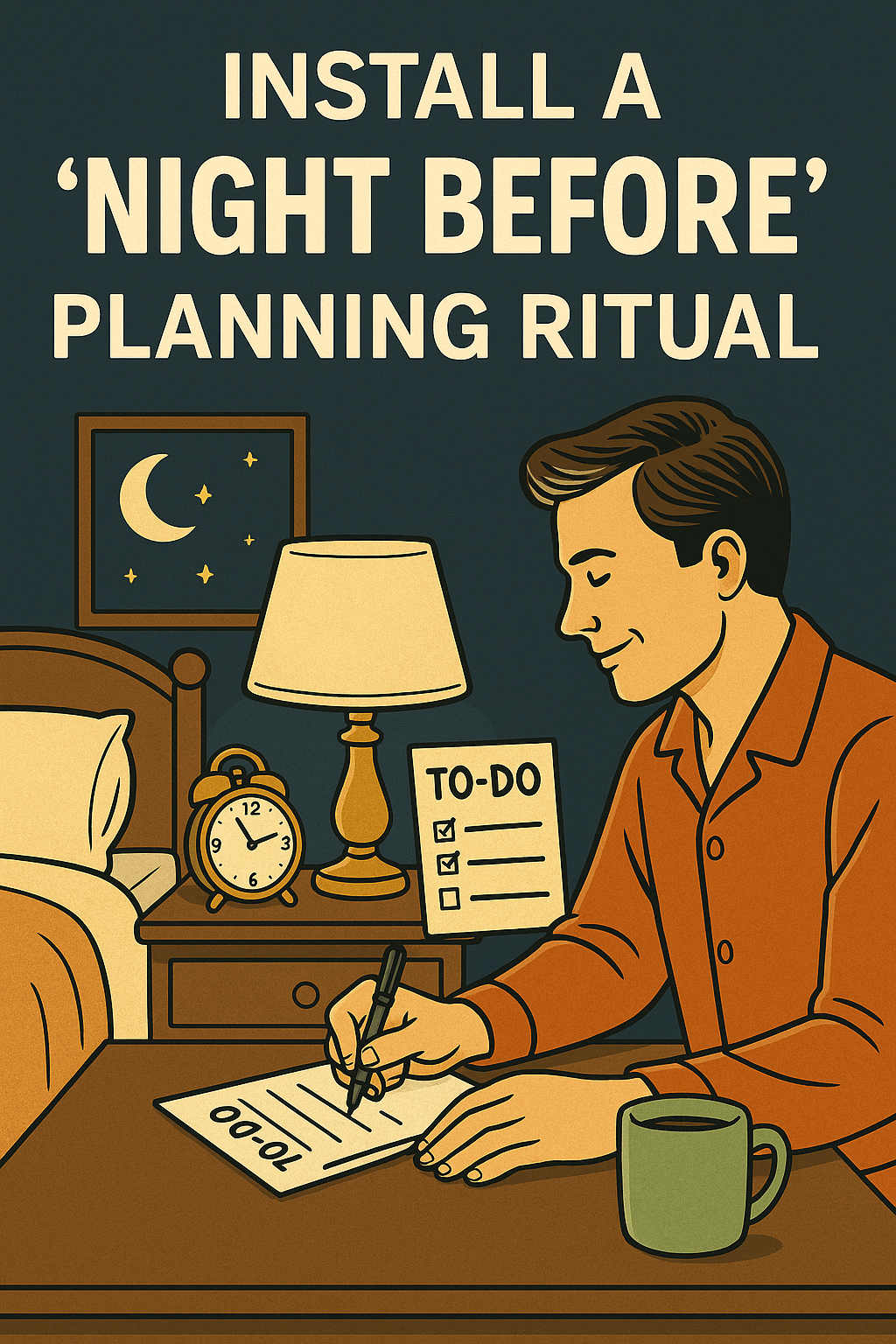
    End your day with purpose by planning tomorrow tonight. A simple evening routine of reflecting on today’s progress and mapping out tasks for tomorrow can calm your mind, sharpen your focus, and set you up for a productive morning. Scientific studies show that writing a detailed to-do list at bedtime helps “offload” worries and speeds sleep onset . By making this a habit, you save willpower and reduce decision fatigue – instead of wasting precious morning energy deciding what to do, you wake up with a clear roadmap .

    Benefits of a Nightly Planning Ritual

    Reduced decision fatigue.  When you plan ahead, you eliminate many small morning choices (like what to wear or what task to tackle first). Decision fatigue – a state where mental energy for making choices runs low – builds up each day .  Productivity experts note that by planning the night before you “reduce decision fatigue, and preserve your willpower for your deepest most meaningful work.” . In short, having a plan means your brain isn’t drained by easy decisions, leaving more energy for what matters. Lower stress and anxiety. Jotting down unfinished tasks and worries before bed lets you offload them from your mind. Research found that participants who wrote a to-do list before sleep fell asleep about 9 minutes faster than those who journaled about completed tasks . Writing out tomorrow’s tasks (rather than mentally rehearsing them) reduces “cognitive arousal” and racing thoughts . Doctors advise “don’t take your problems to bed” – instead, schedule a worry-free planning session earlier in the evening . This practice clears your head and can improve sleep quality. Better sleep quality. A consistent bedtime routine signals to your brain that it’s time to wind down. Studies show that structured evening habits – especially a soothing ritual before sleep – are linked to better sleep habits and family well-being .  The sleep study above also found that the more specifically participants wrote their to-do lists, the faster they fell asleep . In other words, the act of detailed planning helps your brain let go of work concerns and drift off more easily. Morning momentum and clarity.  Waking up knowing exactly what to do first creates immediate focus and momentum. As one productivity writer notes, planning your day the night before means you’ll “get more done in less time” and experience “more flow” in the morning . By reviewing your priorities tonight, you remove guesswork from tomorrow’s morning – you know which tasks are top priority, so you can dive in confidently. A clear game plan built the night before means you start each day already moving forward.

    How to Build Your Nightly Planning Ritual

    Reflect on Today.  Spend a few minutes reviewing what you accomplished and what’s pending. Check off completed tasks and celebrate small wins. Noting down what went well (and what didn’t) helps you learn and ensures nothing important slips through the cracks. This reflection closes out the day and makes it easier to move on. Set Tomorrow’s Priorities.  Write a concise to-do list or pick the 3–5 most important things for tomorrow.  The classic Ivy Lee method suggests listing your top tasks before bed and tackling them first thing. Be specific: the sleep research found that detailed to-do lists offload more mental stress . Focus on high-impact goals that align with your bigger objectives. Jotting down these items (on paper, in a planner, or an app) gives your mind permission to rest, knowing you won’t forget them. Prepare Your Space.  Lay out anything you’ll need in the morning: clothes, tools, documents, or even a pre-set coffee mug.  For example, one schedule recommends “prepare for the next day: pack your stuff, choose your outfit” before bed .  Setting out tomorrow’s outfit on the bed (and packing your bag or work supplies) eliminates a key morning decision.  Another habit-stack is setting out your coffee mug or brewing supplies – James Clear points out a simple nighttime stack: after cleaning up, set out your coffee mug for tomorrow morning . These small cues make your morning routine run effortlessly. Wind Down Mindfully.  Turn off work and screens at least 30 minutes before bed. Do a relaxing activity like reading, gentle stretching, or deep breathing. A calming ritual signals it’s time to sleep .  You might also write a brief journal entry – either a gratitude log or a “worry list” – to further clear your mind (many therapists use worry lists to calm anxious thoughts). By separating your planning from active problem-solving, you give your brain the cue that the workday is done and it’s time to rest. Keep a Consistent Schedule.  Try to do this planning ritual at the same time each evening. Habits form best when they’re tied to a routine . For example, plan right after dinner or immediately after your evening shower. Over time, this consistency will make evening planning second nature. The more automatic it is, the easier it is to maintain – soon, writing tomorrow’s list will feel like a normal part of winding down.

    Examples of Effective Nightly Rituals

    One powerful nightly habit is to lay out tomorrow’s essentials before bed.  For example, prepare your outfit and work bag ahead of time – a schedule note advises “prepare for the next day: pack your stuff, choose your outfit” before sleep .  Even small cues help: setting out your coffee mug and ingredients can streamline your morning (as one habit example notes, “After I wipe down the counter, I will set out my coffee mug for tomorrow morning.” ).

    Review Big Goals and Wins.  Take 1–2 minutes to look over your long-term goals or project milestones. Celebrate any progress today and adjust tomorrow’s tasks if needed. This keeps your nightly plan aligned with the big picture. Write a To-Do List.  Handwrite or type the top tasks for tomorrow. Be clear and action-oriented. (Remember: researchers found that a detailed pre-sleep to-do list can actually help you fall asleep faster , so don’t skimp on specifics!) Check Tomorrow’s Calendar.  Scan your schedule for upcoming meetings or deadlines. Confirm any appointments and note what preparations you need. This ensures you wake up mentally prepared for events, not scrambling. Lay Out Clothes or Gear.  Decide what you’ll wear and put it out, or pack your gym/laptop bag. This removes a “morning decision” and can save precious time. Prep Breakfast or Lunch.  If you bring lunch or make morning coffee at home, prepare the night before. Fill the coffee maker, pack ingredients, or set out dishes. These tiny steps can make your morning smoother. Write a Worry List.  Quickly jot down any nagging worries or tasks that are on your mind. Just writing them down can quiet anxious thoughts (a Cognitive Behavioral Therapy technique ), making it easier to relax into sleep. Prep Your Technology.  Charge your phone and laptop so they’re ready. Set your phone to Do Not Disturb or put it away from the bed. Fewer notifications in the morning means a calmer start.

    Each of these simple rituals takes only a few minutes but can have a big payoff. Over time, they add up into a powerful habit loop that makes every morning easier. As one productivity coach puts it, giving yourself a framework for the next day “means there’s no guesswork as to what you’ll be doing when you sit down to work in the morning.”

    Conclusion: Try It Tonight

    Installing a night-before planning ritual is a small step that can transform your days. Imagine waking up calm and confident, with all your priorities lined up. Tonight, before bed, give it a try: spend five minutes jotting down your top goals for tomorrow and set out one item you’ll need (like your outfit or coffee mug). Notice how this clears your mind and jumpstarts your productivity. You might be surprised by how much more focused and energized you feel in the morning. Experiment with this ritual tonight and see the difference tomorrow .

    Give yourself one night to start – your tomorrow will thank you.
  • Book of the Day: Outlive — The Science & Art of Longevity by Dr. Peter Attia

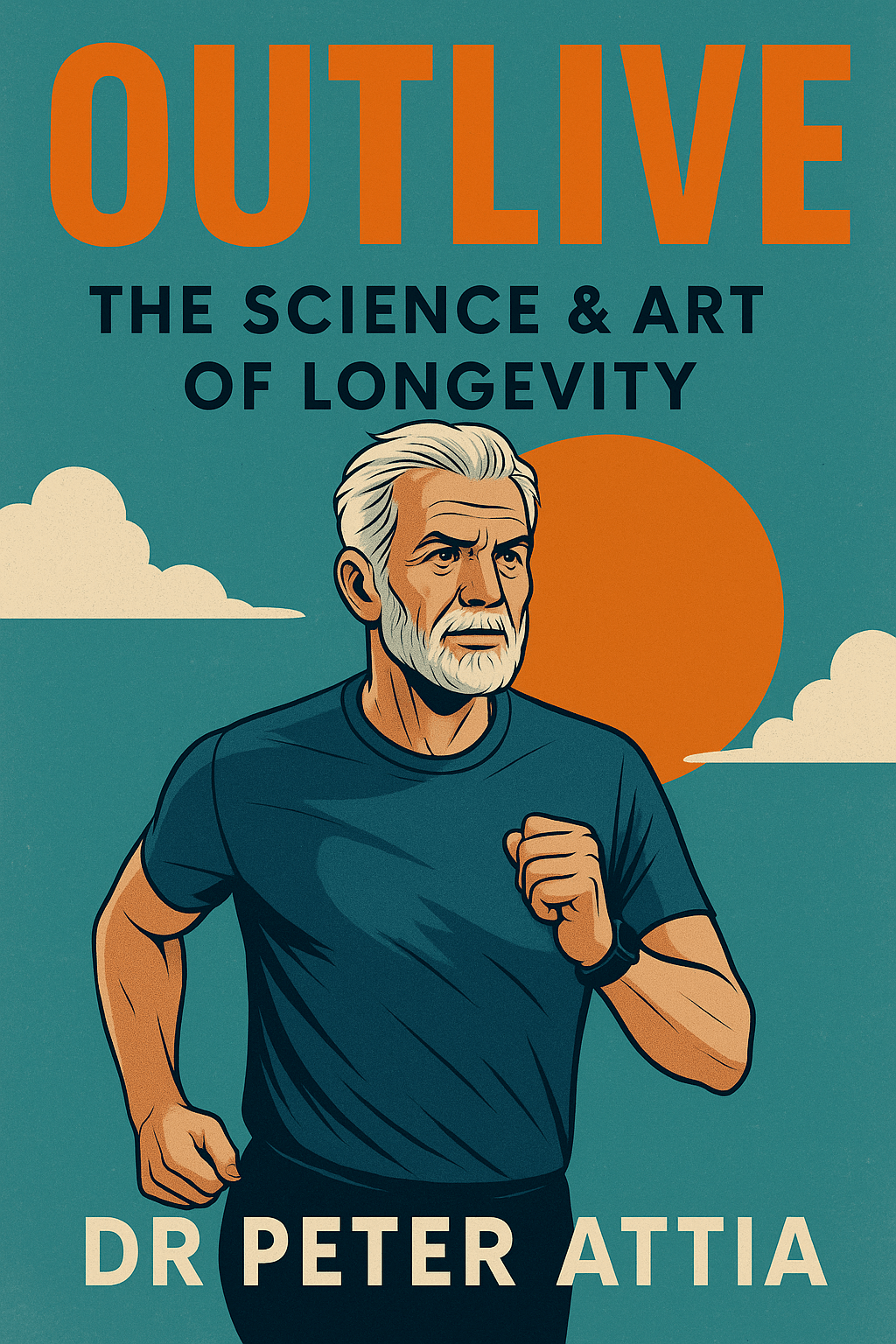
    Book of the Day: Outlive — The Science & Art of Longevity by Dr. Peter Attia

    Have you ever felt that everything you thought about “healthy aging” might be wrong? In Outlive, Peter Attia shatters conventional wisdom and hands you the evidence-based playbook to truly live longer and better. This isn’t hype – it’s a no-nonsense blueprint for peak performance at any age. Attia, a Stanford-trained physician and longevity expert, argues that our current medical model (which he dubs “Medicine 1.0” and “2.0”) is fundamentally flawed . Instead of waiting for illness, he demands a radical proactive regime: treat aging like an engineering problem — track your health, catch threats early, and optimize your performance every day .

    The Four Horsemen and Medicine 3.0

    Attia identifies four killers driving most premature death: heart disease, cancer, Alzheimer’s/dementia, and type 2 diabetes/metabolic dysfunction. He dubs these the “Four Horsemen” of aging, arguing they dictate both how long we live and how well we live . The key is a radical pivot he calls Medicine 3.0 . No more reacting after the fact: under this model you hunt down problems early. For example, Outlive urges calcium scans for hidden plaque or routine cancer blood tests before any symptoms appear —completely flipping the script on how we use medicine.

    Bold Takeaway: Prevention is the new prescription. Think long-term: what’s your 80-year game plan? (Hint: it shouldn’t start at 80.) Medicine 3.0 is clear: catch problems early or prevent them entirely .

    The Four Pillars of Longevity

    So what do you actually do? Attia boils it down to four tactical pillars of health : exercise, nutrition, sleep, and emotional health. Ignore any one of these, and longevity suffers.

    Exercise: This isn’t optional. Attia flat-out calls exercise “the most potent longevity ‘drug’ in our arsenal” . The research backs it up: just 90 minutes of moderate exercise per week can slash your mortality risk (~14% lower) , and regular exercisers live a decade longer than couch potatoes . Zone 2 cardio, strength training, even agility work — Attia details how each form of movement upgrades your heart, muscles, and brain. Your muscles and mind will thank you. Nutrition: This is not another faddish diet sermon. Attia challenges conventional diet dogma . There’s no one-size-fits-all approach . Instead, he urges a nutrient-dense, whole-food focus (think Mediterranean-style eating, minimal refined sugar/alcohol) and encourages you to experiment and measure how your own body responds . He’s clear: severe calorie restriction can backfire — it can tax your immune system and lead to frailty —so prioritize quality and sustainability in your diet. Sleep: The undercover hero of health. Outlive warns that chronic sleep deficits wreck metabolism, immunity, and brain repair. Treat sleep as non-negotiable: consistency, a cool dark room, and proper duration are as critical as any workout or meal. Neglect it, and you’ll be stacking up disease risk by the decade (attacked obesity, diabetes, heart disease, even dementia). Emotional & Mental Health: Longevity isn’t just a physical game. Attia stresses that chronic stress, loneliness, and depression accelerate aging. Good relationships, purpose, therapy or mindfulness — these count as seriously as reps in the gym. Outlive shows that a resilient, engaged mind fuels all other pillars and keeps you sharp and motivated in your 80s and 90s.

    “I now consider exercise to be the most potent longevity ‘drug’ in our arsenal”  — a reminder that the basics (move more, eat real food, sleep well, manage stress) are far more powerful than any pill or supplement for a vibrant, long life.

    Personalization, Metrics and the Centenarian Decathlon

    No-nonsense cornerstone: measure everything, personalize relentlessly . Attia bluntly states there is no magic pill or single diet that fits all . You are a unique experiment: track your blood pressure, lipid panels, glucose responses, and even get advanced tests (coronary calcium scans, genetic risk screens, etc.). He even advises prescribing statins for prevention if your calcium score is sky-high . The motto: you can’t manage what you don’t measure.

    Attia also introduces the “Centenarian Decathlon.” Imagine the life you want at 100: what athletic and mental feats do you still want to pull off? A marathon? Writing a novel? Keep up with grandchildren? Now reverse-engineer: build a program today to preserve those specific abilities . This simple, inspiring concept reframes aging as a personal engineering challenge. Every workout or habit tweak is targeted at making that 100-year-old you possible.

    Bold Takeaway: Don’t guess — test and tune. Gather your data (wearables, bloodwork, scans) and only take aggressive action if anything looks off .

    Breaking (Goodbye to) Old Advice

    Outlive tears down outdated health mantras. Dietary cholesterol as a mortal enemy? Attia says it’s nuanced — some people handle eggs and saturated fat just fine . All calories being equal? He shows that quality matters, and extreme calorie-cutting often backfires . The “wait for symptoms” medical model? He flips it: find hidden plaque or early tumors long before they strike .

    You won’t find sugar-coated pills or vague platitudes here. Attia’s tone is tough-love: he wants you to embrace uncomfortable truths (for example, over 11% of Americans have diabetes right now ) and use that data to overhaul habits.

    Bold Takeaway: Challenge everything. If a health recommendation feels lazy or one-size, scrutinize it. Outlive teaches that breakthroughs come from hacking the system — using data, rejecting dogma, and training your body/mind to defy the status quo .

    Actionable Fitness & Lifestyle Hacks

    Outlive isn’t just theory — it’s packed with practical life tweaks. Here are some game-changing moves distilled for daily life:

    Move with a plan: Schedule consistent cardio (e.g. 3 sessions/week of 30–60 min Zone-2 rides or runs) and strength training (muscle = metabolic armor). Remember: 90 minutes/week of exercise yields huge returns , and every rep builds your future self. Eat for energy: Ditch ultra-processed junk and added sugars. Embrace whole foods: vibrant veggies, lean protein, healthy fats. Experiment: track your blood glucose or ketones to see which foods spike you — then dial your diet for stability. Sleep as your power-up: Prioritize 7–9 hours nightly. Fix your light exposure (bright days, dark nights) and keep a consistent bedtime. Small tweaks (no late caffeine, a cool dark room, wind-down routine) can revolutionize your daily energy and hormone balance. Build mental resilience: Make stress-management a daily habit — meditation, cold exposure, journaling, therapy, or whatever works for you. Cultivate strong social bonds and hobbies you love. Your mind is the command center of health; protect it. Set 10-year goals: Use Attia’s Centenarian Decathlon: list the feats you want at ages 70, 80, 100. Measure them yearly. This keeps you laser-focused on why you’re doing this (hint: for maximum life fulfillment). Track your metrics: Get annual labs (fasting glucose, lipids, inflammation markers). Know your family risks and discuss them with your doctor. If something’s off (e.g. rising blood sugar or a high calcium score), take action now.

    Each step here is a brick in your longevity fortress — and the beauty is they overlap with peak performance. When your cardiovascular fitness soars, energy and clarity follow. When your diet stabilizes blood sugar, productivity spikes and crashes disappear. When you nail sleep, workouts, mood, and focus all improve. This isn’t about giving up life’s pleasures; it’s about getting more out of life — longer and better.

    Conclusion: Defy Your Age

    Reading Outlive feels like a wake-up call. Dr. Attia doesn’t promise magic pills; he delivers a radical, disciplined framework. The message is empowering: you are in charge of your aging. There’s no reason to be passive — the science shows we can extend our healthspan with bold, intentional choices.

    In the end, Outlive is a manifesto for anyone serious about self-mastery. It’s about embracing hard truths (like over 11% of Americans have diabetes right now ) and taking relentless action.

    So here’s the challenge: Pick one area today and commit. Run a little farther, swap one processed snack for something real, carve out 15 minutes to meditate. Outlive shows you that small steps against the Four Horsemen compound into huge wins.

    Bold Takeaway: The best time to plant your longevity tree was yesterday; the second-best time is now. Attia’s Outlive arms you with the strategy — your mission is to execute. Read it, question it, and go improve yourself. Your future self will thank you.