Building lasting change often starts with one keystone habit – a single routine that becomes the anchor of your day. Focusing on one habit at a time is key. In fact, research shows that people who make specific plans for one habit (the when, where, and how) are 2–3× more likely to follow through . Crucially, implementation intentions only work if you focus on one thing: people juggling many goals tend to fail more often than those committed to a single goal . By picking one meaningful habit, you give yourself the best chance to automate it into your routine.
Anchoring your day to one core habit has a ripple effect across your life. As Psychology Today explains, “keystone habits” are foundational routines that create a domino effect of positive changes . For example, establishing a regular exercise routine not only boosts fitness, but often leads to improved diet, better sleep, higher energy and productivity . In other words, one good habit tends to spawn others. By consistently practicing just one high-impact habit, you build momentum and confidence that carries over to every part of your day. This habit becomes the stable foundation on which other healthy routines can be built.
Why a Core Habit Matters: Relying on autopilot routines relieves decision fatigue and conserves willpower . When one key habit is locked in place each morning, the rest of your day tends to flow better. You develop a “success mindset” as each completed habit reinforces your identity (for instance, thinking of yourself as “someone who journals every morning” or “a regular exerciser”). And science backs this up: our brains form habits in the basal ganglia, automatically linking cues to routines . By designing a single keystone habit and its cues, you work with your brain’s natural wiring.
Catalyst for change: One core habit can trigger a cascade of other good habits . For example, starting the day with exercise often leads to healthier eating, better sleep, and sharper focus in the afternoon . Momentum builder: Completing a meaningful habit each day boosts motivation and confidence. When you see progress in one area, it’s easier to tackle other challenges. Routine anchor: Your keystone habit anchors your schedule. Making it a fixed part of your morning or evening routine creates stability, so other habits “slot in” around it . Identity shift: Focusing on one habit helps reshape your self-image. You begin to think, “I am the kind of person who [habits]”, which reinforces consistent behavior. Simplicity wins: Psychology research finds that trying too many new habits at once undermines progress. People focusing on a single specific habit are far more likely to succeed .
Together, these points show why it’s better to master one core habit than spread yourself thin.
Examples of Powerful Core Habits
Which habits make good core routines? Think of activities that energize you, support your biggest goals, or simply feel rewarding. Here are some examples that many people find transformative:
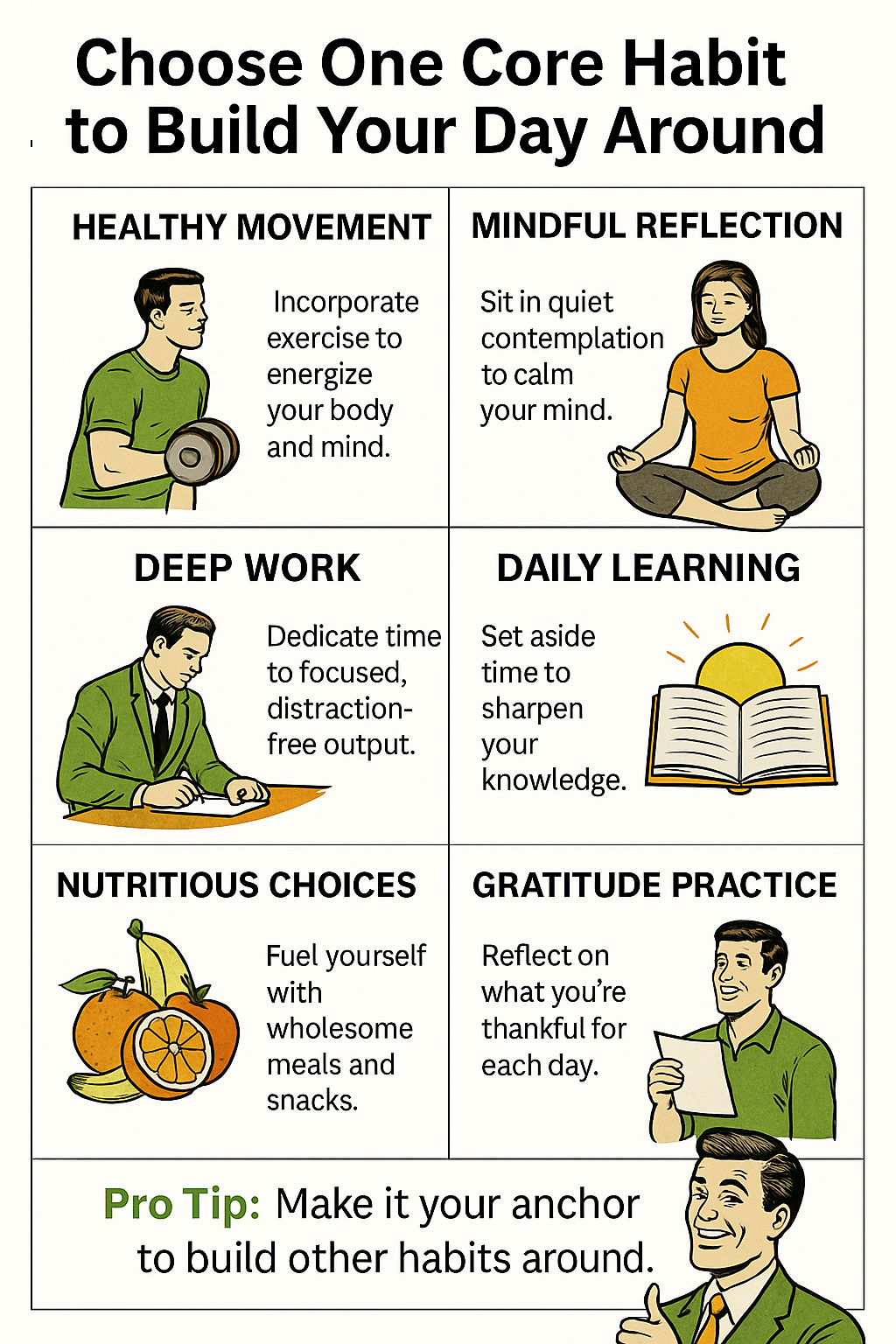
Morning Journaling: Spend 5–10 minutes writing after you wake up. Journaling clears your mind, sets your intentions for the day, and helps process emotions. Studies show that expressing thoughts on paper “enhances mental clarity and emotional processing,” helping to manage stress and anxiety . Over time, this practice can improve mood and self-awareness. Daily Exercise: A short workout or brisk walk each morning gets your body moving and brain alert. Exercise not only strengthens muscles and heart, it also “boosts memory and thinking indirectly by improving mood and sleep, and by reducing stress and anxiety” . Many people who exercise daily report clearer thinking and more energy throughout the day. Daily Reading: Even 15–30 minutes of reading (non-fiction, personal development, or inspirational material) can prime your mind. Reading regularly is like a gym session for your brain – it “improves memory, concentration, and [reduces] stress,” according to education experts . Starting the day with learning sets a positive tone and gradually builds knowledge. Morning Meditation or Mindfulness: Sitting quietly for a few minutes each morning to meditate or breathe deeply trains your attention and calms your nervous system. Research on meditation shows that brief daily practice can decrease negative mood and anxiety while improving attention and working memory . Over weeks, people report better focus and emotional balance. Gratitude Practice: Noticing things you’re thankful for – even mentally or by writing a quick list – can reframe your mindset. Regular gratitude journaling has been linked to better well-being and reduced stress . It’s a simple habit that shifts your outlook to the positive. Evening Review or Planning: End your day by reviewing successes and planning tomorrow’s top priority. This sets up your next morning with clarity and can improve sleep by reducing rumination. (This habit aligns with identity and goal-setting research .)
(Tailor this list to what appeals to you: exercise could be yoga or dance, reading could be podcasts, and journaling could be notes on wins. The specific habit is less important than consistency.)
How to Pick the Right Habit for You
The best habit is one that aligns with your goals, lifestyle, and natural energy. Here are some guidelines:
Match Your Goals: What is your top priority? If you want more energy, a morning workout or walk might be ideal. If you seek calm and focus, meditation or journaling could help. If personal growth is key, reading or learning fits. Choose a habit that directly supports what you care about most. Consider Your Daily Rhythm: Pay attention to when you feel most alert. Morning “larks” often have more willpower and energy early, so they might tackle exercise or writing right after waking. Night owls might start with something simpler (like sipping tea while reading) and schedule more demanding habits later. Research shows people perform best at their preferred time of day – morning types in the a.m. and evening types later . Pick a habit and time of day when you naturally feel energetic and clear-headed. Test for Enjoyment and Feasibility: A habit doesn’t have to be fun, but it should be something you don’t dread. For example, if 30 minutes of exercise feels impossible, start with 5 minutes. If journaling every day is too much, try 3 days a week. The goal is consistency, not intensity. Simplicity and Resources: Keep it simple. You’re much more likely to maintain a basic habit (5-minute meditation, 10-minute walk) than a complex one. Also, ensure you have what you need: if you choose exercise, place workout clothes where you see them; if writing, keep a notebook handy. Identity Alignment: Frame the habit in identity terms. Instead of “I want to exercise,” tell yourself “I am the sort of person who exercises regularly.” This mindset (identity-based habits) makes it easier to stick with your choice .
When you settle on one habit, commit to it wholeheartedly. Remember, focusing on that one habit increases your chance of success . You can always add another habit later. For now, give your first habit all your attention and energy.
Making Your Habit Stick: Practical Steps
Once you’ve chosen your keystone habit and timing, use these strategies to turn it into an automatic part of your day:
Plan It Precisely (Implementation Intention): Decide exactly when, where, and how you will do your habit. For example: “Every morning right after I brush my teeth, I will meditate for 5 minutes.” Studies find that writing down such specific plans doubles or even triples the likelihood you’ll follow through . Having a concrete plan (“If X happens, then I will Y”) makes it much easier to act. Habit Stacking: Attach your new habit to an existing routine. This is called “habit stacking.” For instance, after you make coffee, then sit down to journal; or after you put away your shoes at night, then do 5 minutes of stretching. Psychology experts note that habit stacking “anchors” a new habit to something you already do, making the change feel effortless . Over time the linked behaviors become second nature. Time-Blocking: Put the habit on your calendar and treat it as an appointment. Block a short fixed window each day (e.g. 7:00–7:10 AM) for your habit. This way you won’t accidentally skip it. Scheduling a daily reminder or alarm can help signal it’s time. Design Your Environment: Make the habit obvious and easy by arranging your surroundings. Keep cues and tools in sight: place your journal on your desk, lay workout gear out before bed, or put a water bottle where you’ll see it . Conversely, hide or remove distractions: turn off notifications, log out of social apps, or keep junk food out of the house. As one habit expert advises, small environmental tweaks (like “keeping a water bottle on your desk” or “placing a book on your nightstand instead of your phone”) can automatically nudge you toward the right behavior . Start Small and Build: Resist the urge to overdo it. Consistency is more important than duration. If you miss a day, don’t criticize yourself – just do it again tomorrow. Gradually increase the habit as it becomes easier. For example, add one more minute to your meditation or one extra page of reading each week. Use Rewards and Tracking: Give yourself a small reward after completing the habit (even just a mental high-five). Keep track of your progress – a checkmark on a calendar or a habit-tracking app can reinforce your commitment. Seeing a streak build can be motivating. Get Accountability: Tell a friend or family member about your habit goal, or join a group (online or offline) for support. Sometimes sharing your intention publicly makes you more likely to stick with it.
Following these steps harnesses the best strategies from behavioral science. As Neuroscience Today explains, our brains form strong habits when we consistently pair a cue (like a time of day) with a routine, which eventually becomes automatic . By stacking your habit, time-blocking it, and shaping your environment, you effectively engineer success.
Your Takeaway: Start Today
You now have the blueprint: pick one single habit to build your daily routine around. Make it specific, plan it, and slot it into your schedule. Use habit-stacking and environmental cues to make it automatic. Remember that even a few minutes of daily focus can spark broader improvements.
The most important step is to start. Don’t wait for the “perfect” time or until you have more willpower. Tomorrow morning, for example, wake up a bit earlier and begin. Write those first journal lines, put on your sneakers for a walk, or sit for a short meditation. Once you’ve built a streak of a few days, you’ll feel the momentum building.
Key takeaways: Choose one core habit aligned with your goals. Treat it like an unmissable appointment. Set up cues and remove friction so the habit happens almost automatically . Focus on this habit fully before adding more. Scientific research confirms this focused approach is the most effective route to lasting change .
You’re ready – start your new habit today and let it become the anchor of a better, more productive day!
Sources: Practical tips and examples above are backed by psychology and neuroscience research , which highlight how keystone habits and smart habit-design lead to lasting success. Use these insights as your guide, and watch the positive ripple effect in your life. You’ve got this!